
Summer Is the Perfect Time to Reimagine Your School Spaces
As a school-based occupational therapist, summer has always been one of my favorite times of year.
Not because school is out, but because it's when educators begin dreaming about what's possible for the year ahead.
The hustle and bustle of the school year slows down. Hallways are quiet. Classrooms are being cleaned and reorganized. Administrators and teachers finally have a chance to step back and ask an important question:
How can we better support our students next year?
Sometimes the answer isn't adding another program, curriculum, or initiative.
Sometimes it's simply looking at the spaces we already have in a new way.
What If Your Hallways Could Do More?
Most school hallways serve one primary purpose: getting students from one place to another.
But what if they could do more?
What if a hallway became a place where students could move their bodies, regulate their emotions, practice executive functioning skills, or build confidence before entering the classroom?
As an OT, I've seen firsthand how movement can help students prepare for learning. A few moments of purposeful movement can help students organize their bodies, improve attention, reduce stress, and transition more successfully throughout the day.
That's why sensory paths have become such valuable tools in schools.
They transform an ordinary hallway into an opportunity for movement, regulation, and success.
Don't Forget About Your Walls
One of the most exciting trends I've seen recently is schools utilizing vertical space in creative ways.
An empty wall can become:
A breathing and mindfulness area
A movement break zone
A faith-based reflection space
A gross motor activity center
Wall-based activities are especially helpful for schools that may not be ready for a full floor installation or are looking to create smaller regulation spaces throughout their building.
Small Spaces Can Make a Big Difference
When schools think about sensory supports, they often imagine large projects.
But some of the most impactful spaces I've seen are surprisingly simple.
A small corner near a counseling office.
A section of hallway outside the library.
An unused wall near a classroom cluster.
A quiet area where students can take a moment to reset before returning to learning.
These spaces don't need to be large to be effective. They simply need to be intentional.
Why Summer Is the Best Time to Plan
Summer offers a unique opportunity to evaluate your building with fresh eyes.
Without students filling the hallways, it's easier to notice:
Underutilized spaces
Areas where transitions are challenging
Locations where students may benefit from movement opportunities
Walls and hallways that could better support student success
It's also the ideal time to plan installations, make updates, and prepare spaces before students return in the fall.
Start by Looking Differently
One of my favorite parts of creating Sacred Steps is helping schools see possibilities they may not have noticed before.
A hallway becomes a sensory path.
An empty wall becomes a calming space.
A transition area becomes an opportunity for movement, regulation, and success.
As educators, we spend so much time thinking about what happens inside our classrooms. Sometimes the greatest opportunities exist just outside them.
As you prepare for another school year, I encourage you to take a walk through your building and ask yourself:
What could this space become?
You may be surprised by the answer.
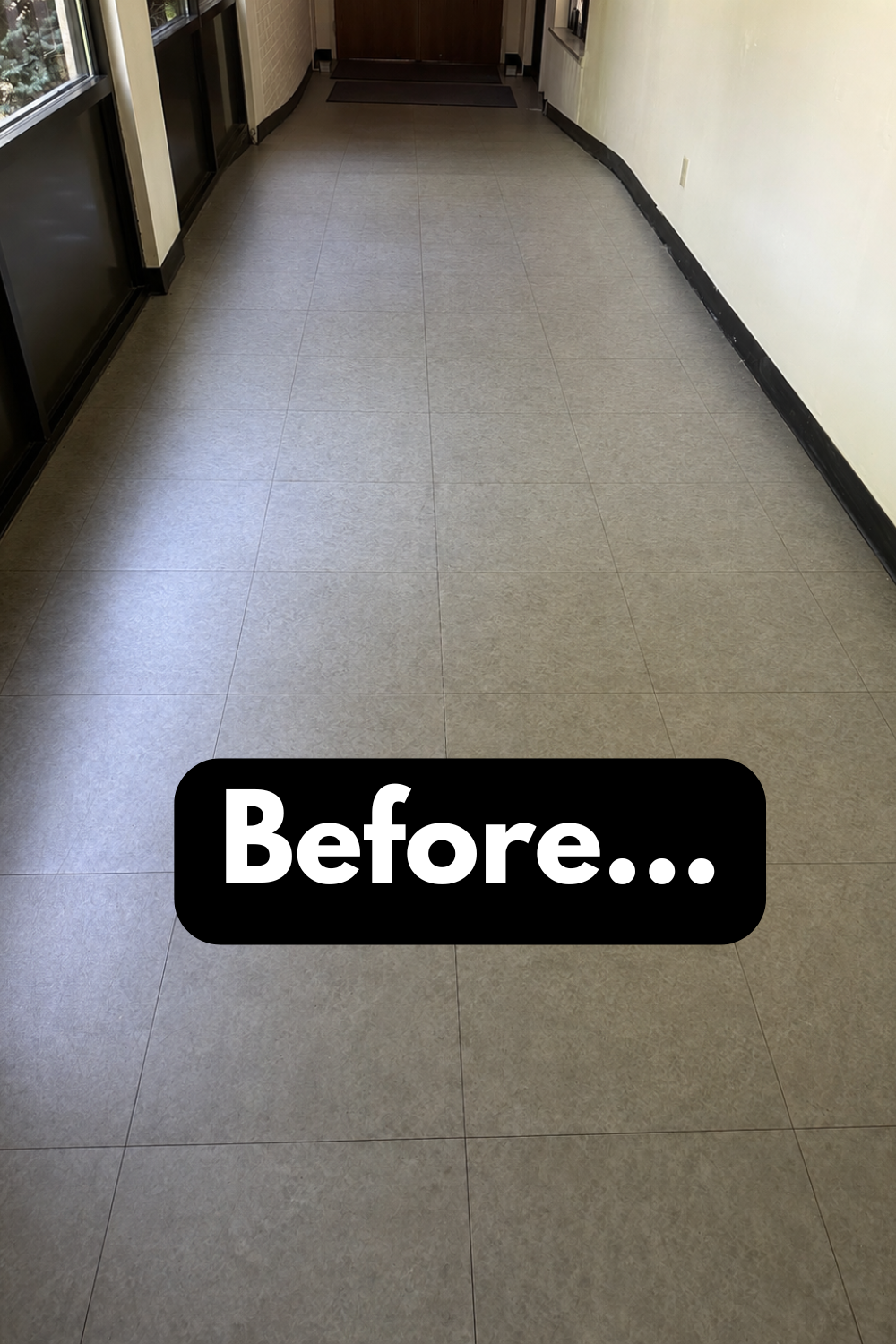
An underutilized hallway at a Catholic school in Missouri…
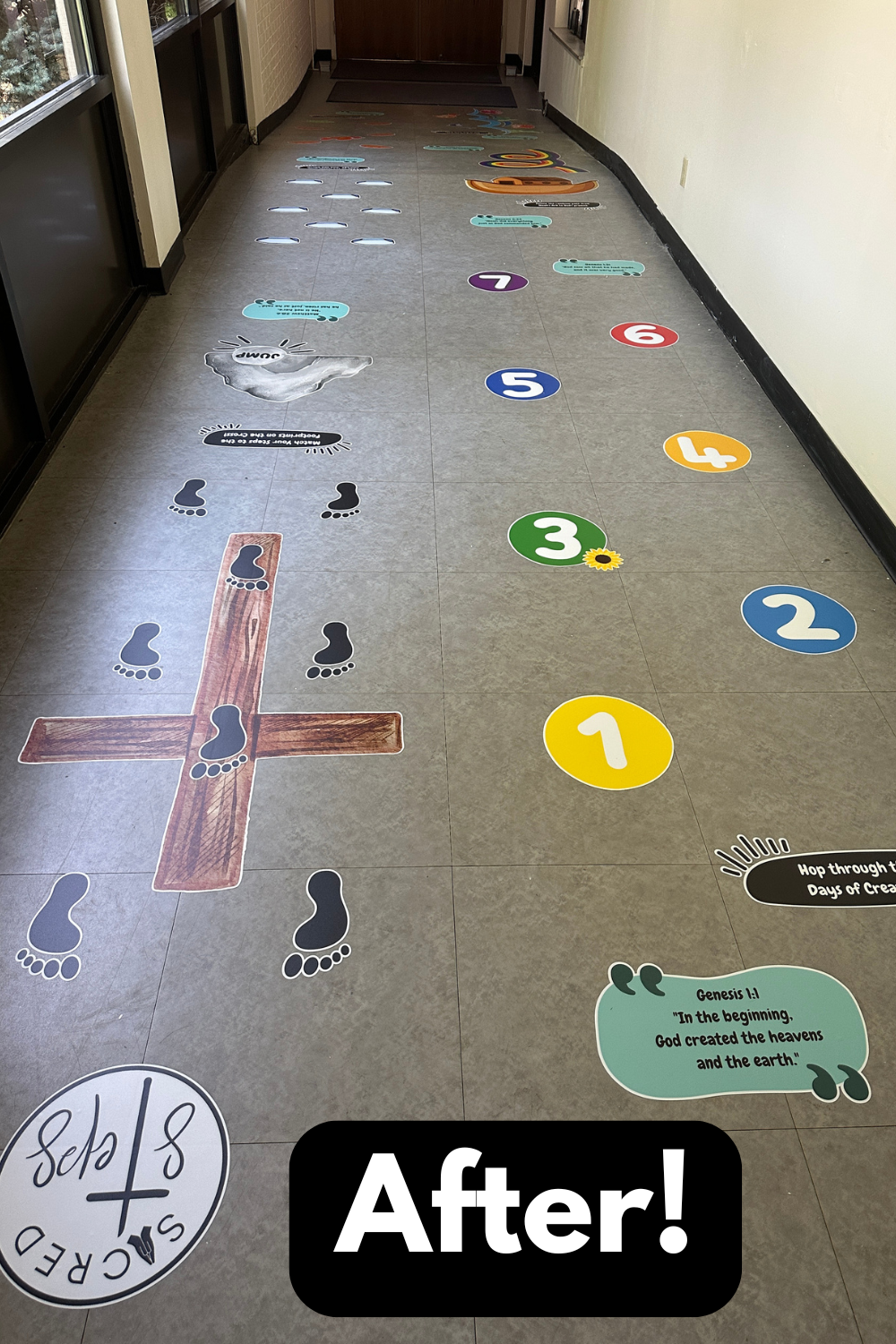
Catholic school hallway transformed into a faith-based sensory pathway that supports student regulation, focus, and faith formation.