Why Movement Comes Before Learning
Discover why purposeful movement prepares children to learn. A practicing pediatric occupational therapist explains how movement supports attention, regulation, and classroom success.
Have you ever noticed what happens after a child has a chance to move?
They return to class calmer. More focused. More organized. More ready to learn.
That's not a coincidence.
As a practicing pediatric occupational therapist, I've seen it happen thousands of times.
Many people think movement is a break from learning. In reality, purposeful movement often prepares the brain for learning. One way schools can build proactive movement into the day is through a sensory pathway, which gives students structured opportunities to move, regulate and refocus.
The Brain Was Designed to Move
Children experience the world through movement long before they ever sit at a desk.
Before they learn to read...
They crawl.
They climb.
They balance.
They jump.
They explore.
Movement helps develop the very foundations that support attention, self-regulation, coordination, motor planning, and learning.
When we ask children to sit still for long periods without opportunities to move, many are working against how their brains naturally develop.
Purposeful movement gives the nervous system exactly what it needs to organize itself for learning.
Not All Movement Is Created Equal
As occupational therapists, we don't recommend movement simply because children enjoy it.
We recommend movement because different types of movement provide different benefits.
Jumping can increase alertness.
Balancing challenges body awareness.
Crossing the body's midline supports coordination and motor planning.
Reaching, stretching, crawling, and pushing all provide valuable sensory input that helps children regulate their bodies and attention.
When movement is intentional, it becomes much more than a brain break—it becomes part of the learning process.
What This Looks Like in Schools
Purposeful movement doesn't require a large gym or an extra class period.
It can happen naturally throughout the school day:
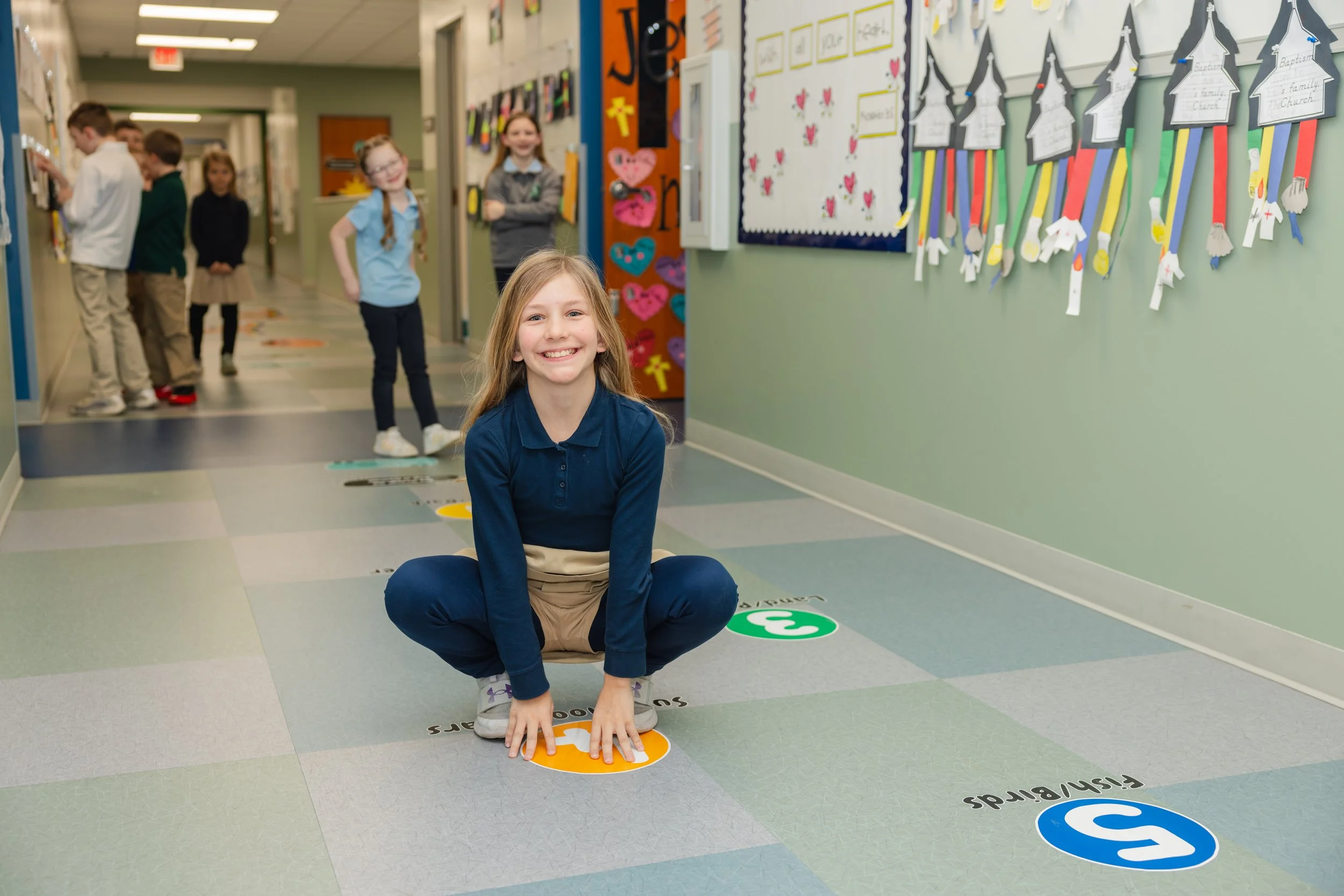
During hallway transitions
Before a challenging lesson
While waiting for small-group instruction
During indoor recess
As part of a calming corner
In therapy spaces
During movement breaks between academic tasks
These small moments of movement can have a meaningful impact on a child's readiness to learn.
Why I Created Sacred Steps
After years of working in schools, I realized something.
Teachers were doing incredible work.
Therapists were supporting students.
Schools cared deeply about helping children succeed.
But many hallways, walls, and common spaces were simply...empty.
I saw an opportunity to transform those everyday spaces into places where movement could happen naturally throughout the day.
That's why I created Sacred Steps.
Every product begins with one question:
"What does a child's brain need before we ask them to learn?"
Every movement is intentionally designed—not simply to be fun, but to help children regulate, focus, and thrive.
Because when we understand how children learn best, movement becomes more than an activity.
It becomes an opportunity.
Try This Tomorrow
Before your next reading lesson, math block, or classroom transition, give students 60 seconds of purposeful movement.
Try:
✔️ 10 jumping jacks
✔️ Reach up high, then touch your toes
✔️ Cross your right hand to your left knee, then switch
✔️ Balance on one foot for 10 seconds
✔️ March in place while counting to 20
Then simply observe.
Do students settle more quickly?
Do they focus longer?
Do transitions become smoother?
Purposeful movement doesn't have to take a lot of time—it just has to be intentional.
Want to Learn More?
Every Sacred Steps product begins with one simple question:
"What does a child's brain need before we ask them to learn?"
That's why every sensory path, wall activity, calming space, and portable pathway is intentionally designed by a practicing pediatric occupational therapist—not just to be fun, but to help children regulate, focus, and thrive.
Whether you're looking to transform a school hallway, therapy clinic, childcare center, church, library, hospital, or community space, you'll find movement solutions designed with both purpose and practicality in mind.
👉 Explore the Sacred Steps collections and discover the difference purposeful movement can make.
About the Author
Trisha Klausing, MOT, OTR/L is a practicing pediatric occupational therapist and the founder of Sacred Steps Sensory Paths. She designs OT-informed movement experiences that help children regulate, learn, and thrive in schools, therapy clinics, churches, childcare centers, and community spaces.