Why the Best School Supports Are in Place Before Students Need Them
Learn why proactive sensory supports help schools create calmer, more successful learning environments before behavior challenges begin.
Every summer, schools across the country prepare for a new year.
Teachers organize classrooms.
Custodians wax floors and freshen hallways.
Administrators finalize schedules and class lists.
Therapists prepare materials and review student needs.
Everyone works hard to make sure students walk into a welcoming environment on the very first day of school.
But one important question often gets overlooked:
Are we preparing our school environments to support every child before they need help?
As a school-based occupational therapist, this question has shaped the way I think about schools for more than a decade.
Because after working with hundreds of students, I've learned something important:
The most effective supports are proactive—not reactive.
We Prepare for Success in Every Other Area
Think about everything schools do before students arrive.
Teachers don't wait until the first day of school to create lesson plans.
Administrators don't wait until winter to test the heating system.
Custodians don't wait until the hallways become dirty before cleaning them.
We prepare because we know preparation creates success.
Yet when it comes to student regulation, movement, and emotional well-being, it's easy to wait until challenges appear before adding supports.
What if we approached those needs differently?
What if we intentionally designed school environments that quietly supported students all day long?
What Occupational Therapy Has Taught Me
As an occupational therapist, I know that behavior is communication.
Many students who appear distracted, anxious, impulsive, or overwhelmed aren't choosing to struggle.
Often, their nervous system is telling us something.
Their bodies may need movement.
Their brains may need a predictable routine.
Their sensory systems may need opportunities to regulate before learning can happen.
While we can't eliminate every challenge, we can build environments that make success more likely.
That's why I believe schools should support students long before they're struggling.
The Hallway Is One of the Most Underused Teaching Spaces in a School
When most people think about learning, they picture a classroom.
I picture the hallway.
Every student walks through it multiple times every single day.
Before lunch.
After recess.
Between specials.
On the way to intervention.
Heading back to class.
Over the course of a school year, those few minutes add up to hundreds of opportunities.
What if those transitions became moments to practice self-regulation?
To strengthen executive functioning?
To build confidence?
To remind students they are loved, capable, brave, and never alone?
Hallways aren't just places students pass through.
They can become places where students grow.
A Proactive School Environment Benefits Every Child
One of the biggest misconceptions about sensory supports is that they're only for students receiving special education services.
In reality, thoughtfully designed sensory supports benefit everyone.
The student who feels anxious before a test.
The child who struggles after recess.
The student who simply needs movement before sitting for another lesson.
Even the students who appear to be doing just fine benefit from opportunities to move, regulate, and reset throughout the day.
That's what makes sensory paths such a powerful Tier 1 support.
They're available to every student.
No referral.
No paperwork.
No waiting.
Just an environment intentionally designed to help children succeed.
Because when we prepare the environment, we're preparing students for success.
Preparing School Environments That Support Every Child
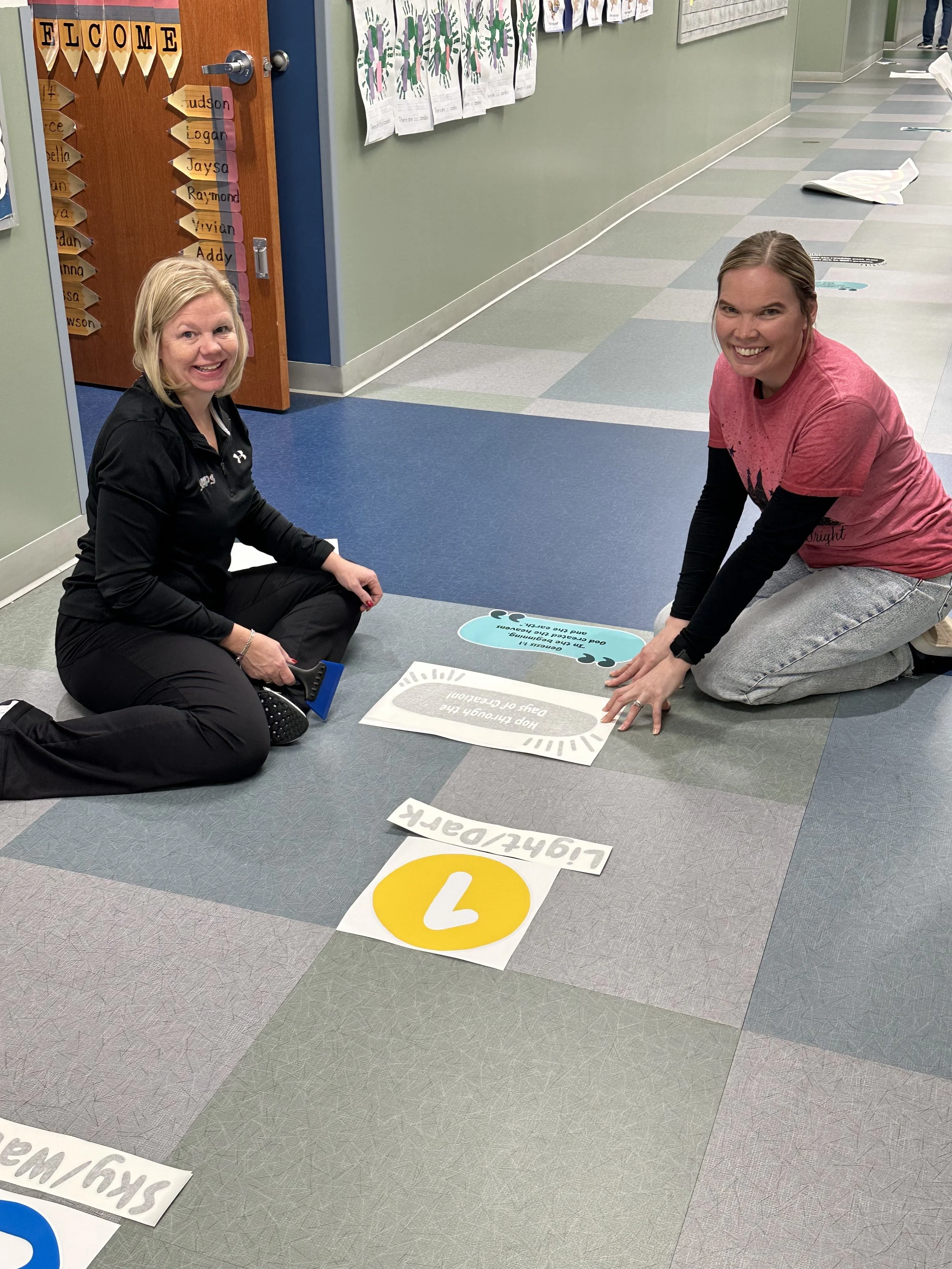
At Sacred Steps, this belief guides everything I create.
I don't design decals.
I design opportunities.
Opportunities for students to move.
To regulate.
To build confidence.
To practice executive functioning.
To encounter encouraging messages during ordinary moments of the school day.
Every hallway has the potential to become more than a hallway.
It can become part of a school's support system.
When we prepare our environments before students need them, we send a powerful message:
Every child belongs here.
Every child deserves support.
Every child deserves the opportunity to succeed.
That's the heart behind every Sacred Steps sensory path.
Try This Tomorrow
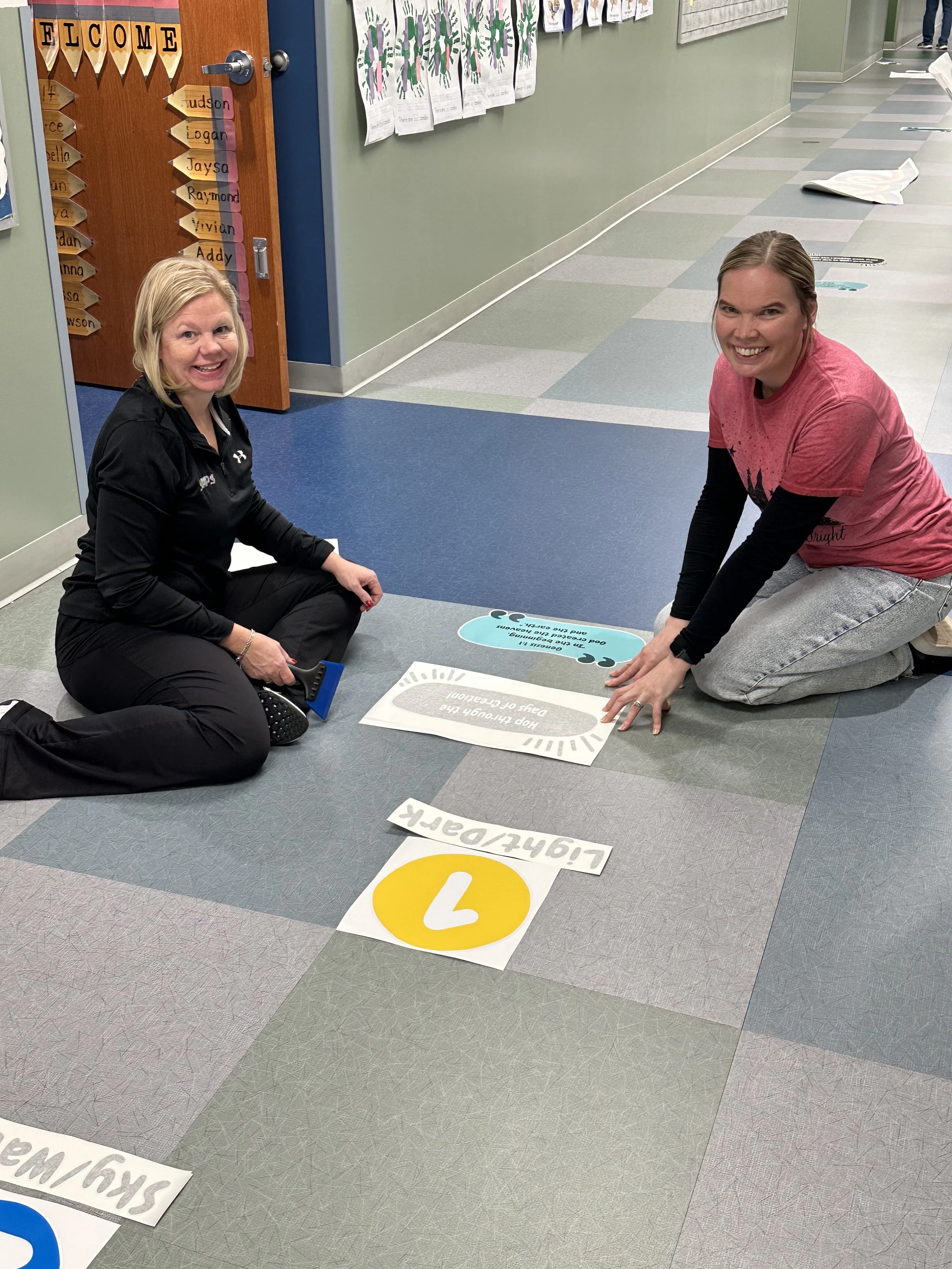
Take a walk through your school.
As you move from one hallway to the next, ask yourself these questions:
Where do students consistently struggle with transitions?
Which hallway feels rushed, chaotic, or stressful?
Where could movement naturally become part of the school day?
How could this space better support every child—not just the students who are already struggling?
Sometimes the greatest opportunities for change are hiding in spaces we walk through every day.
Want to Learn More?
Sacred Steps Sensory Paths are OT-designed movement experiences that help schools create environments where students can regulate, learn, and thrive. A school sensory pathway is one example of a proactive support that gives students access to movement before dysregulation interferes with learning.
Whether you're looking for a full hallway transformation, a Starter Set, portable sensory paths, calming stations, or faith-based movement experiences, every product is designed with one goal in mind:
Preparing school environments that support every child before they need help.
If you'd like help choosing the best fit for your school, I'd love to connect with you.
👉 Explore Sacred Steps Sensory Paths
About the Author
Trisha Klausing, OTR/L is a pediatric, school-based occupational therapist with more than 10 years of experience helping students develop the skills they need for success. She is the founder of Sacred Steps Sensory Paths, where she combines occupational therapy expertise with faith-filled and inclusive movement experiences designed to help schools create environments that support every child.
What Are Your Hallways Teaching?
Discover how schools can transform hallways into spaces that support self-regulation, executive functioning, character development, faith formation, and student success.
When we think about teaching, we naturally think about classrooms.
We think about lesson plans, curriculum, small groups, and instructional strategies.
But lately I've been asking a different question:
What are our hallways teaching?
Students spend hundreds of hours each year moving through hallways.
They walk to lunch.
They transition between classes.
They head to specials.
They travel to the library, gym, and office.
Those moments may seem small, but they add up.
And every space in a school sends a message.
The Hidden Curriculum of School Spaces
Whether we realize it or not, our physical environments are constantly teaching.
Classrooms teach academic content.
Libraries teach a love of reading.
Playgrounds teach cooperation and social skills.
But what about hallways?
For many schools, hallways are simply spaces students move through as quickly as possible.
But what if they could do more?
What if hallways became opportunities to reinforce the very lessons we want students to carry with them every day?
Hallways That Teach Character
Imagine students encountering messages about:
• Kindness
• Respect
• Perseverance
• Gratitude
• Responsibility
• Courage
Not once during a special assembly.
Not once during a character education lesson.
Every single day.
The power of repetition matters.
The messages students see repeatedly often become the messages they remember.
Hallways That Teach Self-Regulation
As a school-based occupational therapist, I know that many students need movement in order to learn.
Students are being asked to sit longer, focus longer, and manage increasingly complex expectations.
Purposeful movement can help students:
• Refocus attention
• Improve body awareness
• Reduce stress
• Increase readiness for learning
• Transition more successfully between activities
A hallway can become a place where students practice regulation skills instead of simply passing through.
Hallways That Teach Executive Functioning
Executive functioning skills are some of the most important skills students develop.
These include:
• Following directions
• Planning
• Organization
• Flexible thinking
• Self-monitoring
• Task initiation
Movement-based activities can provide opportunities for students to practice these skills in engaging and meaningful ways.
Hallways That Teach Faith
For Catholic and Christian schools, hallways offer another unique opportunity.
Faith formation doesn't only happen during religion class.
Students can be reminded throughout the day that they are:
✝️ Loved by God
✝️ Created with purpose
✝️ Called to serve others
✝️ Never alone
Bible stories, virtues, prayers, and faith-based movement activities can transform hallways into spaces that support both spiritual and physical development.
Making Every Square Foot Count
One of my favorite things about working with schools is helping them see possibilities they hadn't considered before.
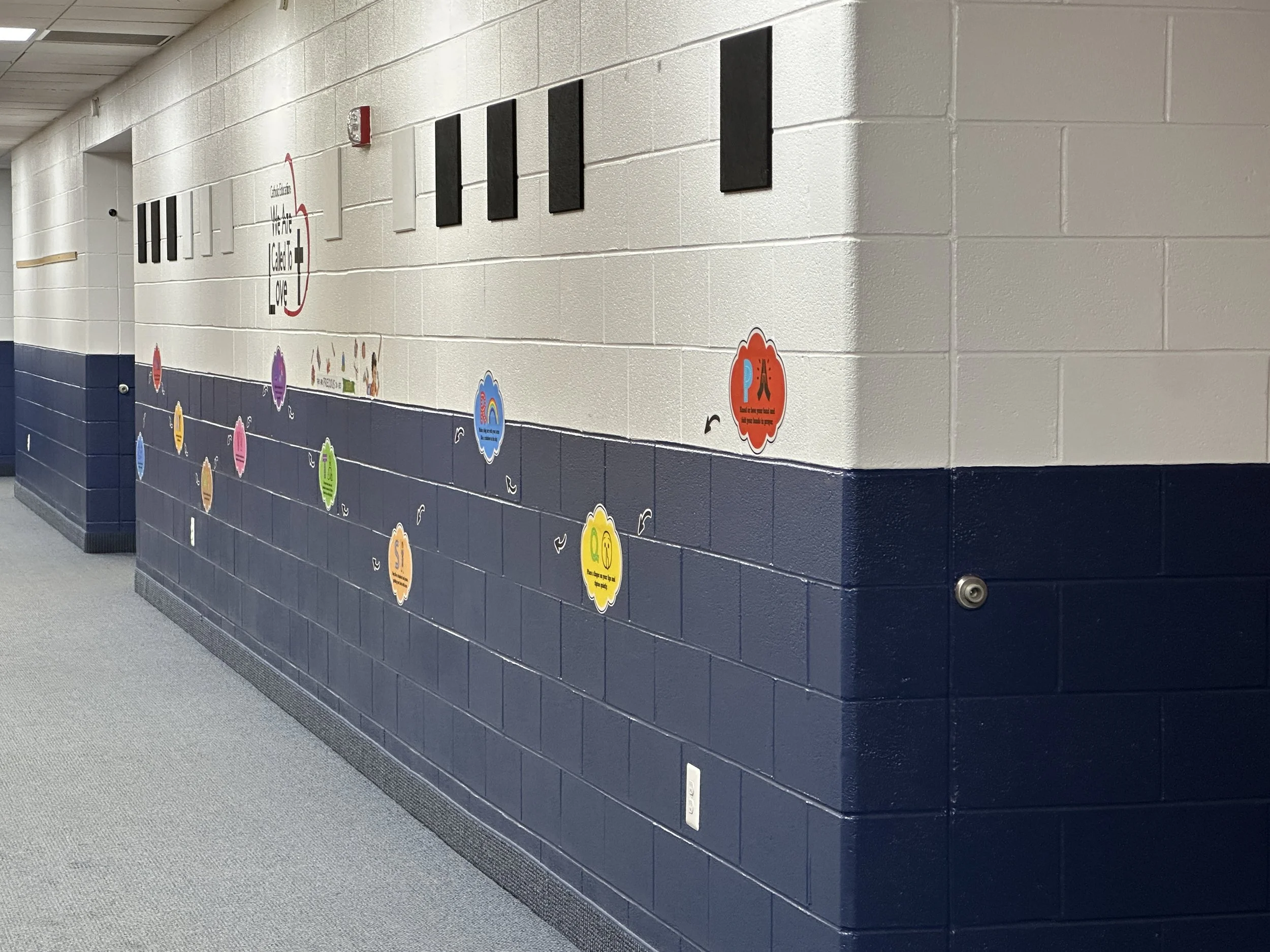
An empty hallway becomes a sensory path.
A blank wall becomes a calming station.
A transition area becomes a space for movement, reflection, and growth.
The best part?
Most schools already have the space they need.
They simply need to look at it differently.
A Simple Question
As you prepare for the upcoming school year, I encourage you to take a walk through your building and ask yourself:
What are our hallways teaching?
Are they simply moving students from one place to another?
Or are they reinforcing the values, skills, and lessons that matter most?
Because every space in a school teaches something.
The question is whether it teaches intentionally.
Would you like help envisioning what a "Hallway That Teaches" could look like in your school?
I'd be happy to create a complimentary mockup using a photo of your hallway, wall, library, counseling office, or common area.
Sometimes the most impactful student support starts with a space you're already walking past every day.