What Is a Sensory Pathway? Signs, Benefits & School Examples
What is a sensory pathway? Discover how sensory pathways work in schools, their benefits for student regulation and focus, real examples, and OT-designed ideas for creating one in your school.
If you've heard the term "sensory pathway" but aren't exactly sure what it means, you're not alone.
Over the past several years, sensory pathways have become increasingly popular in schools, therapy clinics, libraries, hospitals, and community spaces. But many educators and administrators are still wondering:
What is a sensory pathway, and why are so many schools adding them?
As a school-based occupational therapist, I'd love to help answer that question.
What Is a Sensory Pathway?
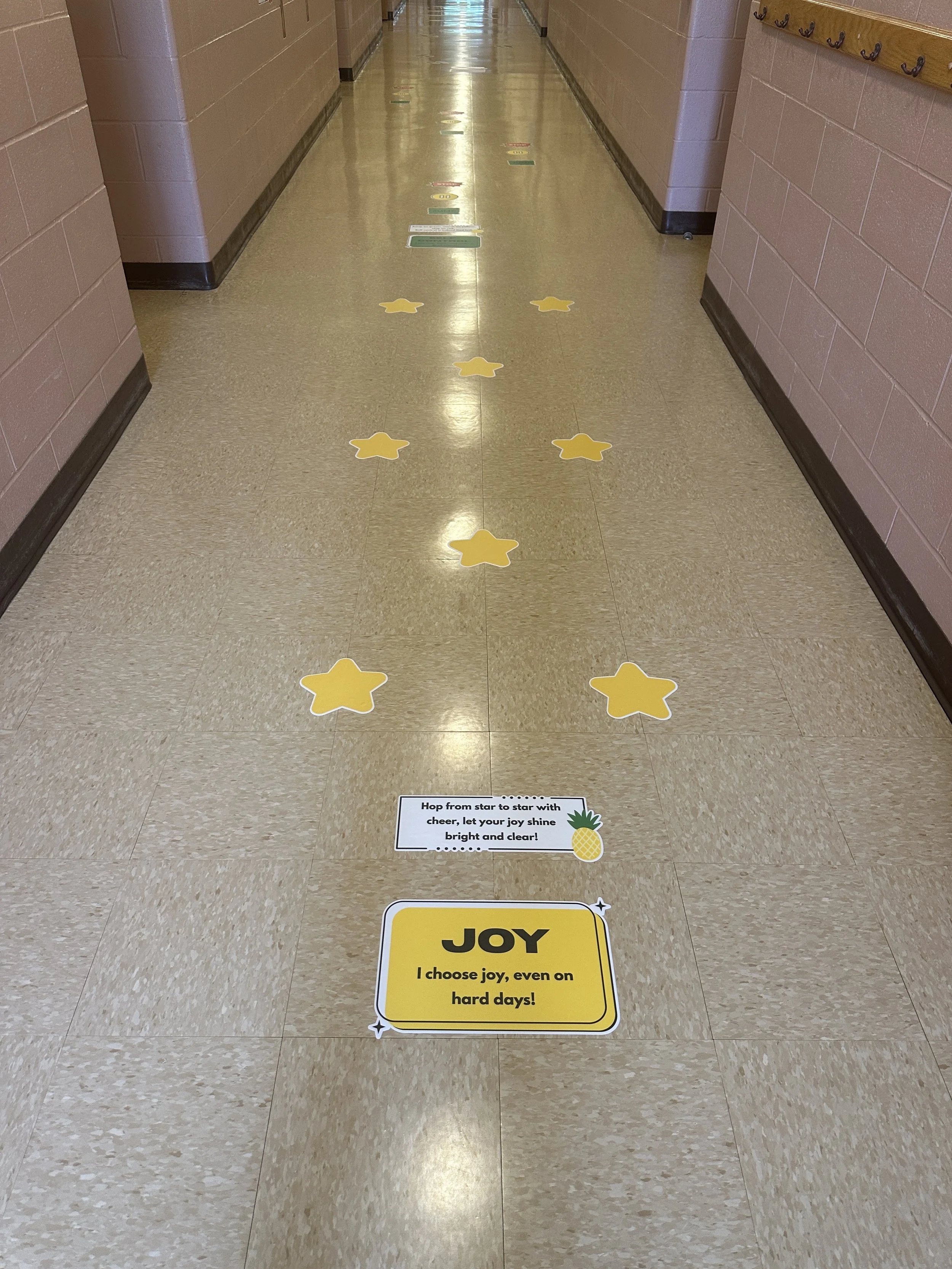
A sensory pathway is a series of intentional movement activities designed to help students move, regulate, refocus, and return to learning. In schools, sensory pathways can provide proactive movement opportunities throughout the day without requiring a dedicated sensory room.
Students might:
Hop
Jump
Balance
Stretch
March
Cross midline
Trace shapes
Practice deep breathing
Complete gross motor challenges
The goal is simple: provide structured movement opportunities that help students regulate their bodies and prepare for learning.
Many sensory pathways are installed in school hallways, allowing students to use them during transitions throughout the day.
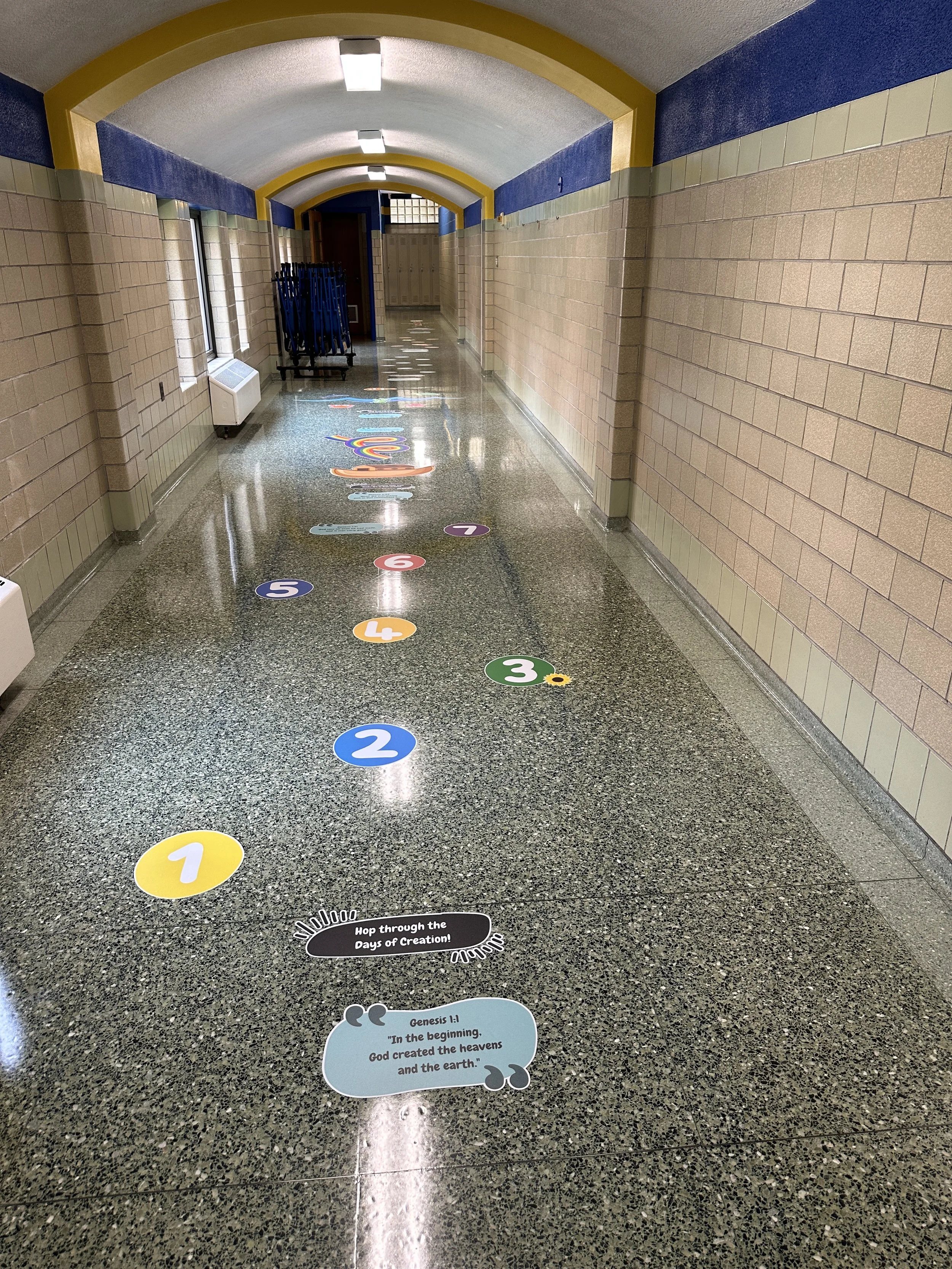
Sensory pathway for schools in Catholic elementary school hallway; https://www.sacredstepssensorypaths.com/store/p/bible-stories-sensory-path
Why Do Schools Use Sensory Pathways?
Movement plays a critical role in a child's ability to focus, regulate emotions, and participate successfully in the classroom.
When students are struggling with attention, self-regulation, anxiety, impulsivity, or transitions, a brief movement break can make a significant difference.
Schools often use sensory pathways to support:
Student Regulation
Sensory pathways provide students with opportunities to move their bodies in ways that help them feel more organized, calm, and ready to learn.
Executive Functioning Skills
Many pathways include activities that encourage students to follow directions, sequence movements, maintain attention, and practice self-control.
Positive Transitions
Transitions can be challenging for many students. Sensory pathways create a structured and engaging way for students to move from one activity to another.
Indoor Movement Opportunities
Weather doesn't always cooperate. Sensory pathways give students a way to move throughout the day, even when outdoor activities aren't possible.
Inclusive Support
One of the best things about sensory pathways is that they benefit all students. While they can be particularly helpful for students with ADHD, anxiety, autism, sensory processing differences, or executive functioning challenges, every child can benefit from purposeful movement.
Where Are Sensory Pathways Installed?
One of the reasons sensory pathways have become so popular is their flexibility.
Schools are installing sensory pathways in:
Hallways
Libraries
Counseling offices
Calming corners
Early childhood wings
Resource rooms
Common areas
Church and parish spaces
Many schools also incorporate wall-based sensory activities when floor space is limited. Other schools choose portable sensory paths that can be rolled out when needed and stored away when space is limited.
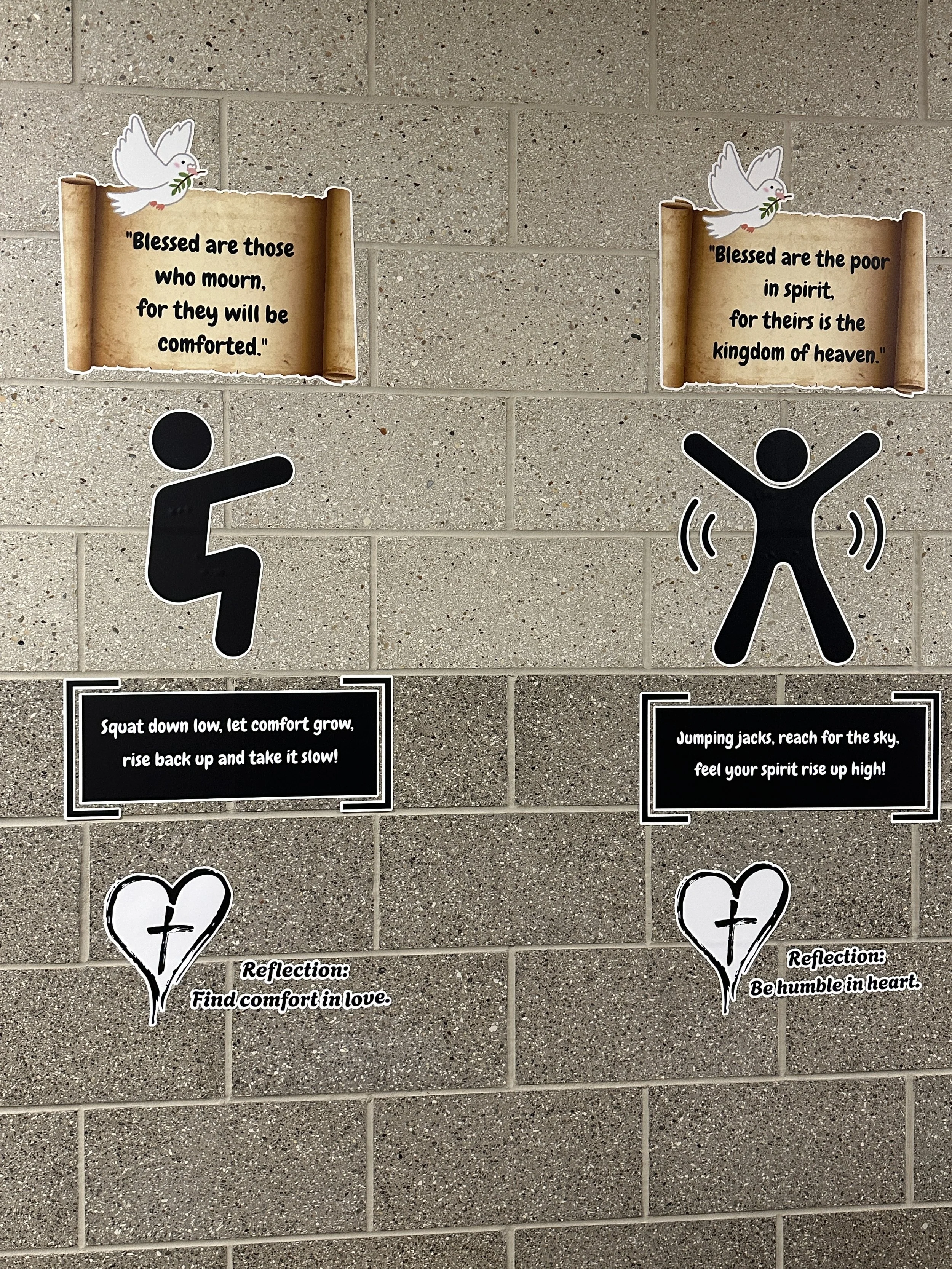
Limited floor space? A wall sensory path is the perfect solution. https://www.sacredstepssensorypaths.com/store/p/beatitudes-blessings-wall-sensory-path
Examples of Sensory Pathway Activities
Every sensory pathway is unique, but common activities include:
Animal walks
Hopping patterns
Balance challenges
Cross-body movements
Deep breathing exercises
Visual tracking activities
Gross motor sequences
Mindfulness prompts
These activities encourage students to move in ways that support both physical and cognitive development.
What Makes Faith-Based Sensory Pathways Different?
While many sensory pathways focus solely on movement, some schools are looking for ways to combine movement with meaningful learning opportunities.
This is especially true in Catholic and Christian schools.
Faith-based sensory pathways allow students to engage with:
Bible stories
Scripture
Catholic virtues
The Sacraments
Prayer
Religious education concepts
At Sacred Steps, some of our most popular faith-based options include the Bible Stories Sensory Path, the Who God Says I Am Path, and the Sacred Sacraments Path, each designed to combine purposeful movement with meaningful faith formation.
As students move through the activities, they are not only supporting regulation and focus but also reinforcing their faith in a way that feels active, engaging, and memorable.
How Sacred Steps Sensory Paths Are Different
As both a school-based occupational therapist and a Catholic business owner, I wanted to create something that supported the whole child.
That's why Sacred Steps combines purposeful movement with faith formation.
Our sensory pathways help students:
Regulate their bodies
Improve focus and attention
Strengthen executive functioning skills
Support positive behavior
Reinforce Catholic identity
Engage with Scripture and faith-based concepts
To our knowledge, Sacred Steps remains the only faith-based sensory path company specifically designed for Catholic and Christian schools.
Is a Sensory Pathway Right for Your School?
If your school is looking for ways to:
Support student regulation
Improve transitions
Encourage movement throughout the day
Create more purposeful learning spaces
Strengthen Catholic identity
A sensory pathway may be an excellent fit.
The best part? Many schools already have the perfect space.
An empty hallway.
A blank wall.
A transition area that could become something more.
Schools often begin with a full hallway path, a portable path, or even a smaller starter set before expanding over time.
Sometimes the most impactful school improvement projects don't require additional space—just a new way of thinking about the space you already have.
If you're interested in exploring what a sensory pathway could look like in your school, I'd be happy to create a complimentary mockup using photos of your space. You can explore our faith-based sensory paths, portable paths, and starter sets here: https://www.sacredstepssensorypaths.com/