Why the Best School Supports Are in Place Before Students Need Them
Learn why proactive sensory supports help schools create calmer, more successful learning environments before behavior challenges begin.
Every summer, schools across the country prepare for a new year.
Teachers organize classrooms.
Custodians wax floors and freshen hallways.
Administrators finalize schedules and class lists.
Therapists prepare materials and review student needs.
Everyone works hard to make sure students walk into a welcoming environment on the very first day of school.
But one important question often gets overlooked:
Are we preparing our school environments to support every child before they need help?
As a school-based occupational therapist, this question has shaped the way I think about schools for more than a decade.
Because after working with hundreds of students, I've learned something important:
The most effective supports are proactive—not reactive.
We Prepare for Success in Every Other Area
Think about everything schools do before students arrive.
Teachers don't wait until the first day of school to create lesson plans.
Administrators don't wait until winter to test the heating system.
Custodians don't wait until the hallways become dirty before cleaning them.
We prepare because we know preparation creates success.
Yet when it comes to student regulation, movement, and emotional well-being, it's easy to wait until challenges appear before adding supports.
What if we approached those needs differently?
What if we intentionally designed school environments that quietly supported students all day long?
What Occupational Therapy Has Taught Me
As an occupational therapist, I know that behavior is communication.
Many students who appear distracted, anxious, impulsive, or overwhelmed aren't choosing to struggle.
Often, their nervous system is telling us something.
Their bodies may need movement.
Their brains may need a predictable routine.
Their sensory systems may need opportunities to regulate before learning can happen.
While we can't eliminate every challenge, we can build environments that make success more likely.
That's why I believe schools should support students long before they're struggling.
The Hallway Is One of the Most Underused Teaching Spaces in a School
When most people think about learning, they picture a classroom.
I picture the hallway.
Every student walks through it multiple times every single day.
Before lunch.
After recess.
Between specials.
On the way to intervention.
Heading back to class.
Over the course of a school year, those few minutes add up to hundreds of opportunities.
What if those transitions became moments to practice self-regulation?
To strengthen executive functioning?
To build confidence?
To remind students they are loved, capable, brave, and never alone?
Hallways aren't just places students pass through.
They can become places where students grow.
A Proactive School Environment Benefits Every Child
One of the biggest misconceptions about sensory supports is that they're only for students receiving special education services.
In reality, thoughtfully designed sensory supports benefit everyone.
The student who feels anxious before a test.
The child who struggles after recess.
The student who simply needs movement before sitting for another lesson.
Even the students who appear to be doing just fine benefit from opportunities to move, regulate, and reset throughout the day.
That's what makes sensory paths such a powerful Tier 1 support.
They're available to every student.
No referral.
No paperwork.
No waiting.
Just an environment intentionally designed to help children succeed.
Because when we prepare the environment, we're preparing students for success.
Preparing School Environments That Support Every Child
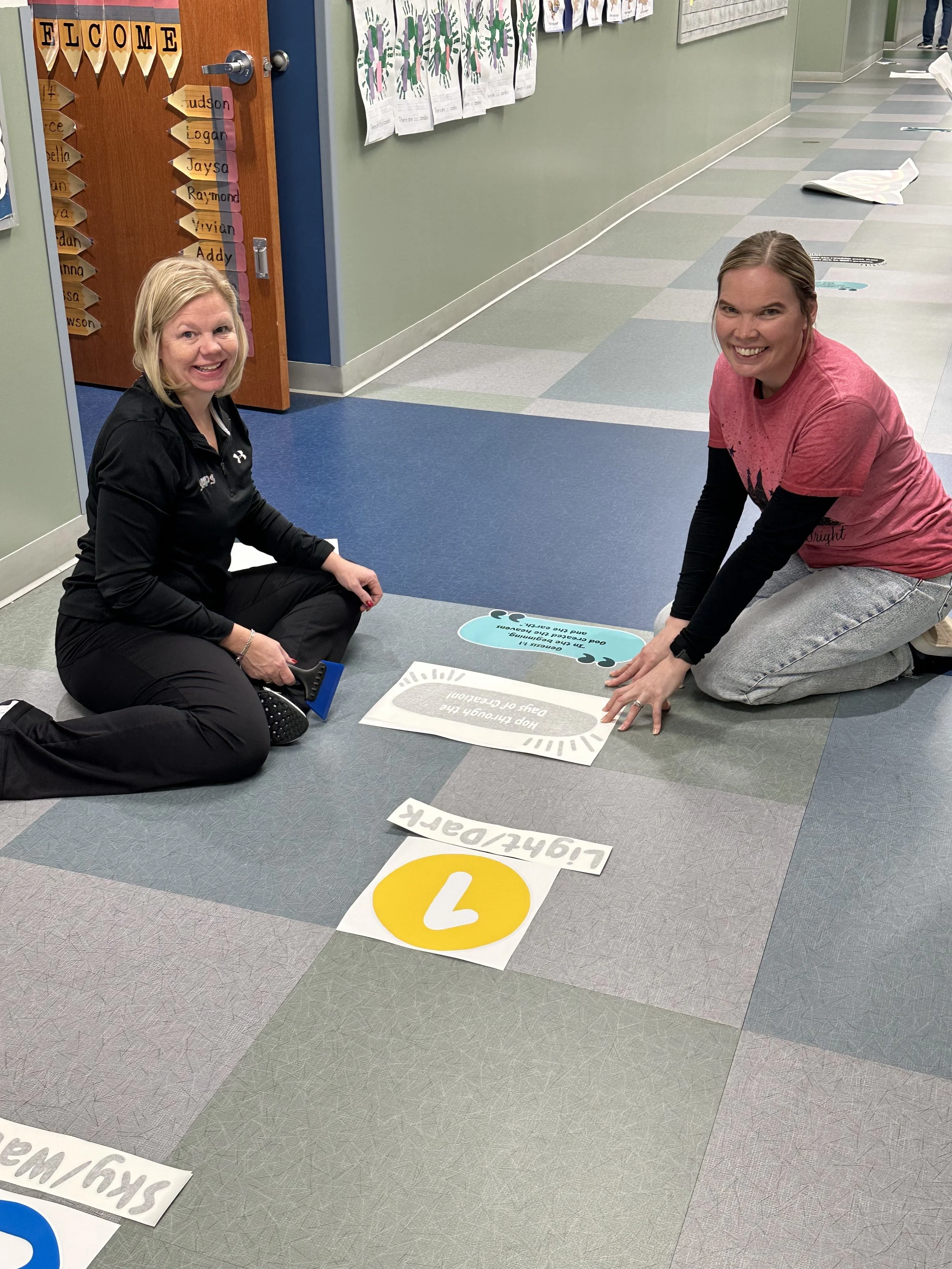
At Sacred Steps, this belief guides everything I create.
I don't design decals.
I design opportunities.
Opportunities for students to move.
To regulate.
To build confidence.
To practice executive functioning.
To encounter encouraging messages during ordinary moments of the school day.
Every hallway has the potential to become more than a hallway.
It can become part of a school's support system.
When we prepare our environments before students need them, we send a powerful message:
Every child belongs here.
Every child deserves support.
Every child deserves the opportunity to succeed.
That's the heart behind every Sacred Steps sensory path.
Try This Tomorrow
Take a walk through your school.
As you move from one hallway to the next, ask yourself these questions:
Where do students consistently struggle with transitions?
Which hallway feels rushed, chaotic, or stressful?
Where could movement naturally become part of the school day?
How could this space better support every child—not just the students who are already struggling?
Sometimes the greatest opportunities for change are hiding in spaces we walk through every day.
Want to Learn More?
Sacred Steps Sensory Paths are OT-designed movement experiences that help schools create environments where students can regulate, learn, and thrive. A school sensory pathway is one example of a proactive support that gives students access to movement before dysregulation interferes with learning.
Whether you're looking for a full hallway transformation, a Starter Set, portable sensory paths, calming stations, or faith-based movement experiences, every product is designed with one goal in mind:
Preparing school environments that support every child before they need help.
If you'd like help choosing the best fit for your school, I'd love to connect with you.
👉 Explore Sacred Steps Sensory Paths
About the Author
Trisha Klausing, OTR/L is a pediatric, school-based occupational therapist with more than 10 years of experience helping students develop the skills they need for success. She is the founder of Sacred Steps Sensory Paths, where she combines occupational therapy expertise with faith-filled and inclusive movement experiences designed to help schools create environments that support every child.
Why Movement Belongs in Children's Ministry
Discover how purposeful movement helps children engage in worship, Sunday School, VBS, and sensory-friendly ministry through OT-designed faith-based pathways.
The Sacred Steps Difference: An OT Perspective
When we think about helping children grow in their faith, we often think about Bible stories, worship songs, crafts, and prayer.
Those are all wonderful ways to teach children about God's love.
But what if one of the most effective teaching tools has been with us all along?
Movement.
As a pediatric occupational therapist, I've spent my career helping children learn through movement. And over the years, I've come to realize something important:
Children don't stop needing movement when they walk through the doors of a church.
In fact, many children are better able to listen, participate, and remember when movement is intentionally included in the experience.
God Designed Children to Move
Children learn differently than adults.
They wiggle.
They jump.
They explore.
They touch.
They experience the world through their bodies.
That's not something to eliminate.
It's something we can embrace.
Movement isn't a distraction from learning.
For many children, movement is how learning happens.
The same is true when they're learning about God.
Every Transition Is a Teaching Opportunity
Think about the journey a child takes on a typical Sunday morning.
Walking from the parking lot.
Heading to the children's ministry room.
Moving between activities.
Waiting for parents after class.
Most of those moments are simply transitions.
But what if they became part of the lesson?
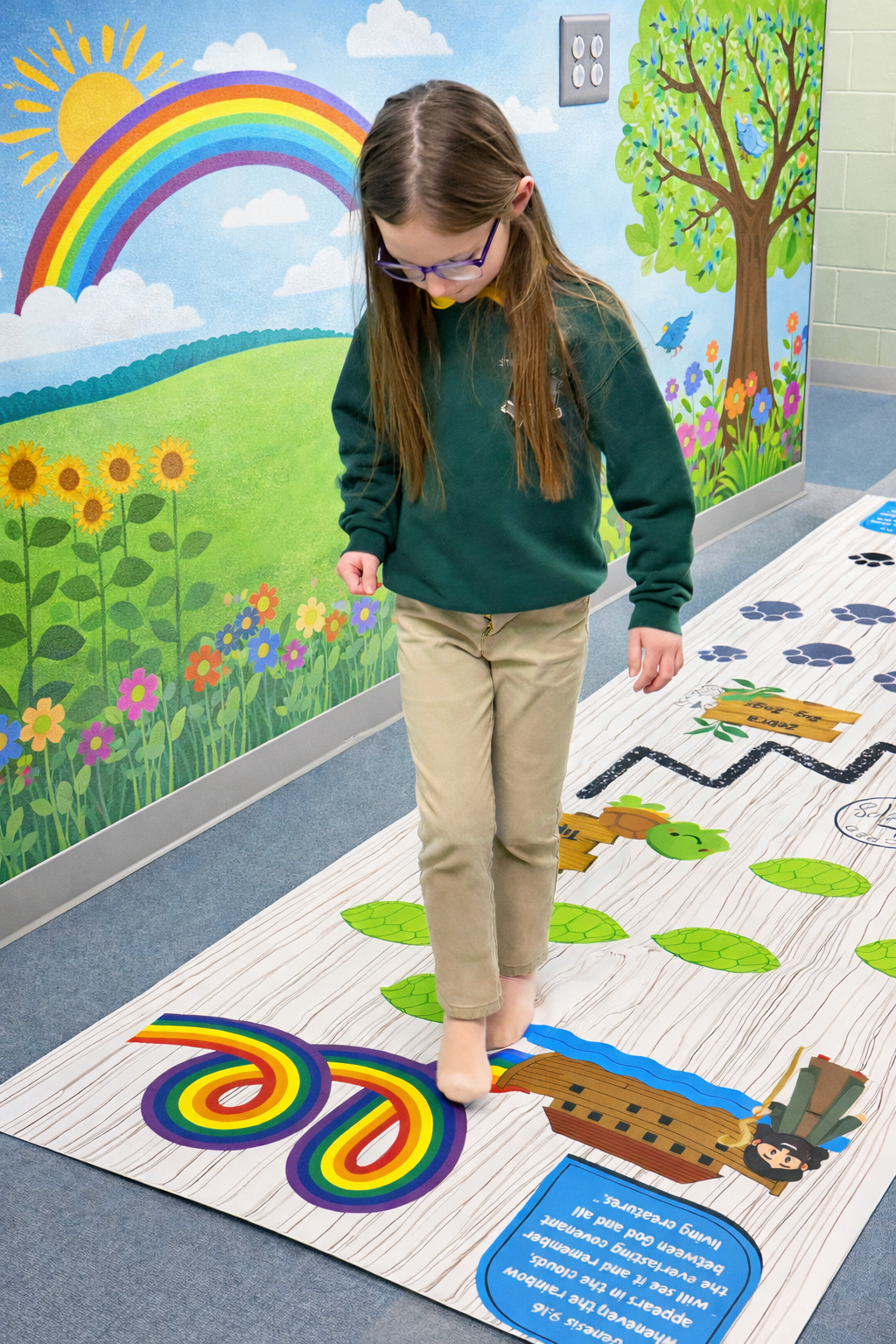
Imagine children hopping through the Days of Creation.
Following Noah's Ark.
Practicing calming breaths before prayer.
Reciting Scripture while moving from station to station.
The transition itself becomes meaningful.
Movement Creates Welcome
Every church wants families to feel welcomed.
For some children, especially those with sensory processing differences, autism, ADHD, or anxiety, sitting still for long periods can be difficult.
Purposeful movement offers another way to participate.
It says:
"You belong here, too."
Movement pathways can become valuable resources for:
Sensory-friendly Masses or worship services
Children's Church
Sunday School
Religious Education
Vacation Bible School
Family ministry events
Special needs ministries
Rather than asking children to suppress their need to move, we can give them a purposeful way to move while remaining engaged.
Why Portable Pathways Work So Well
Churches are wonderfully flexible spaces.
One classroom may host Sunday School in the morning, Vacation Bible School during the summer, and a parish meeting that evening.
That's why I created portable pathways.
Unlike permanent installations, portable pathways can be:
Rolled out wherever they're needed
Shared between classrooms
Used in fellowship halls
Brought to parish events
Stored away in minutes
One pathway can serve an entire ministry.
The Sacred Steps Difference
When I searched for commercially produced movement pathways rooted in the Christian and Catholic faith, I couldn't find any.
So I created them.
Every Sacred Steps pathway combines purposeful movement with Scripture, Bible stories, virtues, and faith-filled messages.
They're designed not simply to keep children busy.
They're designed to help children:
Move with purpose.
Regulate their bodies.
Engage more fully.
Experience God's love in another meaningful way.
Because movement and faith belong together.
Imagine This...
Imagine a child arriving at church excited to follow Noah's Ark.
Imagine another quietly taking deep breaths before entering Mass.
Imagine siblings practicing Bible stories while they wait for class to begin.
Imagine a family saying,
"My child can't wait to come to church."
Sometimes, the smallest changes create the biggest moments.
A Final Thought
As ministry leaders, teachers, catechists, and volunteers, we work hard to help children know and love Jesus.
Movement isn't separate from that mission.
It can become another way children encounter Him.
Because every hallway teaches something.
Why not let it teach faith?
Call to Action
If you're looking for a new way to engage children this fall, explore our collection of OT-designed portable movement pathways rooted in the Christian and Catholic faith.
Whether you're serving a parish, church, children's ministry, or sensory-friendly worship program, we'd love to help you create a space where every step points children toward Christ.
Trisha Klausing, MOT, OTR/L is a practicing pediatric occupational therapist and the founder of Sacred Steps Sensory Paths. She designs OT-informed movement experiences that help children regulate, learn, and thrive in schools, therapy clinics, churches, childcare centers, and community spaces.