How to Set Up a Sensory Pathway in Your School
Step-by-step guidance from a school-based OT on planning, placing, and installing a sensory pathway — plus what actually works.
If you've been researching sensory pathways for schools, you've probably noticed they're appearing in elementary schools, Catholic schools, therapy clinics, and early childhood centers across the country.
But what exactly is a sensory pathway?
More importantly...
Do they actually work?
As a practicing school-based occupational therapist for more than 10 years, I've seen firsthand how purposeful movement can transform a student's ability to learn, focus, regulate emotions, and participate in the school day.
A sensory pathway isn't simply colorful hallway décor. When thoughtfully designed, it becomes an extension of the classroom—a place where movement supports learning, self-regulation, executive functioning, and even school culture.
This guide will help you understand what sensory pathways are, who benefits from them, and how to choose the right one for your school.
What Is a Sensory Pathway?
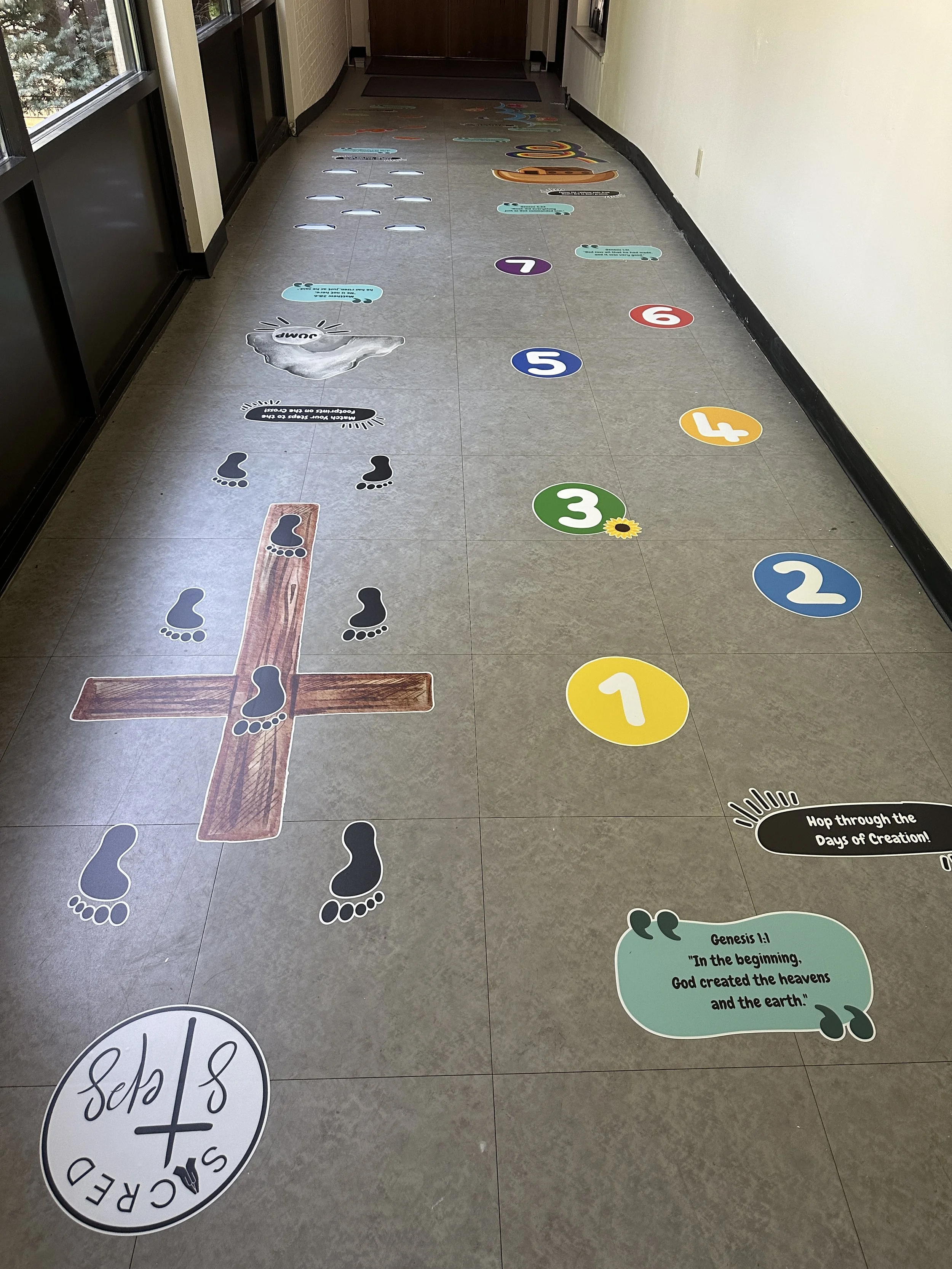
A sensory pathway is a series of movement-based activities placed throughout a hallway or learning space that encourages children to move with purpose.
Students may be asked to:
Jump
Balance
Hop
Stretch
Cross midline
Practice bilateral coordination
Follow visual directions
Complete calming breathing activities
These simple movements activate multiple body systems while giving students an opportunity to reset before returning to learning.
Unlike a playground or PE class, sensory pathways provide quick movement opportunities throughout the school day during natural transitions.
Why Schools Are Installing Sensory Pathways
Today's students spend much of their day sitting.
Research continues to show that movement improves:
Attention
Learning readiness
Emotional regulation
Executive functioning
Classroom participation
Instead of asking students to simply "sit still," sensory pathways acknowledge an important truth:
Movement helps children learn.
Schools are incorporating sensory pathways into:
Hallways
Entryways
Counseling offices
Resource rooms
Libraries
Early childhood wings
Therapy spaces
Waiting areas
Faith formation areas
The goal isn't to interrupt learning.
It's to improve it.
Who Benefits From a School Sensory Pathway?
One of the biggest misconceptions is that sensory pathways are only for students with special needs.
In reality, every child benefits from movement.
Sensory pathways can support:
Students who need movement breaks
Some children simply learn better after moving.
A short hallway activity may improve focus far more effectively than repeatedly reminding a child to stay seated.
Students with ADHD
Movement can improve attention, body awareness, impulse control, and regulation throughout the school day.
Students with autism
Many autistic students benefit from predictable movement routines and opportunities for sensory regulation between activities.
Students experiencing anxiety
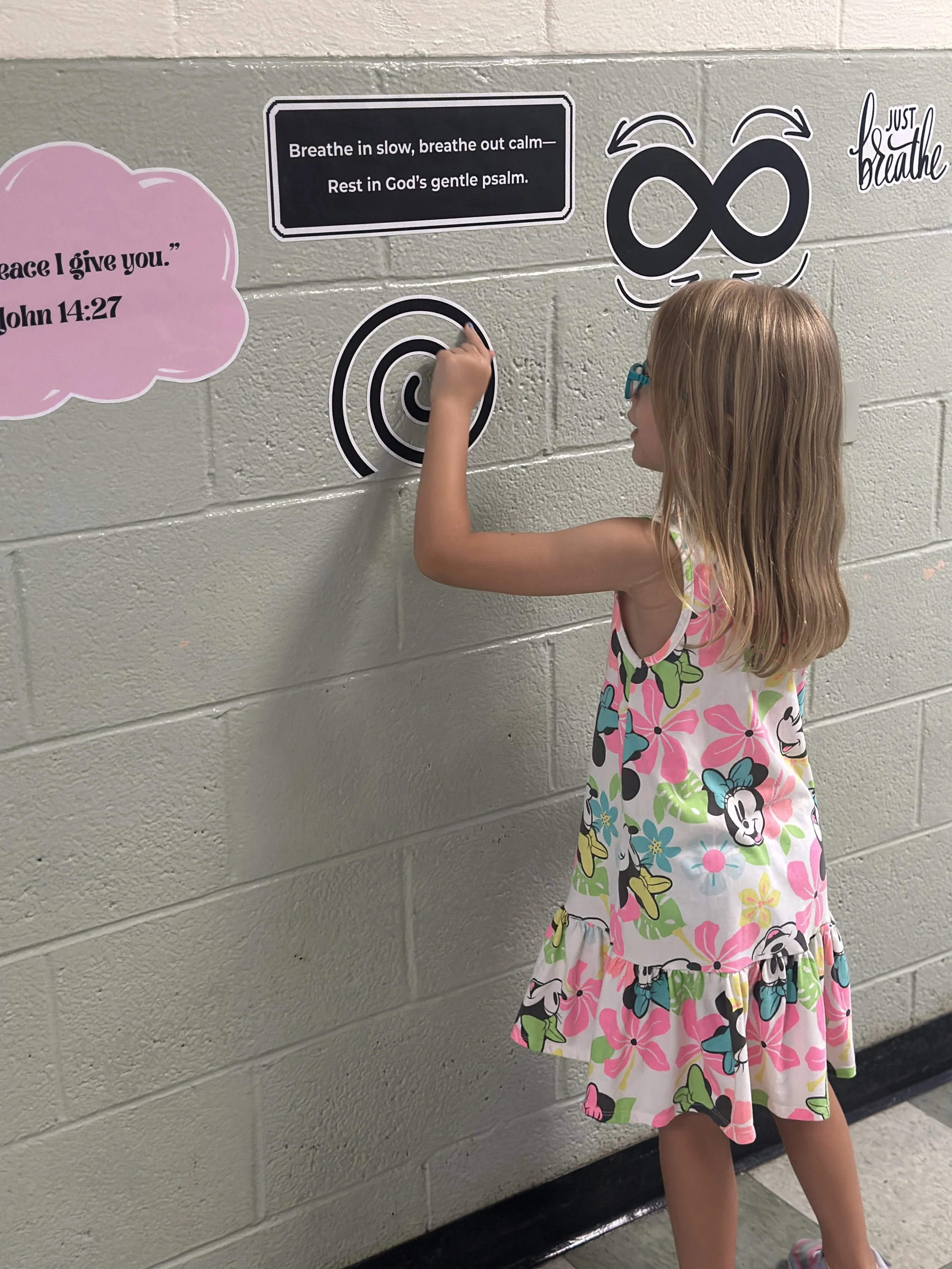
Deep breathing, heavy work, and rhythmic movement may help students feel calmer before entering challenging academic or social situations.
Entire classrooms
Teachers often report smoother transitions and improved readiness after classes complete a sensory pathway together.
Benefits of Sensory Pathways
Schools often notice improvements in:
Better transitions
Instead of chaotic hallway movement, students have a structured activity to complete while moving between classrooms.
Improved focus
Movement increases alertness and prepares the brain for learning.
Self-regulation
Students begin recognizing when they need movement before becoming overwhelmed.
Executive functioning
Many pathways challenge planning, sequencing, working memory, and attention.
Positive school culture
Hallways become engaging spaces that reinforce kindness, perseverance, responsibility, faith, or other school values.
Choosing the Right Sensory Pathway
Not every pathway is the same.
When comparing options, ask yourself:
What skills are we trying to support?
Examples include:
Self-regulation
Executive functioning
School readiness
Faith formation
Character education
Motor coordination
Emotional regulation
Who will use it?
Consider:
Preschool
Elementary
Middle school
Therapy students
Entire school
Where will it be installed?
Popular locations include:
Main hallways
Classroom hallways
Counseling offices
Libraries
Waiting rooms
Church hallways
Religious education spaces
Is it durable?
School hallways receive heavy foot traffic.
Choose commercial-quality materials designed specifically for educational settings.
Faith-Based vs. Traditional Sensory Pathways
Many schools are looking for ways to reinforce learning beyond the classroom.
Faith-based sensory pathways combine movement with Scripture, prayer, virtues, sacraments, or Bible stories, creating opportunities for students to encounter their faith throughout the school day.
Instead of simply decorating hallways, schools can transform them into meaningful spaces that encourage movement while reinforcing Catholic identity.
How Occupational Therapy Influences Great Design
As an occupational therapist, I approach every sensory pathway differently than a graphic designer.
Every movement should have a purpose.
Activities should intentionally support:
Bilateral coordination
Crossing midline
Motor planning
Vestibular input
Proprioceptive input
Executive functioning
Self-regulation
Beautiful design matters—but purposeful movement matters even more.
Frequently Asked Questions
How long does installation take?
Most floor decals can be installed in just a few hours depending on the size of the project.
Are sensory pathways only for elementary schools?
No.
Many middle schools, counseling departments, therapy clinics, churches, and early childhood programs successfully use movement pathways.
Do sensory pathways require a lot of space?
Not at all.
They can be customized for long hallways, short corridors, classrooms, counseling spaces, or even portable options.
Can they be cleaned?
Yes.
Commercial-quality decals are designed for regular school cleaning procedures when installed and maintained according to manufacturer recommendations.
Try This Tomorrow
Take a walk through your school and look at your hallways with fresh eyes.
Ask yourself:
Where do students tend to become restless during transitions?
Which hallway could become a purposeful movement opportunity?
Is there a space that could reinforce your school's mission, values, or faith while helping students regulate and refocus?
Sometimes the most powerful learning spaces aren't classrooms at all—they're the places students pass through every day.
Want to Learn More?
At Sacred Steps Sensory Paths, every product is designed by a practicing school-based occupational therapist to support movement, learning, regulation, and school culture.
Whether you're looking for faith-based sensory pathways, universal movement paths, calming spaces, or portable options, I'd love to help you find the right fit for your school.
I also offer complimentary hallway mock-ups so you can visualize how your space could be transformed before placing an order.
Explore the collection or contact me to start planning your hallway transformation today.
About the Author
Trisha Klausing, OTR/L is a practicing school-based occupational therapist and the founder of Sacred Steps Sensory Paths. She designs movement-rich environments that help schools support self-regulation, executive functioning, learning, and faith formation. Sacred Steps products are used in schools, churches, clinics, and educational settings across 25 states and Canada.