No Hallway? No Problem. How Portable Sensory Paths Bring Movement Anywhere
Learn how portable sensory paths help schools bring movement, self-regulation, and executive functioning support to any space—without permanent installation.
As schools prepare for a new year, many educators are looking for simple, effective ways to help students feel calm, focused, and ready to learn.
Sensory paths have become an increasingly popular way to provide purposeful movement throughout the school day. Traditionally, these paths are installed in hallways where students can hop, stretch, balance, and regulate their bodies before entering the classroom.
But what if your school doesn't have a long hallway?
What if you're looking for something that can move from classroom to classroom?
Or perhaps you'd like to introduce movement supports before committing to a permanent installation.
That's exactly why I created portable sensory paths.
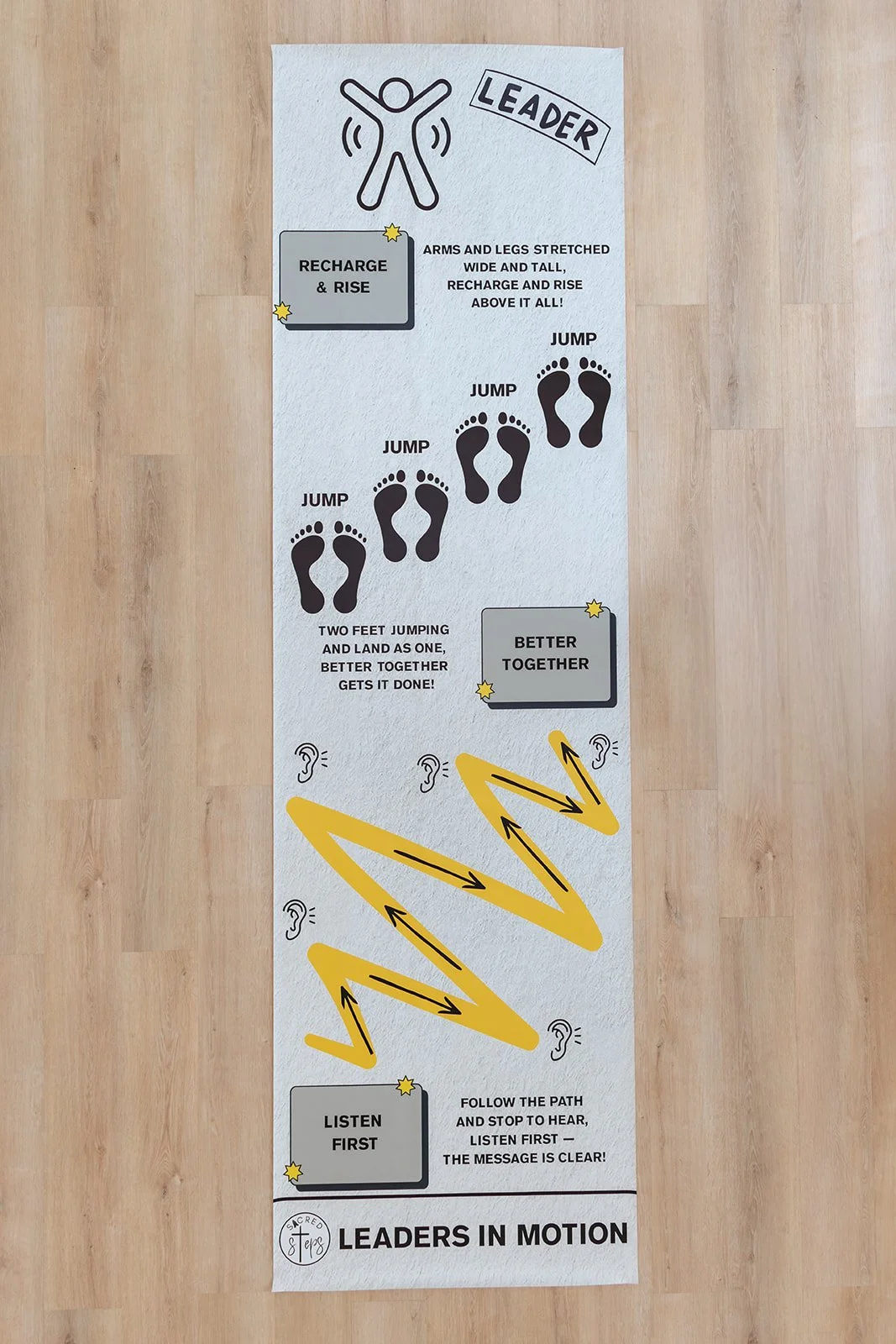
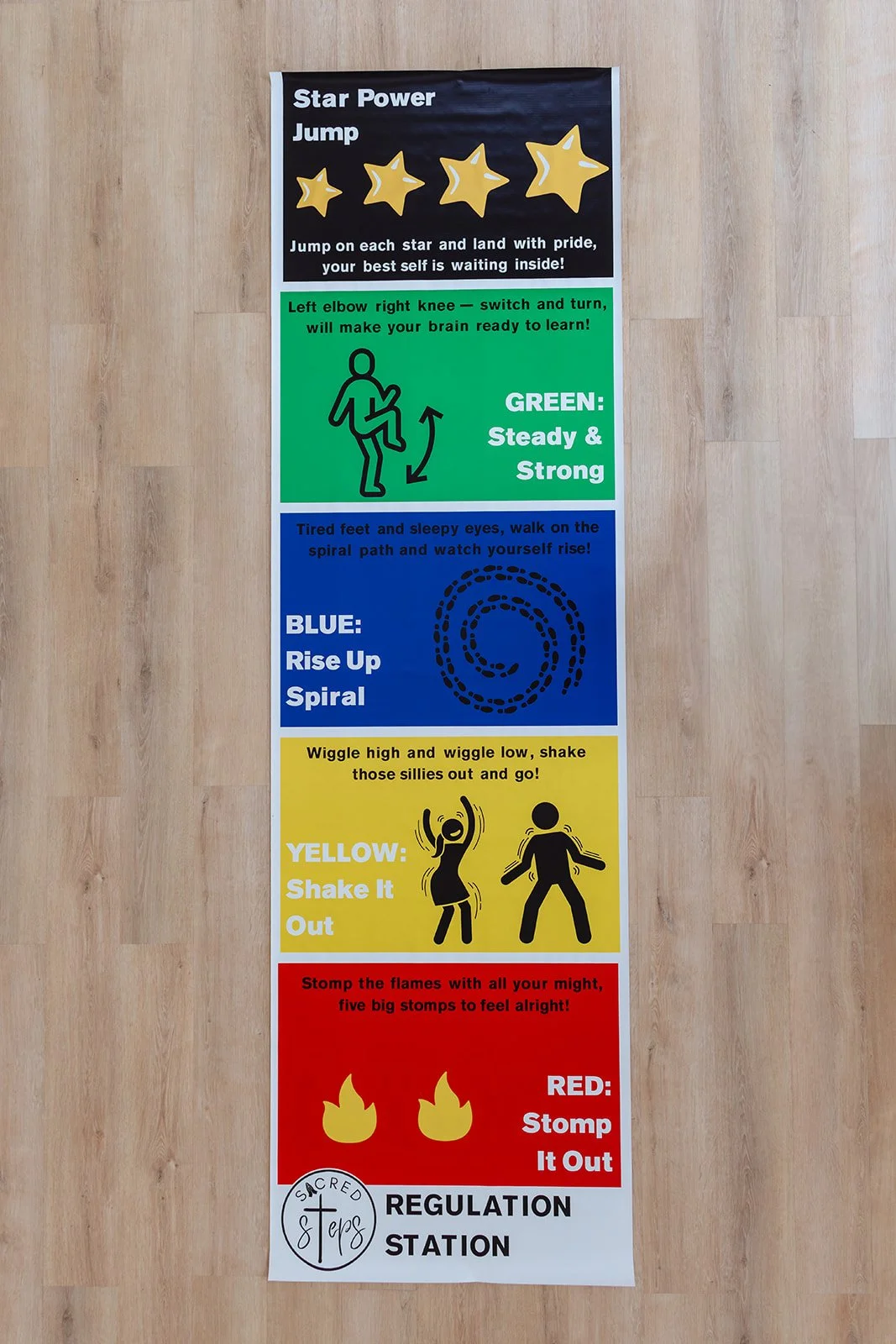
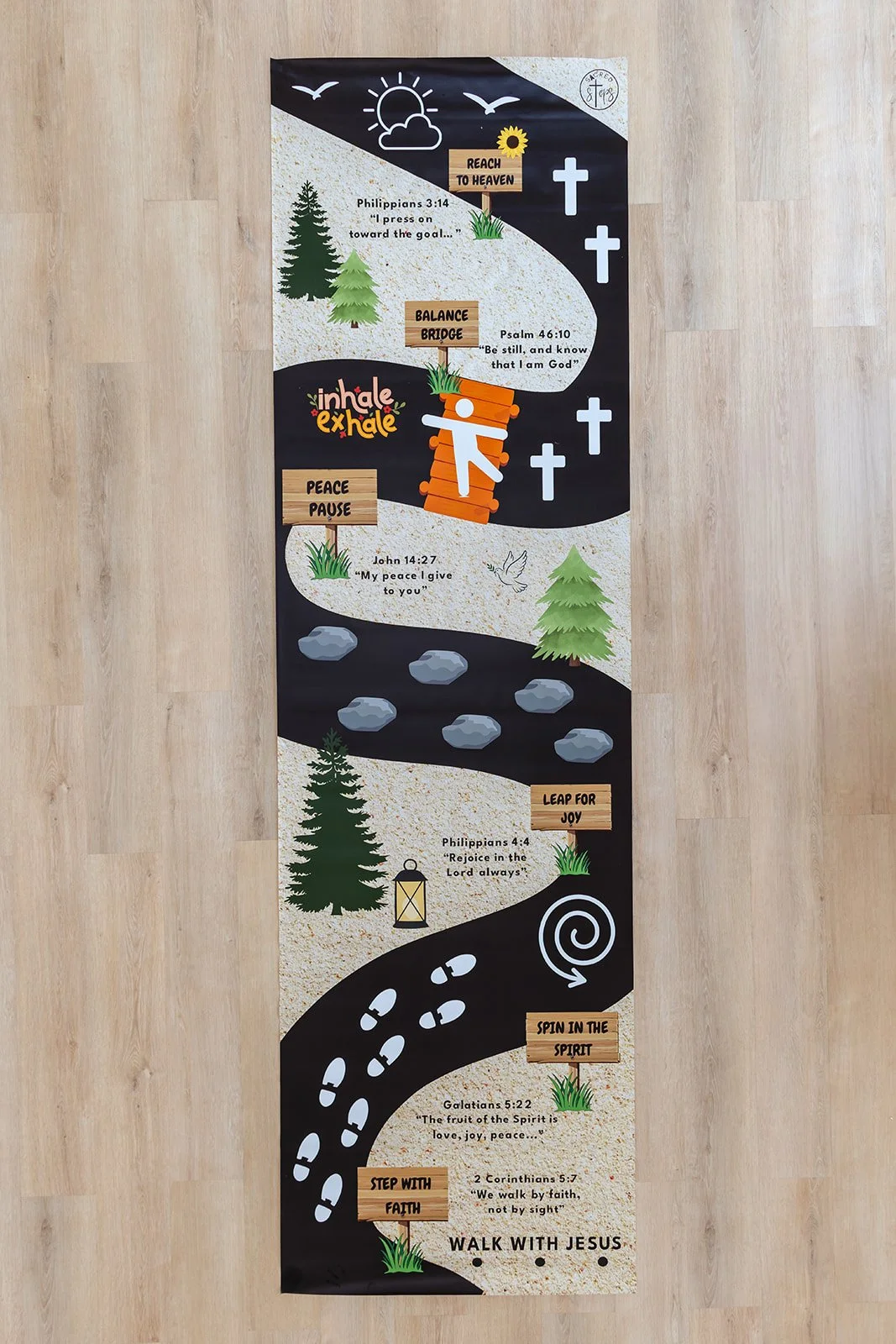
Not Every School Has the Perfect Hallway
Permanent hallway sensory paths are wonderful—but they aren't the right fit for every school.
Some schools have narrow hallways.
Some have carpet instead of tile.
Some share facilities with other organizations.
Others simply want the flexibility to move resources throughout the building.
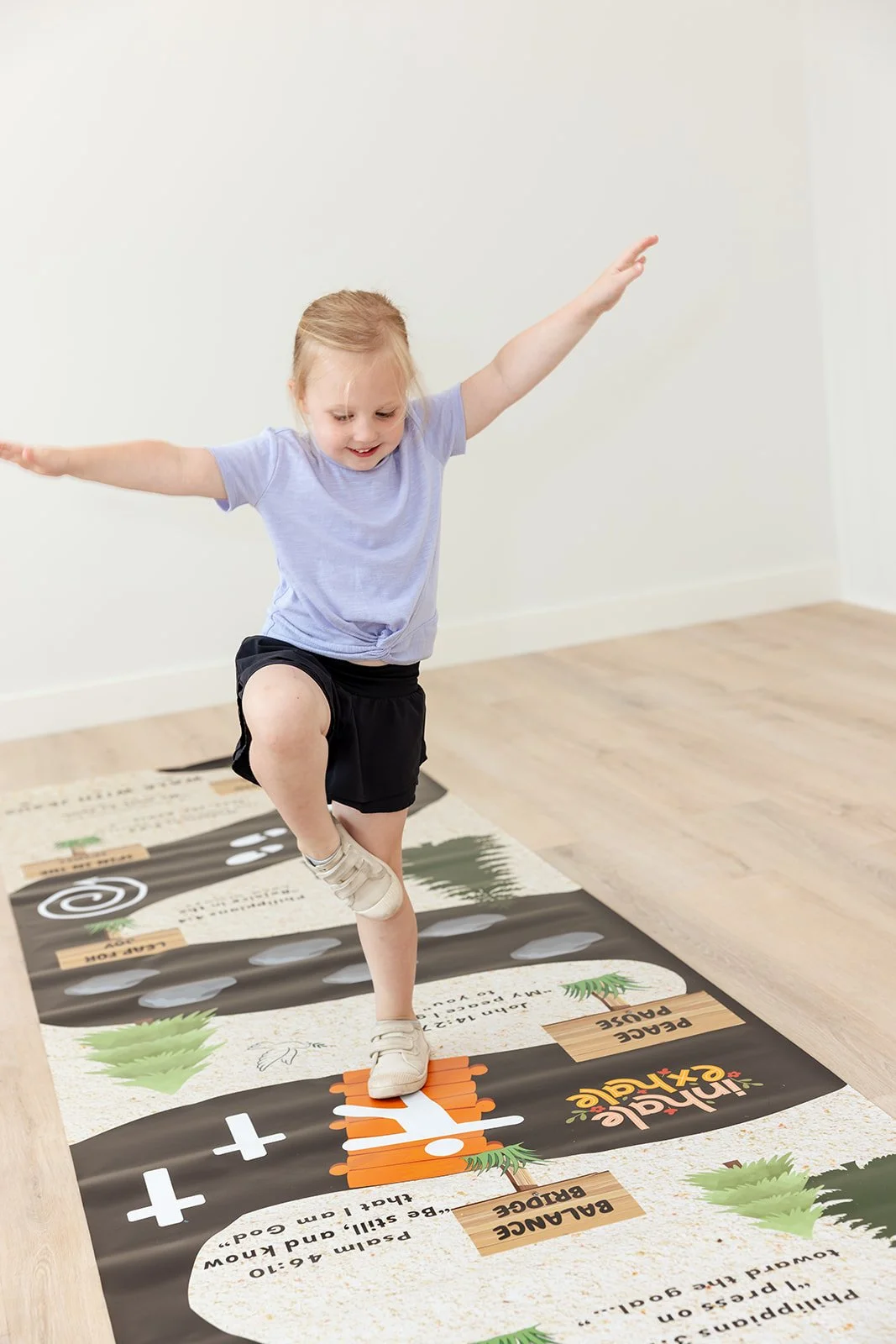
Portable sensory paths make it possible to bring meaningful movement anywhere students need it.
Simply roll them out when needed, then roll them back up for easy storage.
Why Purposeful Movement Matters
As a practicing school-based occupational therapist, I've seen firsthand how movement can change the course of a student's day.
Purposeful movement helps students:
Improve attention and focus
Develop self-regulation skills
Strengthen executive functioning
Prepare their brains for learning
Reduce stress and anxiety
Improve body awareness
Transition more successfully between activities
Build confidence and independence
The beauty of portable paths is that these benefits aren't limited to hallways—they can happen anywhere.
Where Portable Sensory Paths Work
Schools are using portable sensory paths in:
Classrooms
Occupational therapy rooms
Physical therapy spaces
Speech therapy rooms
Counseling offices
Libraries
Resource rooms
Preschool classrooms
Religious education classrooms
Parish centers
Before and after-school programs
Small-group intervention spaces
Because they're portable, one path can support multiple classrooms throughout the day.
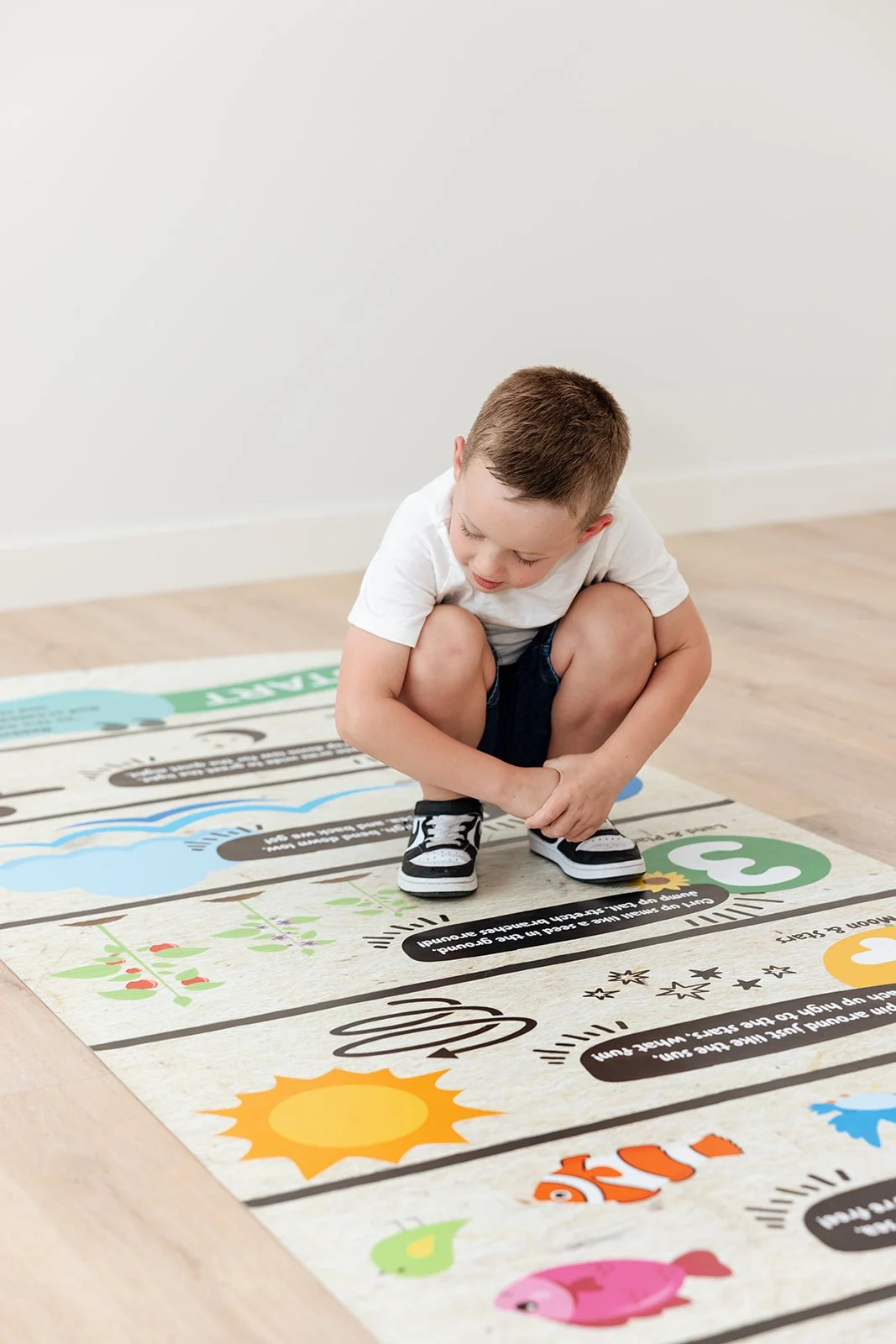
Perfect for Schools That Aren't Ready for Permanent Installation
Portable sensory paths are also a wonderful option for schools that:
Want to try a sensory path before investing in hallway decals
Need movement supports in multiple locations
Have limited wall or floor space
Want movement available during indoor recess
Need flexible intervention tools
Prefer resources that can easily be stored when not in use
Many schools begin with a portable path and later expand into permanent hallway installations as they see the positive impact on students.
Which Portable Path Is Right for Your School?
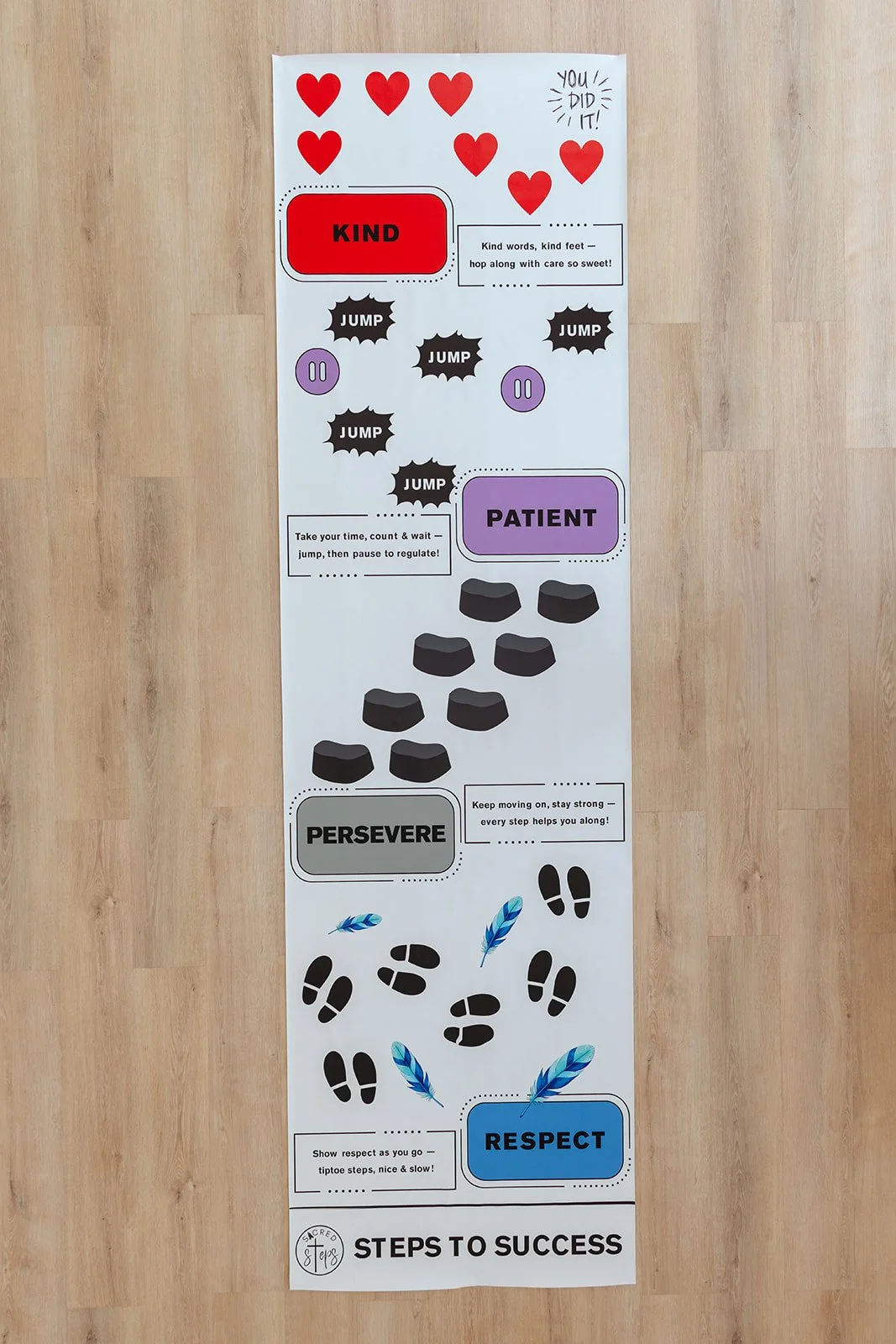
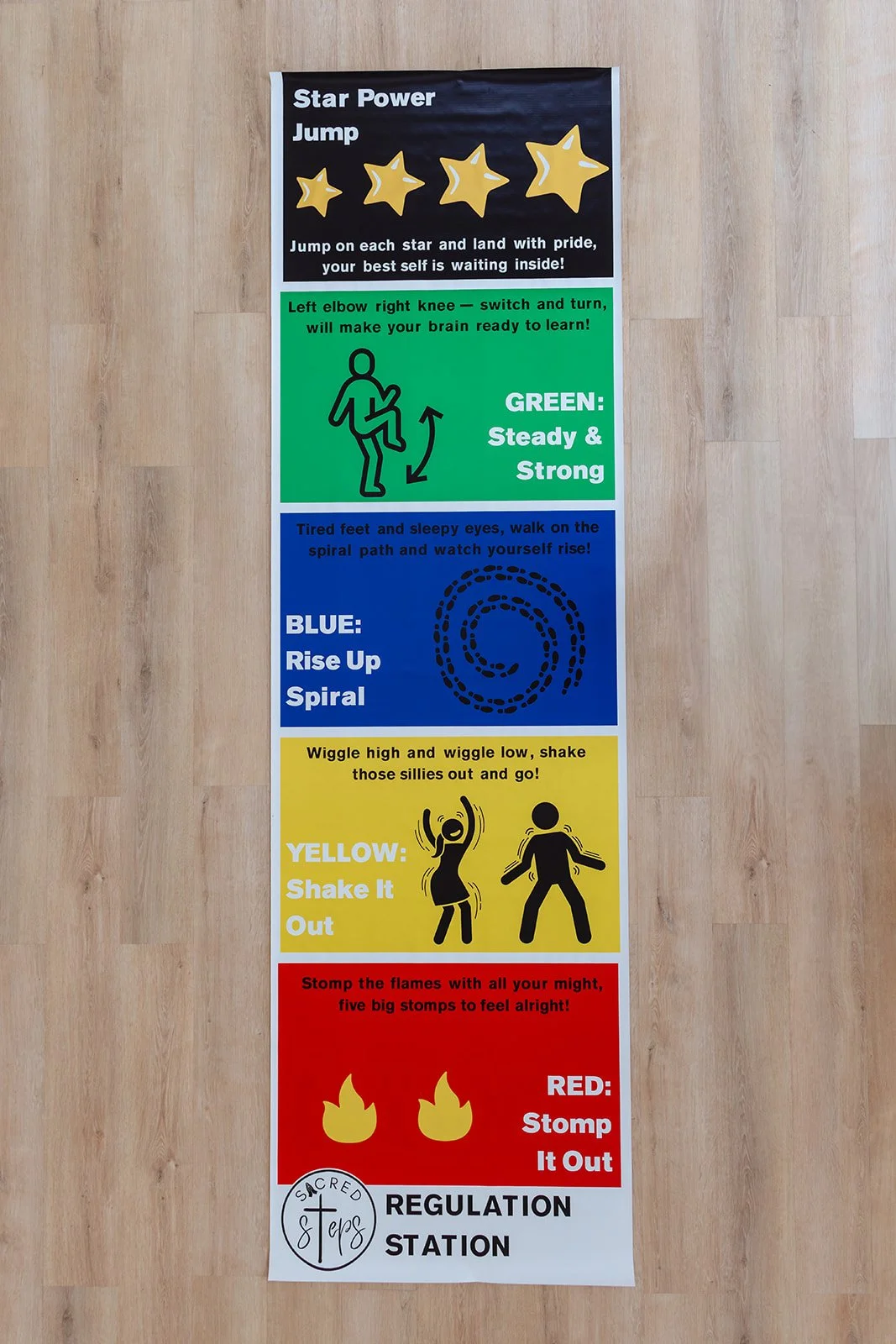
Sacred Steps currently offers six portable sensory paths, each designed to meet different needs while encouraging purposeful movement.
⭐ Steps to Success
A universal social-emotional learning path that reinforces kindness, perseverance, responsibility, honesty, bravery, patience, and other important life skills.
Perfect for:
Public schools
Private schools
Counseling spaces
Intervention programs
Leadership initiatives
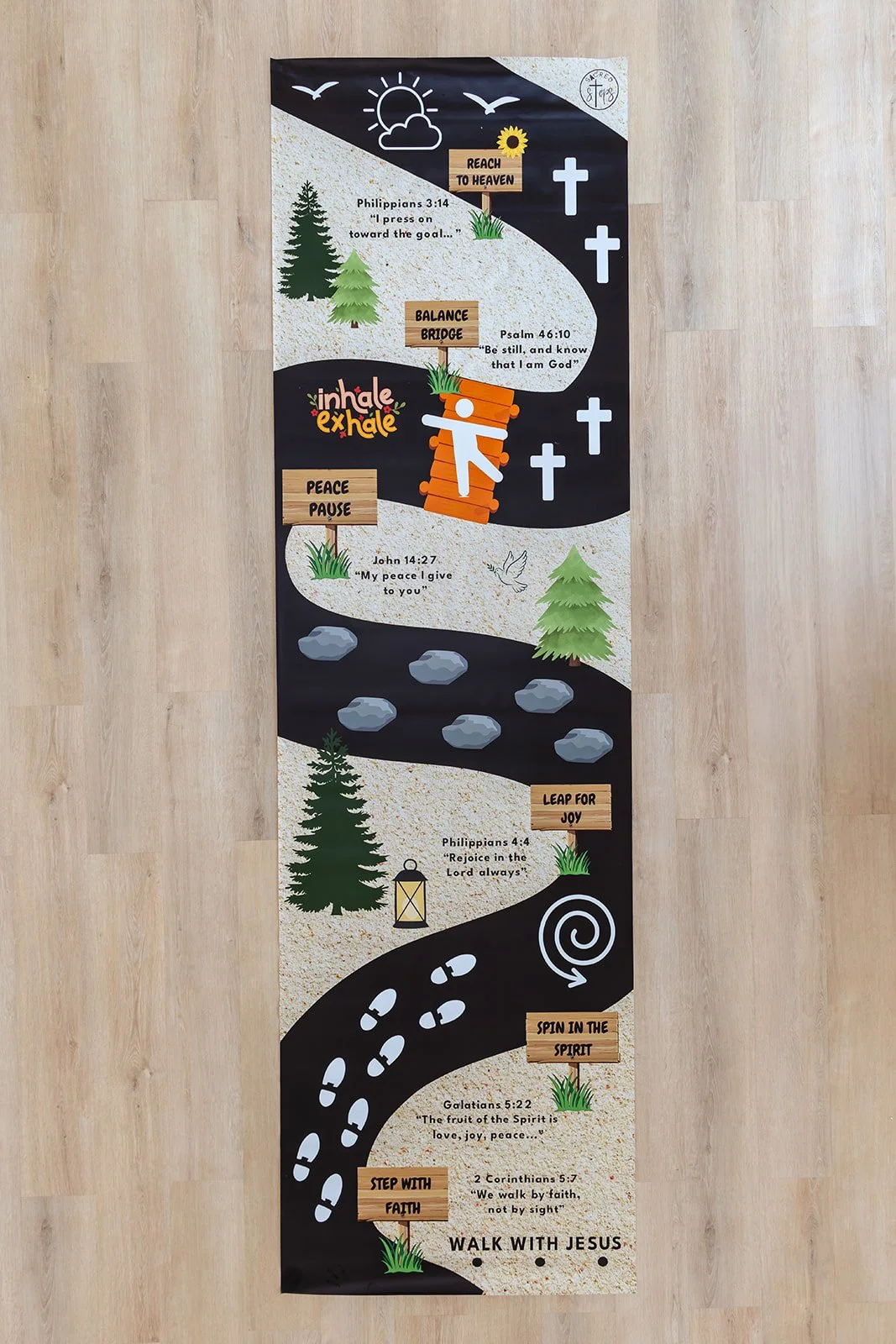
⭐ Walk With Jesus
Students move while reflecting on the life and teachings of Jesus, reinforcing faith formation through purposeful movement.
Perfect for:
Catholic schools
Religious education
Parish programs
Faith formation classrooms
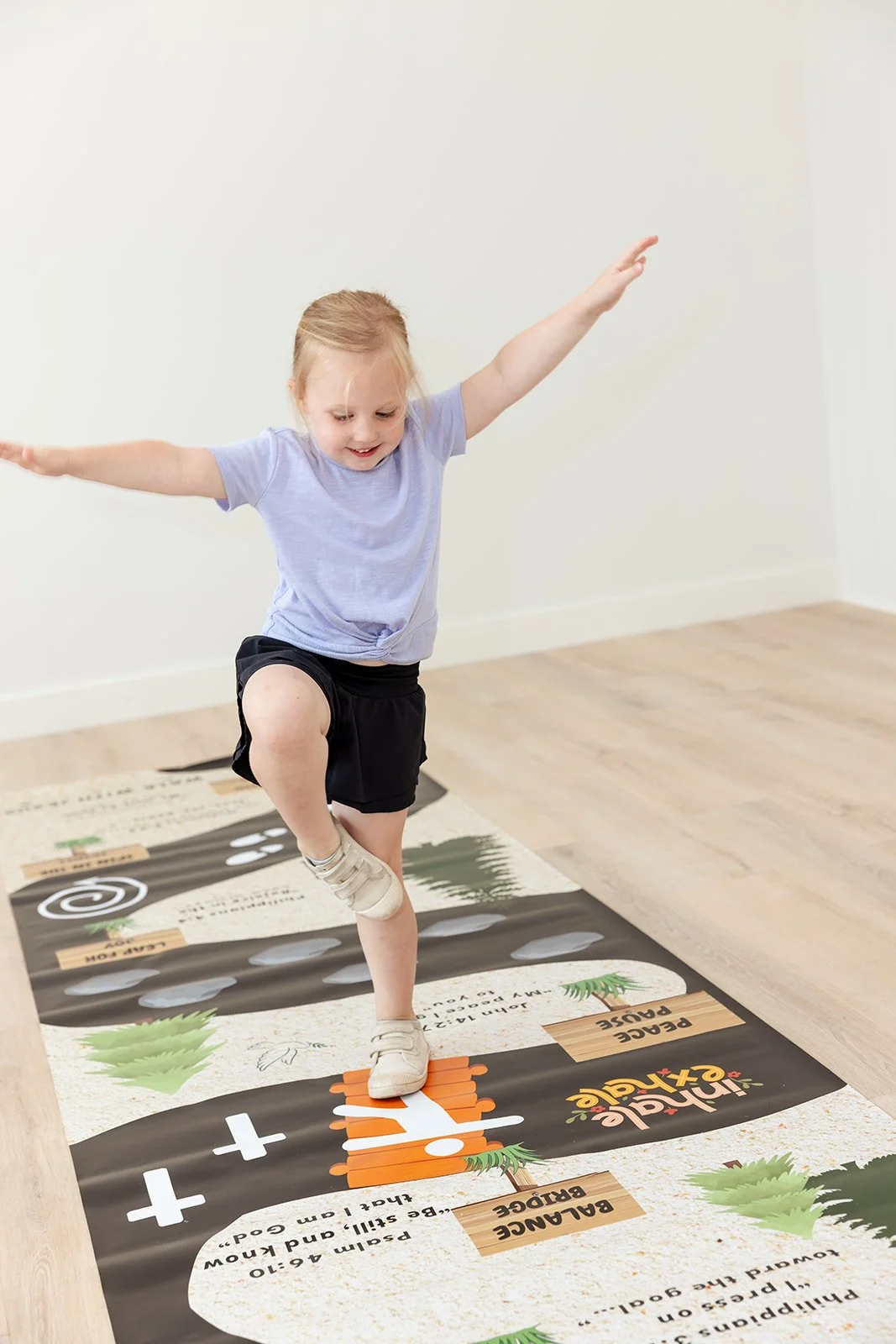
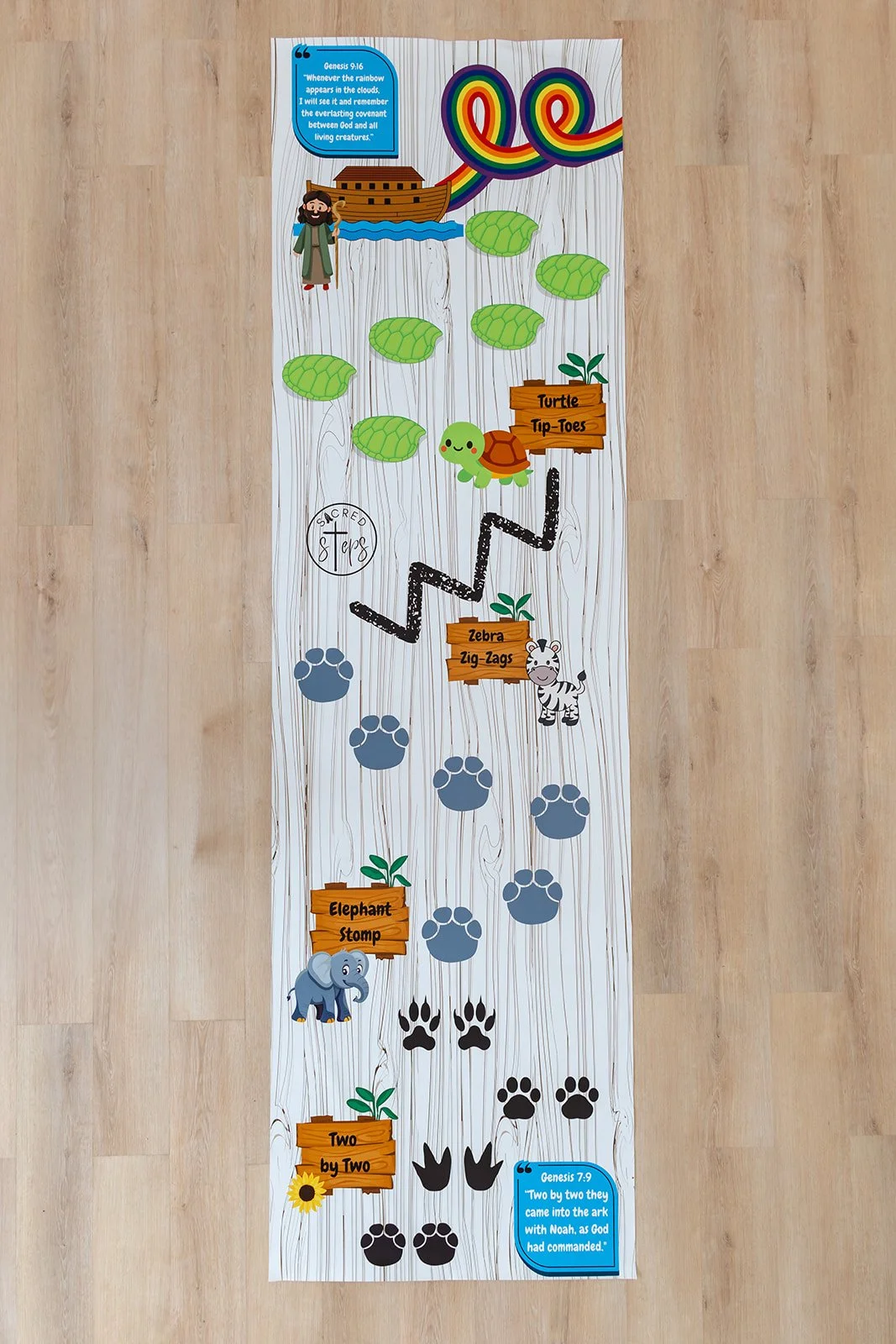
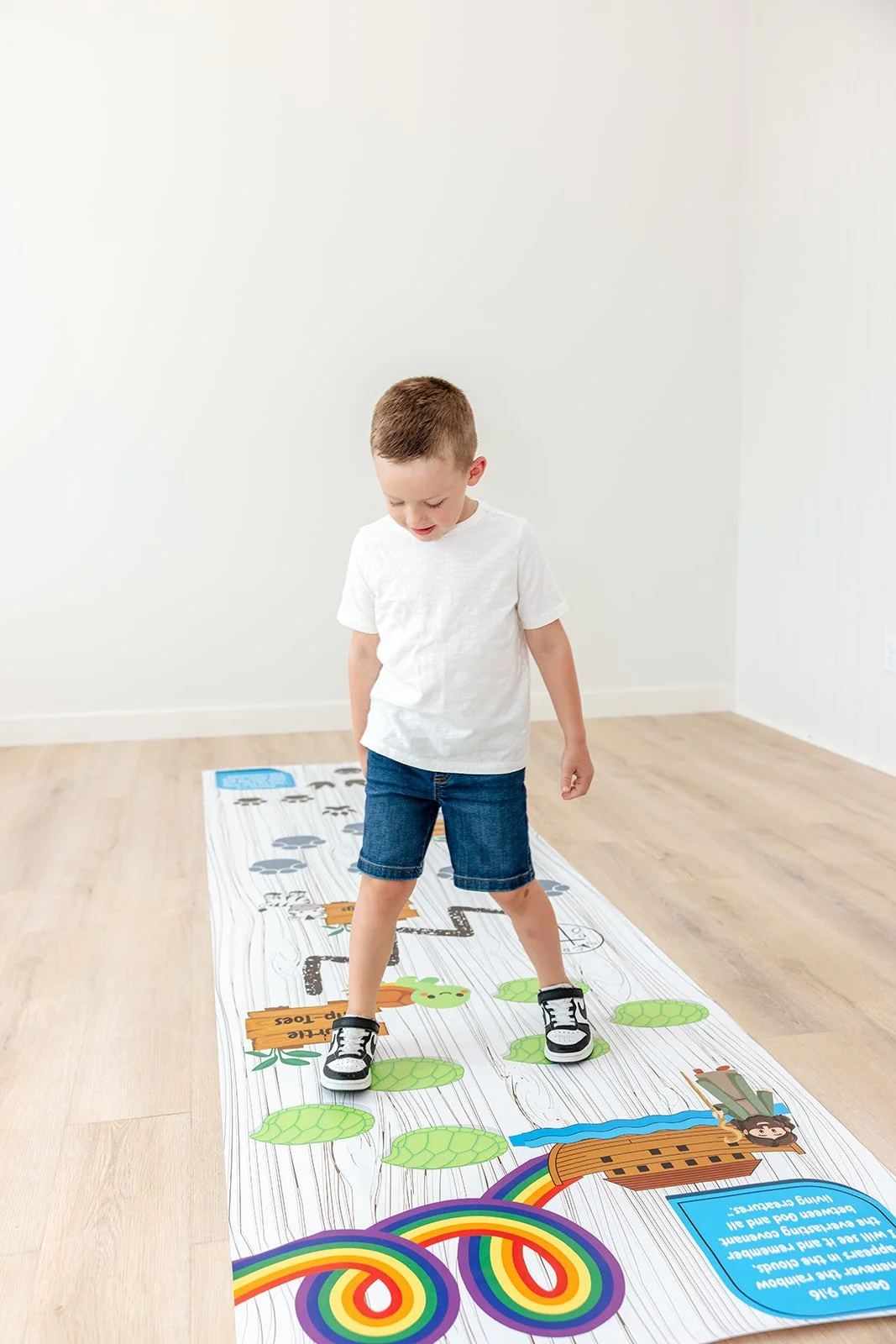
⭐ Noah's Ark
A favorite for younger learners, this engaging path combines movement with one of the Bible's most beloved stories.
Perfect for:
Preschool
Kindergarten
Early elementary
Church nurseries
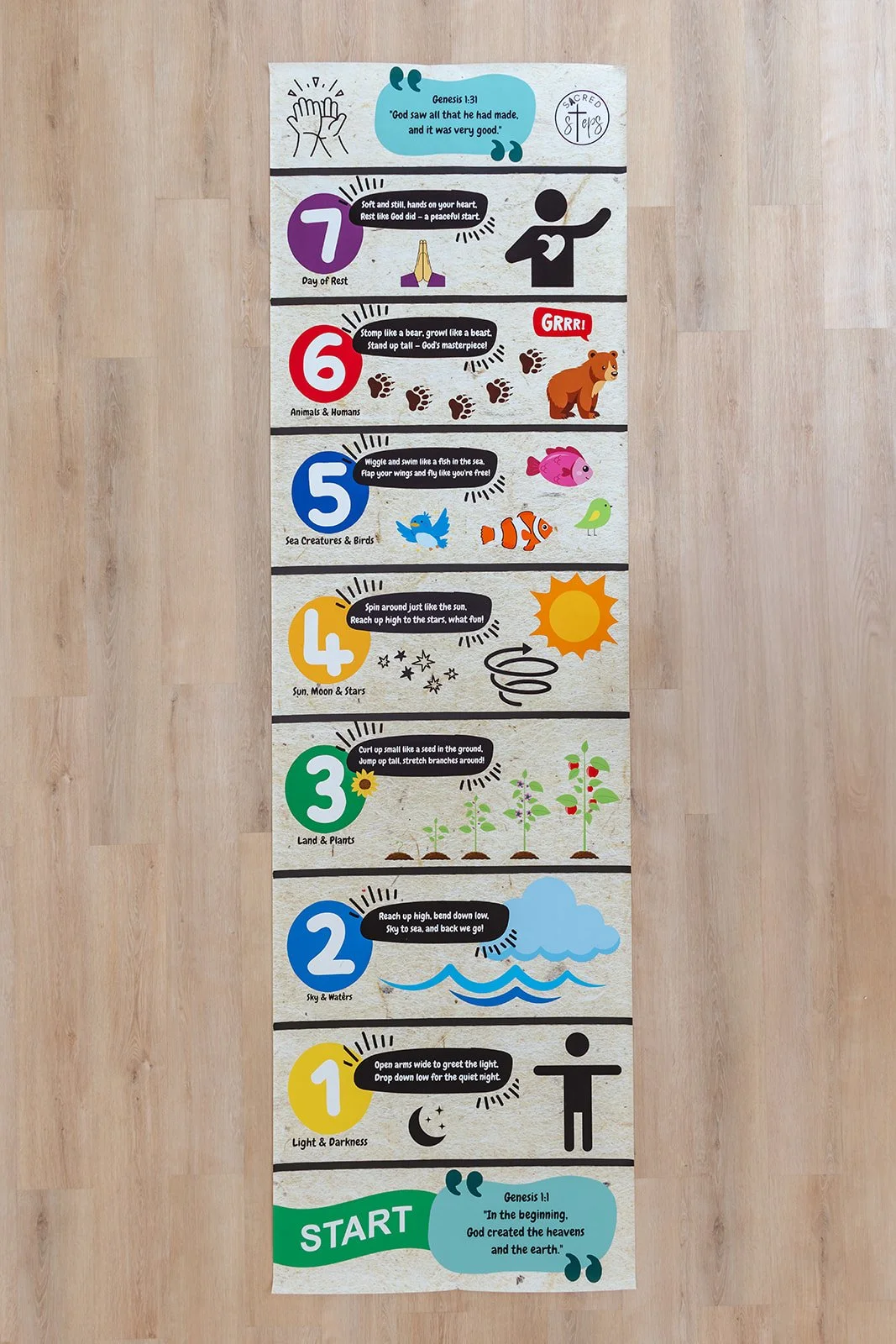
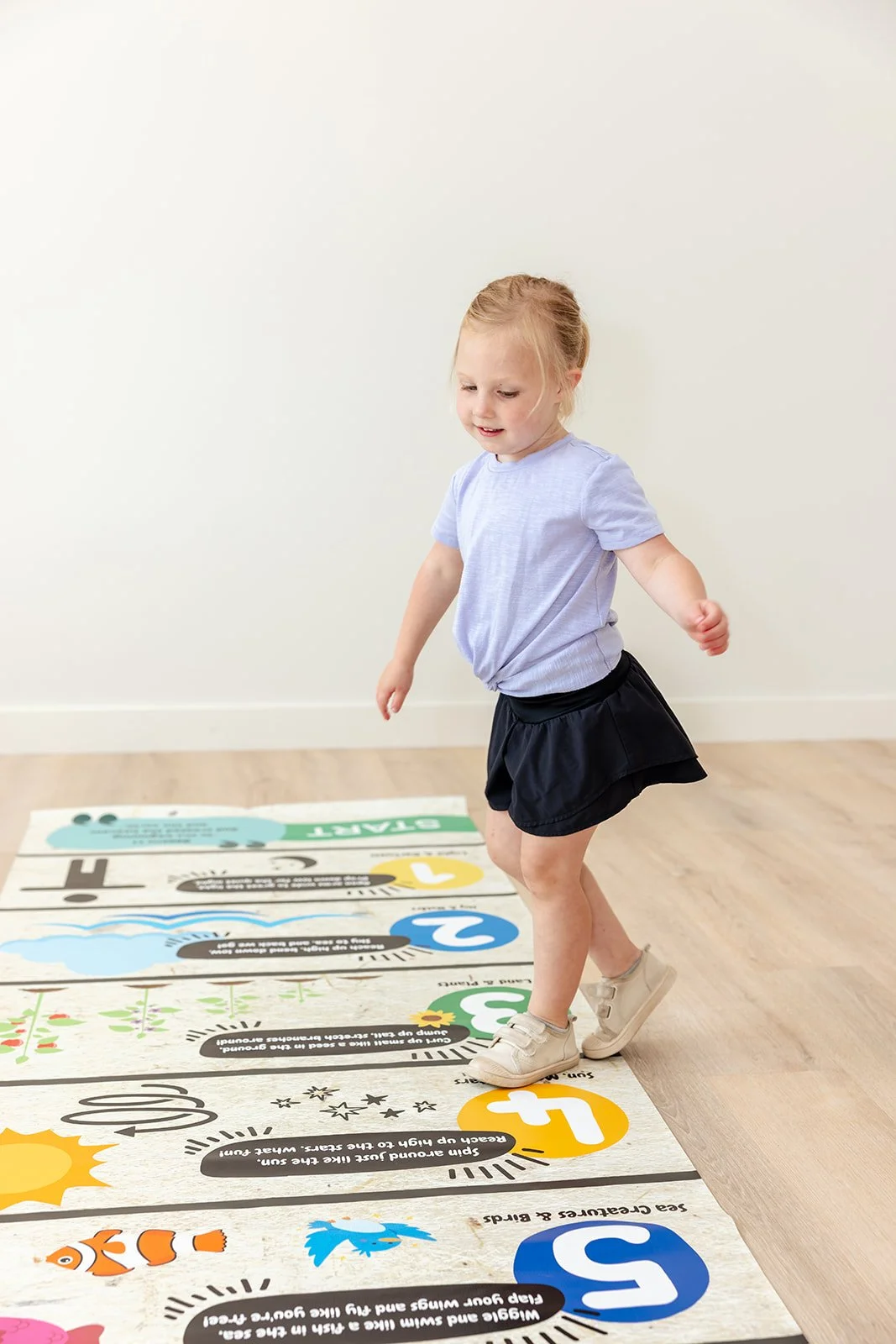
⭐ Days of Creation
Students journey through the seven days of creation while moving, balancing, hopping, and learning Scripture.
Perfect for:
Elementary religion classes
Catholic schools
Faith formation
Vacation Bible School
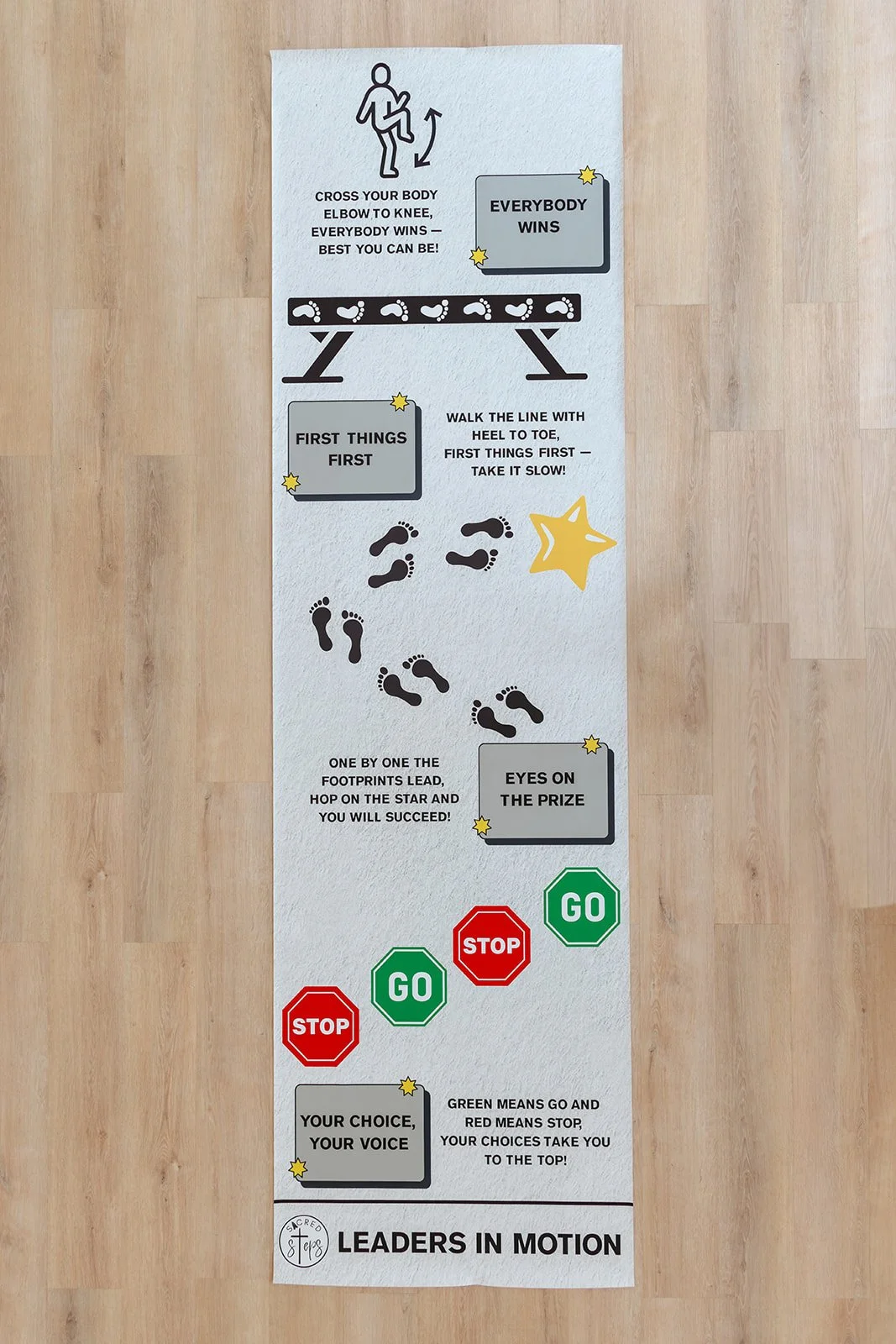
⭐ Leaders in Motion
Created to help students develop leadership skills through purposeful movement, Leaders in Motion encourages confidence, responsibility, perseverance, teamwork, self-regulation, executive functioning, and positive decision-making.
Available in two unique versions, schools can choose the path that best fits their students and school culture.
Perfect for:
Leadership initiatives
Character education
Social-emotional learning (SEL)
Executive functioning support
Student leadership programs
Elementary and middle school students
Why Schools Love Portable Paths
Portable sensory paths give schools incredible flexibility.
One resource can support:
Morning arrival
Indoor recess
Small-group instruction
Therapy sessions
Classroom brain breaks
Counseling visits
Transition times
After-school programs
Instead of students traveling to the sensory path, the sensory path comes to them.
Every portable path is professionally printed on durable 3ft x 10ft canvas, rolls up for easy storage, and can be moved from room to room in seconds.
No installation.
No commitment to one location.
Just purposeful movement wherever students need it.
Try This Tomorrow
Choose one classroom that struggles with transitions.
Before independent work, after recess, or before dismissal, spend just five minutes allowing students to complete a movement activity together.
Observe what changes.
Many teachers notice students returning to learning calmer, more organized, and better prepared to focus.
Sometimes just a few minutes of purposeful movement can completely change the tone of the classroom.
Want to Learn More?
Whether you're looking for faith-based resources like Walk With Jesus, Noah's Ark, and Days of Creation, or universal options like Steps to Success and our Leaders in Motion portable paths, Sacred Steps makes it easy to bring purposeful movement into any learning environment.
No hallway?
No problem.
Movement can happen anywhere students learn, grow, regulate, and thrive.
Browse the complete collection of portable sensory paths and discover how simple it can be to create meaningful movement opportunities throughout your school.
About the Author
Trisha Klausing, OTR/L is a practicing school-based occupational therapist with more than a decade of experience helping children succeed through purposeful movement, sensory regulation, and executive functioning supports. She is the founder of Sacred Steps Sensory Paths, creating OT-designed movement resources that are now helping students in schools across 27 states and Canada. Whether through permanent hallway installations or portable sensory paths, her mission is to help every child feel welcomed, regulated, confident, and ready to learn.
Before the First Bell Rings: 7 Proactive Ways to Prepare Students for a Successful School Year
Learn seven proactive ways schools can prepare students—not just classrooms—for a successful school year. Written by a practicing school-based occupational therapist. Plus, get a free Hallway Readiness Checklist.
Every school wants students to have a successful first day.
Teachers decorate classrooms. Administrators finalize schedules. Hallways are waxed. Bulletin boards are filled. Families pack backpacks with brand-new supplies.
But one important question is often overlooked.
Are we preparing our students—or just preparing our classrooms?
As a school-based occupational therapist, I've learned that the most effective supports aren't always the ones we implement after challenges arise.
They're the ones we intentionally build before the first bell rings.
When schools proactively create environments that support movement, self-regulation, executive functioning, and belonging, students are more prepared to learn from the very first day.
Whether you're a principal, teacher, counselor, occupational therapist, or parish leader, here are seven simple ways to prepare students for a successful school year.
And at the end of this article, I'll share a free Hallway Readiness Checklist you can use with your staff before students arrive.
1. Build Movement Into the School Day
Children were never meant to sit still for six or seven hours each day.
Purposeful movement helps students:
Improve attention
Increase focus
Support self-regulation
Prepare their brains for learning
Reduce stress and anxiety
Improve transitions
Movement isn't a reward after learning.
Movement helps make learning possible.
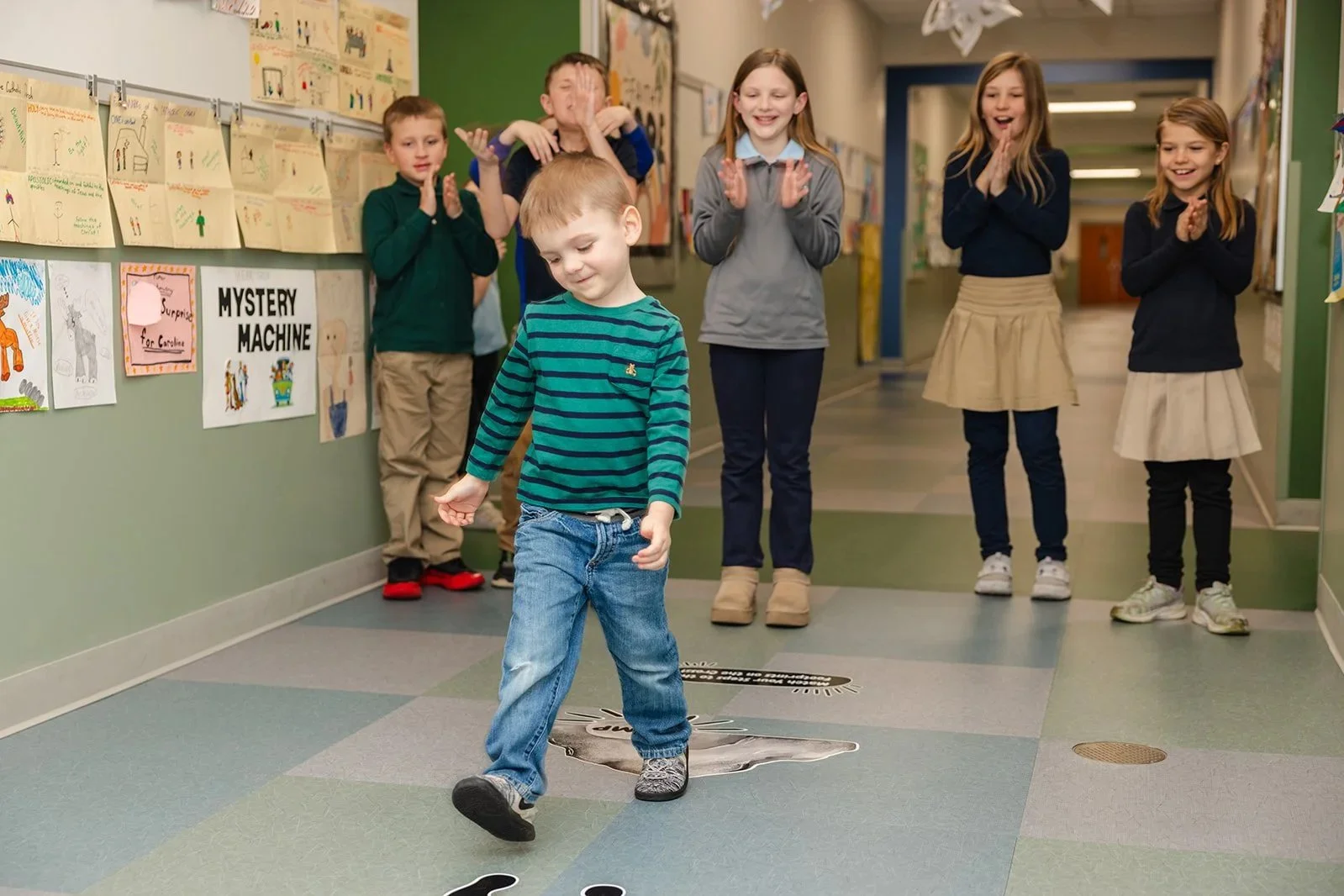
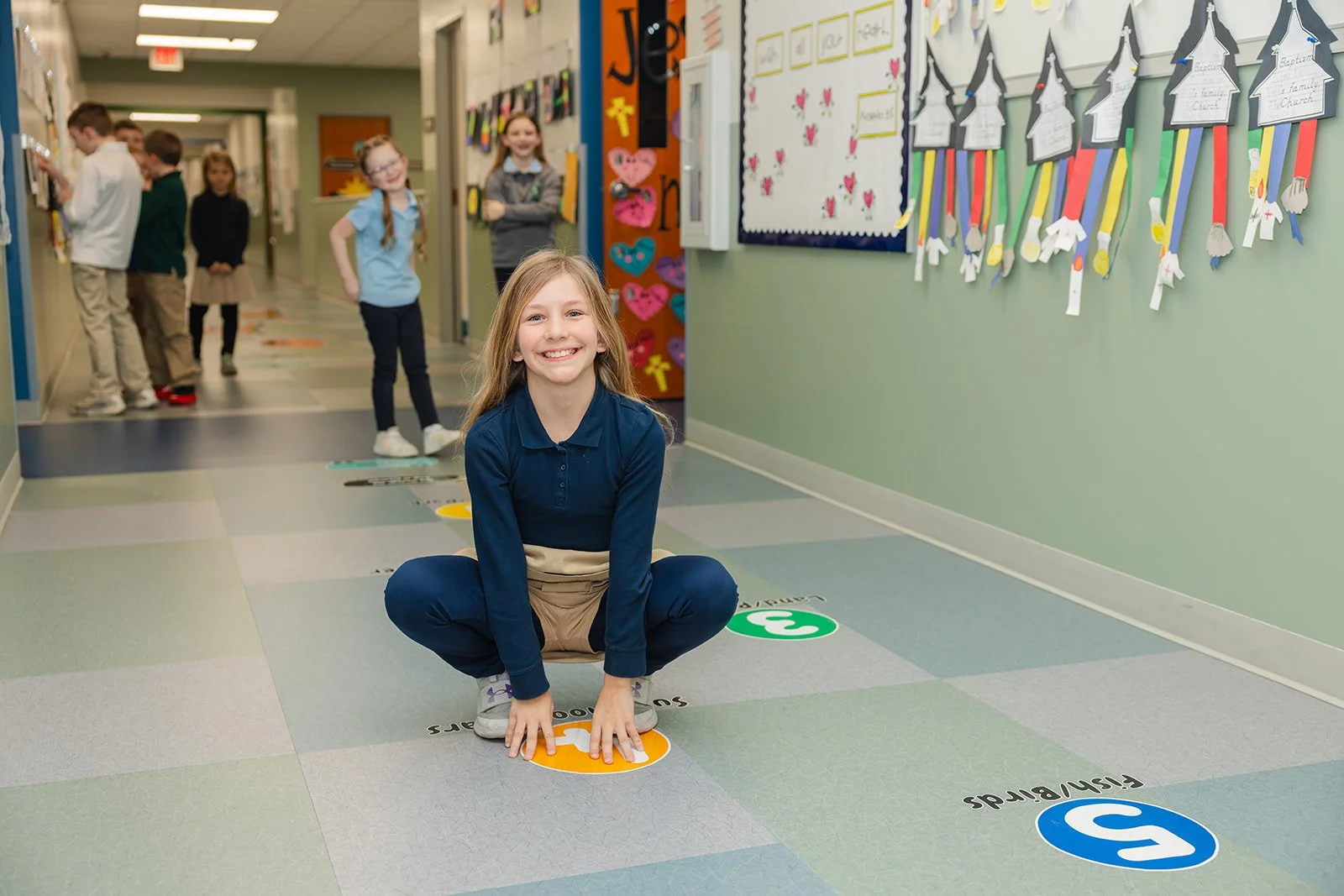
2. Turn Your Hallways Into Learning Spaces
Think about how many times students walk your hallways every day.
Now ask yourself...
What are those hallways teaching?
Hallways don't have to be empty spaces between classrooms.
They can reinforce:
Responsibility
Executive functioning
School values
Faith formation
Every transition becomes another opportunity to teach.
3. Be Proactive Instead of Reactive
One of the biggest shifts I've seen during my years as a school-based OT is moving from:
"What do we do when a student becomes dysregulated?"
to
"How do we help students stay regulated before challenges occur?"
Many students don't need intensive interventions.
They simply need intentional opportunities to move, reset, and regulate throughout the day.
Proactive supports often prevent problems before they begin.
4. Design Supports That Benefit Every Student
One misconception about sensory supports is that they're only for students receiving special education services.
In reality...
Every child has moments when they need:
A brain break
Encouragement
Movement
A chance to reset
Support during transitions
The best school-wide supports help everyone while naturally providing additional support for students who need it most.
That's what inclusion looks like.
5. Reinforce Your School's Mission Every Day
Students may hear your school's mission statement once each morning.
But what if they experienced it dozens of times throughout the day?
Imagine hallways reminding students to be:
Brave
Respectful
Honest
Patient
Helpful
Or, in Catholic schools...
Imagine students being reminded that they are:
Forgiven
Never alone
Called to serve others
Your physical environment can reinforce your mission long after announcements end.
6. Strengthen Executive Functioning Through Everyday Experiences
Executive functioning isn't taught during one lesson.
It's developed over hundreds of small moments.
Students strengthen these skills when they:
Follow multi-step directions
Make choices
Solve problems
Sequence movements
Practice self-control
Remember routines
Movement-based activities naturally encourage many of these skills while keeping students engaged.
7. Remember That Small Changes Can Have a Big Impact
Schools don't need complete renovations to create meaningful change.
Sometimes it begins with:
One hallway.
One calming corner.
One movement station.
One intentional routine.
Small environmental changes can positively influence hundreds of students over the course of a school year.
The goal isn't perfection.
The goal is creating an environment where students feel successful before challenges arise.
Is Your School Ready Before the First Bell Rings?
As you're preparing classrooms, lesson plans, and schedules, don't forget one of the most overlooked learning environments in your building...
Your hallways.
To help schools prepare for a successful year, I've created a Hallway Readiness Checklist specifically for principals, teachers, occupational therapists, counselors, and school leaders.
Inside, you'll evaluate questions like:
✔ Do students have opportunities for purposeful movement throughout the day?
✔ Do your hallways reinforce your school's mission, values, or faith?
✔ Are students given proactive opportunities to regulate before becoming overwhelmed?
✔ Does your environment support executive functioning and successful transitions?
✔ Are your hallways working as hard as your classrooms?
It's a simple resource that helps schools think intentionally about how their physical environment supports learning before the first bell ever rings.
🎁 Get Your FREE Hallway Readiness Checklist
I'd love to send you a complimentary copy!
Simply email me at hello@sacredstepssensorypaths.com
with the subject line:
Hallway Checklist
I'll send you:
✅ The Hallway Readiness Checklist
✅ An OT guide explaining how to interpret your results
✅ Information about a complimentary hallway mock-up customized for your school if you'd like to explore additional ideas.
No obligation.
Just a practical resource designed to help schools start the year strong.
Try This Tomorrow
Before students return, take ten minutes and walk through your school as if you were seeing it for the first time.
Ask yourself:
What are students learning before they even reach the classroom?
Where do students have opportunities to move?
Where are they reminded they're capable?
Where are they encouraged to regulate before becoming overwhelmed?
Does our environment reflect the mission and values we want students to experience every day?
Sometimes the biggest opportunities aren't found inside classrooms.
They're found in the spaces between them.
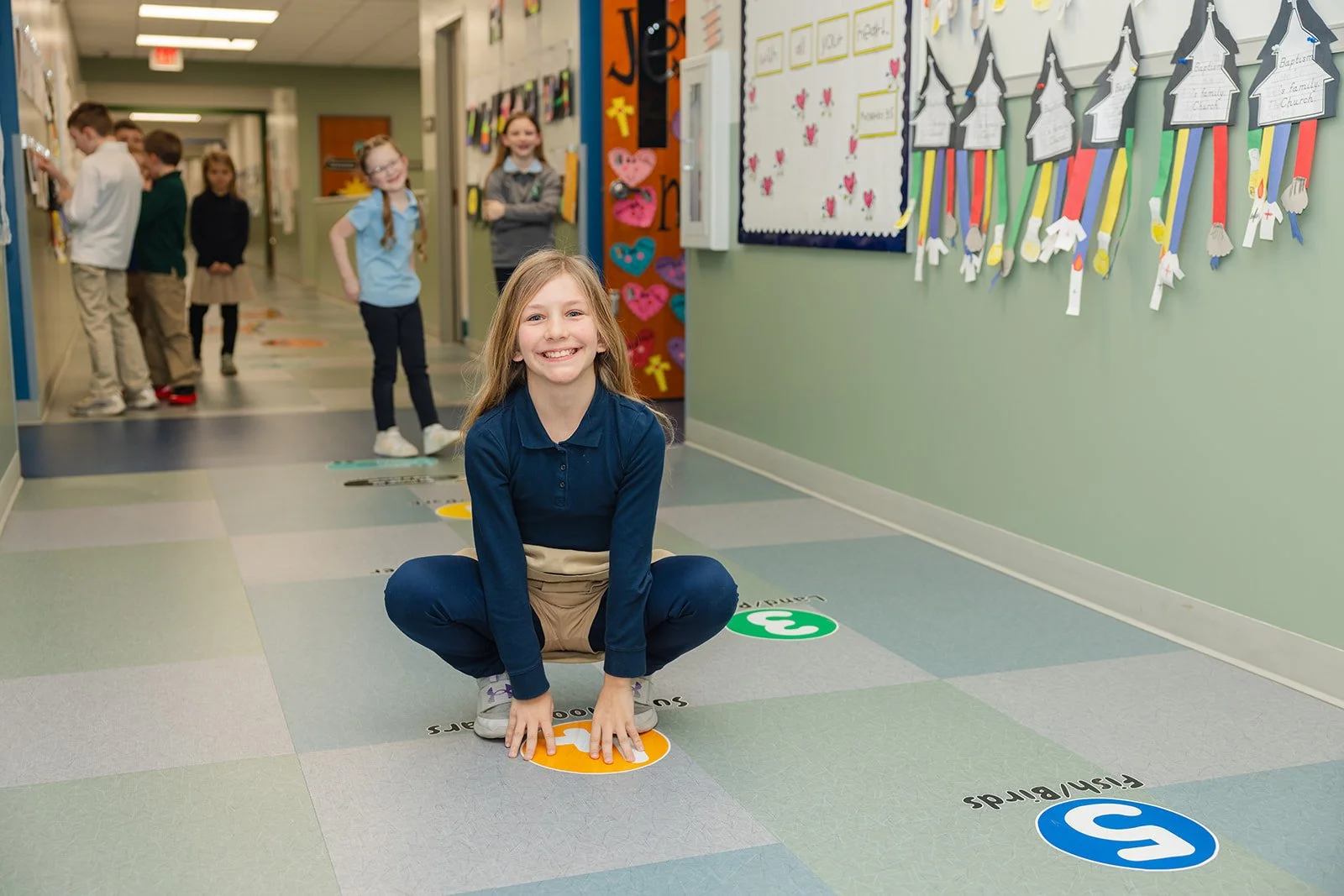
Want to Learn More?
At Sacred Steps Sensory Paths, we believe every hallway has the potential to become a place where students grow academically, socially, emotionally, and spiritually.
Designed by a practicing school-based occupational therapist, our movement-based resources help schools transform ordinary spaces into opportunities for learning, self-regulation, executive functioning, faith formation, and positive school culture.
Whether you're looking for a complete sensory path, a calming space, portable movement activities, or simply ideas for making your school more proactive, we'd love to help.
Contact us today for a complimentary hallway mock-up and discover how your hallways can begin teaching before the first bell ever rings.
About the Author
Trisha Klausing, MOT, OTR/L is a practicing school-based occupational therapist with more than a decade of experience helping children succeed in educational settings. She is the founder of Sacred Steps Sensory Paths, where she designs movement-based resources that support executive functioning, self-regulation, faith formation, and inclusive learning environments. Sacred Steps products are currently being used in schools, parishes, therapy clinics, and community spaces across 27 states and Canada.