Why Did Seven Catholic Schools just Choose Who God Says I Am?
Discover why seven Catholic schools recentlyselected the Who God Says I Am sensory path and how movement reinforces faith, identity, and emotional regulation.
As educators, we spend countless hours helping children learn who they are.
We encourage perseverance after mistakes. We celebrate kindness. We remind students they are capable, valued, and important.
But today's children are also growing up in a world that constantly tells them who they should be—and too often, those messages create anxiety, self-doubt, and comparison.
As I recently completed installations throughout the Archdiocese of Omaha, I noticed something that immediately stood out.
When nine Catholic schools selected products for their hallways, one collection became the clear favorite.
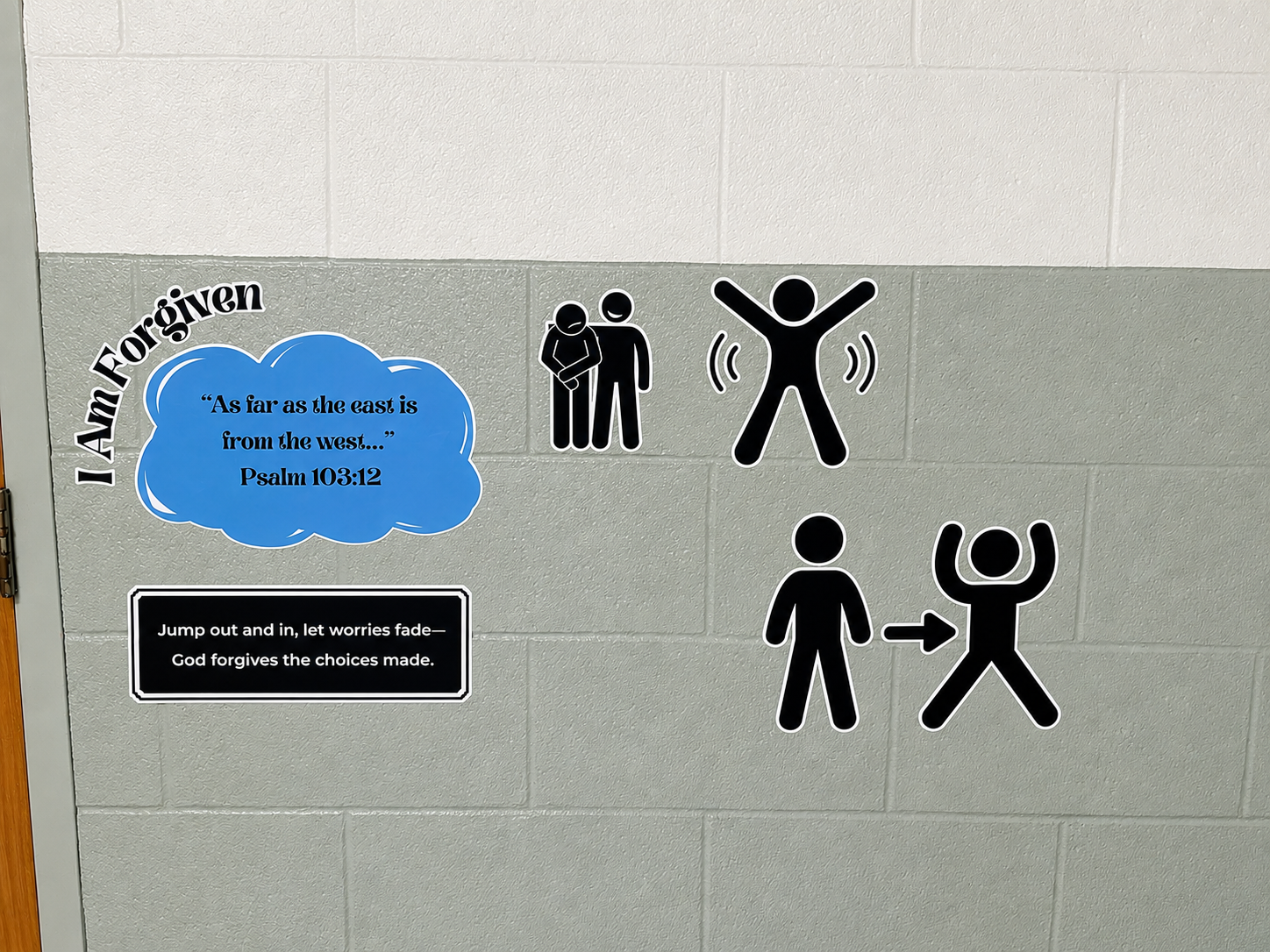
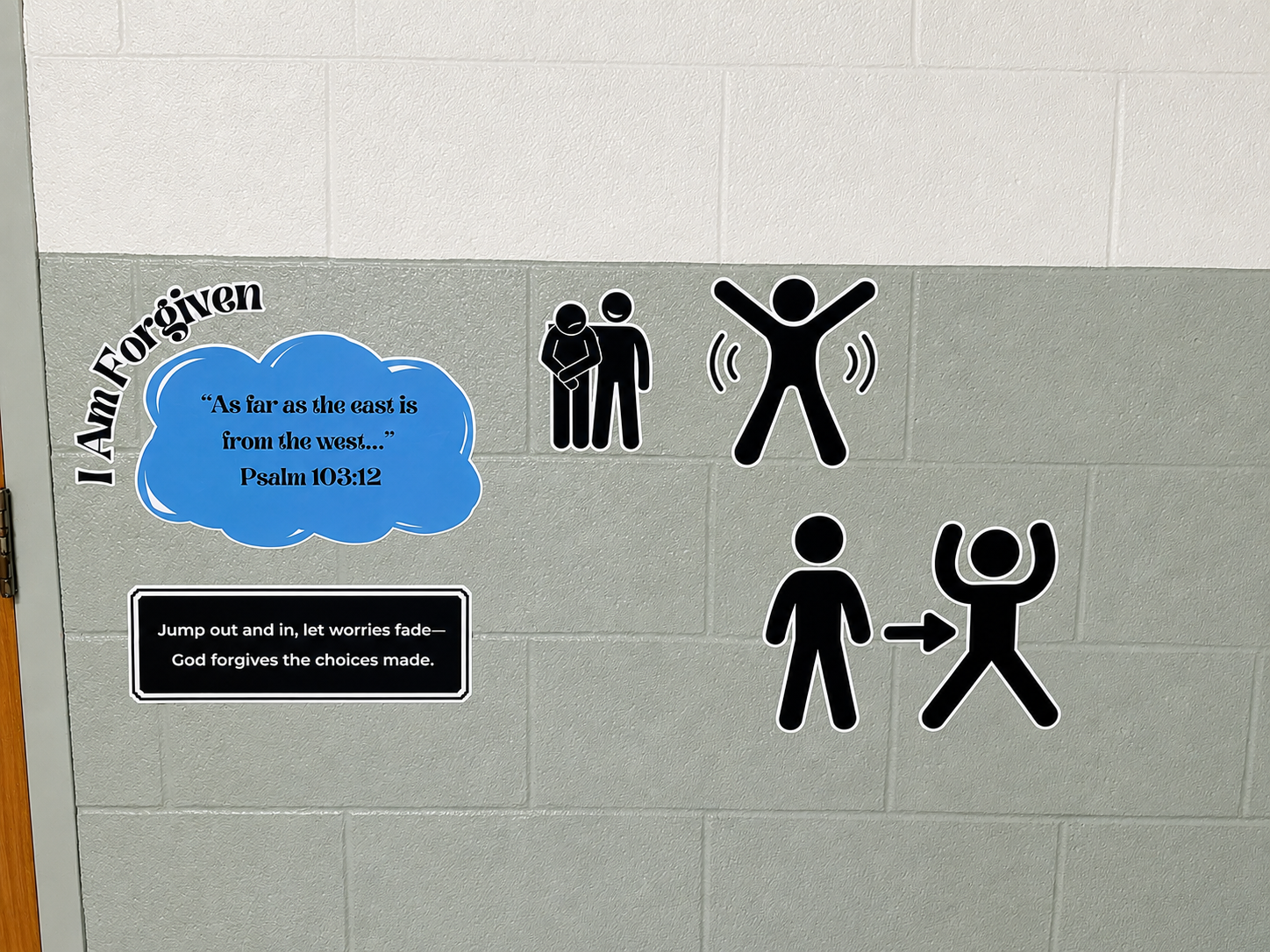
Three schools chose the complete Who God Says I Am Sensory Path, while four additional schools selected the Who God Says I Am Starter Set.
That made me stop and think.
Why did this message resonate so deeply?
Children Need Truth They Can Return To
Every school day is filled with moments that challenge a child's confidence.
A difficult math assignment.
A disagreement with a friend.
A poor test grade.
Feeling left out at recess.
Making a mistake in class.
These moments often become the stories children tell themselves.
"I'm not good enough."
"Nobody likes me."
"I always mess things up."
As Catholic educators, we have the incredible opportunity to replace those lies with truth.
Imagine students walking down the hallway and being reminded:
I Am Loved
I Am Forgiven
I Am Strong
I Am Brave
I Am Never Alone
I Am God's Child
Not once.
Not only during religion class.
But every single day.
Why Movement Makes These Messages More Meaningful
As a pediatric occupational therapist, I've seen firsthand how movement prepares the brain for learning.
Movement increases alertness.
It supports attention.
It helps regulate emotions.
It improves memory and retention.
When children move while interacting with meaningful messages, they're doing much more than getting the wiggles out.
They're pairing physical movement with positive identity.
That combination helps those affirmations become experiences rather than simply words on a wall.
Instead of walking past another hallway display, students are actively engaging with reminders of who God says they are.
Hallways Can Become Places of Formation
Catholic schools do an incredible job forming students academically and spiritually inside the classroom.
But learning doesn't stop when students leave their desks.
Hallways are some of the most frequently used spaces in every school.
Those daily transitions can become opportunities to reinforce faith, encourage movement, and support emotional regulation—all in less than a minute.
When students repeatedly encounter these messages throughout the school year, they become familiar, comforting reminders during both joyful and challenging moments.
Why I Believe This Collection Resonated
I can't speak for each school's individual decision, but after working with Catholic educators across 27 states and Canada, I've noticed a common theme.
Schools aren't just looking for sensory paths.
They're looking for ways to intentionally shape school culture.
They want students to know they are seen.
They want children to feel safe.
They want every hallway to reinforce the values they teach inside the classroom.
The Who God Says I Am collection does exactly that.
It's more than movement.
It's a daily reminder of identity rooted in faith.
Try This Tomorrow
Take a walk through your school's hallways and imagine you're seeing them through the eyes of a student.
What messages do they encounter?
What do your walls say about kindness, courage, forgiveness, or belonging?
Even one intentional reminder placed where students naturally transition throughout the day can become a meaningful moment of encouragement.
Want to Learn More?
The Who God Says I Am collection was thoughtfully designed to combine purposeful movement with faith-filled affirmations that remind students of their identity in Christ.
Whether you're looking for the complete sensory path or a simple Starter Set to begin transforming your hallways, these movement experiences help reinforce positive messages every single day.
If you'd like to see how Catholic schools across the country are using the collection—or explore which option might be the best fit for your school—I'd love to help.
Browse the collection or contact me anytime. Together, we can create hallways that encourage movement, strengthen faith, and remind every child exactly who God says they are.
Still deciding?
If you'd like to see the quality of Sacred Steps products before purchasing, I'd be happy to send you a complimentary sample.
It's a simple way to experience the colors, materials, and durability firsthand—and see why schools across 27 states and Canada have chosen Sacred Steps.
👉 Request your free sample here.
About the Author
Trisha Klausing, OTR/L is a pediatric occupational therapist and the founder of Sacred Steps Sensory Paths. She combines over a decade of school-based occupational therapy experience with her passion for Catholic education to create movement experiences that strengthen self-regulation, learning, and faith. Sacred Steps products are currently used in schools across 27 states and Canada.
Before the First Bell Rings: 7 Proactive Ways to Prepare Students for a Successful School Year
Learn seven proactive ways schools can prepare students—not just classrooms—for a successful school year. Written by a practicing school-based occupational therapist. Plus, get a free Hallway Readiness Checklist.
Every school wants students to have a successful first day.
Teachers decorate classrooms. Administrators finalize schedules. Hallways are waxed. Bulletin boards are filled. Families pack backpacks with brand-new supplies.
But one important question is often overlooked.
Are we preparing our students—or just preparing our classrooms?
As a school-based occupational therapist, I've learned that the most effective supports aren't always the ones we implement after challenges arise.
They're the ones we intentionally build before the first bell rings.
When schools proactively create environments that support movement, self-regulation, executive functioning, and belonging, students are more prepared to learn from the very first day.
Whether you're a principal, teacher, counselor, occupational therapist, or parish leader, here are seven simple ways to prepare students for a successful school year.
And at the end of this article, I'll share a free Hallway Readiness Checklist you can use with your staff before students arrive.
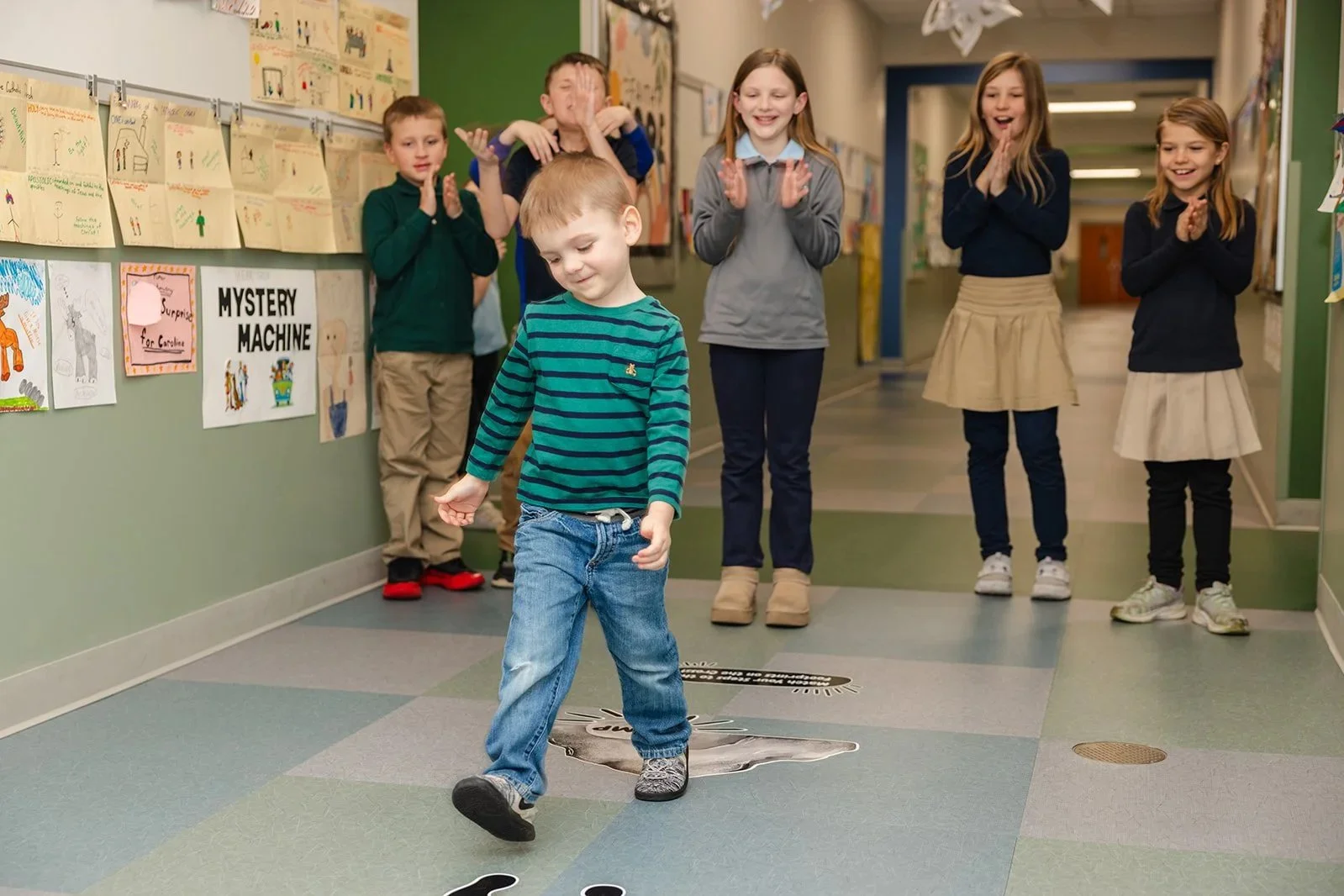
1. Build Movement Into the School Day
Children were never meant to sit still for six or seven hours each day.
Purposeful movement helps students:
Improve attention
Increase focus
Support self-regulation
Prepare their brains for learning
Reduce stress and anxiety
Improve transitions
Movement isn't a reward after learning.
Movement helps make learning possible.
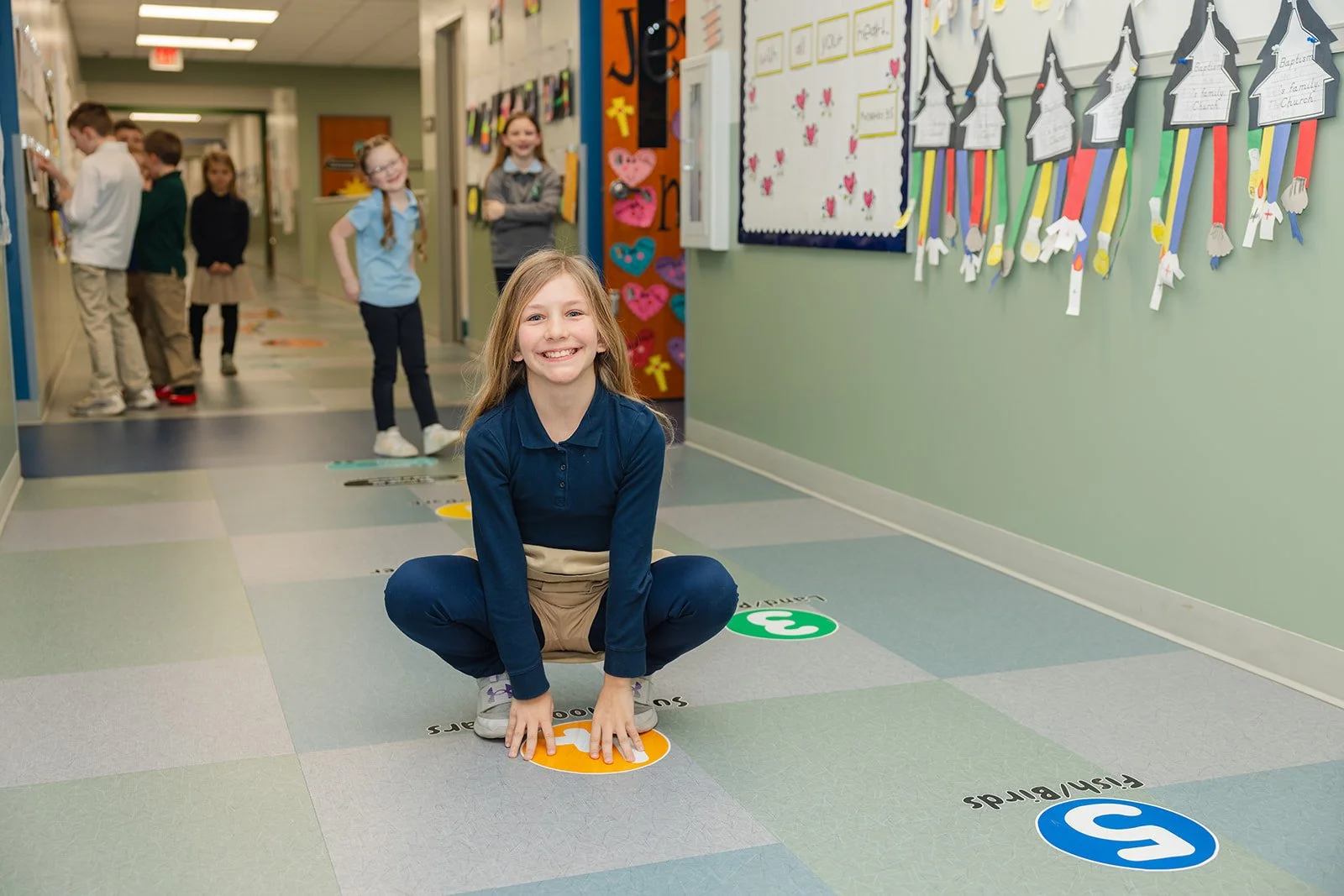
2. Turn Your Hallways Into Learning Spaces
Think about how many times students walk your hallways every day.
Now ask yourself...
What are those hallways teaching?
Hallways don't have to be empty spaces between classrooms.
They can reinforce:
Responsibility
Executive functioning
School values
Faith formation
Every transition becomes another opportunity to teach.
3. Be Proactive Instead of Reactive
One of the biggest shifts I've seen during my years as a school-based OT is moving from:
"What do we do when a student becomes dysregulated?"
to
"How do we help students stay regulated before challenges occur?"
Many students don't need intensive interventions.
They simply need intentional opportunities to move, reset, and regulate throughout the day.
Proactive supports often prevent problems before they begin.
4. Design Supports That Benefit Every Student
One misconception about sensory supports is that they're only for students receiving special education services.
In reality...
Every child has moments when they need:
A brain break
Encouragement
Movement
A chance to reset
Support during transitions
The best school-wide supports help everyone while naturally providing additional support for students who need it most.
That's what inclusion looks like.
5. Reinforce Your School's Mission Every Day
Students may hear your school's mission statement once each morning.
But what if they experienced it dozens of times throughout the day?
Imagine hallways reminding students to be:
Brave
Respectful
Honest
Patient
Helpful
Or, in Catholic schools...
Imagine students being reminded that they are:
Forgiven
Never alone
Called to serve others
Your physical environment can reinforce your mission long after announcements end.
6. Strengthen Executive Functioning Through Everyday Experiences
Executive functioning isn't taught during one lesson.
It's developed over hundreds of small moments.
Students strengthen these skills when they:
Follow multi-step directions
Make choices
Solve problems
Sequence movements
Practice self-control
Remember routines
Movement-based activities naturally encourage many of these skills while keeping students engaged.
7. Remember That Small Changes Can Have a Big Impact
Schools don't need complete renovations to create meaningful change.
Sometimes it begins with:
One hallway.
One calming corner.
One movement station.
One intentional routine.
Small environmental changes can positively influence hundreds of students over the course of a school year.
The goal isn't perfection.
The goal is creating an environment where students feel successful before challenges arise.
Is Your School Ready Before the First Bell Rings?
As you're preparing classrooms, lesson plans, and schedules, don't forget one of the most overlooked learning environments in your building...
Your hallways.
To help schools prepare for a successful year, I've created a Hallway Readiness Checklist specifically for principals, teachers, occupational therapists, counselors, and school leaders.
Inside, you'll evaluate questions like:
✔ Do students have opportunities for purposeful movement throughout the day?
✔ Do your hallways reinforce your school's mission, values, or faith?
✔ Are students given proactive opportunities to regulate before becoming overwhelmed?
✔ Does your environment support executive functioning and successful transitions?
✔ Are your hallways working as hard as your classrooms?
It's a simple resource that helps schools think intentionally about how their physical environment supports learning before the first bell ever rings.
🎁 Get Your FREE Hallway Readiness Checklist
I'd love to send you a complimentary copy!
Simply email me at hello@sacredstepssensorypaths.com
with the subject line:
Hallway Checklist
I'll send you:
✅ The Hallway Readiness Checklist
✅ An OT guide explaining how to interpret your results
✅ Information about a complimentary hallway mock-up customized for your school if you'd like to explore additional ideas.
No obligation.
Just a practical resource designed to help schools start the year strong.
Try This Tomorrow
Before students return, take ten minutes and walk through your school as if you were seeing it for the first time.
Ask yourself:
What are students learning before they even reach the classroom?
Where do students have opportunities to move?
Where are they reminded they're capable?
Where are they encouraged to regulate before becoming overwhelmed?
Does our environment reflect the mission and values we want students to experience every day?
Sometimes the biggest opportunities aren't found inside classrooms.
They're found in the spaces between them.
Want to Learn More?
At Sacred Steps Sensory Paths, we believe every hallway has the potential to become a place where students grow academically, socially, emotionally, and spiritually.
Designed by a practicing school-based occupational therapist, our movement-based resources help schools transform ordinary spaces into opportunities for learning, self-regulation, executive functioning, faith formation, and positive school culture.
Whether you're looking for a complete sensory path, a calming space, portable movement activities, or simply ideas for making your school more proactive, we'd love to help.
Contact us today for a complimentary hallway mock-up and discover how your hallways can begin teaching before the first bell ever rings.
About the Author
Trisha Klausing, MOT, OTR/L is a practicing school-based occupational therapist with more than a decade of experience helping children succeed in educational settings. She is the founder of Sacred Steps Sensory Paths, where she designs movement-based resources that support executive functioning, self-regulation, faith formation, and inclusive learning environments. Sacred Steps products are currently being used in schools, parishes, therapy clinics, and community spaces across 27 states and Canada.
How Catholic Schools Can Reinforce Faith Outside the Classroom
Discover simple ways Catholic schools can reinforce faith beyond religion class by transforming hallways and shared spaces into meaningful learning environments.
When we think about faith formation in Catholic schools, our minds often go to religion class, Mass, prayer services, and sacramental preparation. Those are, of course, essential parts of Catholic education.
But what about the other 90% of a student's day?
The walk to lunch.
The trip to the library.
Transitions between classrooms.
Waiting in the hallway.
Walking to the office.
A moment spent calming down after a difficult interaction.
These everyday moments offer incredible opportunities to reinforce faith—not through another lesson, but through the environment itself.
Every Hallway Is a Teaching Opportunity
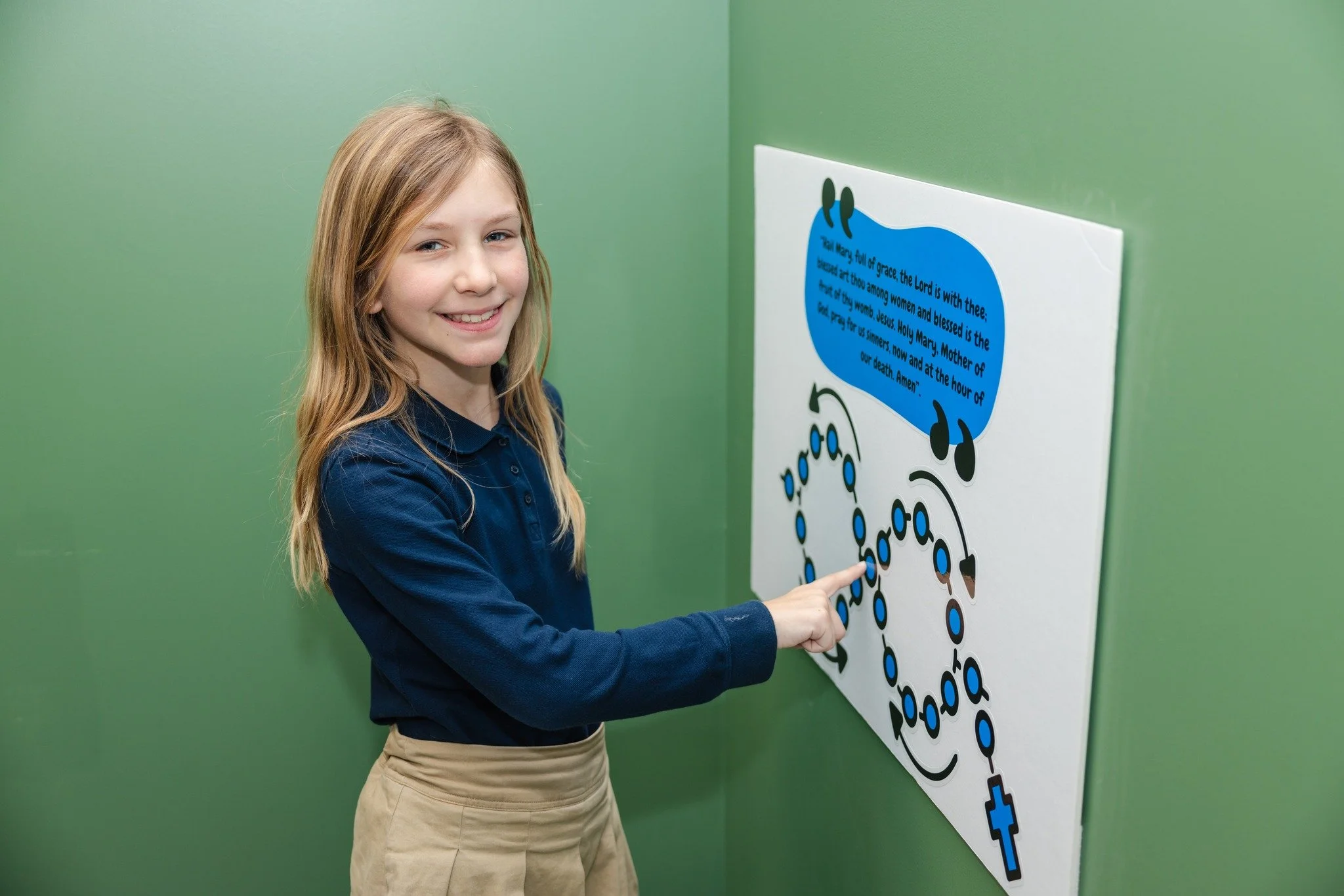
Children spend a surprising amount of time moving throughout their school. Rather than viewing hallways simply as spaces that connect classrooms, Catholic schools can intentionally design them to become extensions of faith formation.
Imagine a student walking to music class while stopping to:
Recall the seven days of Creation.
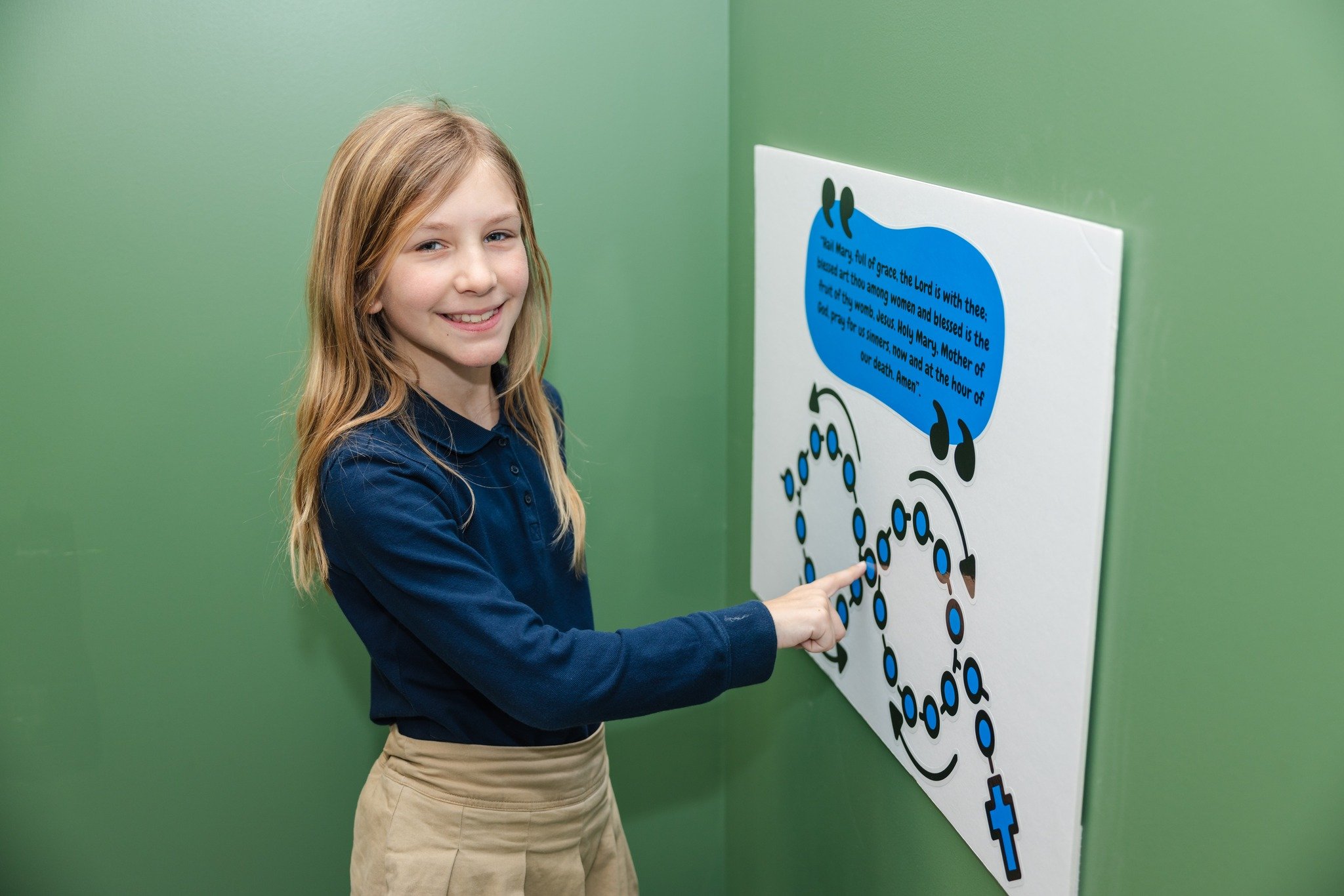
Pray a Hail Mary while following a Rosary Infinity Loop.
Remember one of the Beatitudes.
Reflect on who God says they are.
Practice calming strategies while being reminded they are loved by God.
These small interactions don't replace religion class—they reinforce it.
Over time, repeated exposure helps children internalize both faith and movement in meaningful ways.
Faith Is Built Through Repetition
Anyone who has worked with children knows that repetition matters.
Students learn multiplication facts by practicing them repeatedly.
They learn handwriting through daily use.
The same is true for faith.
Seeing Scripture, virtues, prayers, and reminders of God's love throughout the school day helps make these truths familiar and accessible.
Instead of faith existing only during one class period, it becomes woven into everyday school life.
Movement Helps Learning
As an occupational therapist, I also see another important benefit.
Children are designed to move.
Movement helps many students:
regulate their bodies,
improve attention,
organize their thoughts,
prepare for learning,
and transition more successfully between activities.
When movement is paired with faith-based messages, students are engaging both their minds and their bodies.
A hallway becomes more than a place to walk—it becomes a place to learn, reflect, and reset.
Every Student Benefits
Faith-filled movement opportunities can support students of all ages and abilities.
Some students may pause to pray.
Others may benefit from the calming movement.
Some simply enjoy the interactive experience.
The beauty is that each child engages at their own level while receiving consistent reminders of God's presence throughout the day.
Building a Culture of Faith
Catholic school culture isn't created only through curriculum.
It's created through daily experiences.
The words students see.
The messages they hear.
The routines they practice.
The environments they move through.
When hallways, counseling spaces, libraries, early childhood wings, and parish centers intentionally reflect the school's mission, faith becomes something students experience—not just something they study.
Over time, these seemingly small moments contribute to a school culture where children are continually reminded that they are known, loved, forgiven, and called by God.
Try This Tomorrow
Take one walk through your school's hallways.
Ask yourself:
"If a visitor walked through our building, would they immediately recognize that this is a Catholic school?"
Beyond crucifixes and classroom doors, consider where students could encounter reminders of Scripture, prayer, virtue, or God's love during the ordinary transitions of their day.
Sometimes the most meaningful opportunities for faith formation happen outside the classroom.
Want to Learn More?
Sacred Steps Sensory Paths was created by a practicing school-based occupational therapist to help schools intentionally combine movement, learning, and faith.
From Bible Stories and the Days of Creation to the Beatitudes, Rosary Infinity Loop, Holy Alphabet, Sacred Sacraments, and Who God Says I Am, each pathway is designed to reinforce Catholic teaching while supporting movement, self-regulation, and student engagement.
Whether you're looking to transform an entire hallway or add a simple faith-filled movement station, I'd be happy to help you find the best fit for your school, parish, or ministry.
Explore the full collection or contact me for personalized recommendations and complimentary hallway mock-ups.
About the Author
Trisha Klausing, OTR/L is a pediatric, school-based occupational therapist and the founder of Sacred Steps Sensory Paths. With more than a decade of experience helping children succeed in school, she designs movement experiences that strengthen regulation, learning, and faith. Sacred Steps products are used in Catholic schools, churches, therapy clinics, and early childhood programs across 25 states and Canada.
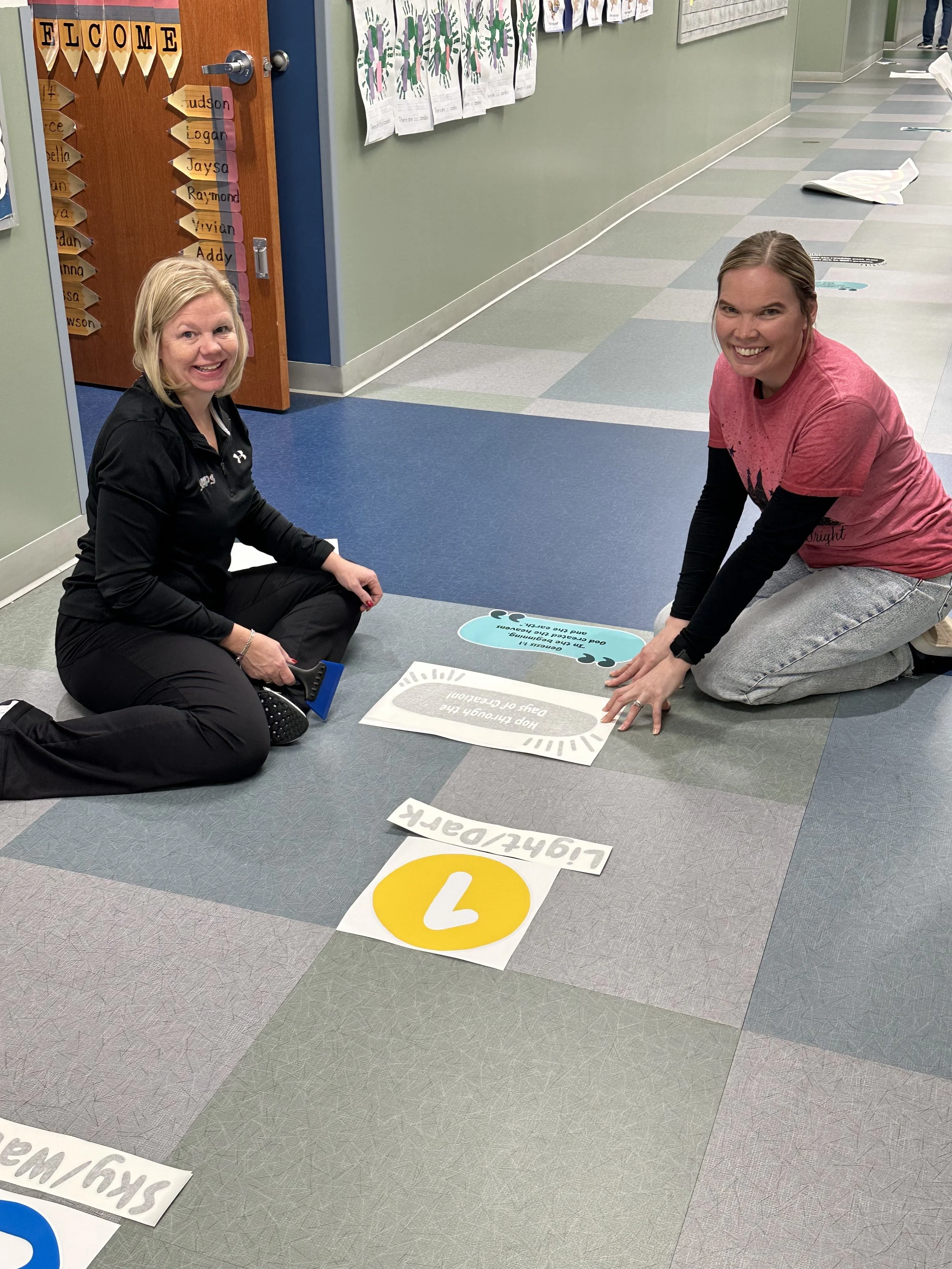
Why the Best School Supports Are in Place Before Students Need Them
Learn why proactive sensory supports help schools create calmer, more successful learning environments before behavior challenges begin.
Every summer, schools across the country prepare for a new year.
Teachers organize classrooms.
Custodians wax floors and freshen hallways.
Administrators finalize schedules and class lists.
Therapists prepare materials and review student needs.
Everyone works hard to make sure students walk into a welcoming environment on the very first day of school.
But one important question often gets overlooked:
Are we preparing our school environments to support every child before they need help?
As a school-based occupational therapist, this question has shaped the way I think about schools for more than a decade.
Because after working with hundreds of students, I've learned something important:
The most effective supports are proactive—not reactive.
We Prepare for Success in Every Other Area
Think about everything schools do before students arrive.
Teachers don't wait until the first day of school to create lesson plans.
Administrators don't wait until winter to test the heating system.
Custodians don't wait until the hallways become dirty before cleaning them.
We prepare because we know preparation creates success.
Yet when it comes to student regulation, movement, and emotional well-being, it's easy to wait until challenges appear before adding supports.
What if we approached those needs differently?
What if we intentionally designed school environments that quietly supported students all day long?
What Occupational Therapy Has Taught Me
As an occupational therapist, I know that behavior is communication.
Many students who appear distracted, anxious, impulsive, or overwhelmed aren't choosing to struggle.
Often, their nervous system is telling us something.
Their bodies may need movement.
Their brains may need a predictable routine.
Their sensory systems may need opportunities to regulate before learning can happen.
While we can't eliminate every challenge, we can build environments that make success more likely.
That's why I believe schools should support students long before they're struggling.
The Hallway Is One of the Most Underused Teaching Spaces in a School
When most people think about learning, they picture a classroom.
I picture the hallway.
Every student walks through it multiple times every single day.
Before lunch.
After recess.
Between specials.
On the way to intervention.
Heading back to class.
Over the course of a school year, those few minutes add up to hundreds of opportunities.
What if those transitions became moments to practice self-regulation?
To strengthen executive functioning?
To build confidence?
To remind students they are loved, capable, brave, and never alone?
Hallways aren't just places students pass through.
They can become places where students grow.
A Proactive School Environment Benefits Every Child
One of the biggest misconceptions about sensory supports is that they're only for students receiving special education services.
In reality, thoughtfully designed sensory supports benefit everyone.
The student who feels anxious before a test.
The child who struggles after recess.
The student who simply needs movement before sitting for another lesson.
Even the students who appear to be doing just fine benefit from opportunities to move, regulate, and reset throughout the day.
That's what makes sensory paths such a powerful Tier 1 support.
They're available to every student.
No referral.
No paperwork.
No waiting.
Just an environment intentionally designed to help children succeed.
Because when we prepare the environment, we're preparing students for success.
Preparing School Environments That Support Every Child
At Sacred Steps, this belief guides everything I create.
I don't design decals.
I design opportunities.
Opportunities for students to move.
To regulate.
To build confidence.
To practice executive functioning.
To encounter encouraging messages during ordinary moments of the school day.
Every hallway has the potential to become more than a hallway.
It can become part of a school's support system.
When we prepare our environments before students need them, we send a powerful message:
Every child belongs here.
Every child deserves support.
Every child deserves the opportunity to succeed.
That's the heart behind every Sacred Steps sensory path.
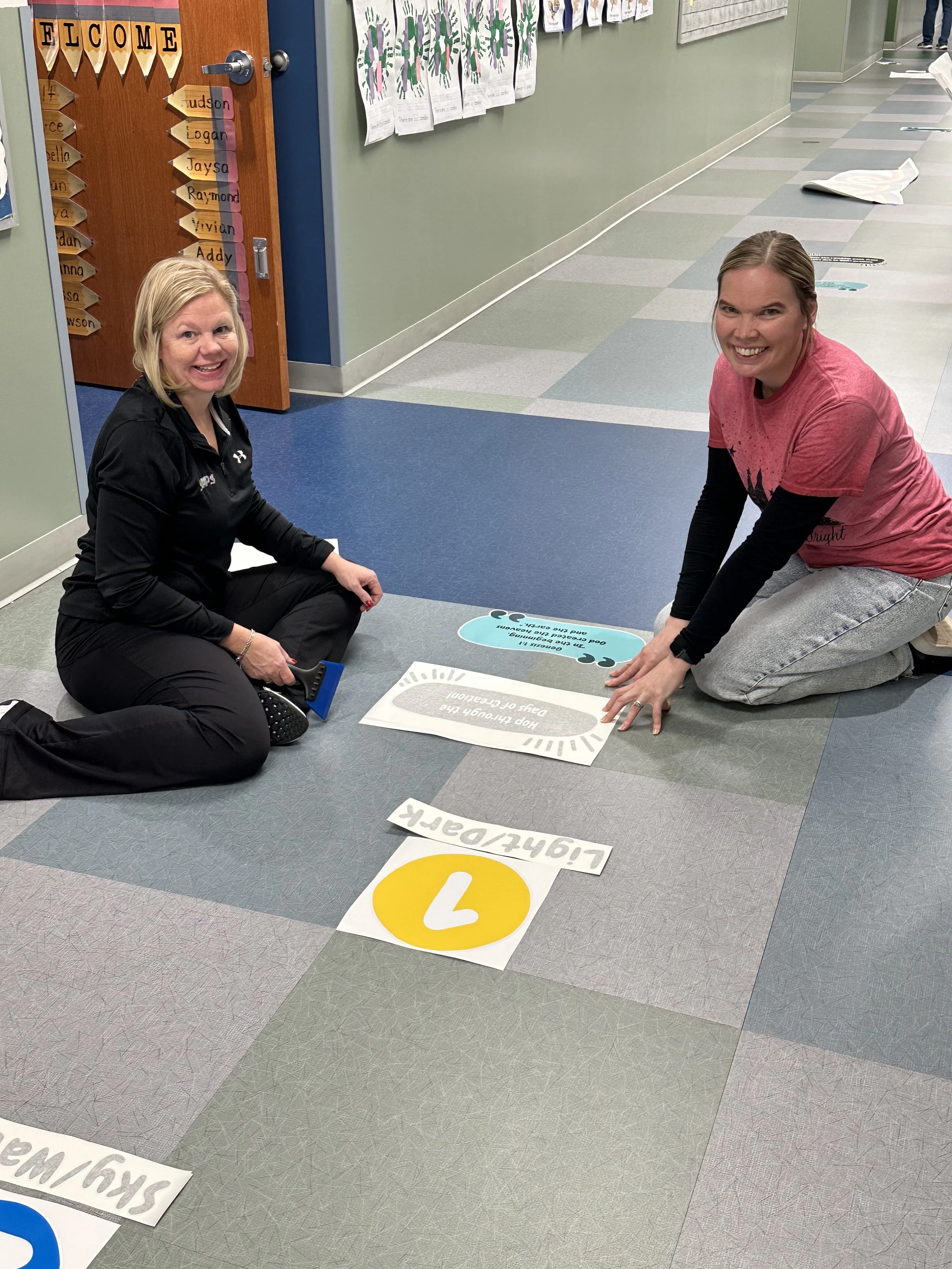
Try This Tomorrow
Take a walk through your school.
As you move from one hallway to the next, ask yourself these questions:
Where do students consistently struggle with transitions?
Which hallway feels rushed, chaotic, or stressful?
Where could movement naturally become part of the school day?
How could this space better support every child—not just the students who are already struggling?
Sometimes the greatest opportunities for change are hiding in spaces we walk through every day.
Want to Learn More?
Sacred Steps Sensory Paths are OT-designed movement experiences that help schools create environments where students can regulate, learn, and thrive. A school sensory pathway is one example of a proactive support that gives students access to movement before dysregulation interferes with learning.
Whether you're looking for a full hallway transformation, a Starter Set, portable sensory paths, calming stations, or faith-based movement experiences, every product is designed with one goal in mind:
Preparing school environments that support every child before they need help.
If you'd like help choosing the best fit for your school, I'd love to connect with you.
👉 Explore Sacred Steps Sensory Paths
About the Author
Trisha Klausing, OTR/L is a pediatric, school-based occupational therapist with more than 10 years of experience helping students develop the skills they need for success. She is the founder of Sacred Steps Sensory Paths, where she combines occupational therapy expertise with faith-filled and inclusive movement experiences designed to help schools create environments that support every child.
What Are Your Hallways Teaching?
Discover how schools can transform hallways into spaces that support self-regulation, executive functioning, character development, faith formation, and student success.
When we think about teaching, we naturally think about classrooms.
We think about lesson plans, curriculum, small groups, and instructional strategies.
But lately I've been asking a different question:
What are our hallways teaching?
Students spend hundreds of hours each year moving through hallways.
They walk to lunch.
They transition between classes.
They head to specials.
They travel to the library, gym, and office.
Those moments may seem small, but they add up.
And every space in a school sends a message.
The Hidden Curriculum of School Spaces
Whether we realize it or not, our physical environments are constantly teaching.
Classrooms teach academic content.
Libraries teach a love of reading.
Playgrounds teach cooperation and social skills.
But what about hallways?
For many schools, hallways are simply spaces students move through as quickly as possible.
But what if they could do more?
What if hallways became opportunities to reinforce the very lessons we want students to carry with them every day?
Hallways That Teach Character
Imagine students encountering messages about:
• Kindness
• Respect
• Perseverance
• Gratitude
• Responsibility
• Courage
Not once during a special assembly.
Not once during a character education lesson.
Every single day.
The power of repetition matters.
The messages students see repeatedly often become the messages they remember.
Hallways That Teach Self-Regulation
As a school-based occupational therapist, I know that many students need movement in order to learn.
Students are being asked to sit longer, focus longer, and manage increasingly complex expectations.
Purposeful movement can help students:
• Refocus attention
• Improve body awareness
• Reduce stress
• Increase readiness for learning
• Transition more successfully between activities
A hallway can become a place where students practice regulation skills instead of simply passing through.
Hallways That Teach Executive Functioning
Executive functioning skills are some of the most important skills students develop.
These include:
• Following directions
• Planning
• Organization
• Flexible thinking
• Self-monitoring
• Task initiation
Movement-based activities can provide opportunities for students to practice these skills in engaging and meaningful ways.
Hallways That Teach Faith
For Catholic and Christian schools, hallways offer another unique opportunity.
Faith formation doesn't only happen during religion class.
Students can be reminded throughout the day that they are:
✝️ Loved by God
✝️ Created with purpose
✝️ Called to serve others
✝️ Never alone
Bible stories, virtues, prayers, and faith-based movement activities can transform hallways into spaces that support both spiritual and physical development.
Making Every Square Foot Count
One of my favorite things about working with schools is helping them see possibilities they hadn't considered before.
An empty hallway becomes a sensory path.
A blank wall becomes a calming station.
A transition area becomes a space for movement, reflection, and growth.
The best part?
Most schools already have the space they need.
They simply need to look at it differently.
A Simple Question
As you prepare for the upcoming school year, I encourage you to take a walk through your building and ask yourself:
What are our hallways teaching?
Are they simply moving students from one place to another?
Or are they reinforcing the values, skills, and lessons that matter most?
Because every space in a school teaches something.
The question is whether it teaches intentionally.
Would you like help envisioning what a "Hallway That Teaches" could look like in your school?
I'd be happy to create a complimentary mockup using a photo of your hallway, wall, library, counseling office, or common area.
Sometimes the most impactful student support starts with a space you're already walking past every day.
What Is a Sensory Pathway? Signs, Benefits & School Examples
What is a sensory pathway? Discover how sensory pathways work in schools, their benefits for student regulation and focus, real examples, and OT-designed ideas for creating one in your school.
If you've heard the term "sensory pathway" but aren't exactly sure what it means, you're not alone.
Over the past several years, sensory pathways have become increasingly popular in schools, therapy clinics, libraries, hospitals, and community spaces. But many educators and administrators are still wondering:
What is a sensory pathway, and why are so many schools adding them?
As a school-based occupational therapist, I'd love to help answer that question.
What Is a Sensory Pathway?
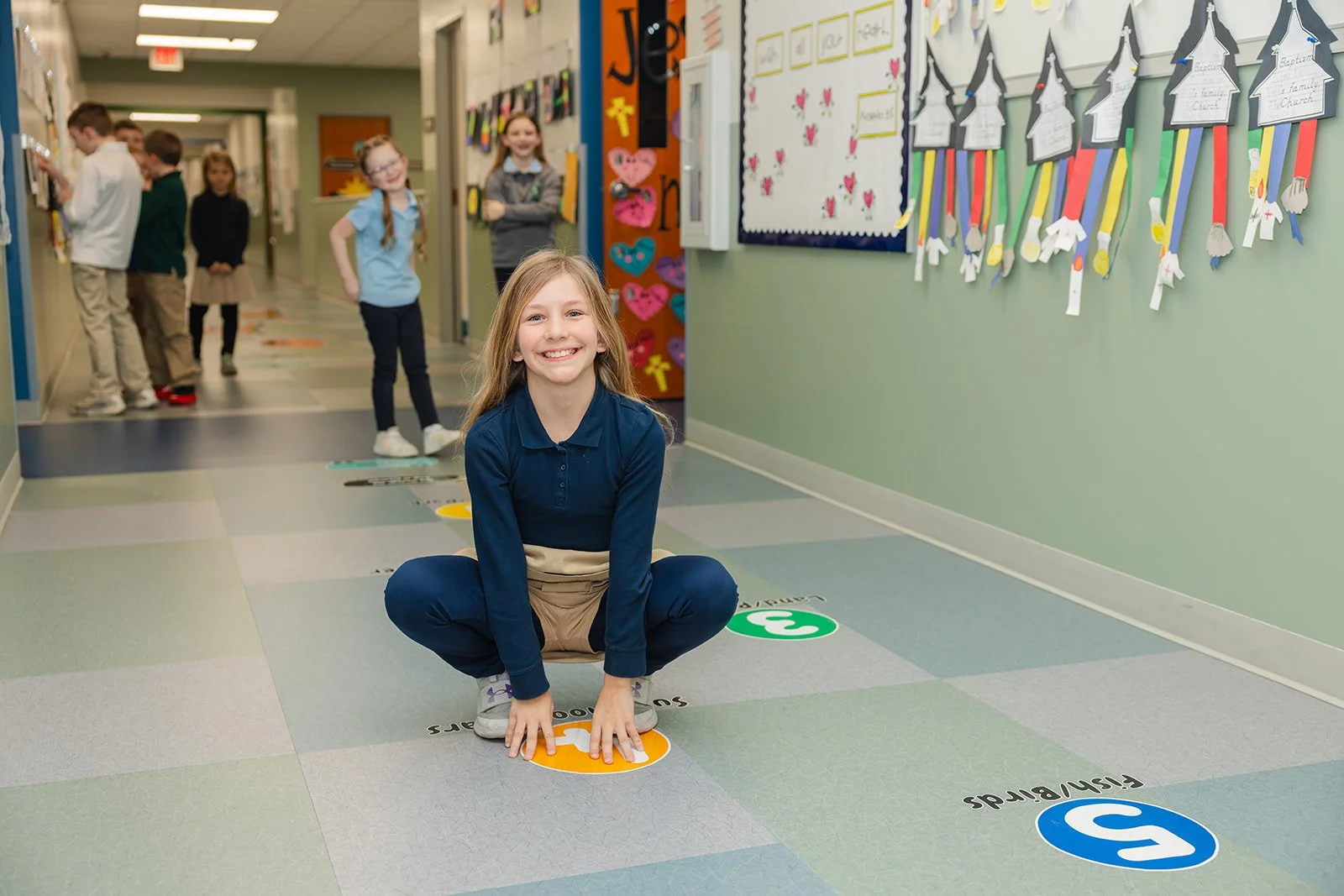
A sensory pathway is a series of intentional movement activities designed to help students move, regulate, refocus, and return to learning. In schools, sensory pathways can provide proactive movement opportunities throughout the day without requiring a dedicated sensory room.
Students might:
Hop
Jump
Balance
Stretch
March
Cross midline
Trace shapes
Practice deep breathing
Complete gross motor challenges
The goal is simple: provide structured movement opportunities that help students regulate their bodies and prepare for learning.
Many sensory pathways are installed in school hallways, allowing students to use them during transitions throughout the day.
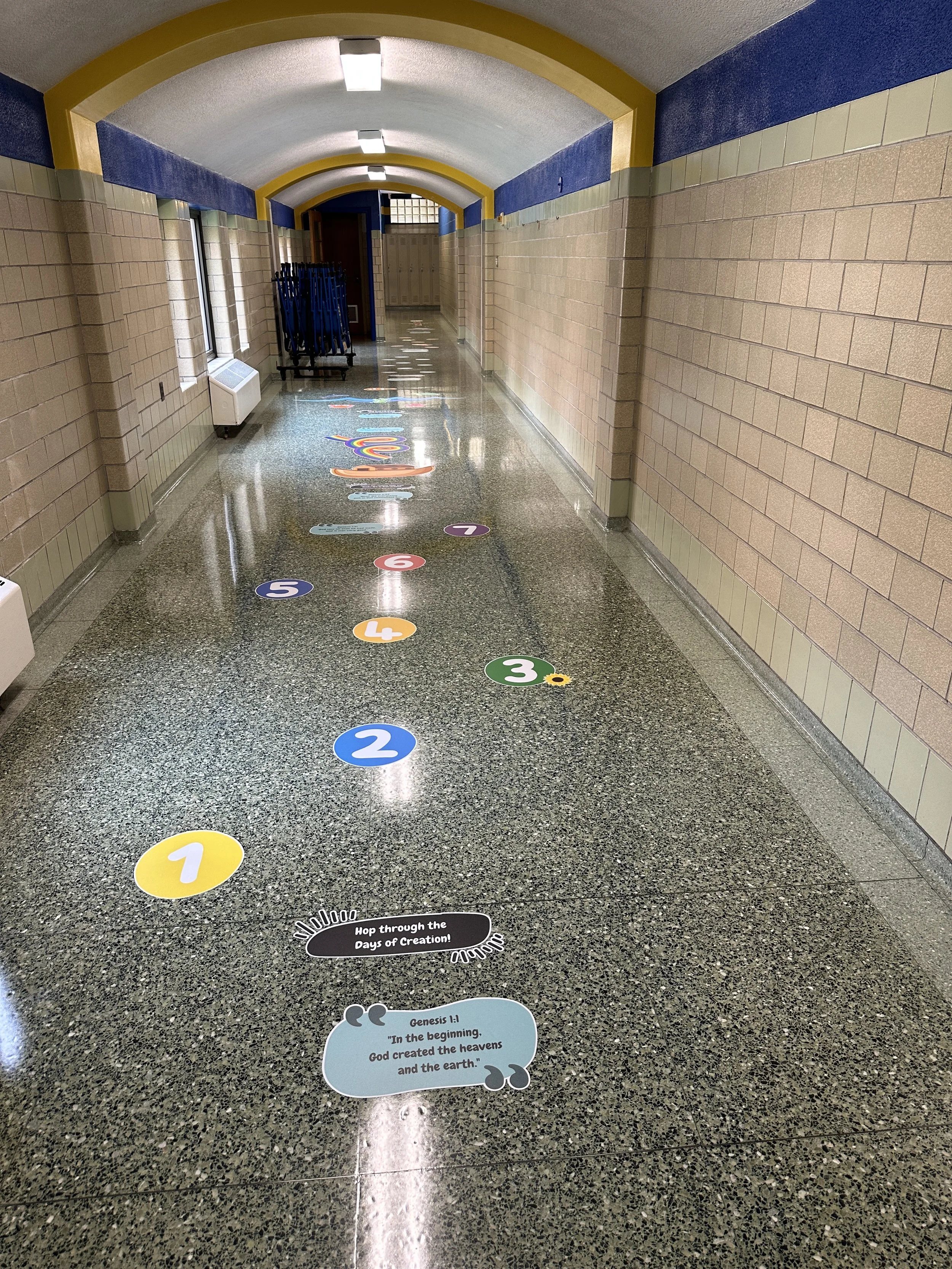
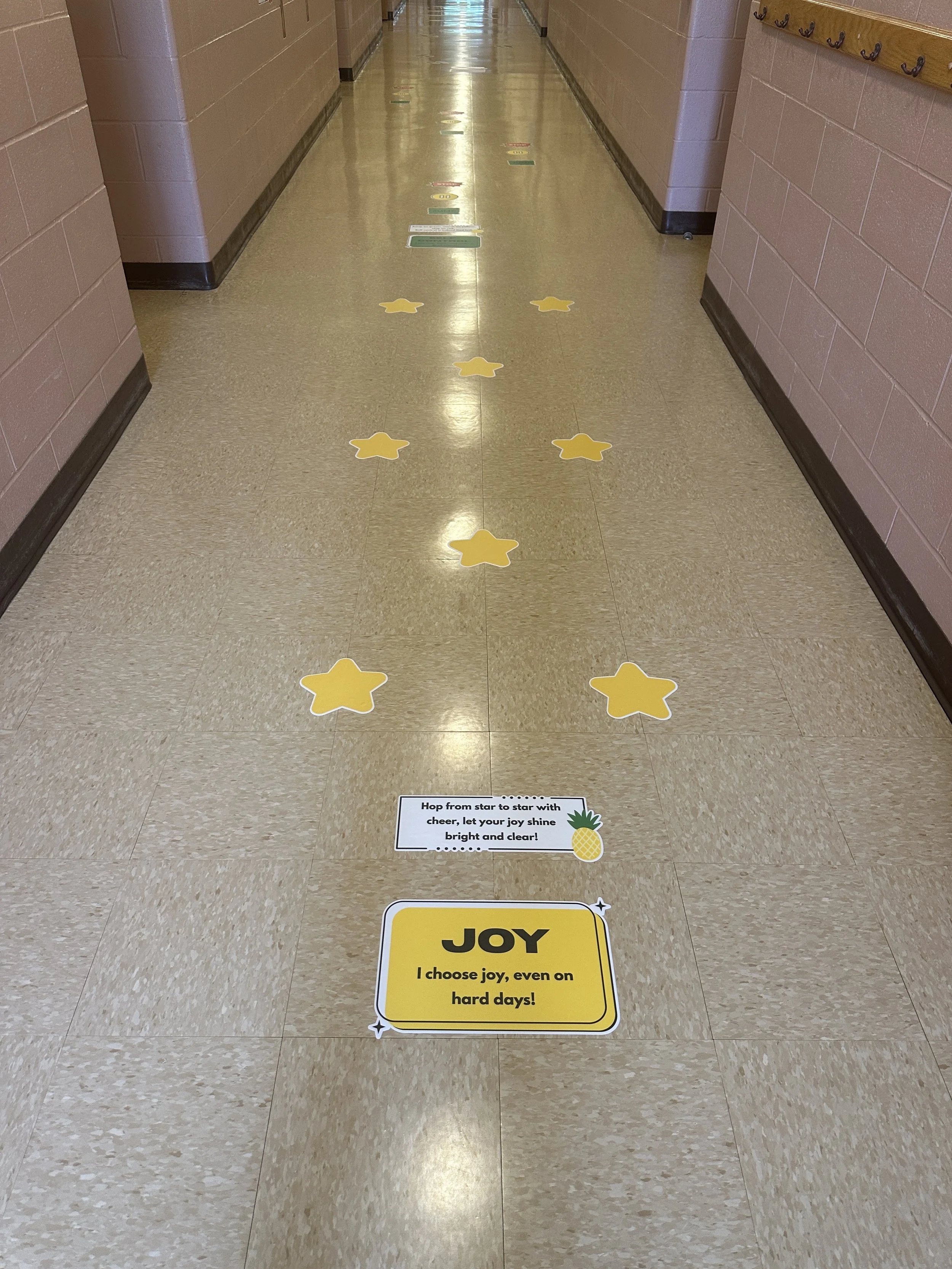
Sensory pathway for schools in Catholic elementary school hallway; https://www.sacredstepssensorypaths.com/store/p/bible-stories-sensory-path
Why Do Schools Use Sensory Pathways?
Movement plays a critical role in a child's ability to focus, regulate emotions, and participate successfully in the classroom.
When students are struggling with attention, self-regulation, anxiety, impulsivity, or transitions, a brief movement break can make a significant difference.
Schools often use sensory pathways to support:
Student Regulation
Sensory pathways provide students with opportunities to move their bodies in ways that help them feel more organized, calm, and ready to learn.
Executive Functioning Skills
Many pathways include activities that encourage students to follow directions, sequence movements, maintain attention, and practice self-control.
Positive Transitions
Transitions can be challenging for many students. Sensory pathways create a structured and engaging way for students to move from one activity to another.
Indoor Movement Opportunities
Weather doesn't always cooperate. Sensory pathways give students a way to move throughout the day, even when outdoor activities aren't possible.
Inclusive Support
One of the best things about sensory pathways is that they benefit all students. While they can be particularly helpful for students with ADHD, anxiety, autism, sensory processing differences, or executive functioning challenges, every child can benefit from purposeful movement.
Where Are Sensory Pathways Installed?
One of the reasons sensory pathways have become so popular is their flexibility.
Schools are installing sensory pathways in:
Hallways
Libraries
Counseling offices
Calming corners
Early childhood wings
Resource rooms
Common areas
Church and parish spaces
Many schools also incorporate wall-based sensory activities when floor space is limited. Other schools choose portable sensory paths that can be rolled out when needed and stored away when space is limited.
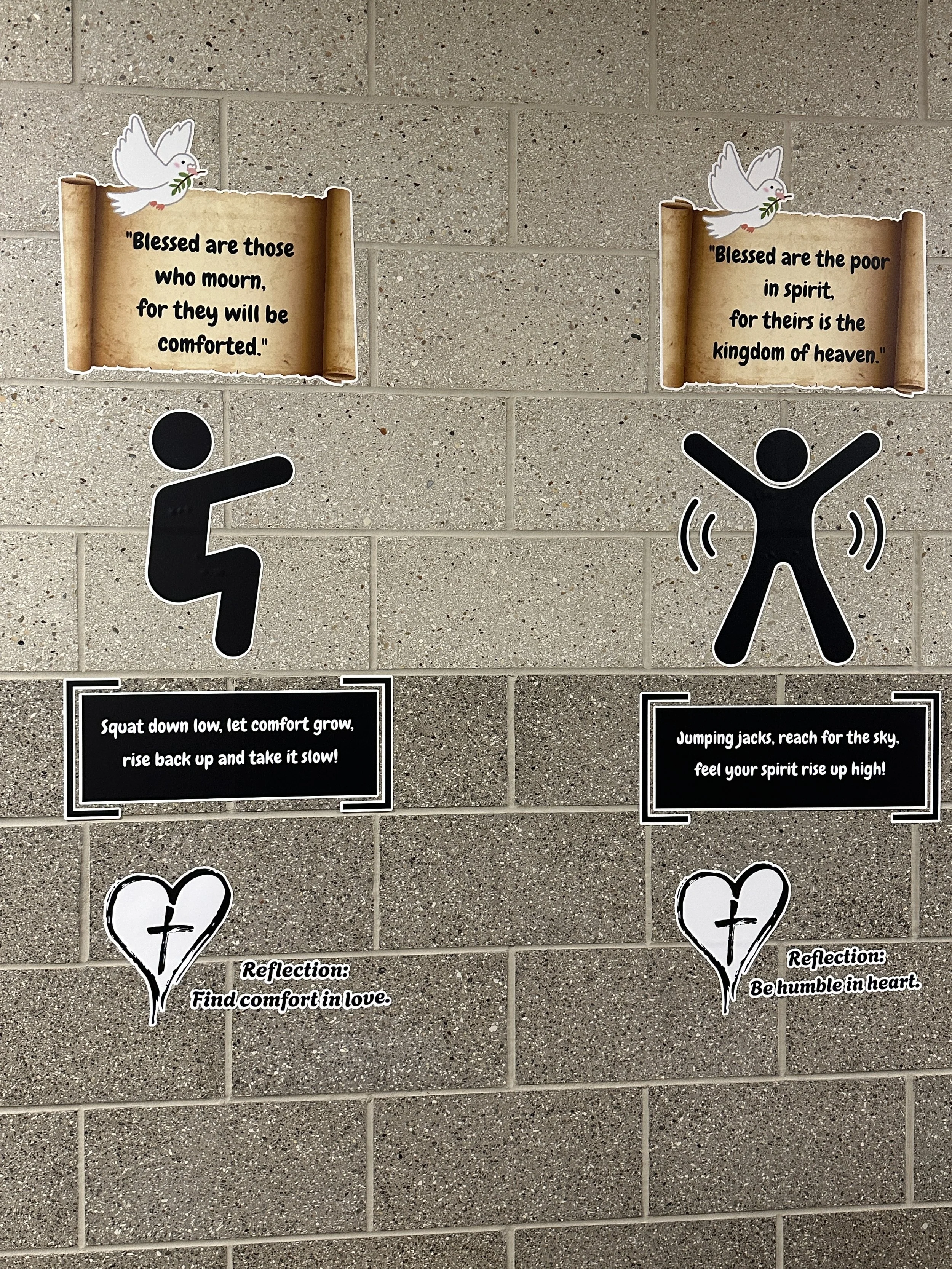
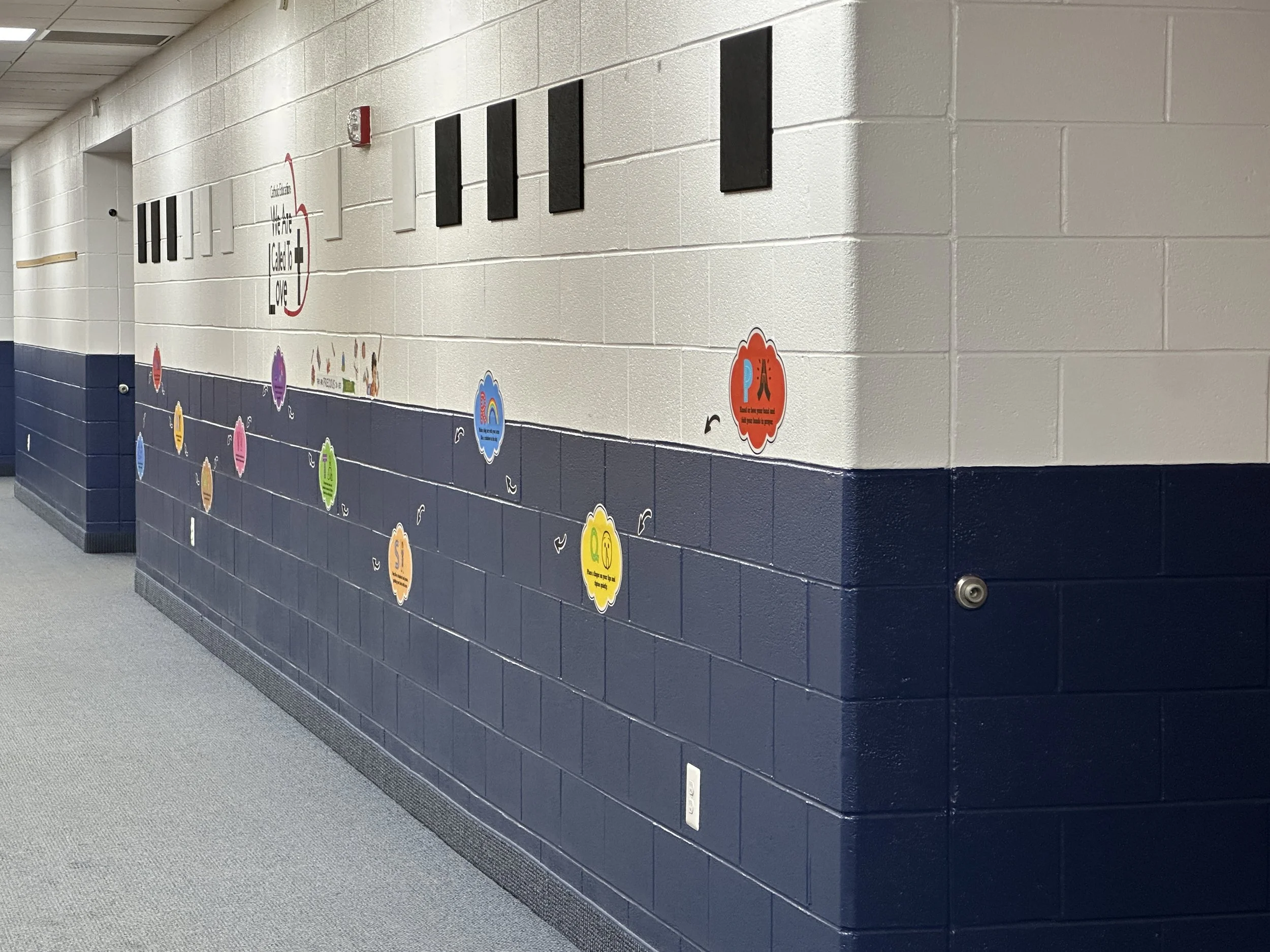
Limited floor space? A wall sensory path is the perfect solution. https://www.sacredstepssensorypaths.com/store/p/beatitudes-blessings-wall-sensory-path
Examples of Sensory Pathway Activities
Every sensory pathway is unique, but common activities include:
Animal walks
Hopping patterns
Balance challenges
Cross-body movements
Deep breathing exercises
Visual tracking activities
Gross motor sequences
Mindfulness prompts
These activities encourage students to move in ways that support both physical and cognitive development.
What Makes Faith-Based Sensory Pathways Different?
While many sensory pathways focus solely on movement, some schools are looking for ways to combine movement with meaningful learning opportunities.
This is especially true in Catholic and Christian schools.
Faith-based sensory pathways allow students to engage with:
Bible stories
Scripture
Catholic virtues
The Sacraments
Prayer
Religious education concepts
At Sacred Steps, some of our most popular faith-based options include the Bible Stories Sensory Path, the Who God Says I Am Path, and the Sacred Sacraments Path, each designed to combine purposeful movement with meaningful faith formation.
As students move through the activities, they are not only supporting regulation and focus but also reinforcing their faith in a way that feels active, engaging, and memorable.
How Sacred Steps Sensory Paths Are Different
As both a school-based occupational therapist and a Catholic business owner, I wanted to create something that supported the whole child.
That's why Sacred Steps combines purposeful movement with faith formation.
Our sensory pathways help students:
Regulate their bodies
Improve focus and attention
Strengthen executive functioning skills
Support positive behavior
Reinforce Catholic identity
Engage with Scripture and faith-based concepts
To our knowledge, Sacred Steps remains the only faith-based sensory path company specifically designed for Catholic and Christian schools.
Is a Sensory Pathway Right for Your School?
If your school is looking for ways to:
Support student regulation
Improve transitions
Encourage movement throughout the day
Create more purposeful learning spaces
Strengthen Catholic identity
A sensory pathway may be an excellent fit.
The best part? Many schools already have the perfect space.
An empty hallway.
A blank wall.
A transition area that could become something more.
Schools often begin with a full hallway path, a portable path, or even a smaller starter set before expanding over time.
Sometimes the most impactful school improvement projects don't require additional space—just a new way of thinking about the space you already have.
If you're interested in exploring what a sensory pathway could look like in your school, I'd be happy to create a complimentary mockup using photos of your space. You can explore our faith-based sensory paths, portable paths, and starter sets here: https://www.sacredstepssensorypaths.com/