Why the Best School Supports Are in Place Before Students Need Them
Learn why proactive sensory supports help schools create calmer, more successful learning environments before behavior challenges begin.
Every summer, schools across the country prepare for a new year.
Teachers organize classrooms.
Custodians wax floors and freshen hallways.
Administrators finalize schedules and class lists.
Therapists prepare materials and review student needs.
Everyone works hard to make sure students walk into a welcoming environment on the very first day of school.
But one important question often gets overlooked:
Are we preparing our school environments to support every child before they need help?
As a school-based occupational therapist, this question has shaped the way I think about schools for more than a decade.
Because after working with hundreds of students, I've learned something important:
The most effective supports are proactive—not reactive.
We Prepare for Success in Every Other Area
Think about everything schools do before students arrive.
Teachers don't wait until the first day of school to create lesson plans.
Administrators don't wait until winter to test the heating system.
Custodians don't wait until the hallways become dirty before cleaning them.
We prepare because we know preparation creates success.
Yet when it comes to student regulation, movement, and emotional well-being, it's easy to wait until challenges appear before adding supports.
What if we approached those needs differently?
What if we intentionally designed school environments that quietly supported students all day long?
What Occupational Therapy Has Taught Me
As an occupational therapist, I know that behavior is communication.
Many students who appear distracted, anxious, impulsive, or overwhelmed aren't choosing to struggle.
Often, their nervous system is telling us something.
Their bodies may need movement.
Their brains may need a predictable routine.
Their sensory systems may need opportunities to regulate before learning can happen.
While we can't eliminate every challenge, we can build environments that make success more likely.
That's why I believe schools should support students long before they're struggling.
The Hallway Is One of the Most Underused Teaching Spaces in a School
When most people think about learning, they picture a classroom.
I picture the hallway.
Every student walks through it multiple times every single day.
Before lunch.
After recess.
Between specials.
On the way to intervention.
Heading back to class.
Over the course of a school year, those few minutes add up to hundreds of opportunities.
What if those transitions became moments to practice self-regulation?
To strengthen executive functioning?
To build confidence?
To remind students they are loved, capable, brave, and never alone?
Hallways aren't just places students pass through.
They can become places where students grow.
A Proactive School Environment Benefits Every Child
One of the biggest misconceptions about sensory supports is that they're only for students receiving special education services.
In reality, thoughtfully designed sensory supports benefit everyone.
The student who feels anxious before a test.
The child who struggles after recess.
The student who simply needs movement before sitting for another lesson.
Even the students who appear to be doing just fine benefit from opportunities to move, regulate, and reset throughout the day.
That's what makes sensory paths such a powerful Tier 1 support.
They're available to every student.
No referral.
No paperwork.
No waiting.
Just an environment intentionally designed to help children succeed.
Because when we prepare the environment, we're preparing students for success.
Preparing School Environments That Support Every Child
At Sacred Steps, this belief guides everything I create.
I don't design decals.
I design opportunities.
Opportunities for students to move.
To regulate.
To build confidence.
To practice executive functioning.
To encounter encouraging messages during ordinary moments of the school day.
Every hallway has the potential to become more than a hallway.
It can become part of a school's support system.
When we prepare our environments before students need them, we send a powerful message:
Every child belongs here.
Every child deserves support.
Every child deserves the opportunity to succeed.
That's the heart behind every Sacred Steps sensory path.
Try This Tomorrow
Take a walk through your school.
As you move from one hallway to the next, ask yourself these questions:
Where do students consistently struggle with transitions?
Which hallway feels rushed, chaotic, or stressful?
Where could movement naturally become part of the school day?
How could this space better support every child—not just the students who are already struggling?
Sometimes the greatest opportunities for change are hiding in spaces we walk through every day.
Want to Learn More?
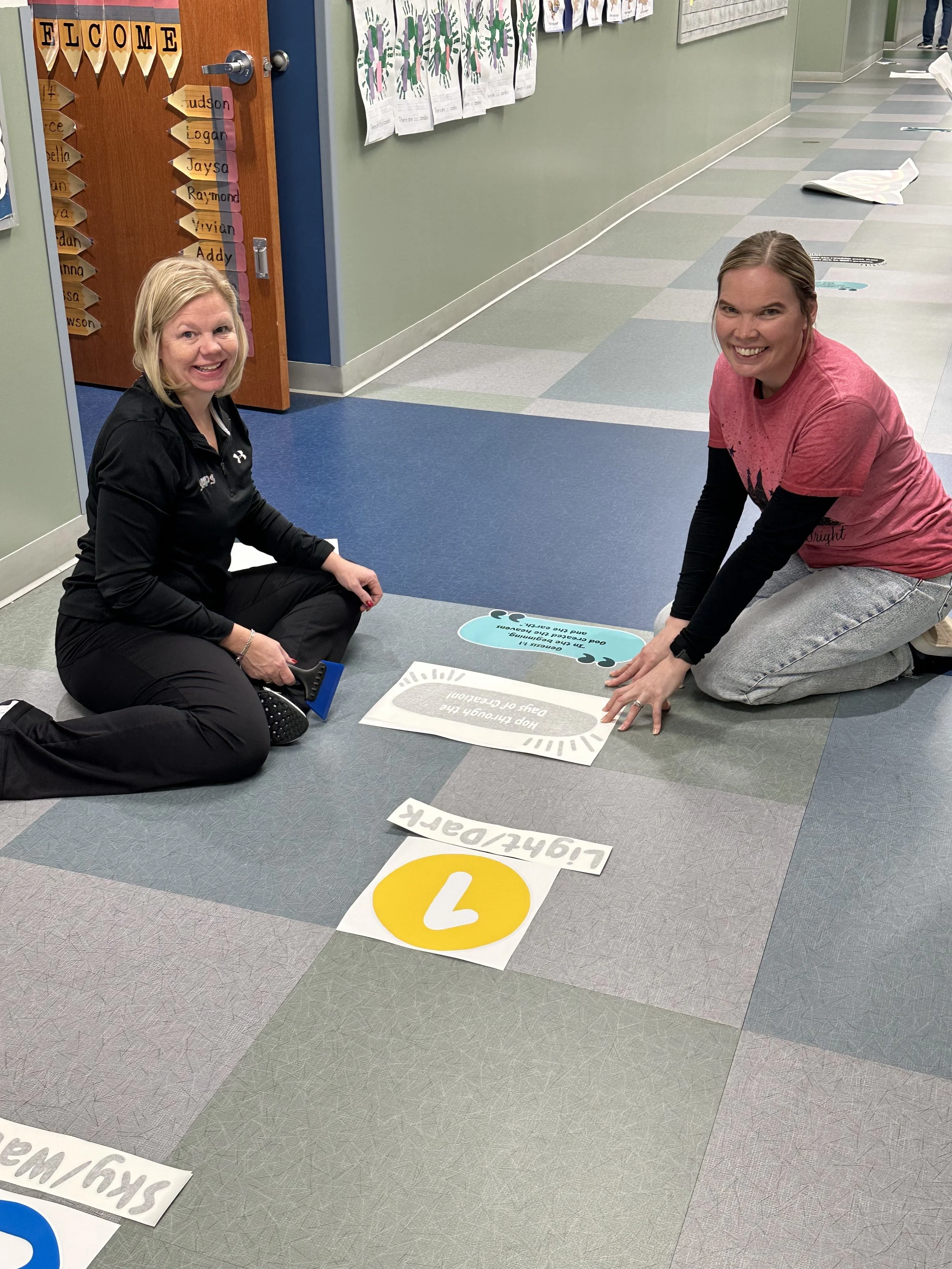
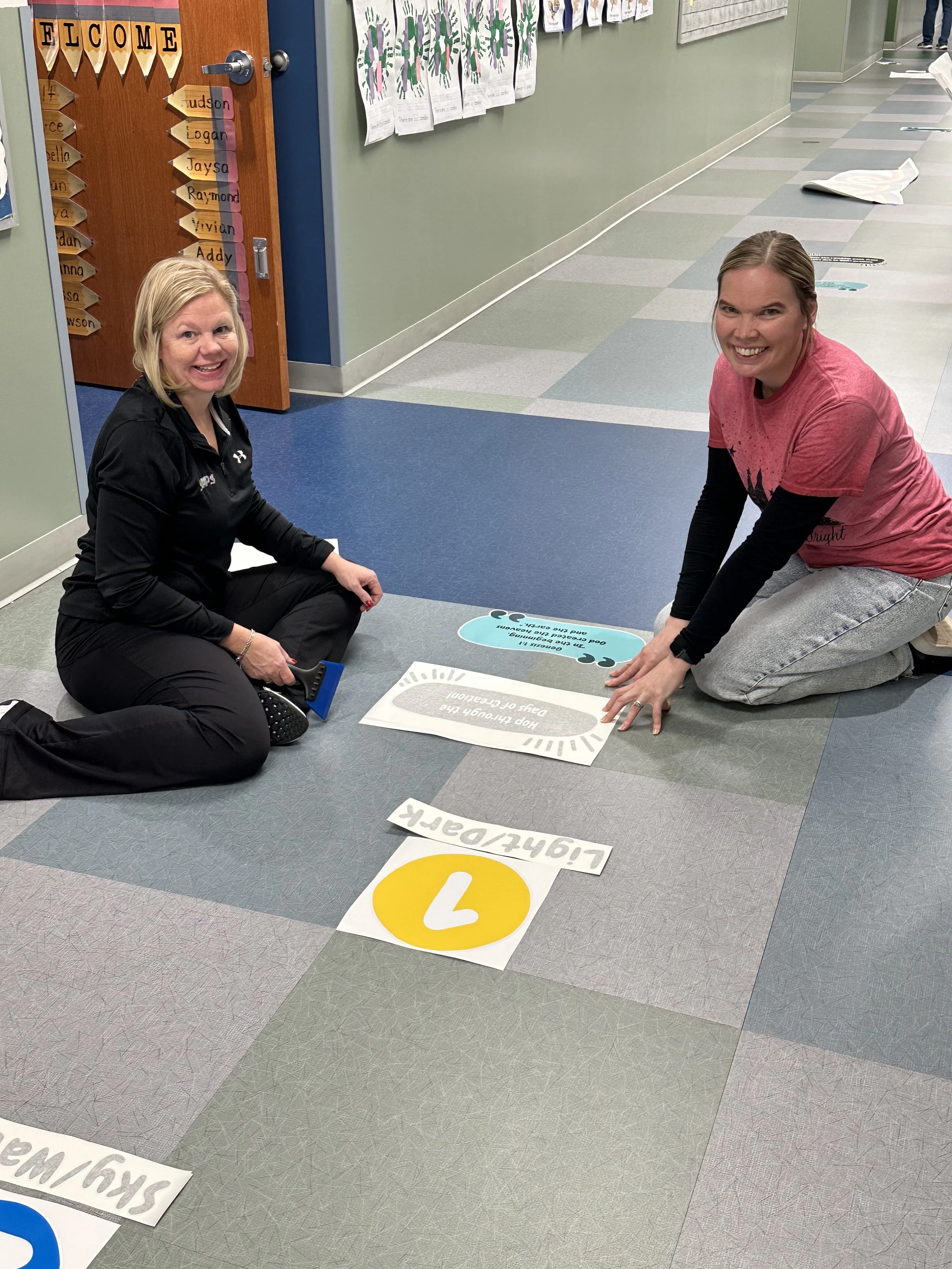
Sacred Steps Sensory Paths are OT-designed movement experiences that help schools create environments where students can regulate, learn, and thrive. A school sensory pathway is one example of a proactive support that gives students access to movement before dysregulation interferes with learning.
Whether you're looking for a full hallway transformation, a Starter Set, portable sensory paths, calming stations, or faith-based movement experiences, every product is designed with one goal in mind:
Preparing school environments that support every child before they need help.
If you'd like help choosing the best fit for your school, I'd love to connect with you.
👉 Explore Sacred Steps Sensory Paths
About the Author
Trisha Klausing, OTR/L is a pediatric, school-based occupational therapist with more than 10 years of experience helping students develop the skills they need for success. She is the founder of Sacred Steps Sensory Paths, where she combines occupational therapy expertise with faith-filled and inclusive movement experiences designed to help schools create environments that support every child.
The Sacred Steps Difference: Why OT-Designed Sensory Paths Work
Walk through almost any education conference, and you'll see plenty of colorful sensory paths.
They look fun.
They brighten hallways.
They encourage movement.
But at Sacred Steps, we believe one thing sets our products apart:
Every activity begins with one question:
"Will this actually help children?"
That question guides every decision we make—from the first sketch to the final installation.
As a practicing pediatric occupational therapist, I've spent years working alongside teachers, administrators, therapists, and families. Every day, I see the challenges children face with attention, self-regulation, executive functioning, transitions, and sensory processing.
I've also seen what happens when movement is used intentionally.
Movement isn't simply a brain break.
When designed correctly, movement prepares the brain for learning.
That's why every Sacred Steps activity is created with purpose—not simply to decorate a hallway, but to help children regulate their bodies, engage their minds, and build skills they use throughout the school day.
Created by an OT. Refined in Real Schools.
Unlike products designed solely for visual appeal, Sacred Steps activities are built from real clinical experience.
Before a product is released, I ask questions like:
Does this movement support sensory regulation?
Will this activity improve attention and readiness to learn?
Is the cognitive demand appropriate for the intended age?
Can teachers realistically use it during a busy school day?
Will students enjoy coming back to it again and again?
If the answer isn't yes, it goes back to the drawing board.
Designed for Busy Educators
Schools don't need one more thing to manage.
That's why Sacred Steps products are intentionally designed to be:
Quick to install
Easy to clean
Durable enough for high-traffic environments
Flexible enough to work in hallways, classrooms, therapy spaces, libraries, counseling offices, churches, and childcare centers
Whether you're installing a full hallway sensory path, starting with a Starter Set, or using one of our portable pathways, the goal is the same: create meaningful movement opportunities that fit naturally into your day.
More Than Movement
Movement is only one piece of the puzzle.
Our products also support:
Self-regulation
Attention and focus
Motor planning
Executive functioning
Classroom transitions
Social-emotional learning
Confidence and independence
For our faith-based collection, we add another meaningful layer by helping children engage with Scripture, Biblical truths, and Christian values through movement and reflection.
Designed for Every Child
Every child learns differently.
Some need movement before they can focus.
Some benefit from visual supports.
Some need opportunities to reset during challenging moments.
Others simply thrive when learning is active and engaging.
Our goal has never been to create products for only one type of learner.
It's to create movement experiences that help every child succeed.
Why Schools Choose Sacred Steps
Schools across the United States and Canada are choosing Sacred Steps because they want more than a colorful hallway.
They want intentional movement.
They want practical tools.
They want products grounded in clinical expertise and designed for everyday use.
Most importantly, they want solutions that help children thrive.
That's the Sacred Steps difference.
And it's why every product we create starts with one simple question:
"Will this actually help children?"