Can 4 Minutes of Movement Improve Classroom Focus? What the Research Says
Could just a few minutes of movement help students return to learning more focused and ready to participate? A school-based pediatric occupational therapist looks at the research behind classroom movement breaks, on-task behavior, regulation, and why purposeful movement can be an important part of the school day.
Teachers are asked to fit an incredible amount into the school day.
Reading. Math. Writing. Intervention. Specials. Social-emotional learning. Transitions. Assessments.
So when someone suggests adding movement breaks to the day, it's understandable for educators to wonder:
Where are we supposed to find the time?
As a pediatric, school-based occupational therapist, I hear versions of this question often. And it's one reason I find the research surrounding movement and classroom behavior so interesting. Classroom movement breaks don't have to take large amounts of time away from instruction. Research suggests that even brief opportunities for physical activity may support on-task behavior, student regulation, and classroom focus.
Because what if movement isn't taking valuable time away from learning?
What if a few purposeful minutes of movement actually help students make better use of the learning time that follows?
Research suggests that may be exactly what happens.
What Can Just 4 Minutes of Movement Do?
One study examined the effect of short classroom activity breaks in children in grades 1–3.
The movement break lasted just four minutes.
Compared with a control condition without an activity break, researchers found increases in on-task behavior of:
10.4% following a morning activity break
10.5% following an afternoon activity break
14% when students participated in both morning and afternoon activity breaks
The researchers found that activity breaks improved on-task behavior regardless of whether they occurred in the morning or afternoon. The effects were particularly strong among children who demonstrated more off-task behavior without the movement break.
Four minutes.
That's less time than many classroom transitions take.
And while one small study certainly doesn't mean every child will become 10–14% more attentive after four minutes of movement, it gives us something important to think about:
Sometimes a small investment in movement may pay us back in attention.
This Isn't Just One Study
A systematic review published in 2018 looked at research involving classroom movement breaks and physically active learning.
When researchers examined classroom behavior, 9 out of 11 interventions showed improvement following particular types of movement breaks or physically active learning.
The review also concluded that classroom movement breaks and physically active learning increased physical activity and enhanced time on task.
It's important to put those findings in context: the researchers described much of the underlying evidence as low-to-medium quality and noted substantial differences among the studies. So we shouldn't interpret the research as proof that any movement break will automatically improve learning.
But the overall findings provide good reason for schools to take purposeful movement seriously.
And other research points in a similar direction.
A study involving fourth- and fifth-grade students found that 10-minute classroom exercise breaks resulted in significantly higher time-on-task than a sedentary classroom activity—87.6% compared with 77.1%.
A separate study involving 87 primary-school students found that brief physical activity breaks—with or without academic content incorporated—were effective in improving on-task behavior.
Why Might Movement Help?
From an occupational therapy perspective, this makes a lot of sense.
We sometimes expect children to move seamlessly from one demand to another:
Recess → math.
Lunch → reading.
Twenty minutes sitting at a desk → another twenty minutes sitting at a desk.
But children don't leave their bodies at the classroom door.
Their ability to attend and participate is influenced by their level of alertness, sensory needs, regulation, environment, and the demands being placed upon them.
Movement provides sensory input and changes the demands being placed on the body.
For some students, that movement may help them become more alert and ready to engage. For others, it may provide an appropriate outlet for their need to move before they're asked to sustain attention again.
That's why I prefer to think about movement as more than simply:
“Getting the wiggles out.”
We're trying to give the body purposeful input that helps prepare it for what we're asking it to do next.
Don't Wait Until a Student Is Already Struggling
This is one of the biggest shifts I encourage schools to make.
Movement doesn't have to be something we offer only after a child is already:
out of their seat,
unable to attend,
frustrated,
restless,
overwhelmed, or
struggling to participate.
We can use movement proactively.
A movement opportunity might make sense:
Before a longer period of seated work.
After lunch.
Between subjects.
During a transition.
Following an extended period of sitting.
Or simply at predictable points in the day when we know attention tends to decrease.
Rather than asking:
“What do we do when this student can't sit anymore?”
we can begin asking:
“What can we do before we get to that point?”
That's a very different approach.
But Please Don't Send Them Back Bouncing Off the Walls! 😊
There's another important piece of the puzzle.
A movement break shouldn't necessarily end with the most exciting, activating activity and then:
“Okay! Back to class!”
Every teacher reading this knows exactly how well that can go. 😂
Our goal isn't simply to get children moving.
We also want to help them transition back to a state that's appropriate for learning.
That's why I like pairing purposeful movement with a calming or organizing activity at the end.
That might include slower movements, controlled breathing, pushing or other resistive activities, or another strategy appropriate for the student and environment.
Think of it as:
👣 MOVE → ❤️ RESET → 📚 LEARN
We're giving the body an opportunity to move—and then helping it prepare for what comes next.
Movement Doesn't Have to Mean a Sensory Room
This is another misconception I encounter.
Schools sometimes assume that supporting sensory regulation requires a beautiful dedicated sensory room filled with specialized equipment.
Those spaces can certainly be valuable.
But they're not the only option.
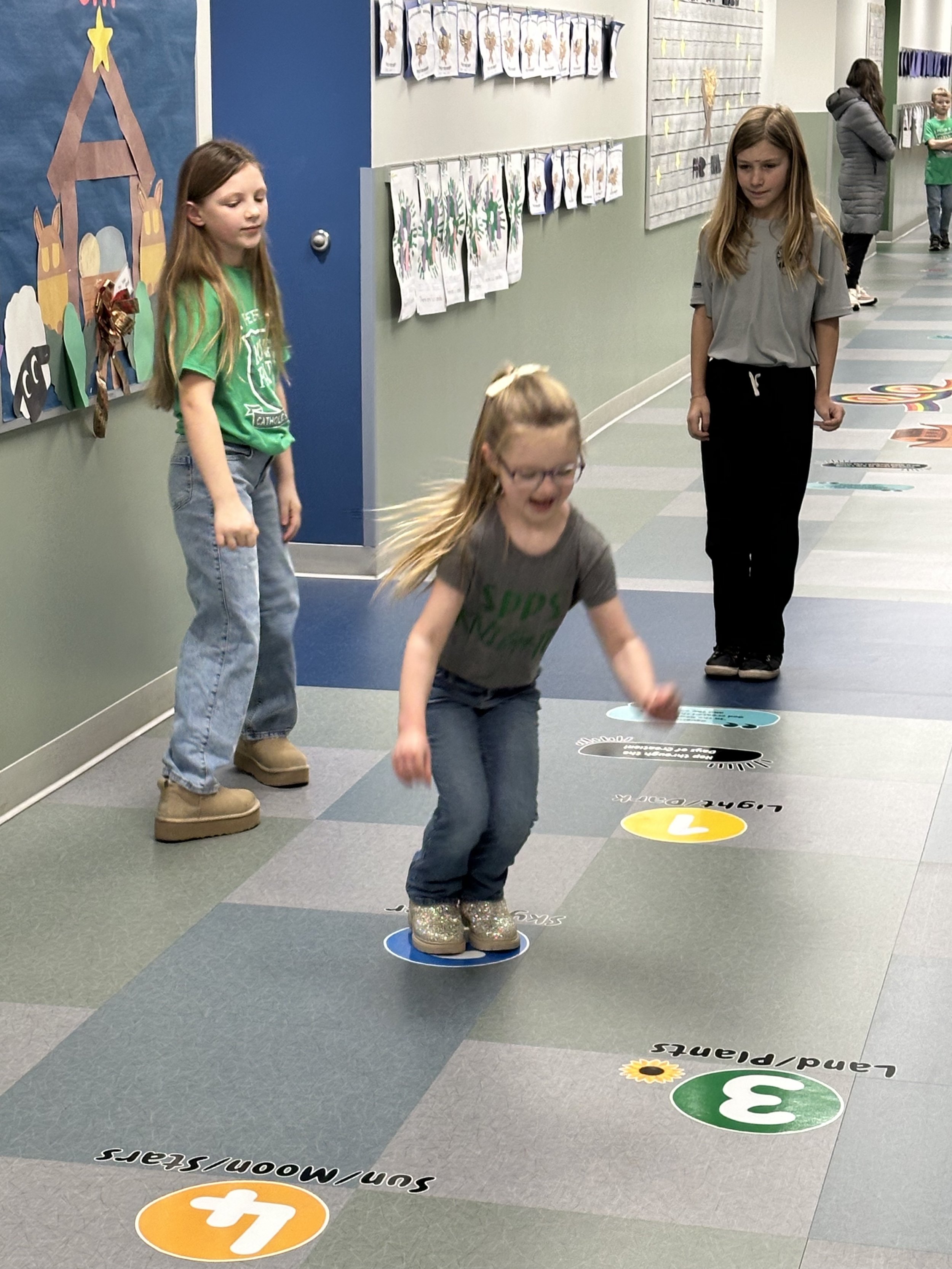
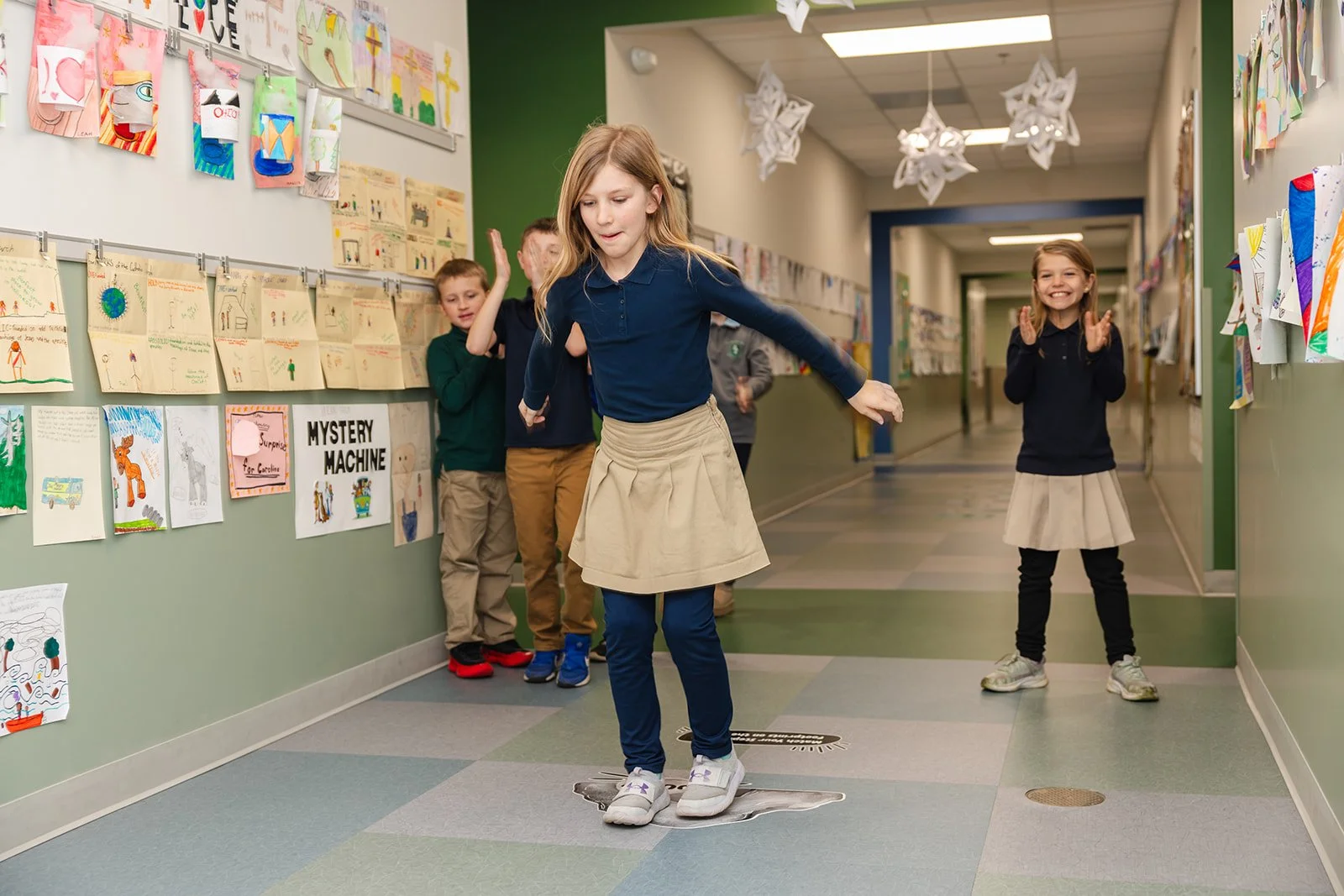
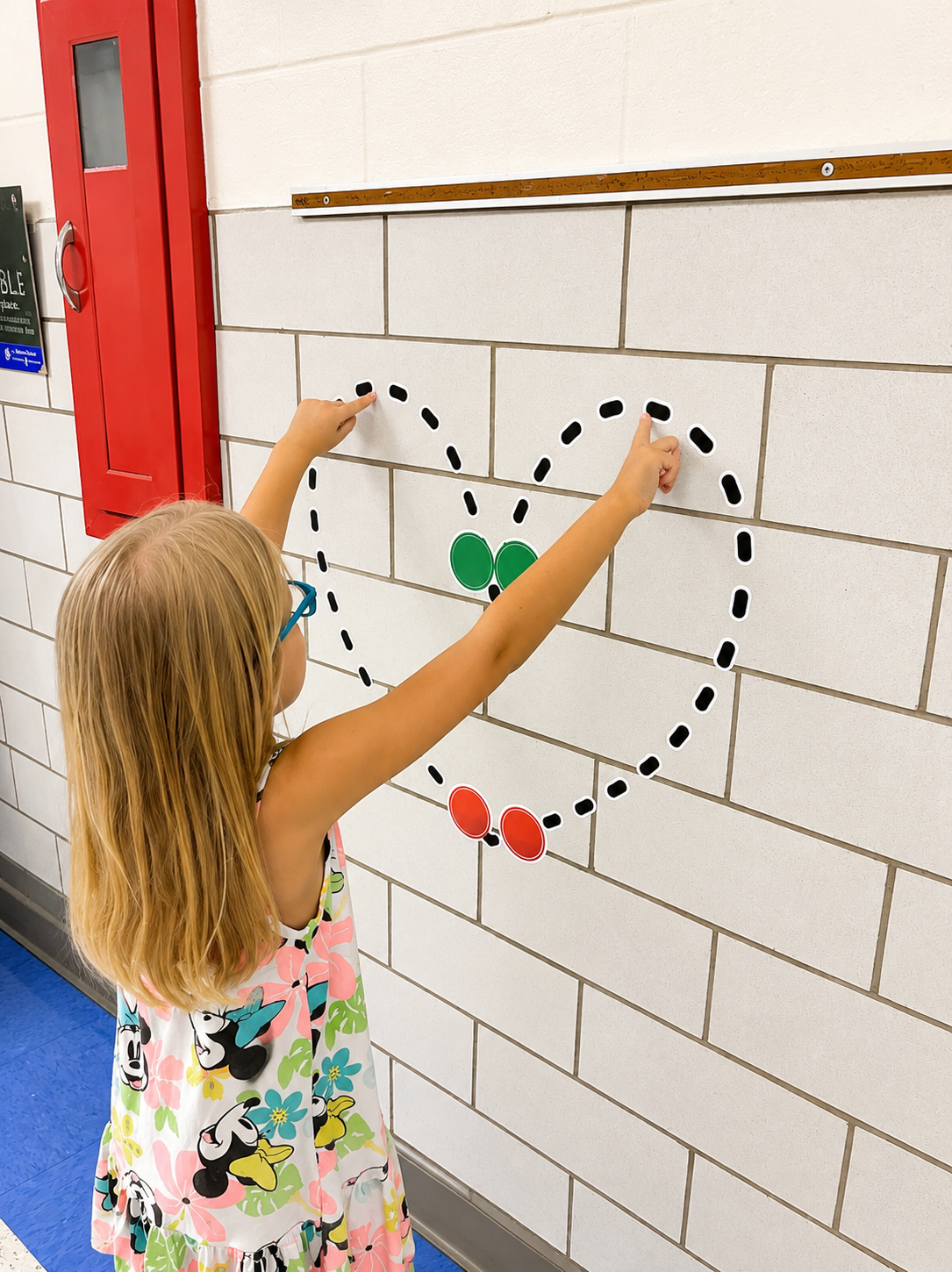
Purposeful movement can happen in the spaces students already use:
Hallways. Classrooms. Counseling areas. Resource rooms. Early childhood wings. Transition spaces.
And it doesn't always require 20 or 30 minutes.
The research on short classroom activity breaks is particularly encouraging because it suggests that even brief opportunities for movement may be meaningful.
That's the Thinking Behind Sensory Paths
As a practicing pediatric and school-based occupational therapist, this philosophy is a big part of why I created Sacred Steps Sensory Paths.
I wanted movement and regulation strategies to be available where children already are, rather than requiring teachers to find another program, another room, or another large block of time.
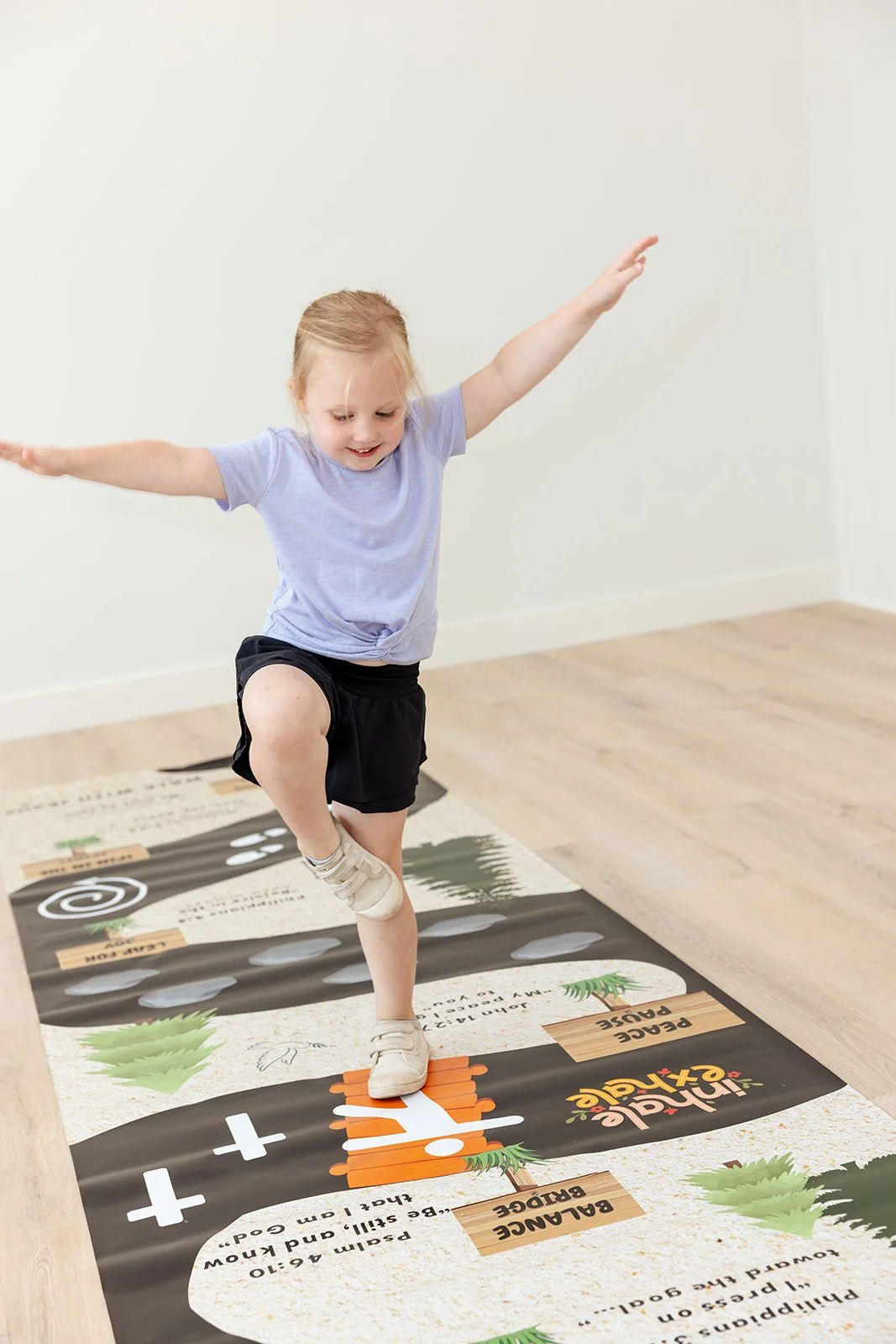
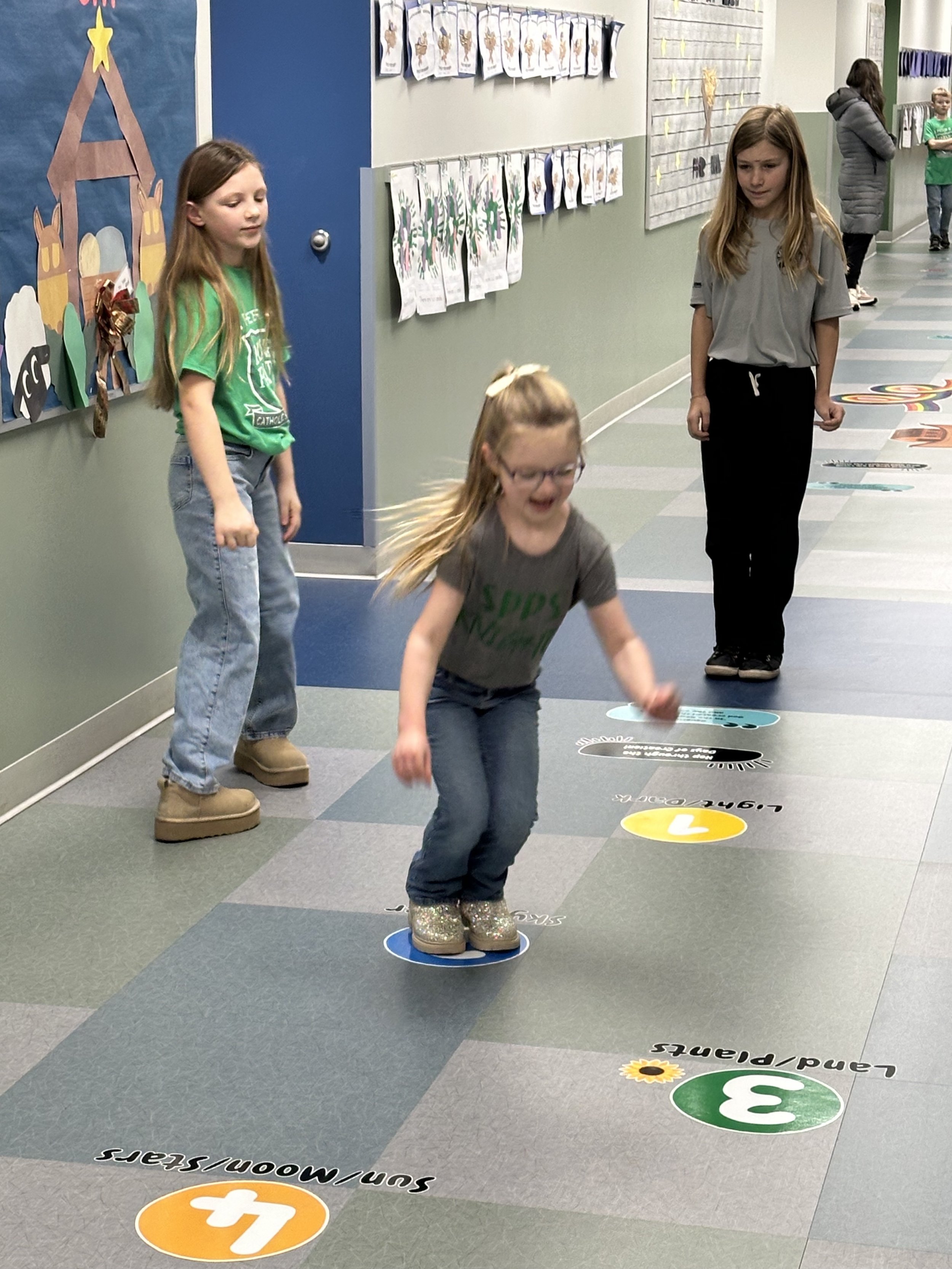
Sensory paths provide students with a structured sequence of purposeful movement activities that can be incorporated naturally into the school day.
And importantly, my paths also incorporate a calming component to help students slow their bodies and reset before returning to the classroom.
For public schools, Steps to Success combines purposeful movement with positive character traits such as:
Kind. Brave. Respectful. Patient. Persevering. Responsible. Honest. Helpful.
For Catholic and Christian schools, Sacred Steps' faith-based paths can combine movement and regulation with Scripture, prayer, Bible stories, the Sacraments, and reminders of who God created children to be.
Different messages.
Same underlying OT philosophy:
Give children an opportunity to move, help their bodies reset, and then ask them to return to learning.
A Few Minutes Can Matter
Schools don't need another complicated initiative.
Teachers certainly don't need one more thing added to an already overflowing plate.
But perhaps that's exactly why this research matters.
We're not necessarily talking about adding another 30-minute block to the schedule.
One study found meaningful differences in on-task behavior after four minutes of classroom activity. Another found higher time-on-task following a 10-minute exercise break. And a systematic review found generally favorable results for classroom behavior across a range of movement interventions.
That doesn't mean four minutes is a magic number.
It does mean we may want to reconsider the assumption that every minute spent moving is a minute taken away from learning.
Sometimes those few minutes may help prepare a child's brain and body for the learning we're asking them to do next.
And that makes movement worth making time for.
Try It Now! 👣
Want to put the research into practice today? Try this quick movement-and-reset break with your students:
10 Wall Pushes
Place both hands on the wall and push hard, then relax.
10 Cross-Body Taps
Touch right hand to left knee, then left hand to right knee.
5 Slow Squats
Move down and back up slowly and with control.
5 Big Reaches
Reach high overhead, then down toward your toes.
Finish with 3 Slow Breaths
Breathe in through your nose...and slowly out through your mouth.
Then head back to learning!
The whole thing takes just a few minutes and follows the same philosophy I use when designing Sacred Steps:
👣 MOVE → ❤️ RESET → 📚 LEARN
Try it before a longer lesson, after lunch, between subjects, or anytime you notice your students could use a quick reset.
About the Author
Trisha Klausing, OTR/L is a practicing pediatric, school-based occupational therapist with more than 10 years of experience supporting children in educational settings.
She is also the creator of Sacred Steps Sensory Paths, OT-designed movement and regulation resources created to help schools incorporate purposeful movement into the spaces students already use every day.
Sacred Steps offers both faith-based sensory paths for Catholic and Christian schools and universal options for public schools, including permanent floor and wall paths, portable sensory paths, calming resources, and movement activities.
Trisha's work combines her experience as an occupational therapist with a practical understanding of what actually works in busy schools—because supporting regulation shouldn't require another complicated program for teachers to manage.
Her goal is simple: