
Why Upper Elementary and Middle School Students Still Need Sensory Breaks
Older students need movement breaks, too! Discover OT-designed sensory paths, calming activities, and movement ideas for upper elementary and middle school.
When you hear the words sensory path, what comes to mind?
Kindergarten students hopping between colorful footprints? Preschoolers practicing animal walks? Little ones jumping, balancing, and giggling their way down the hallway?
Those are wonderful uses for sensory paths!
But here's something we shouldn't forget: Older students need movement and sensory breaks, too!
And sometimes, they're the students who have the fewest opportunities to get them.
Sensory Needs Don't Disappear After Third Grade
As a school-based occupational therapist, I've worked with students across a variety of ages, abilities, and educational settings.
And one thing I've learned is that the need for movement, sensory regulation, and opportunities to reset doesn't magically disappear as children get older.
Think about what we ask of upper elementary and middle school students throughout a typical school day.
They're expected to sit for longer periods, manage increasingly complicated assignments, navigate busy hallways, organize materials, transition between multiple classes, and handle growing academic and social expectations.
That's a lot!
And while some students navigate these expectations with little difficulty, others may struggle with maintaining attention, managing frustration, staying organized, or regulating their bodies throughout the day.
Just because a student is older doesn't mean they've outgrown the need for movement.
In fact, movement opportunities may become even more important to consider as academic demands increase and opportunities for physical activity decrease.
The Problem? Older Students Don't Want to Look Like Little Kids!
Here's where things get interesting.
A first grader might LOVE jumping from one colorful animal to another.
A seventh grader?
Probably not so much. 😉
And honestly, can you blame them?
As students get older, they become increasingly aware of their peers and may be reluctant to participate in activities that feel too young for them.
But that doesn't mean they no longer benefit from movement.
It simply means we need to rethink what movement breaks look like for older students.
Instead of traditional hopping activities or animal walks, older students may enjoy movement challenges that incorporate:
Balance and coordination: Activities that challenge body control and stability.
Crossing midline: Movements that encourage coordinated use of both sides of the body.
Motor planning: Following movement sequences and completing multistep challenges.
Executive functioning: Activities involving attention, sequencing, planning, and following directions.
Proprioceptive input: Appropriate pushing, stretching, or resistance activities that provide muscle and joint feedback.
Self-regulation: Breathing exercises, mindful movement, and calming strategies.
The goal isn't to make activities more complicated simply because students are older.
It's to make them meaningful, engaging, and developmentally appropriate.
Movement Breaks Don't Have to Be Complicated
One of the biggest misconceptions about sensory breaks is that they require a designated sensory room, expensive equipment, or a significant amount of instructional time.
They don't!
Sometimes a brief opportunity to move between classes, complete a balance challenge, practice coordinated movements, or use a calming strategy can fit naturally into an existing school routine.
And not every movement break needs to look the same.
Some students may benefit from active movement, while others may prefer stretching, breathing exercises, or a quiet opportunity to reset.
As occupational therapists, we recognize that sensory needs are individual. What helps one student regulate may not be helpful for another.
The goal isn't simply to get students moving. It's to offer purposeful movement and regulation opportunities that support their ability to participate in learning.
That's Why Sacred Steps Isn't Just for Little Feet!
When I created Sacred Steps Sensory Paths, I knew I wanted to offer more than activities for preschool and kindergarten students.
Older students deserve opportunities for movement, reflection, and self-regulation that feel appropriate for their age, too!
That's why Sacred Steps includes options that can be used with upper elementary and middle school students.
Beatitudes Blessings: Movement With Meaning
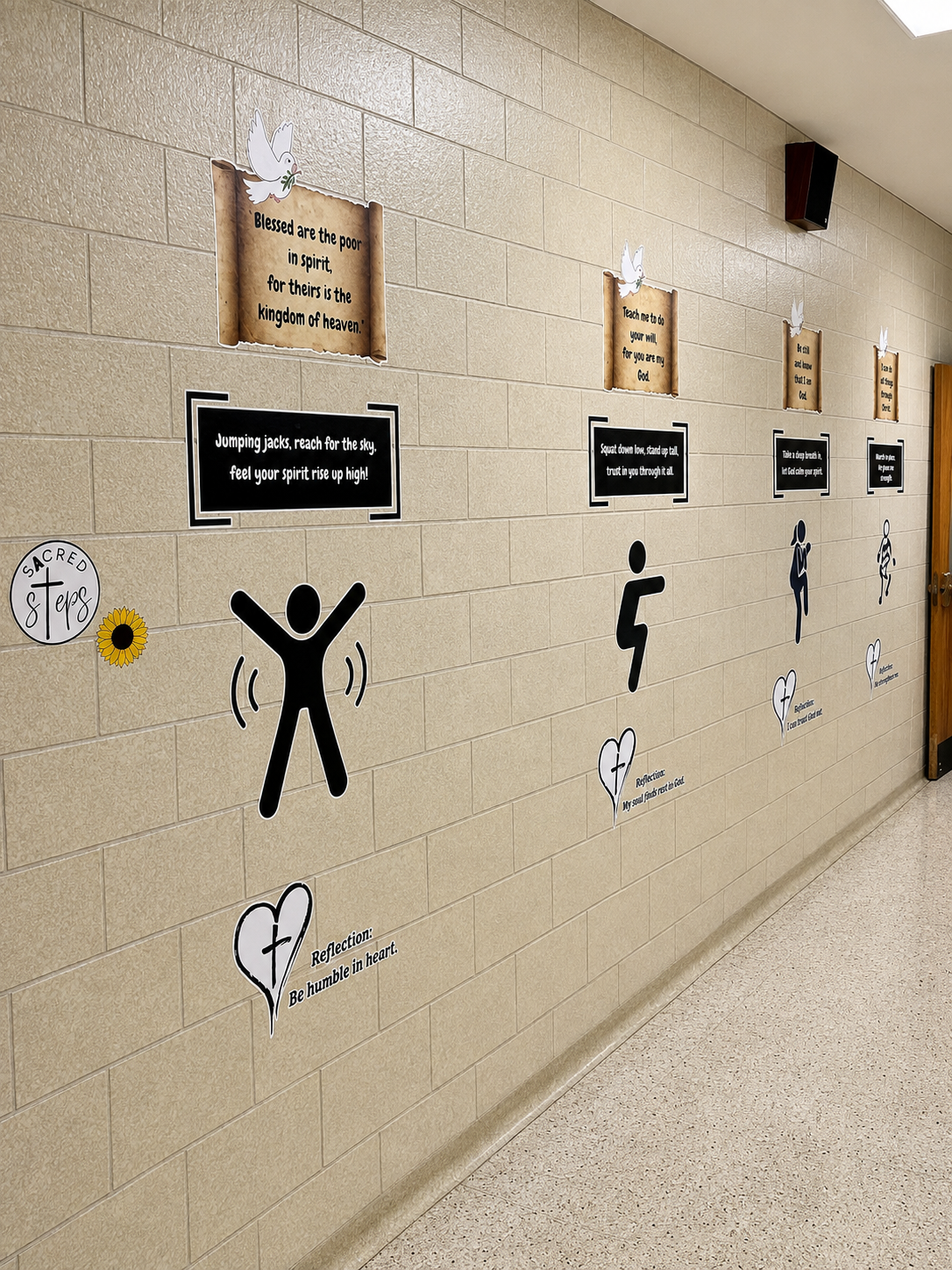
For Catholic and Christian schools, the Beatitudes Blessings sensory path brings together faith, purposeful movement, and opportunities for reflection.
This wall-based sensory path incorporates the teachings of the Beatitudes into meaningful movement experiences, offering students opportunities to engage with their faith while incorporating movement into their school day.
It's an option for schools looking to provide movement activities that feel appropriate for older students while reinforcing the values and teachings already woven into their Catholic or Christian education.
And because it's displayed on the wall, students can access the activities without requiring additional floor space.
Leaders in Motion: Movement for Older Students
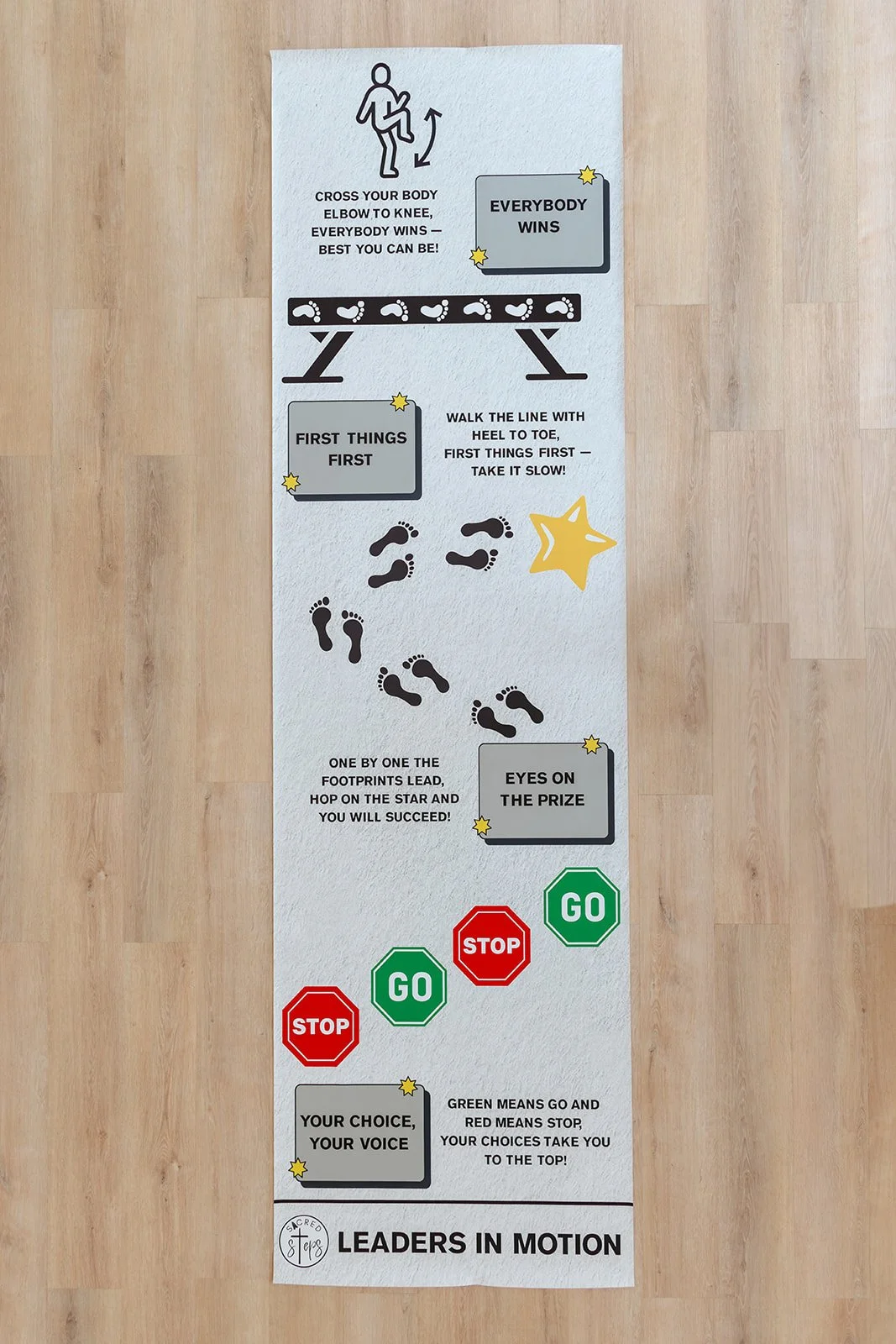
The Leaders in Motion Intermediate Portable Path was created with students in grades 4–8 in mind.
Rather than traditional sensory path activities designed primarily for younger children, this path incorporates movement challenges that encourage coordination, motor planning, and body awareness in an age-appropriate format.
And one of its biggest advantages?
It's portable!
Schools can use it in hallways, classrooms, multipurpose spaces, or other appropriate locations without committing to a permanent installation.
It's a practical way to provide structured movement opportunities for older students who might otherwise have limited access to them.
Steps to Success: Building Skills Beyond the Classroom
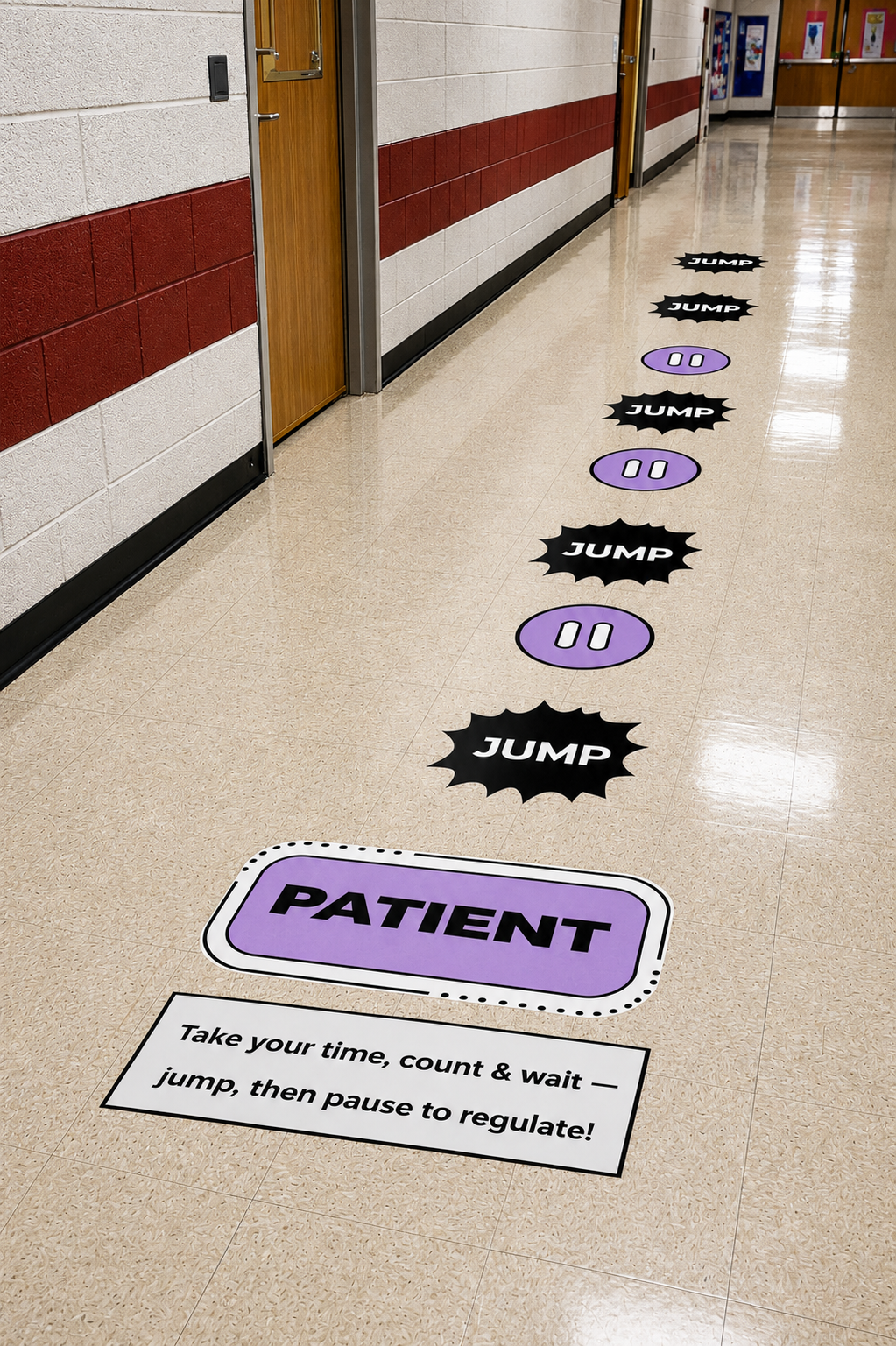
Another option for older students is the Steps to Success sensory path, part of Sacred Steps' universal collection.
This path combines purposeful movement with positive self-talk and social-emotional learning, helping students practice skills that extend well beyond academics.
With seven floor activities and a coordinating Calm wall activity, Steps to Success encourages students to explore qualities such as bravery, patience, and self-regulation while incorporating movement into their day.
And here's what I especially love about this path:
Older students are navigating more than academics. They're learning to manage frustration, build confidence, work through challenges, and become increasingly independent.
Steps to Success provides opportunities to reinforce these important skills through movement and positive messaging.
It's an option for public, private, and faith-based schools looking to incorporate purposeful movement and social-emotional learning into shared spaces.
Because sometimes, helping students take the next step toward success starts with giving them an opportunity to move! ❤️
Calming Corner Activities: Because Big Kids Need to Reset, Too!
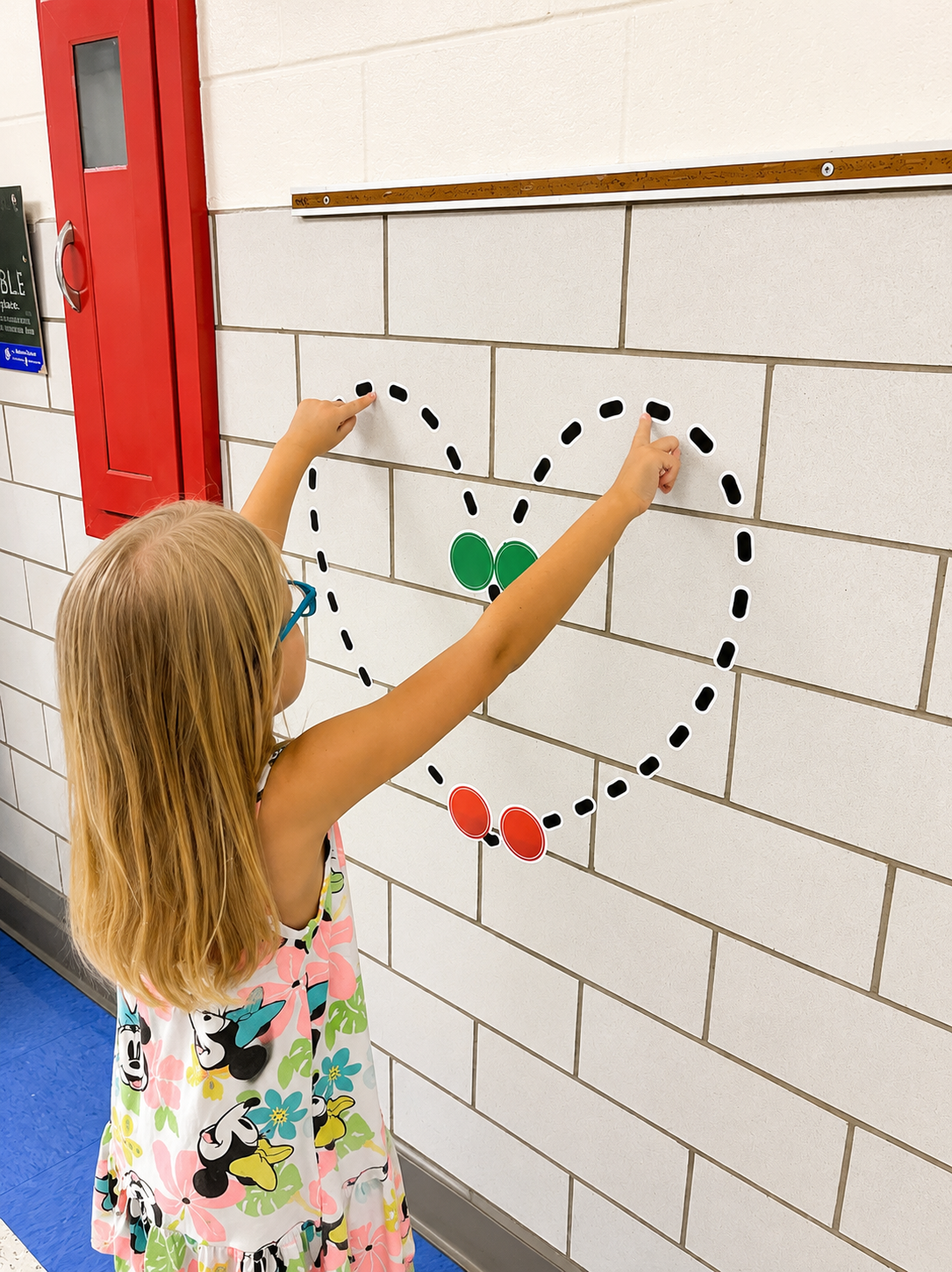
Here's another important point:
Not every sensory break needs to involve jumping, balancing, or large movements.
Sometimes students need an opportunity to slow down, breathe, and regroup.
And older students are certainly no exception!
Sacred Steps offers calming activities such as Calming Cross, Rainbow Reset, and Happy Heart, which provide opportunities to practice breathing, calming, and self-regulation strategies.
These activities can be incorporated into classrooms, hallways, counseling spaces, or designated calming areas.
They're especially useful for schools looking to make regulation strategies accessible without requiring an entire sensory room.
And remember, calming strategies aren't just for students who are already upset or overwhelmed.
Practicing them during calm moments can help students become more familiar with strategies they may choose to use when challenges arise.
What Happens When We Take Movement Away?
Think about how a typical school day changes as students get older.
In early elementary school, movement is often naturally incorporated into classroom routines.
There may be movement songs, brain breaks, centers, recess, and opportunities to learn through physical activity.
But as students progress through the grades, those opportunities may become less frequent.
Academic expectations increase. Students spend more time seated. Their schedules become more structured.
And somewhere along the way, we sometimes begin treating movement as something students should have outgrown.
But needing a movement break isn't a sign of immaturity.
Adults take walks, stretch between meetings, stand up from their desks, and step away from demanding tasks.
We recognize that taking a short break can help us return to an activity feeling refreshed.
Why wouldn't we consider providing appropriate opportunities for our older students to do the same?
A Building-Wide Approach to Movement and Regulation
One of the things I love about incorporating sensory paths and movement activities into school environments is that they don't have to be reserved for students receiving occupational therapy.
Movement opportunities can be available to students throughout a building, whether or not they have an IEP, receive specialized services, or have identified sensory processing difficulties.
Of course, these activities don't replace individualized occupational therapy interventions when those services are needed.
But they can be valuable additions to a school's broader approach to supporting student participation, wellness, and self-regulation.
And when activities are incorporated into spaces students already use, they can become a natural part of the school day rather than another complicated program for teachers to manage.
Let's Stop Treating Movement Like Something Students Outgrow
A kindergartener might love hopping along a colorful sensory path.
A fifth grader might prefer a coordination challenge.
A middle school student might benefit from a brief movement sequence or a quiet breathing activity between classes.
Different ages. Different interests. Different needs.
But one thing remains the same.
Students don't outgrow the need for movement and self-regulation. The opportunities we provide should simply grow with them.
And maybe it's time we started looking beyond the primary grades when thinking about how sensory paths and purposeful movement can support students throughout our schools.
Because big kids need movement breaks, too. ❤️
Looking for Movement Activities for Your Older Students?
At Sacred Steps Sensory Paths, I offer commercially printed, occupational therapist-designed movement activities for preschool through middle school, including unique faith-based and universal options.
Whether you're interested in a permanent wall sensory path, a portable movement activity, or calming tools for your school, I'd love to help you explore the possibilities.
Want to see what Sacred Steps could look like in your building?
Reach out for a FREE sample packet featuring activities and ideas for your students!
Explore Sacred Steps Sensory Paths
Trisha Klausing, OTR/L
Founder, Sacred Steps Sensory Paths