How Catholic Schools Can Reinforce Faith Outside the Classroom
Discover simple ways Catholic schools can reinforce faith beyond religion class by transforming hallways and shared spaces into meaningful learning environments.
When we think about faith formation in Catholic schools, our minds often go to religion class, Mass, prayer services, and sacramental preparation. Those are, of course, essential parts of Catholic education.
But what about the other 90% of a student's day?
The walk to lunch.
The trip to the library.
Transitions between classrooms.
Waiting in the hallway.
Walking to the office.
A moment spent calming down after a difficult interaction.
These everyday moments offer incredible opportunities to reinforce faith—not through another lesson, but through the environment itself.
Every Hallway Is a Teaching Opportunity
Children spend a surprising amount of time moving throughout their school. Rather than viewing hallways simply as spaces that connect classrooms, Catholic schools can intentionally design them to become extensions of faith formation.
Imagine a student walking to music class while stopping to:
Recall the seven days of Creation.
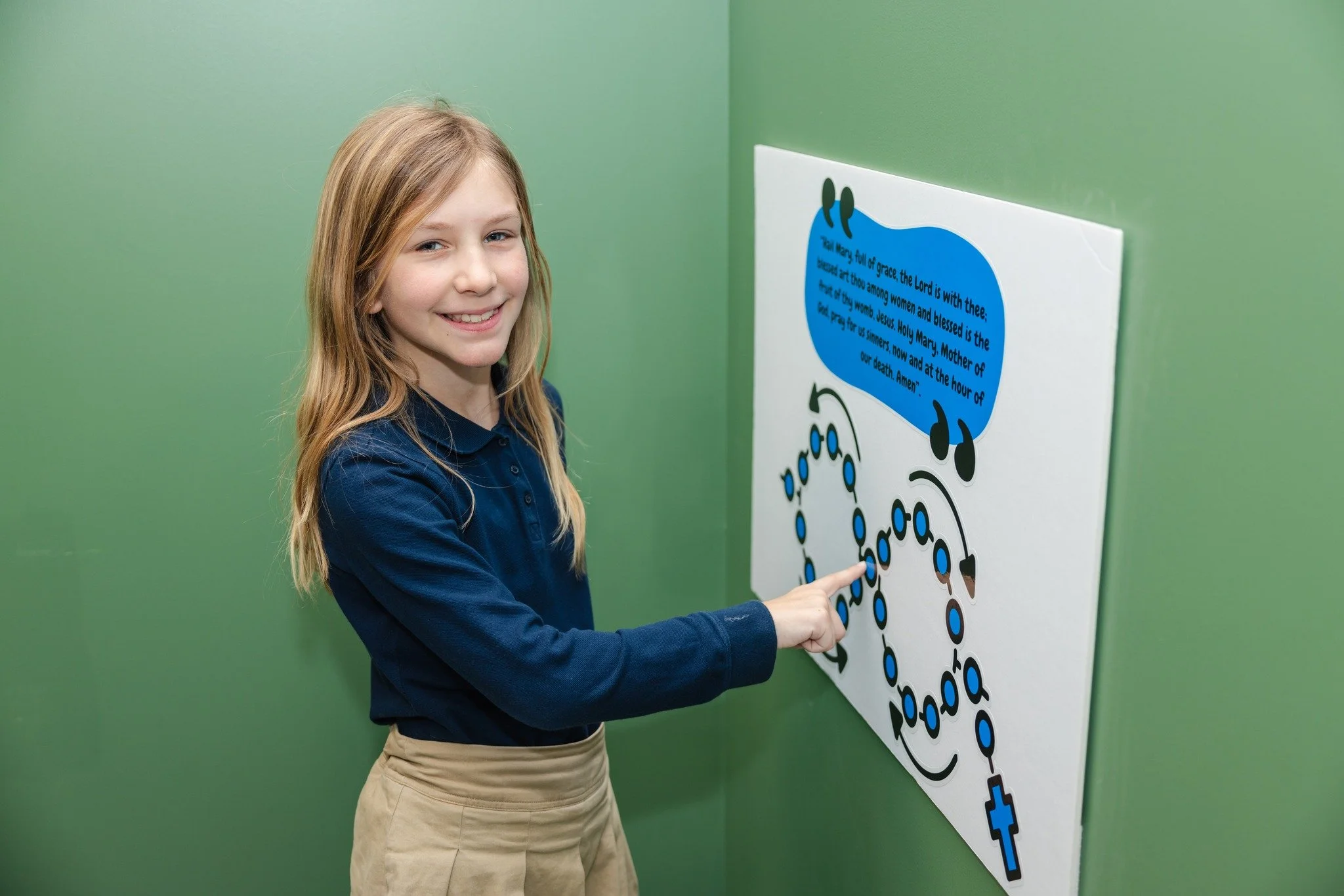
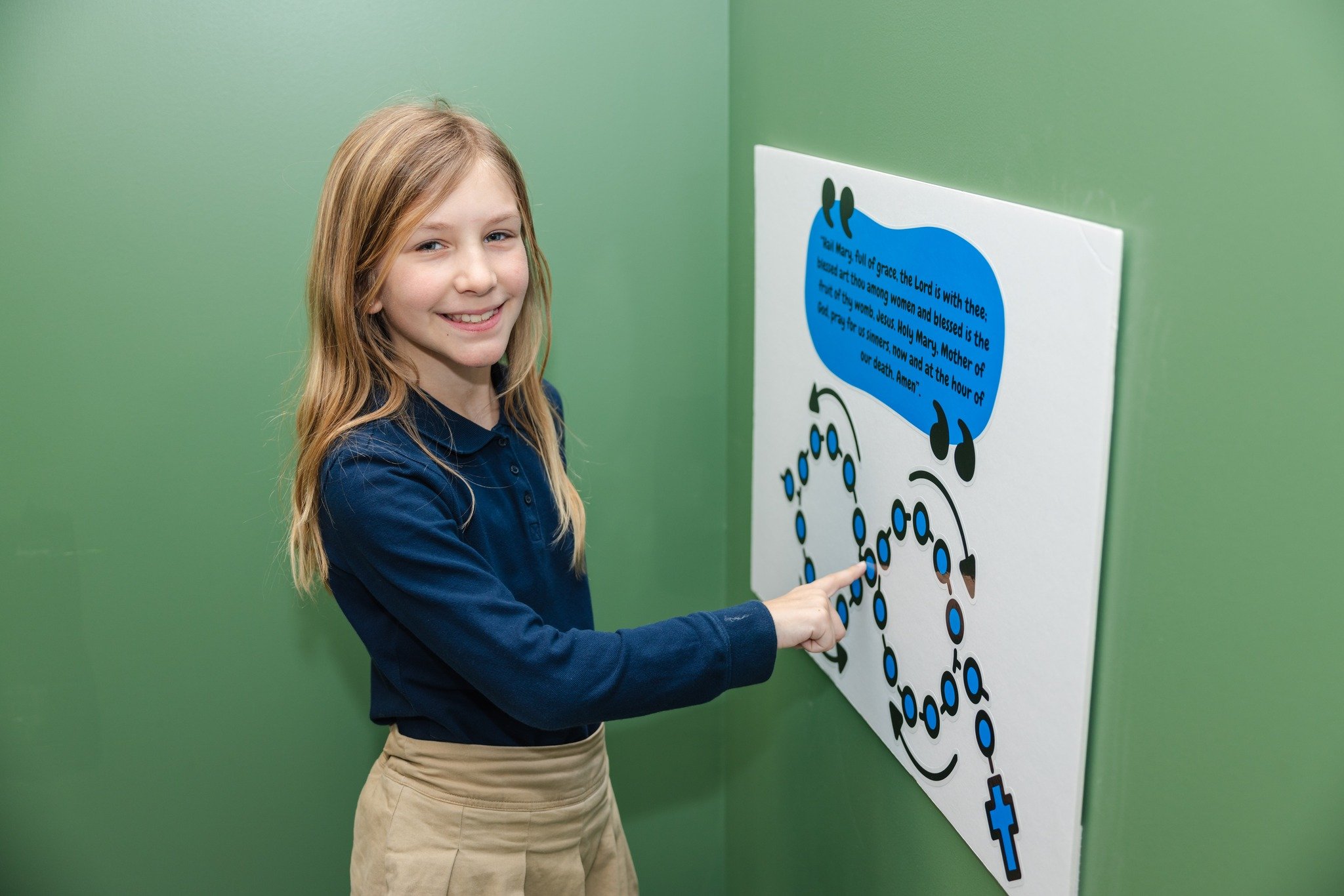
Pray a Hail Mary while following a Rosary Infinity Loop.
Remember one of the Beatitudes.
Reflect on who God says they are.
Practice calming strategies while being reminded they are loved by God.
These small interactions don't replace religion class—they reinforce it.
Over time, repeated exposure helps children internalize both faith and movement in meaningful ways.
Faith Is Built Through Repetition
Anyone who has worked with children knows that repetition matters.
Students learn multiplication facts by practicing them repeatedly.
They learn handwriting through daily use.
The same is true for faith.
Seeing Scripture, virtues, prayers, and reminders of God's love throughout the school day helps make these truths familiar and accessible.
Instead of faith existing only during one class period, it becomes woven into everyday school life.
Movement Helps Learning
As an occupational therapist, I also see another important benefit.
Children are designed to move.
Movement helps many students:
regulate their bodies,
improve attention,
organize their thoughts,
prepare for learning,
and transition more successfully between activities.
When movement is paired with faith-based messages, students are engaging both their minds and their bodies.
A hallway becomes more than a place to walk—it becomes a place to learn, reflect, and reset.
Every Student Benefits
Faith-filled movement opportunities can support students of all ages and abilities.
Some students may pause to pray.
Others may benefit from the calming movement.
Some simply enjoy the interactive experience.
The beauty is that each child engages at their own level while receiving consistent reminders of God's presence throughout the day.
Building a Culture of Faith
Catholic school culture isn't created only through curriculum.
It's created through daily experiences.
The words students see.
The messages they hear.
The routines they practice.
The environments they move through.
When hallways, counseling spaces, libraries, early childhood wings, and parish centers intentionally reflect the school's mission, faith becomes something students experience—not just something they study.
Over time, these seemingly small moments contribute to a school culture where children are continually reminded that they are known, loved, forgiven, and called by God.
Try This Tomorrow
Take one walk through your school's hallways.
Ask yourself:
"If a visitor walked through our building, would they immediately recognize that this is a Catholic school?"
Beyond crucifixes and classroom doors, consider where students could encounter reminders of Scripture, prayer, virtue, or God's love during the ordinary transitions of their day.
Sometimes the most meaningful opportunities for faith formation happen outside the classroom.
Want to Learn More?
Sacred Steps Sensory Paths was created by a practicing school-based occupational therapist to help schools intentionally combine movement, learning, and faith.
From Bible Stories and the Days of Creation to the Beatitudes, Rosary Infinity Loop, Holy Alphabet, Sacred Sacraments, and Who God Says I Am, each pathway is designed to reinforce Catholic teaching while supporting movement, self-regulation, and student engagement.
Whether you're looking to transform an entire hallway or add a simple faith-filled movement station, I'd be happy to help you find the best fit for your school, parish, or ministry.
Explore the full collection or contact me for personalized recommendations and complimentary hallway mock-ups.
About the Author
Trisha Klausing, OTR/L is a pediatric, school-based occupational therapist and the founder of Sacred Steps Sensory Paths. With more than a decade of experience helping children succeed in school, she designs movement experiences that strengthen regulation, learning, and faith. Sacred Steps products are used in Catholic schools, churches, therapy clinics, and early childhood programs across 25 states and Canada.
Before the Wax Goes Down: The Best Time to Install a School Sensory Path
Learn the best time and process for installing a school sensory path. Discover why summer—before the final coat of wax—is the ideal time to install hallway decals and movement pathways.
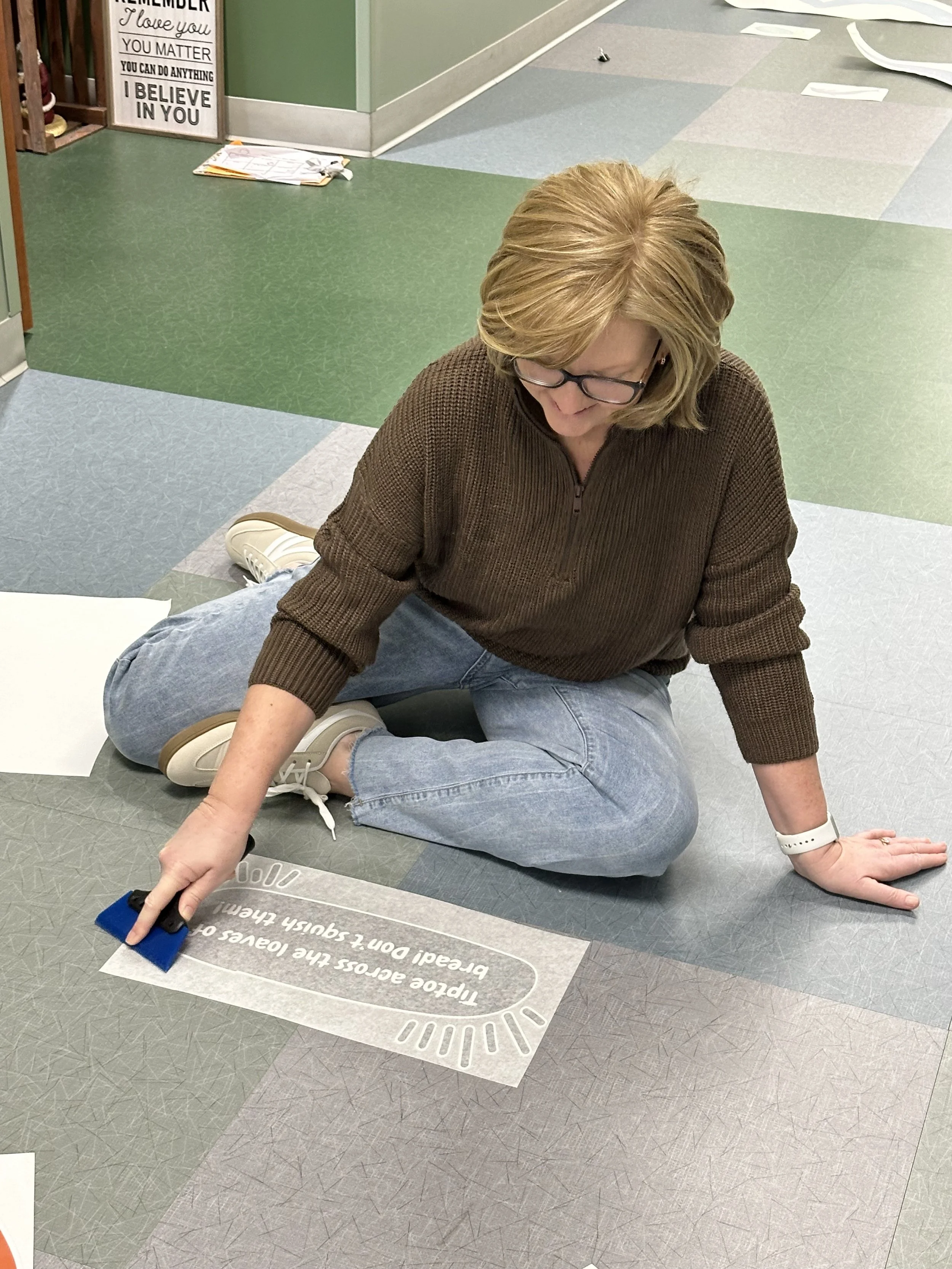
Summer is the perfect opportunity to transform your hallways into purposeful learning spaces.
Every summer, schools are busy checking off maintenance projects before students return.
Hallways are emptied.
Floors are stripped and cleaned.
Fresh coats of wax are applied.
Classrooms are organized.
Teachers begin preparing for another year of learning.
It's also the ideal time to install a sensory pathway.
As a practicing pediatric occupational therapist, one of the most common questions I receive is:
"When should we install our sensory path?"
The answer is simple:
Before the final coat of floor wax is applied.
While Sacred Steps Sensory Paths are commercial-grade and do not require wax to stay in place, many schools choose to install them before waxing because the wax provides an additional protective layer while helping the decals blend beautifully into the floor.
Here's what the installation process typically looks like.
Step 1: Choose the Right Location
Before installation begins, think about how students naturally move throughout your building.
Great locations include:
Main hallways
Primary classroom wings
Counseling areas
Special education hallways
Outside the library
Near intervention spaces
Waiting areas
Church or parish education spaces
The best sensory pathways become part of students' everyday routines.
Step 2: Prepare the Floor
Once the existing wax has been removed and the floor has been thoroughly cleaned, you're ready for installation.
A clean surface allows the commercial-grade adhesive to bond properly with the floor.
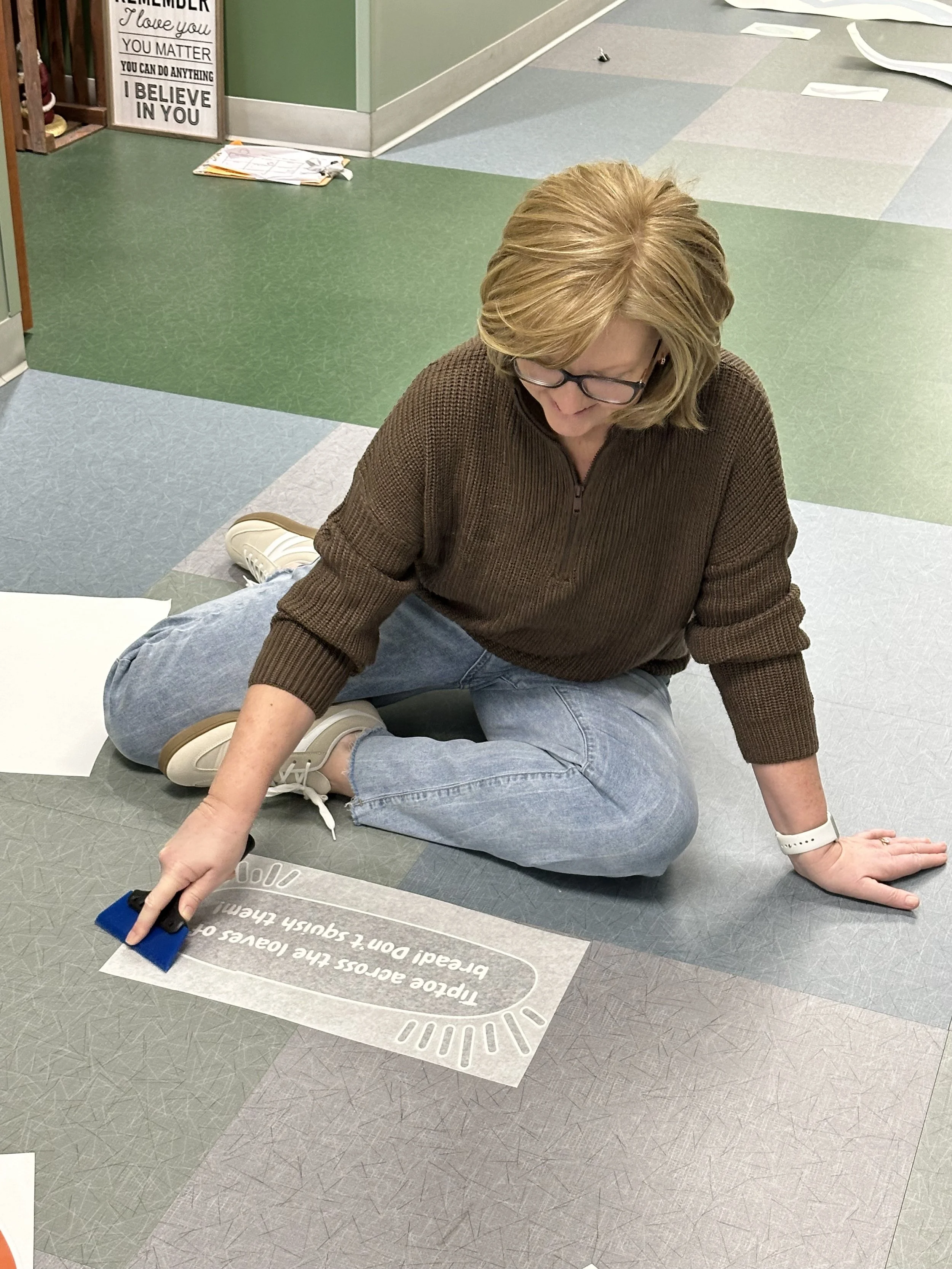
Step 3: Install the Path
Each Sacred Steps pathway arrives with installation directions and a suggested layout guide.
Simply:
✔ Position the pieces
✔ Double-check spacing
✔ Peel the backing
✔ Apply each decal
✔ Smooth firmly into place
Most schools complete installation in just a few hours.
Even better?
Many schools make installation a fun summer project for staff members or volunteers.
Step 4: Apply the Final Coat of Wax (Optional)
This is the step many schools ask about.
Waxing over the decals is completely optional.
Our commercial-grade decals are designed to withstand heavy school traffic on their own.
However, if your custodial team is already applying the final coat of wax, installing the pathway beforehand allows the wax to provide one additional layer of protection.
Many schools appreciate the finished appearance this creates.
Step 5: Welcome Students Back
This is my favorite part.
On the first day of school, students don't just walk through your hallway.
They interact with it.
They jump.
They balance.
They read.
They pray.
They regulate.
They smile.
What was once an ordinary transition becomes another opportunity to learn.
Why Summer Is the Best Time
Waiting until students return often means working around:
Classroom schedules
Hallway traffic
Lunch periods
Specials
Recess
Daily transitions
Summer provides a quiet building and the flexibility to complete installation without disrupting instruction.
Frequently Asked Questions
Do Sacred Steps decals have to be waxed over?
No.
They are commercial-grade floor decals designed for heavy school use.
Waxing is completely optional.
How long does installation take?
Most schools complete installation in just a few hours, depending on the size of the pathway.
Can schools install them themselves?
Absolutely.
Many schools install their own pathways using the included layout guide.
Others choose professional installation or coordinate installation while other summer maintenance projects are taking place.
Can Sacred Steps install them?
Yes!
Depending on location and travel schedule, professional installation may be available.
Every Hallway Teaches Something
Whether you're adding your first Starter Set or transforming an entire hallway, summer is the perfect time to create a space that supports movement, self-regulation, and learning from the very first day students walk through your doors.
If your floors haven't received their final coat of wax yet, now is the ideal time to start planning.
I'd love to help you create a hallway your students will remember long after the first day of school.
👉 Request a complimentary sample
👉 Browse our Faith-Based Collection
👉 Browse our Universal Collection
👉 Or simply contact me to discuss your space.
Trisha Klausing, MOT, OTR/L is a practicing occupational therapist and the founder of Sacred Steps Sensory Paths. She designs OT-informed movement experiences that help children regulate, learn, and thrive in schools, therapy clinics, churches, childcare centers, and community spaces.