Can 4 Minutes of Movement Improve Classroom Focus? What the Research Says
Could just a few minutes of movement help students return to learning more focused and ready to participate? A school-based pediatric occupational therapist looks at the research behind classroom movement breaks, on-task behavior, regulation, and why purposeful movement can be an important part of the school day.
Teachers are asked to fit an incredible amount into the school day.
Reading. Math. Writing. Intervention. Specials. Social-emotional learning. Transitions. Assessments.
So when someone suggests adding movement breaks to the day, it's understandable for educators to wonder:
Where are we supposed to find the time?
As a pediatric, school-based occupational therapist, I hear versions of this question often. And it's one reason I find the research surrounding movement and classroom behavior so interesting. Classroom movement breaks don't have to take large amounts of time away from instruction. Research suggests that even brief opportunities for physical activity may support on-task behavior, student regulation, and classroom focus.
Because what if movement isn't taking valuable time away from learning?
What if a few purposeful minutes of movement actually help students make better use of the learning time that follows?
Research suggests that may be exactly what happens.
What Can Just 4 Minutes of Movement Do?
One study examined the effect of short classroom activity breaks in children in grades 1–3.
The movement break lasted just four minutes.
Compared with a control condition without an activity break, researchers found increases in on-task behavior of:
10.4% following a morning activity break
10.5% following an afternoon activity break
14% when students participated in both morning and afternoon activity breaks
The researchers found that activity breaks improved on-task behavior regardless of whether they occurred in the morning or afternoon. The effects were particularly strong among children who demonstrated more off-task behavior without the movement break.
Four minutes.
That's less time than many classroom transitions take.
And while one small study certainly doesn't mean every child will become 10–14% more attentive after four minutes of movement, it gives us something important to think about:
Sometimes a small investment in movement may pay us back in attention.
This Isn't Just One Study
A systematic review published in 2018 looked at research involving classroom movement breaks and physically active learning.
When researchers examined classroom behavior, 9 out of 11 interventions showed improvement following particular types of movement breaks or physically active learning.
The review also concluded that classroom movement breaks and physically active learning increased physical activity and enhanced time on task.
It's important to put those findings in context: the researchers described much of the underlying evidence as low-to-medium quality and noted substantial differences among the studies. So we shouldn't interpret the research as proof that any movement break will automatically improve learning.
But the overall findings provide good reason for schools to take purposeful movement seriously.
And other research points in a similar direction.
A study involving fourth- and fifth-grade students found that 10-minute classroom exercise breaks resulted in significantly higher time-on-task than a sedentary classroom activity—87.6% compared with 77.1%.
A separate study involving 87 primary-school students found that brief physical activity breaks—with or without academic content incorporated—were effective in improving on-task behavior.
Why Might Movement Help?
From an occupational therapy perspective, this makes a lot of sense.
We sometimes expect children to move seamlessly from one demand to another:
Recess → math.
Lunch → reading.
Twenty minutes sitting at a desk → another twenty minutes sitting at a desk.
But children don't leave their bodies at the classroom door.
Their ability to attend and participate is influenced by their level of alertness, sensory needs, regulation, environment, and the demands being placed upon them.
Movement provides sensory input and changes the demands being placed on the body.
For some students, that movement may help them become more alert and ready to engage. For others, it may provide an appropriate outlet for their need to move before they're asked to sustain attention again.
That's why I prefer to think about movement as more than simply:
“Getting the wiggles out.”
We're trying to give the body purposeful input that helps prepare it for what we're asking it to do next.
Don't Wait Until a Student Is Already Struggling
This is one of the biggest shifts I encourage schools to make.
Movement doesn't have to be something we offer only after a child is already:
out of their seat,
unable to attend,
frustrated,
restless,
overwhelmed, or
struggling to participate.
We can use movement proactively.
A movement opportunity might make sense:
Before a longer period of seated work.
After lunch.
Between subjects.
During a transition.
Following an extended period of sitting.
Or simply at predictable points in the day when we know attention tends to decrease.
Rather than asking:
“What do we do when this student can't sit anymore?”
we can begin asking:
“What can we do before we get to that point?”
That's a very different approach.
But Please Don't Send Them Back Bouncing Off the Walls! 😊
There's another important piece of the puzzle.
A movement break shouldn't necessarily end with the most exciting, activating activity and then:
“Okay! Back to class!”
Every teacher reading this knows exactly how well that can go. 😂
Our goal isn't simply to get children moving.
We also want to help them transition back to a state that's appropriate for learning.
That's why I like pairing purposeful movement with a calming or organizing activity at the end.
That might include slower movements, controlled breathing, pushing or other resistive activities, or another strategy appropriate for the student and environment.
Think of it as:
👣 MOVE → ❤️ RESET → 📚 LEARN
We're giving the body an opportunity to move—and then helping it prepare for what comes next.
Movement Doesn't Have to Mean a Sensory Room
This is another misconception I encounter.
Schools sometimes assume that supporting sensory regulation requires a beautiful dedicated sensory room filled with specialized equipment.
Those spaces can certainly be valuable.
But they're not the only option.
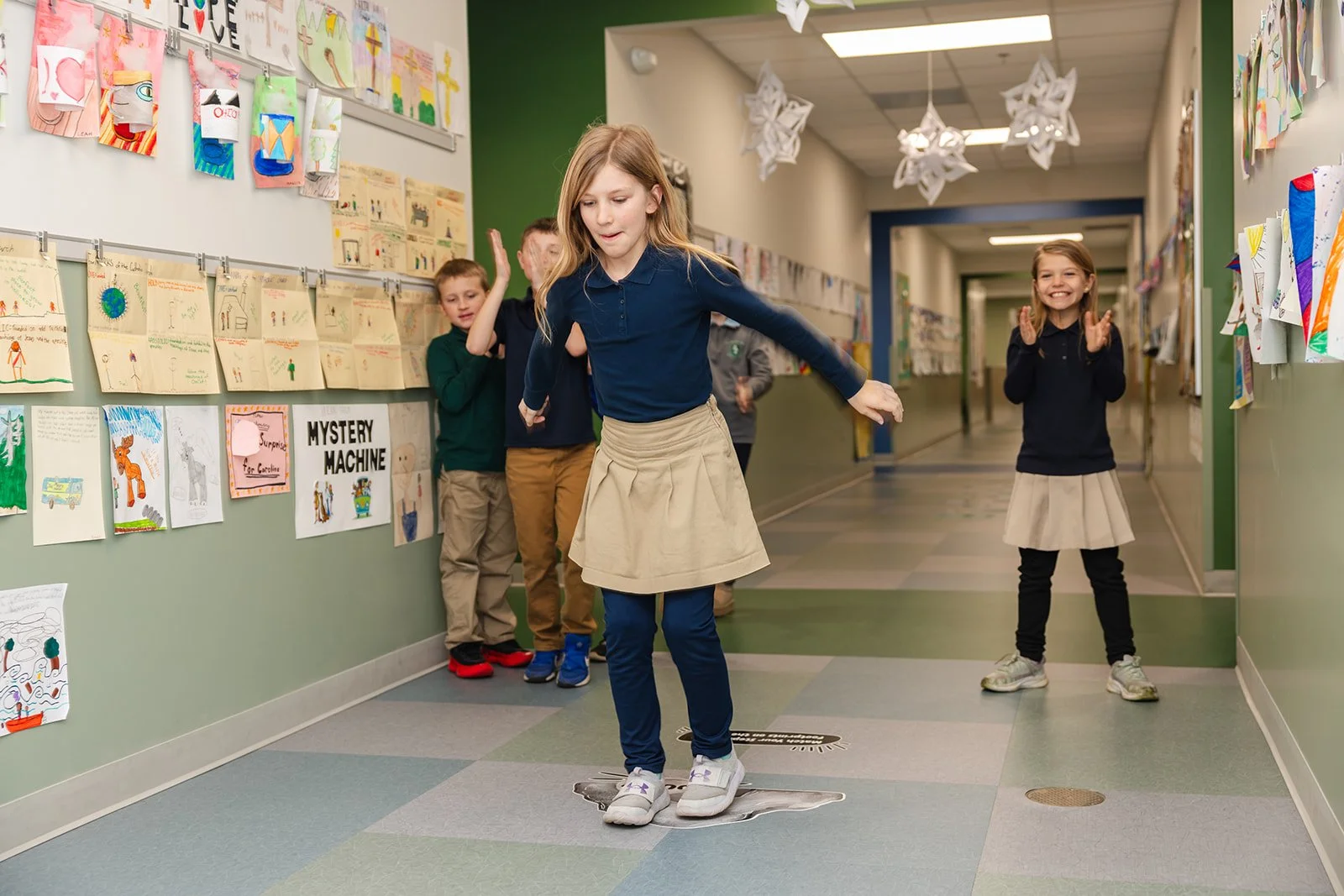
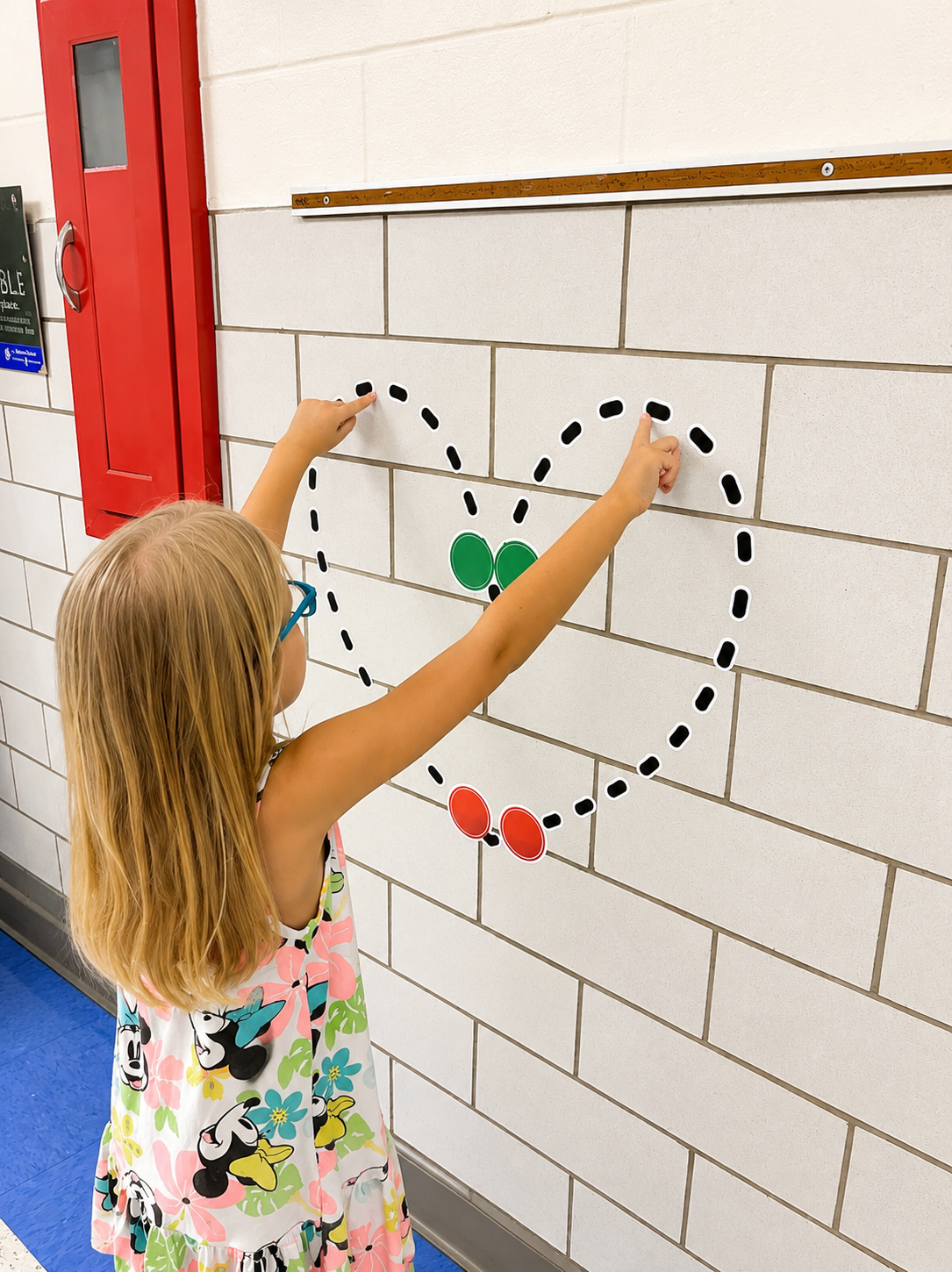
Purposeful movement can happen in the spaces students already use:
Hallways. Classrooms. Counseling areas. Resource rooms. Early childhood wings. Transition spaces.
And it doesn't always require 20 or 30 minutes.
The research on short classroom activity breaks is particularly encouraging because it suggests that even brief opportunities for movement may be meaningful.
That's the Thinking Behind Sensory Paths
As a practicing pediatric and school-based occupational therapist, this philosophy is a big part of why I created Sacred Steps Sensory Paths.
I wanted movement and regulation strategies to be available where children already are, rather than requiring teachers to find another program, another room, or another large block of time.
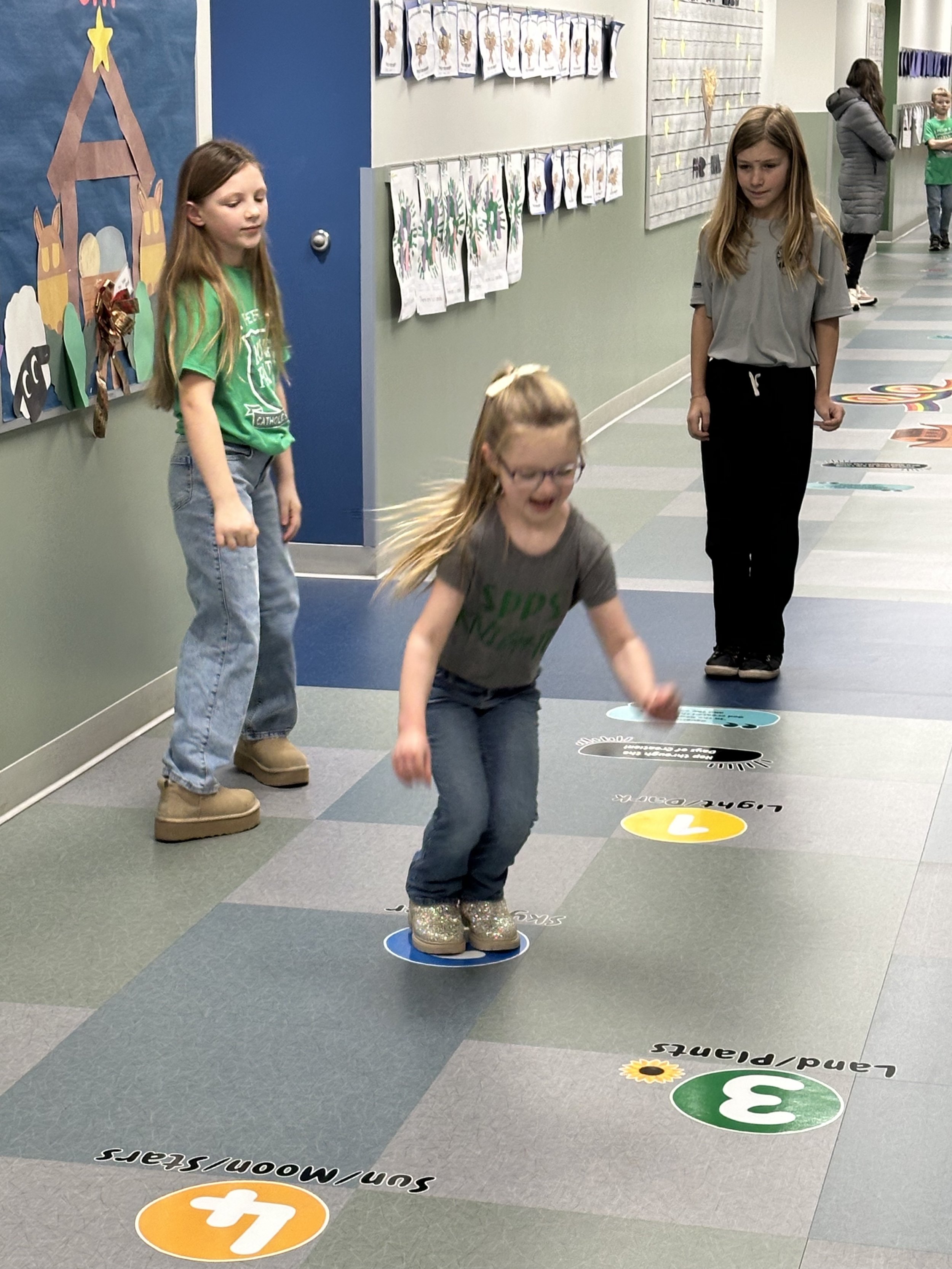
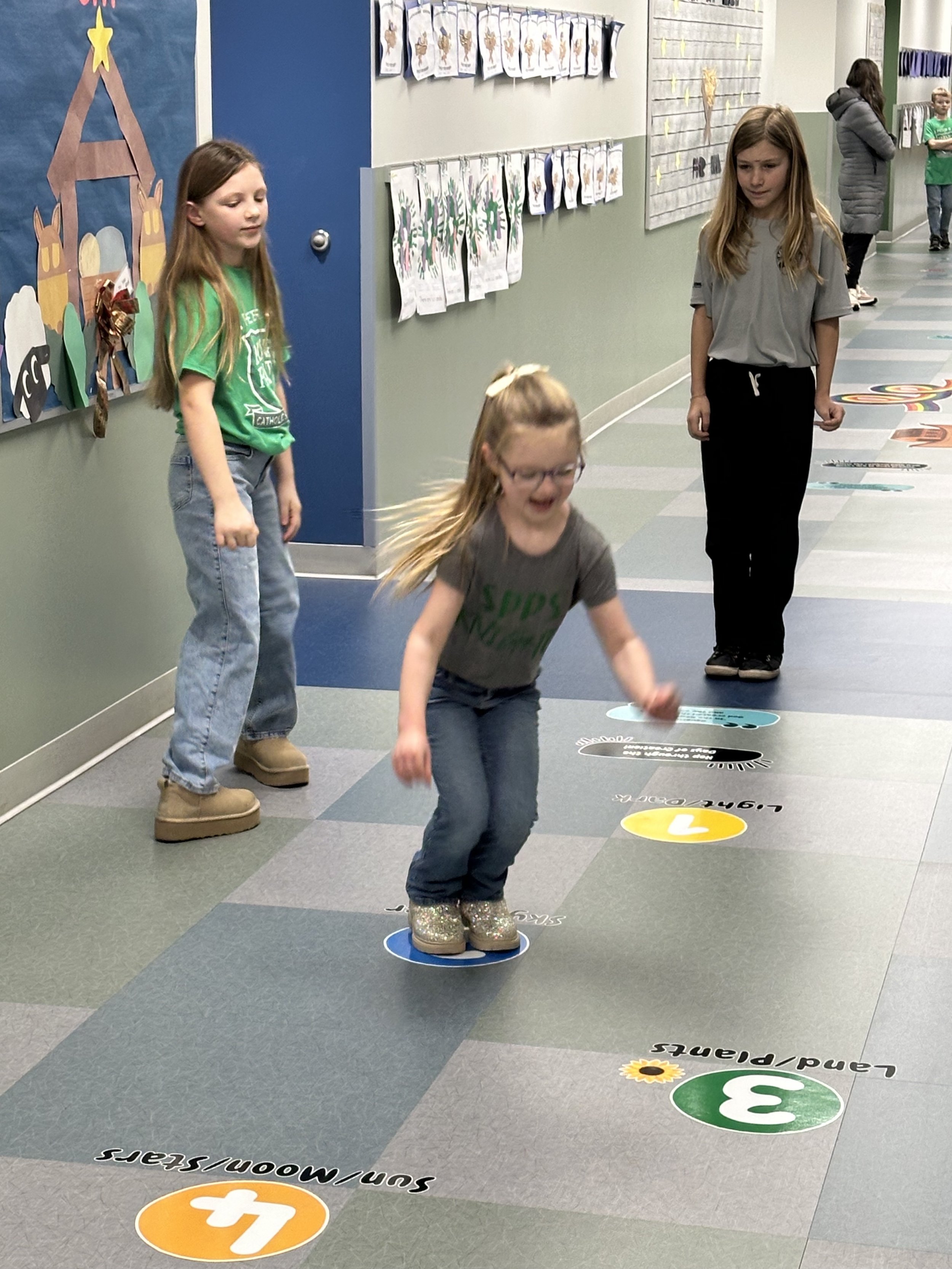
Sensory paths provide students with a structured sequence of purposeful movement activities that can be incorporated naturally into the school day.
And importantly, my paths also incorporate a calming component to help students slow their bodies and reset before returning to the classroom.
For public schools, Steps to Success combines purposeful movement with positive character traits such as:
Kind. Brave. Respectful. Patient. Persevering. Responsible. Honest. Helpful.
For Catholic and Christian schools, Sacred Steps' faith-based paths can combine movement and regulation with Scripture, prayer, Bible stories, the Sacraments, and reminders of who God created children to be.
Different messages.
Same underlying OT philosophy:
Give children an opportunity to move, help their bodies reset, and then ask them to return to learning.
A Few Minutes Can Matter
Schools don't need another complicated initiative.
Teachers certainly don't need one more thing added to an already overflowing plate.
But perhaps that's exactly why this research matters.
We're not necessarily talking about adding another 30-minute block to the schedule.
One study found meaningful differences in on-task behavior after four minutes of classroom activity. Another found higher time-on-task following a 10-minute exercise break. And a systematic review found generally favorable results for classroom behavior across a range of movement interventions.
That doesn't mean four minutes is a magic number.
It does mean we may want to reconsider the assumption that every minute spent moving is a minute taken away from learning.
Sometimes those few minutes may help prepare a child's brain and body for the learning we're asking them to do next.
And that makes movement worth making time for.
Try It Now! 👣
Want to put the research into practice today? Try this quick movement-and-reset break with your students:
10 Wall Pushes
Place both hands on the wall and push hard, then relax.
10 Cross-Body Taps
Touch right hand to left knee, then left hand to right knee.
5 Slow Squats
Move down and back up slowly and with control.
5 Big Reaches
Reach high overhead, then down toward your toes.
Finish with 3 Slow Breaths
Breathe in through your nose...and slowly out through your mouth.
Then head back to learning!
The whole thing takes just a few minutes and follows the same philosophy I use when designing Sacred Steps:
👣 MOVE → ❤️ RESET → 📚 LEARN
Try it before a longer lesson, after lunch, between subjects, or anytime you notice your students could use a quick reset.
About the Author
Trisha Klausing, OTR/L is a practicing pediatric, school-based occupational therapist with more than 10 years of experience supporting children in educational settings.
She is also the creator of Sacred Steps Sensory Paths, OT-designed movement and regulation resources created to help schools incorporate purposeful movement into the spaces students already use every day.
Sacred Steps offers both faith-based sensory paths for Catholic and Christian schools and universal options for public schools, including permanent floor and wall paths, portable sensory paths, calming resources, and movement activities.
Trisha's work combines her experience as an occupational therapist with a practical understanding of what actually works in busy schools—because supporting regulation shouldn't require another complicated program for teachers to manage.
Her goal is simple:
Help children move, regulate, and return ready for what's next. ❤️
No Hallway? No Problem. How Portable Sensory Paths Bring Movement Anywhere
Learn how portable sensory paths help schools bring movement, self-regulation, and executive functioning support to any space—without permanent installation.
As schools prepare for a new year, many educators are looking for simple, effective ways to help students feel calm, focused, and ready to learn.
Sensory paths have become an increasingly popular way to provide purposeful movement throughout the school day. Traditionally, these paths are installed in hallways where students can hop, stretch, balance, and regulate their bodies before entering the classroom.
But what if your school doesn't have a long hallway?
What if you're looking for something that can move from classroom to classroom?
Or perhaps you'd like to introduce movement supports before committing to a permanent installation.
That's exactly why I created portable sensory paths.
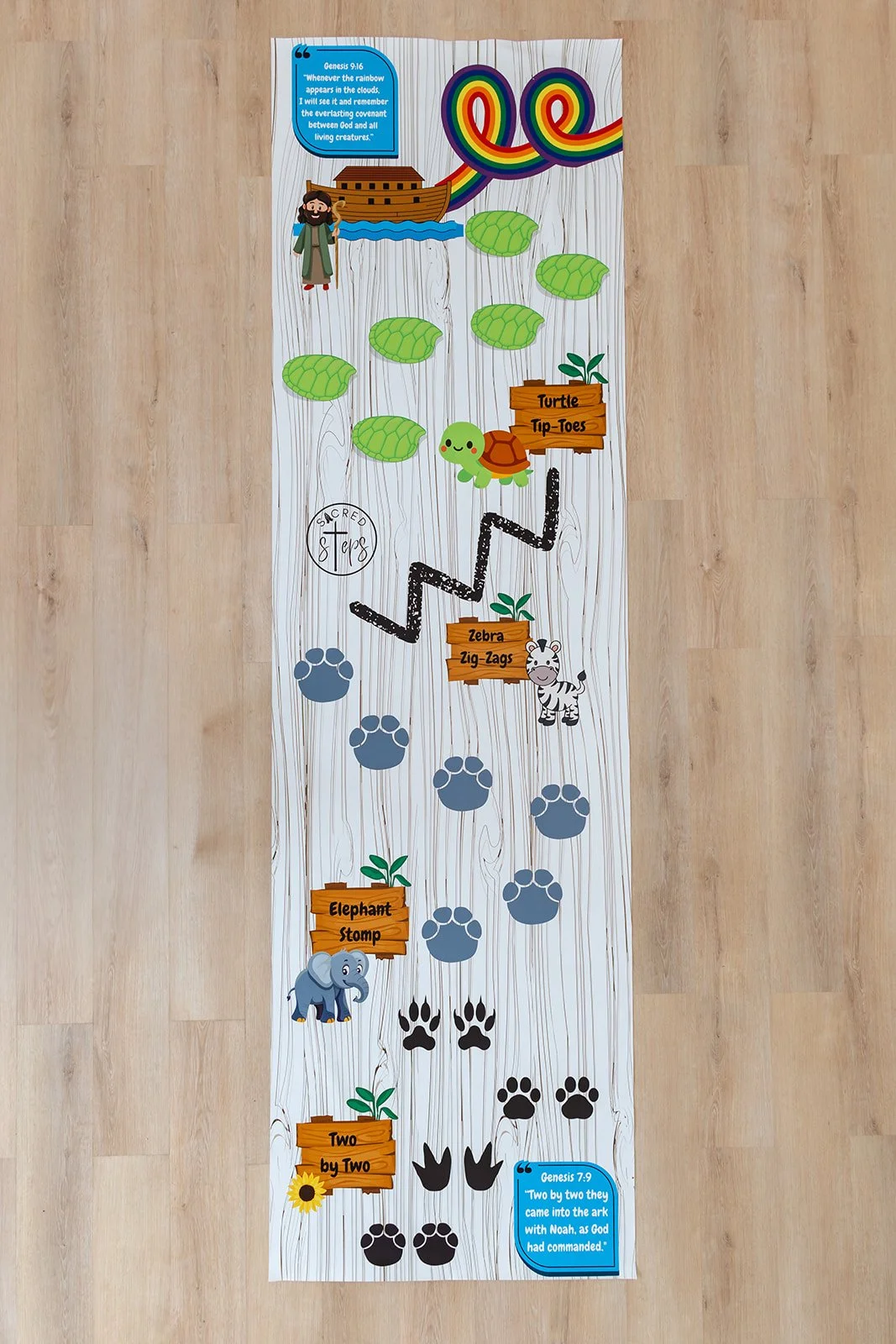
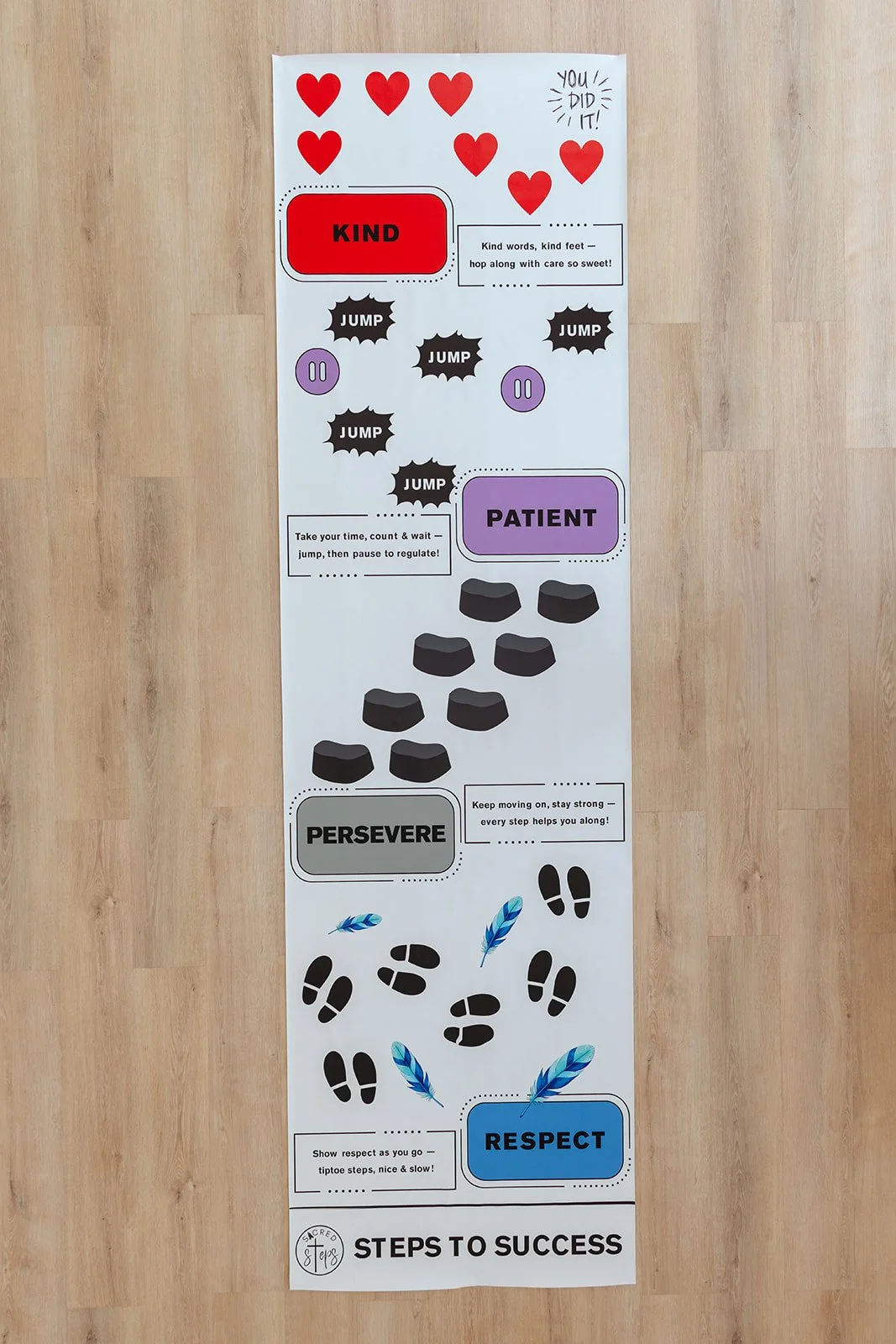
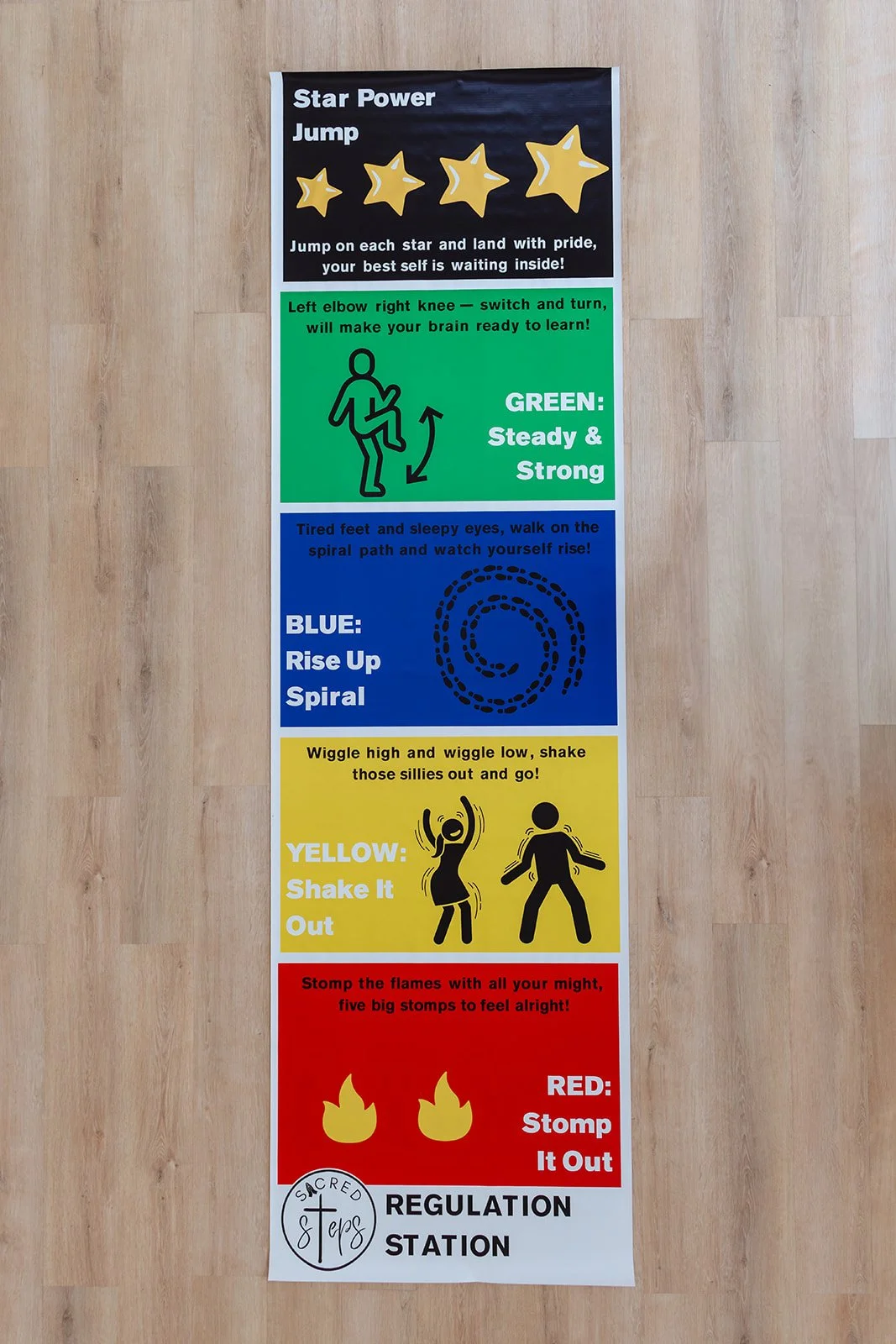
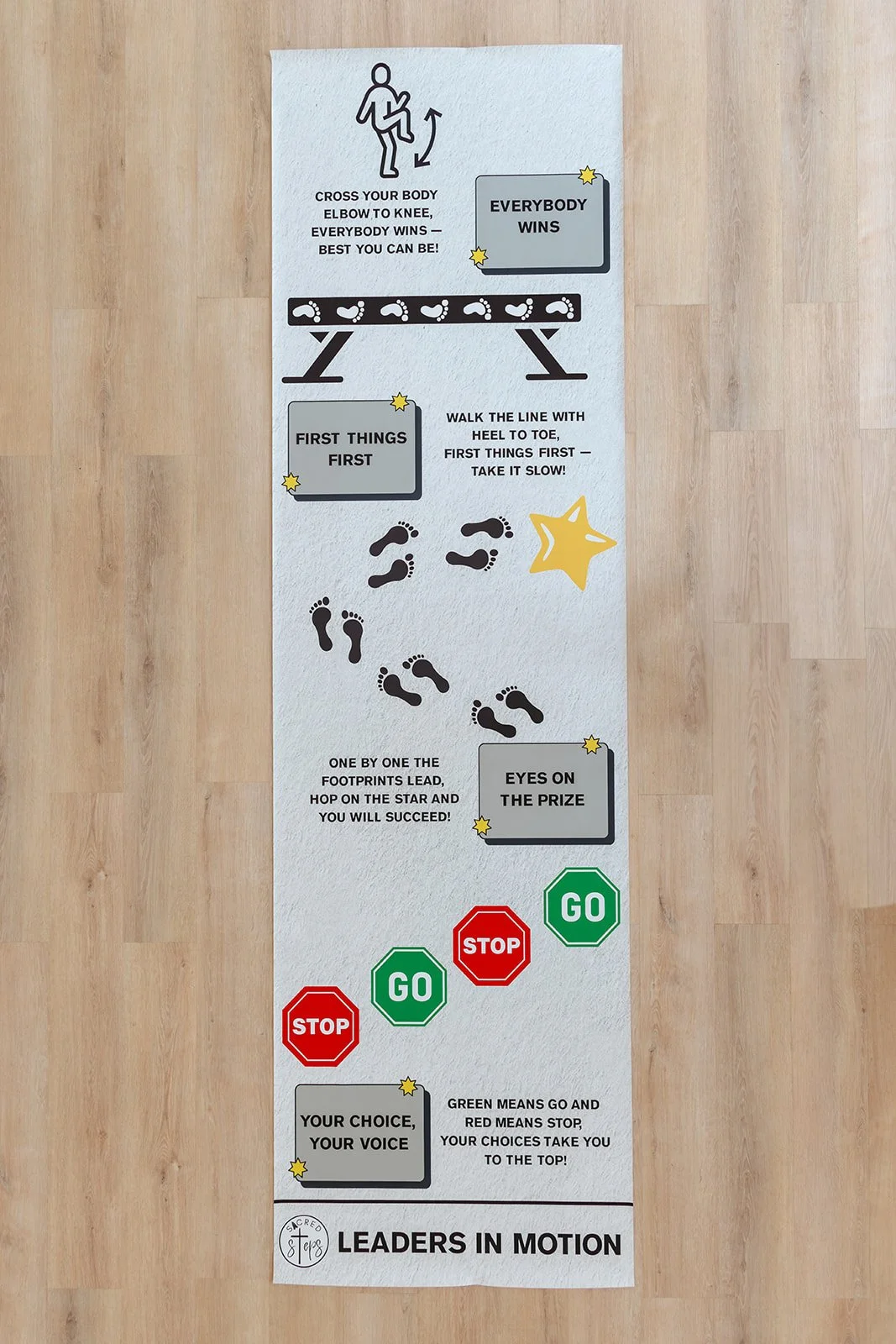
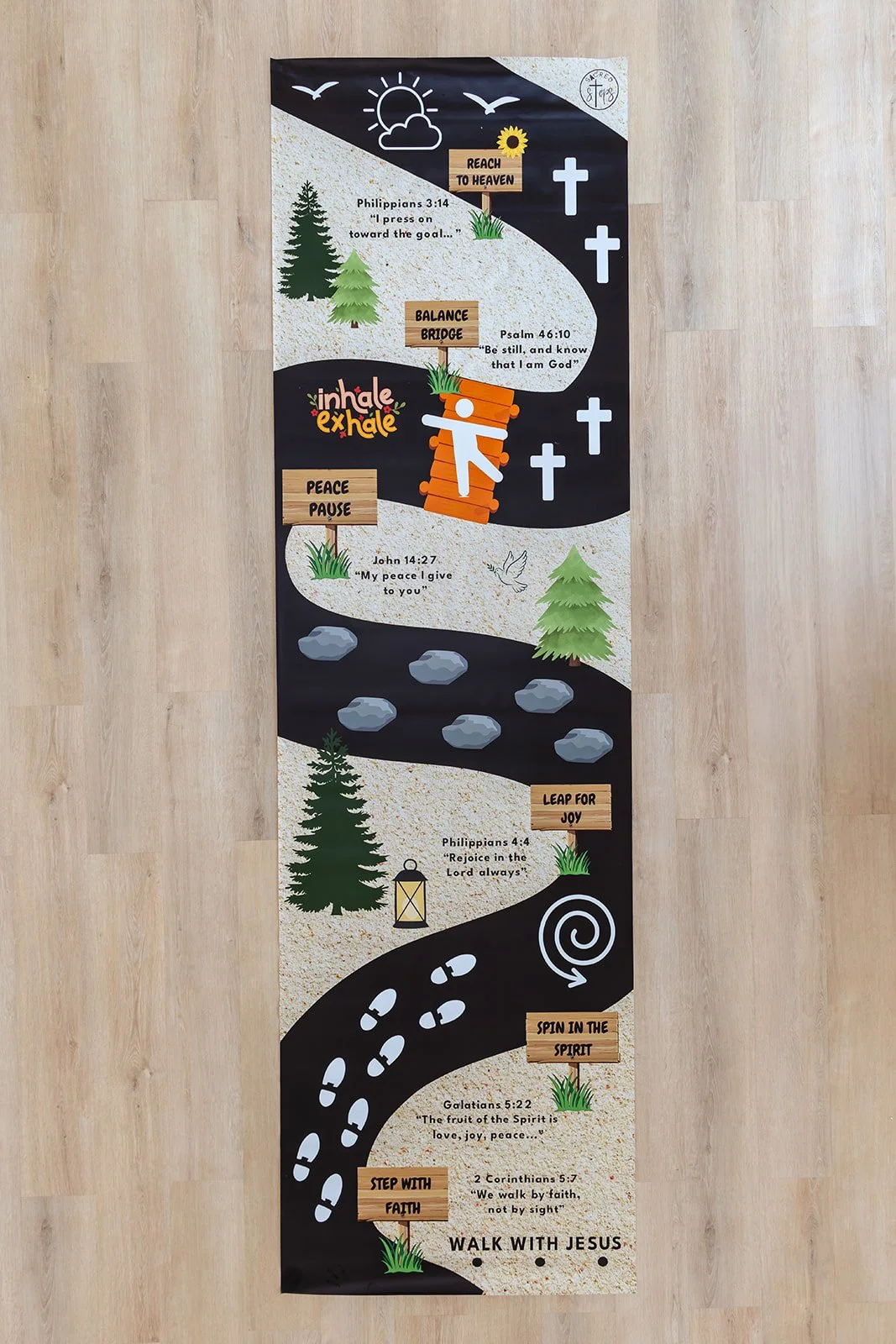
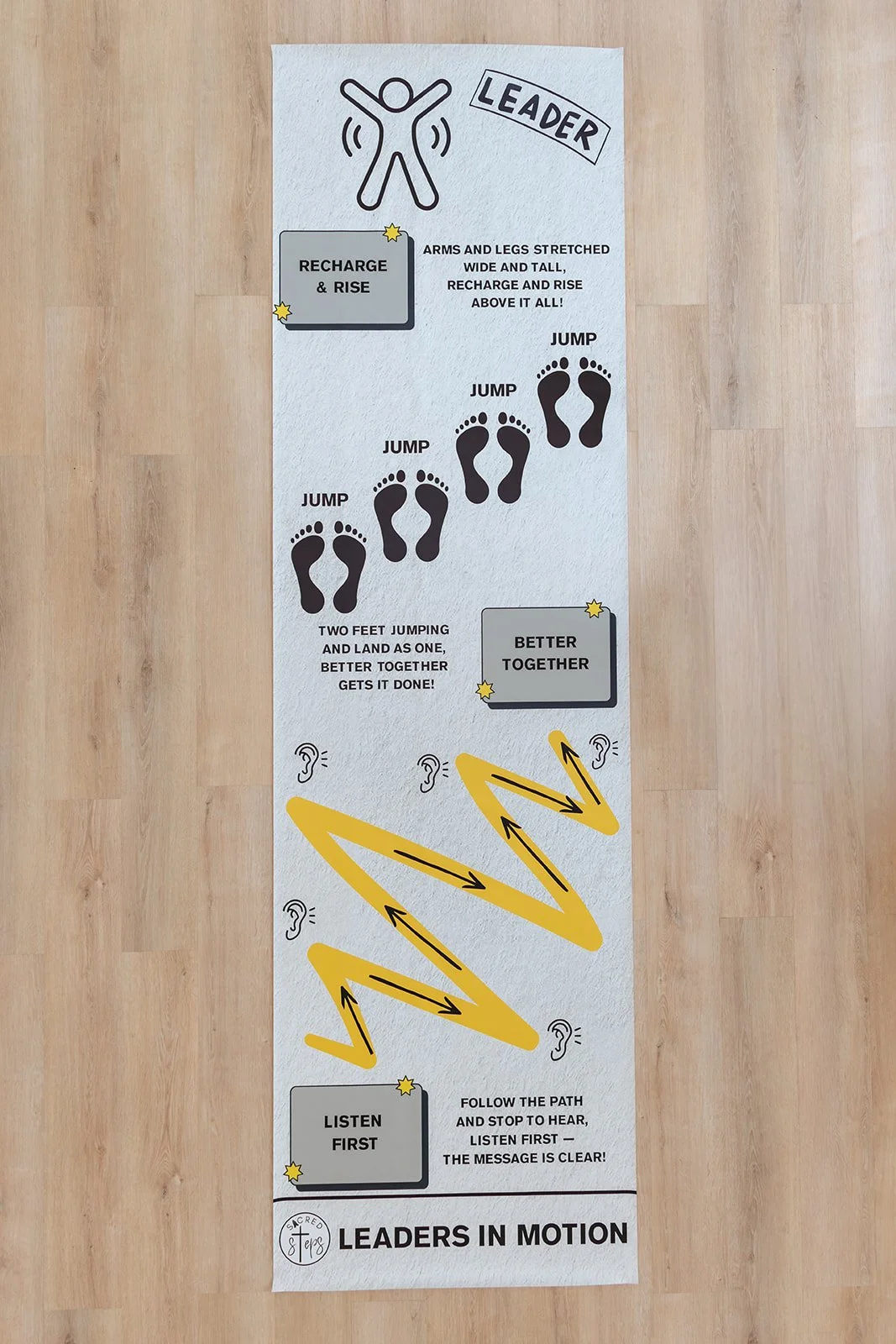
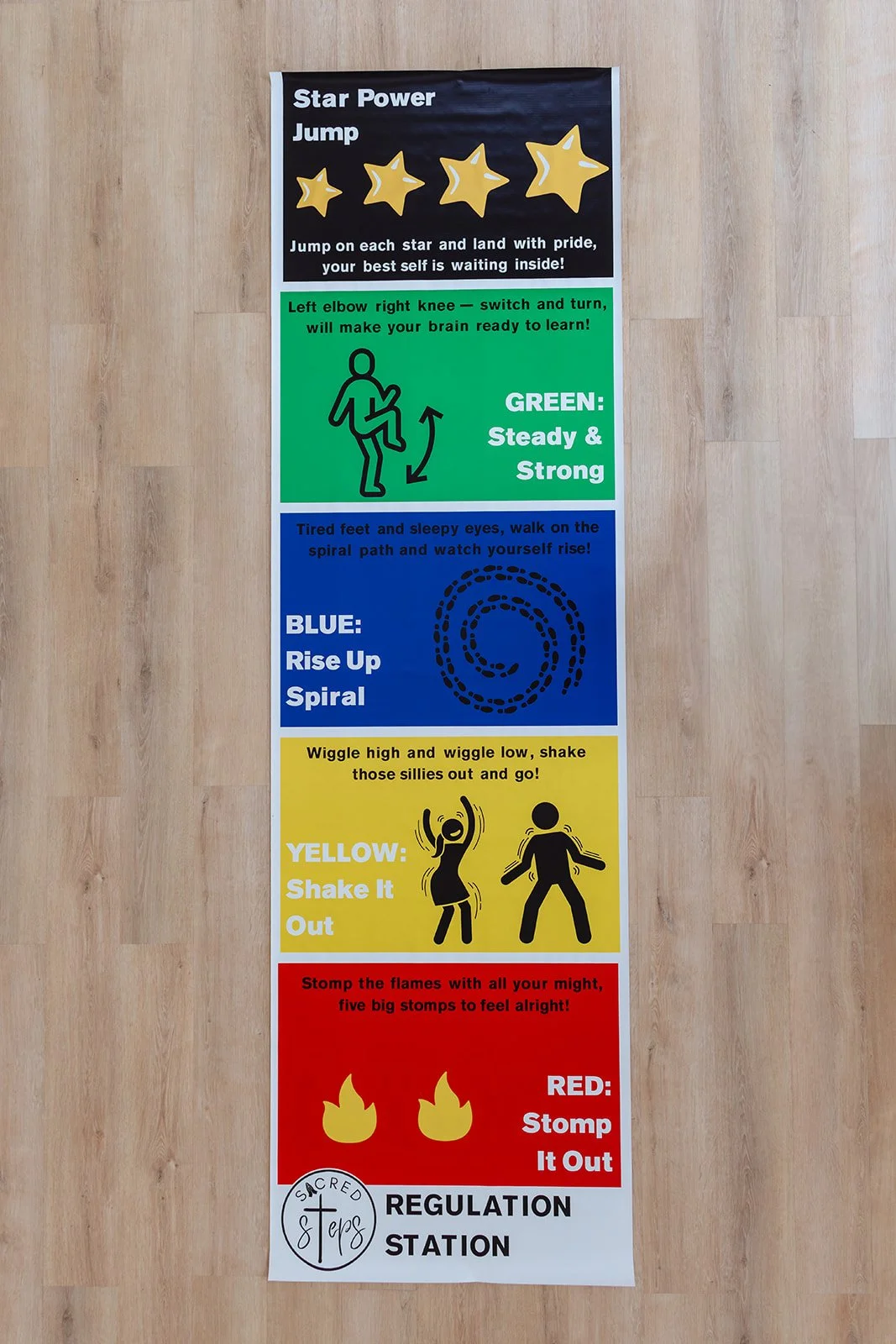
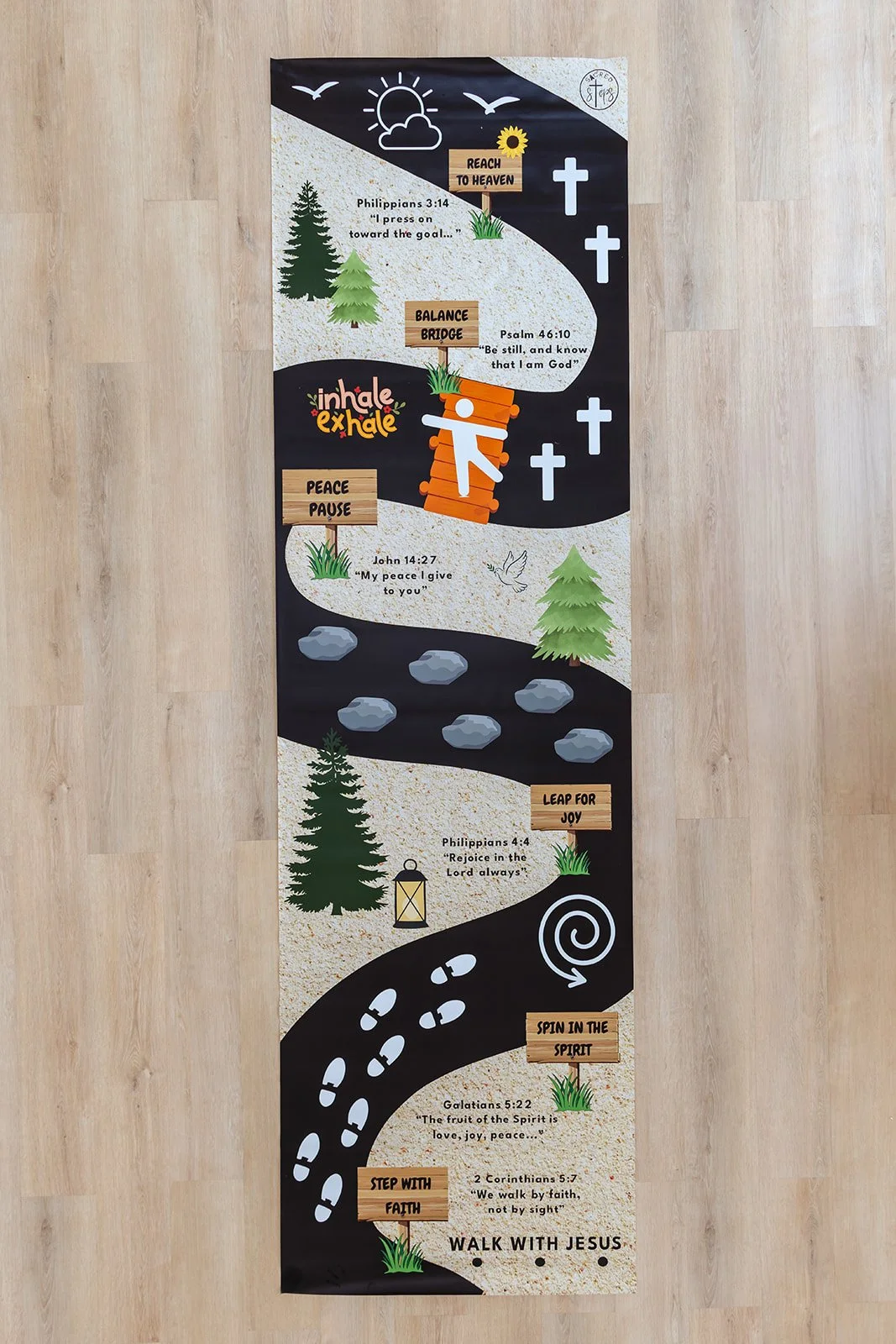
Not Every School Has the Perfect Hallway
Permanent hallway sensory paths are wonderful—but they aren't the right fit for every school.
Some schools have narrow hallways.
Some have carpet instead of tile.
Some share facilities with other organizations.
Others simply want the flexibility to move resources throughout the building.
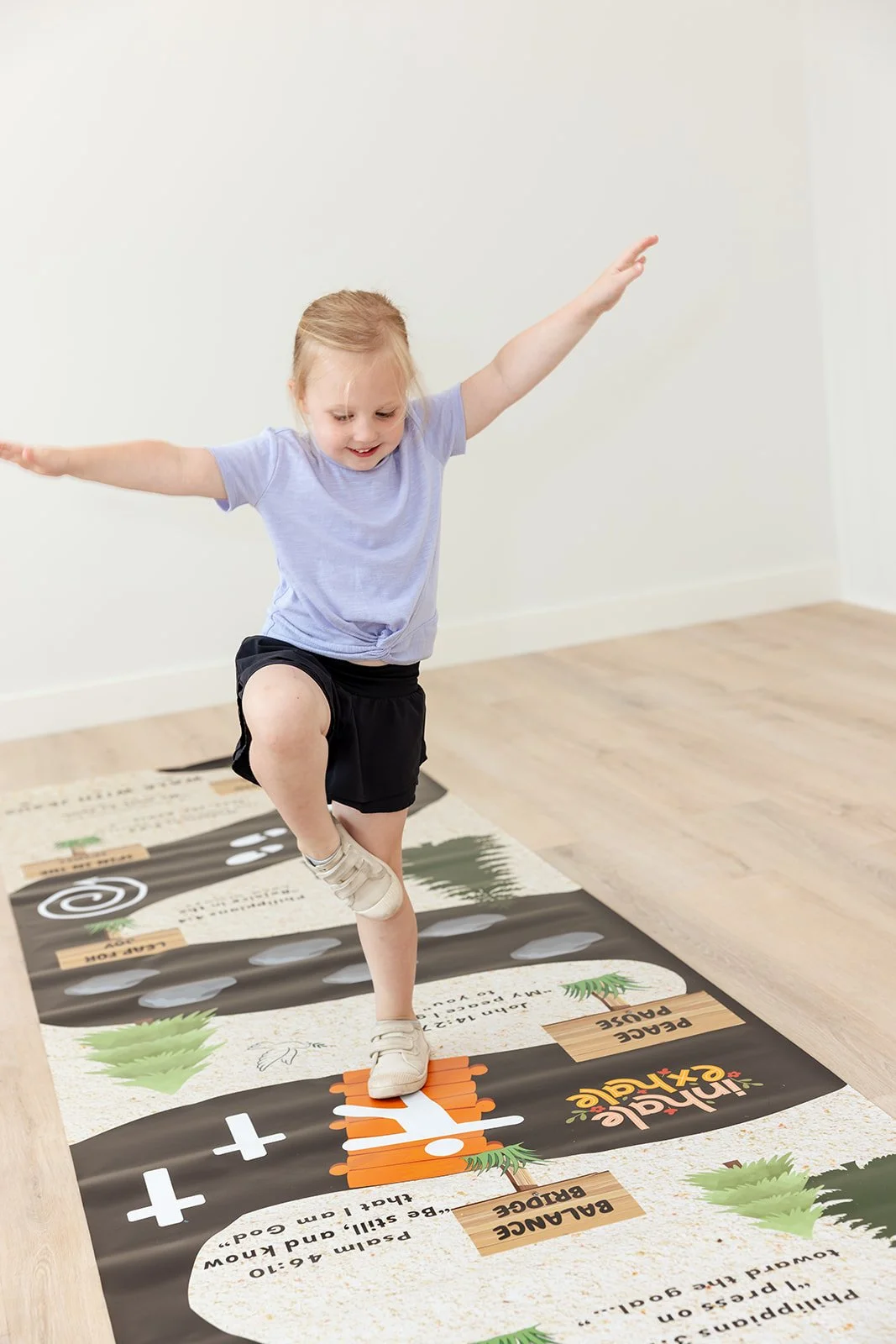
Portable sensory paths make it possible to bring meaningful movement anywhere students need it.
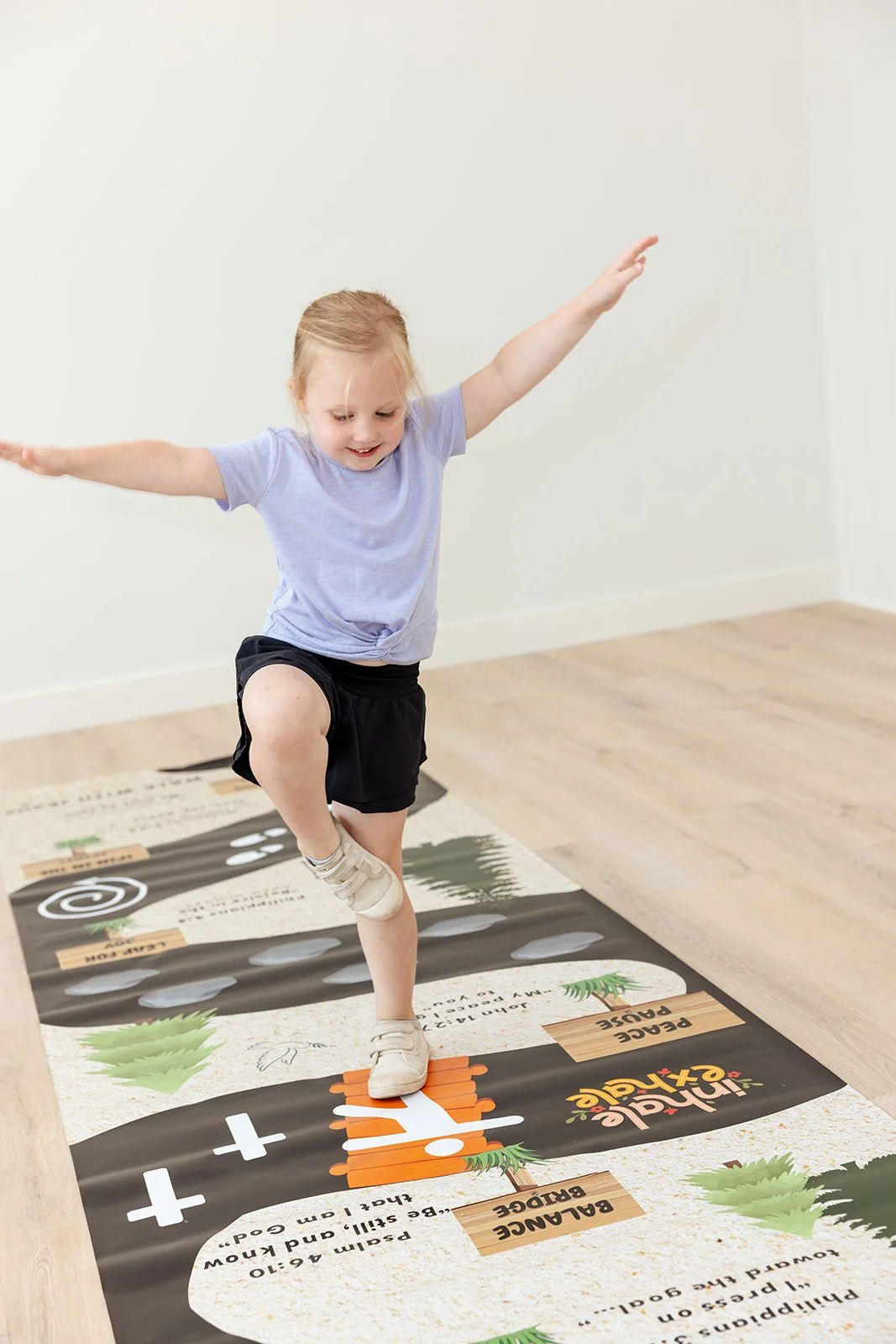
Simply roll them out when needed, then roll them back up for easy storage.
Why Purposeful Movement Matters
As a practicing school-based occupational therapist, I've seen firsthand how movement can change the course of a student's day.
Purposeful movement helps students:
Improve attention and focus
Develop self-regulation skills
Strengthen executive functioning
Prepare their brains for learning
Reduce stress and anxiety
Improve body awareness
Transition more successfully between activities
Build confidence and independence
The beauty of portable paths is that these benefits aren't limited to hallways—they can happen anywhere.
Where Portable Sensory Paths Work
Schools are using portable sensory paths in:
Classrooms
Occupational therapy rooms
Physical therapy spaces
Speech therapy rooms
Counseling offices
Libraries
Resource rooms
Preschool classrooms
Religious education classrooms
Parish centers
Before and after-school programs
Small-group intervention spaces
Because they're portable, one path can support multiple classrooms throughout the day.
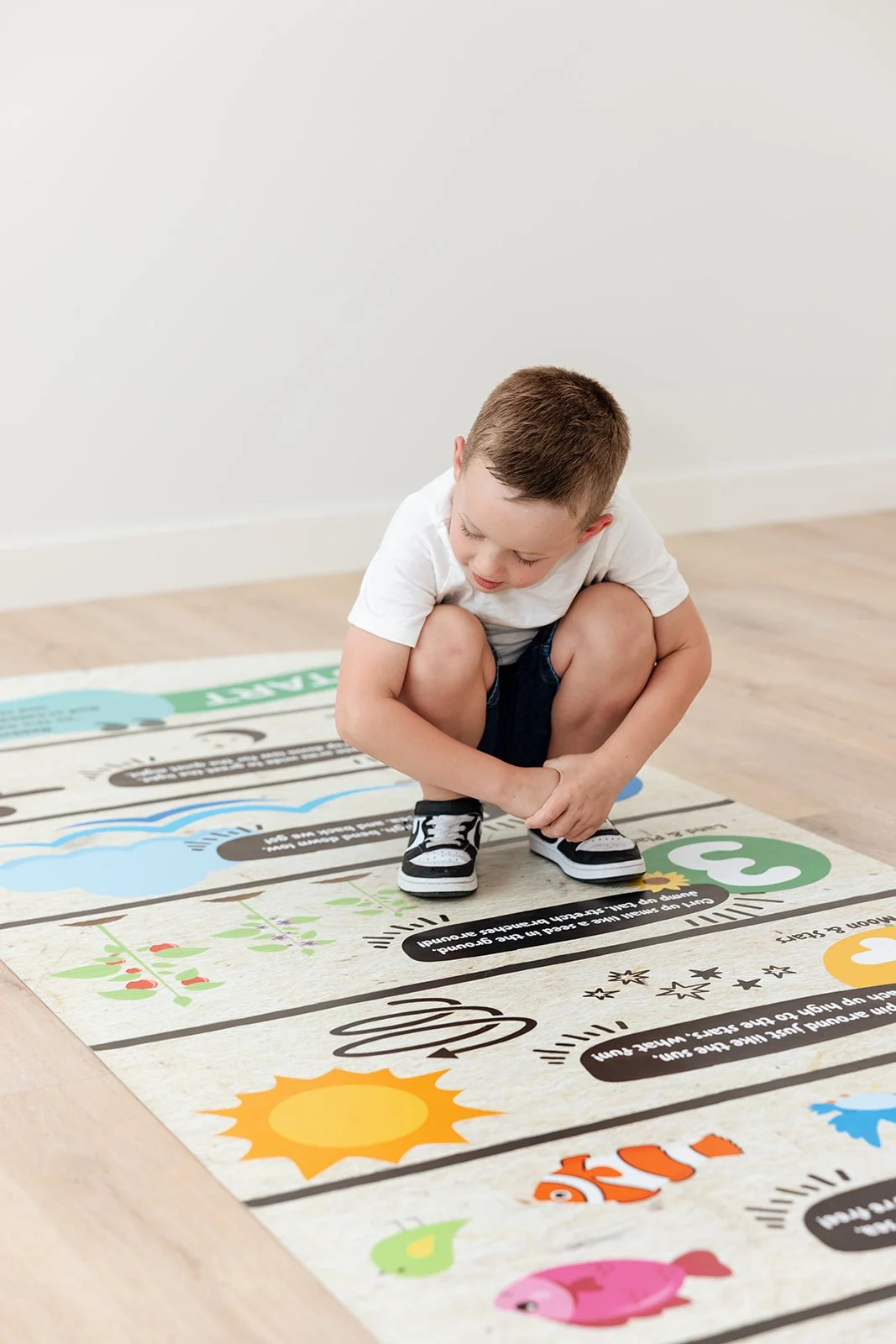
Perfect for Schools That Aren't Ready for Permanent Installation
Portable sensory paths are also a wonderful option for schools that:
Want to try a sensory path before investing in hallway decals
Need movement supports in multiple locations
Have limited wall or floor space
Want movement available during indoor recess
Need flexible intervention tools
Prefer resources that can easily be stored when not in use
Many schools begin with a portable path and later expand into permanent hallway installations as they see the positive impact on students.
Which Portable Path Is Right for Your School?
Sacred Steps currently offers six portable sensory paths, each designed to meet different needs while encouraging purposeful movement.
⭐ Steps to Success
A universal social-emotional learning path that reinforces kindness, perseverance, responsibility, honesty, bravery, patience, and other important life skills.
Perfect for:
Public schools
Private schools
Counseling spaces
Intervention programs
Leadership initiatives
⭐ Walk With Jesus
Students move while reflecting on the life and teachings of Jesus, reinforcing faith formation through purposeful movement.
Perfect for:
Catholic schools
Religious education
Parish programs
Faith formation classrooms
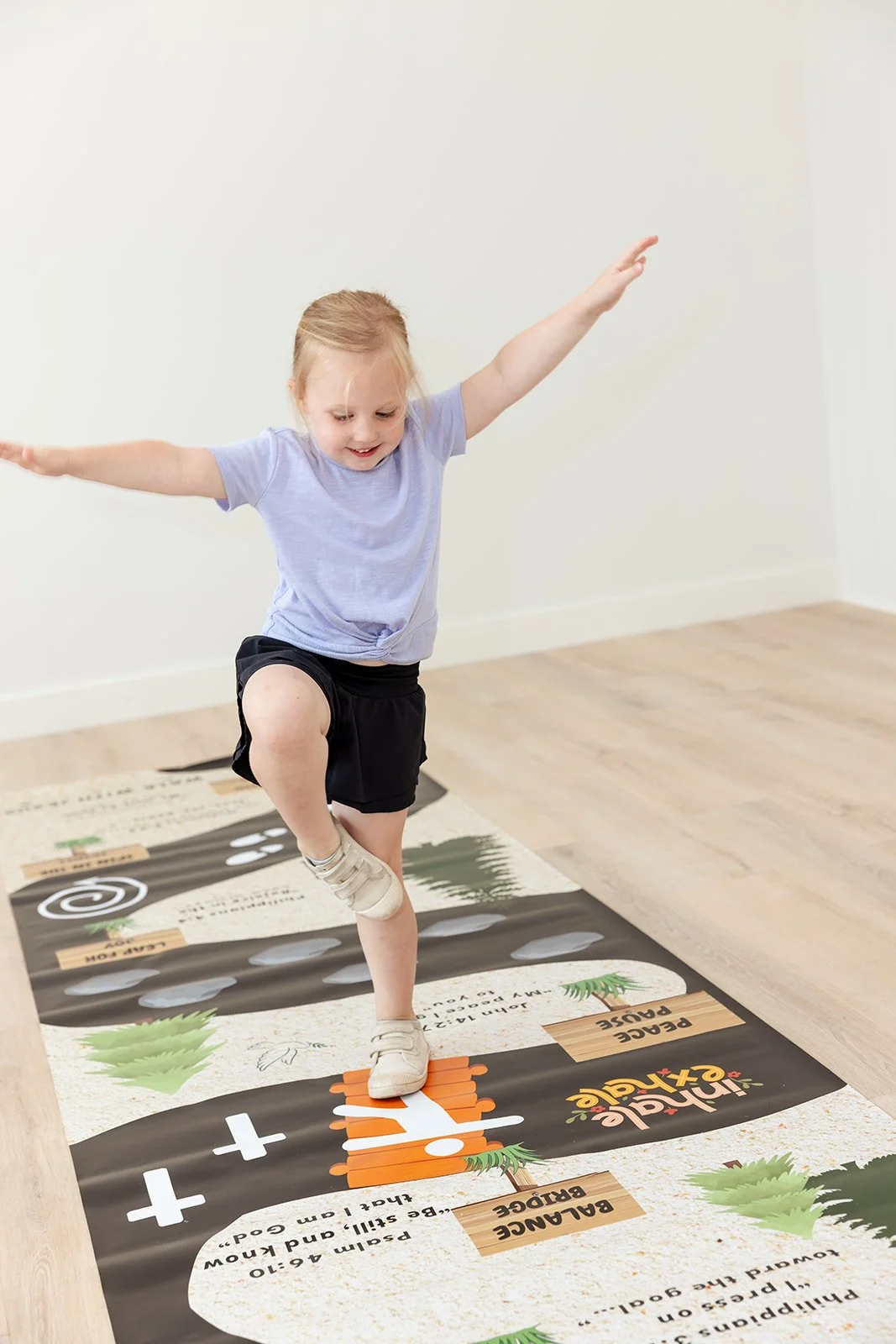
⭐ Noah's Ark
A favorite for younger learners, this engaging path combines movement with one of the Bible's most beloved stories.
Perfect for:
Preschool
Kindergarten
Early elementary
Church nurseries
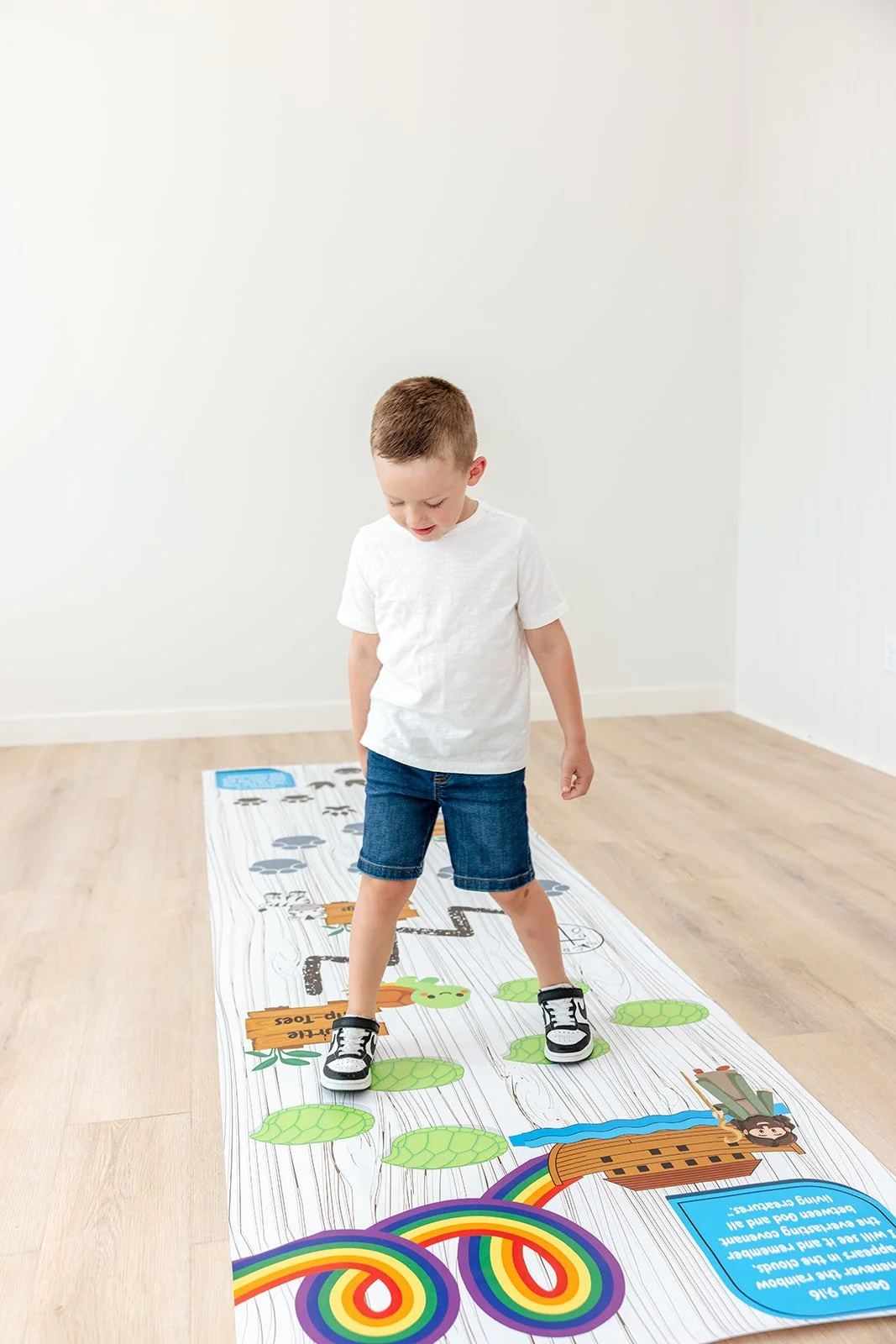
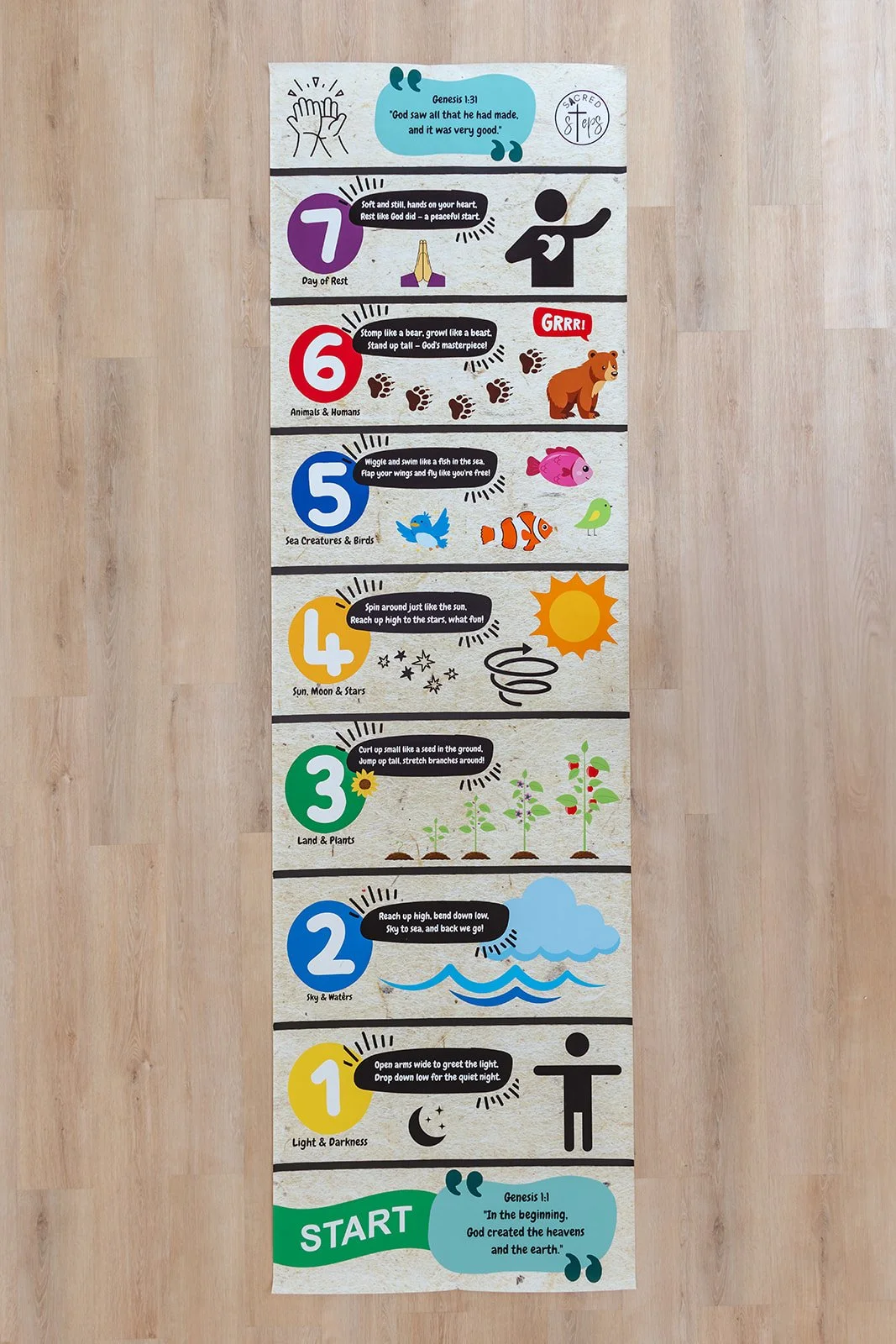
⭐ Days of Creation
Students journey through the seven days of creation while moving, balancing, hopping, and learning Scripture.
Perfect for:
Elementary religion classes
Catholic schools
Faith formation
Vacation Bible School
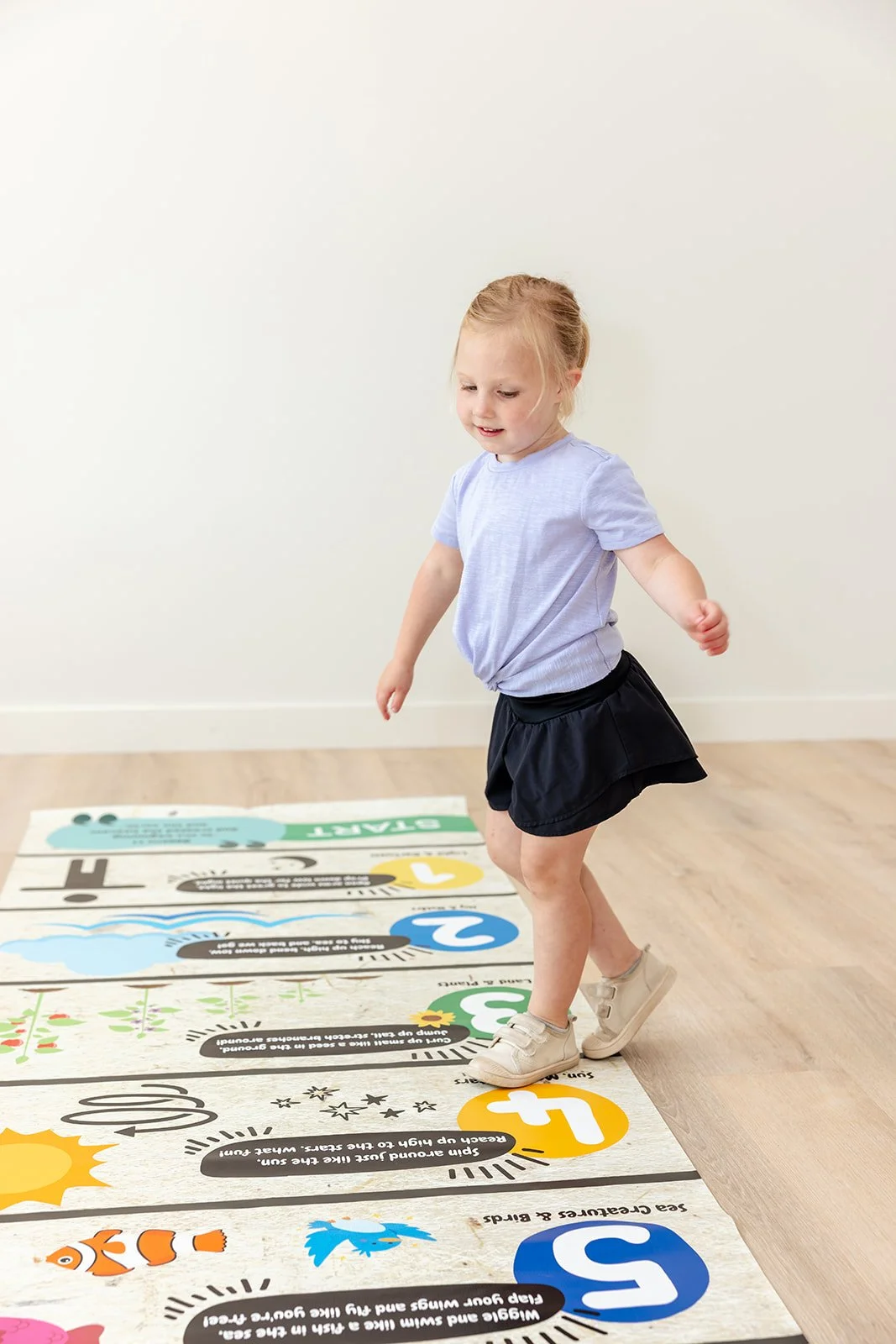
⭐ Leaders in Motion
Created to help students develop leadership skills through purposeful movement, Leaders in Motion encourages confidence, responsibility, perseverance, teamwork, self-regulation, executive functioning, and positive decision-making.
Available in two unique versions, schools can choose the path that best fits their students and school culture.
Perfect for:
Leadership initiatives
Character education
Social-emotional learning (SEL)
Executive functioning support
Student leadership programs
Elementary and middle school students
Why Schools Love Portable Paths
Portable sensory paths give schools incredible flexibility.
One resource can support:
Morning arrival
Indoor recess
Small-group instruction
Therapy sessions
Classroom brain breaks
Counseling visits
Transition times
After-school programs
Instead of students traveling to the sensory path, the sensory path comes to them.
Every portable path is professionally printed on durable 3ft x 10ft canvas, rolls up for easy storage, and can be moved from room to room in seconds.
No installation.
No commitment to one location.
Just purposeful movement wherever students need it.
Try This Tomorrow
Choose one classroom that struggles with transitions.
Before independent work, after recess, or before dismissal, spend just five minutes allowing students to complete a movement activity together.
Observe what changes.
Many teachers notice students returning to learning calmer, more organized, and better prepared to focus.
Sometimes just a few minutes of purposeful movement can completely change the tone of the classroom.
Want to Learn More?
Whether you're looking for faith-based resources like Walk With Jesus, Noah's Ark, and Days of Creation, or universal options like Steps to Success and our Leaders in Motion portable paths, Sacred Steps makes it easy to bring purposeful movement into any learning environment.
No hallway?
No problem.
Movement can happen anywhere students learn, grow, regulate, and thrive.
Browse the complete collection of portable sensory paths and discover how simple it can be to create meaningful movement opportunities throughout your school.
About the Author
Trisha Klausing, OTR/L is a practicing school-based occupational therapist with more than a decade of experience helping children succeed through purposeful movement, sensory regulation, and executive functioning supports. She is the founder of Sacred Steps Sensory Paths, creating OT-designed movement resources that are now helping students in schools across 27 states and Canada. Whether through permanent hallway installations or portable sensory paths, her mission is to help every child feel welcomed, regulated, confident, and ready to learn.
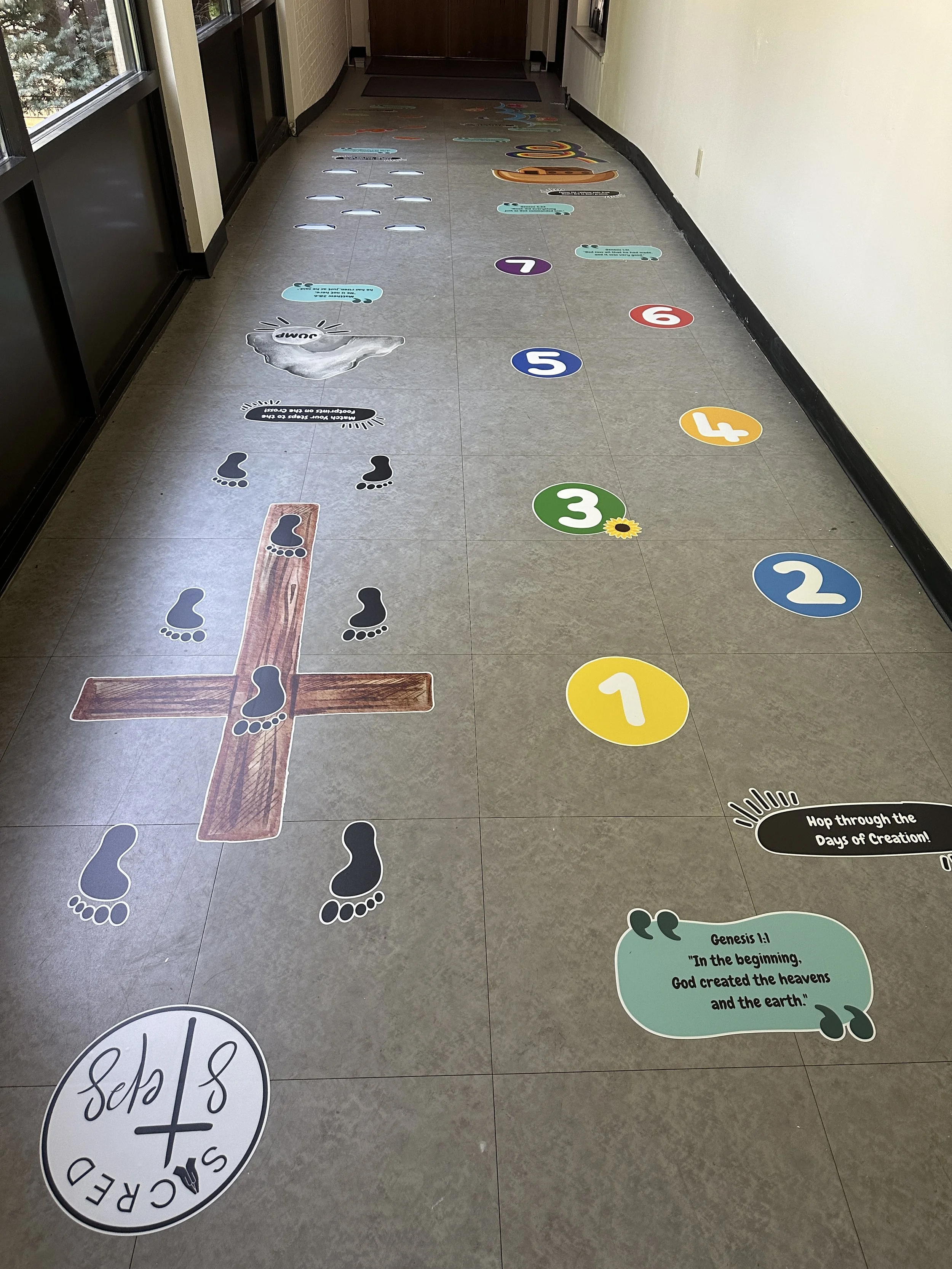
How to Set Up a Sensory Pathway in Your School
Step-by-step guidance from a school-based OT on planning, placing, and installing a sensory pathway — plus what actually works.
If you've been researching sensory pathways for schools, you've probably noticed they're appearing in elementary schools, Catholic schools, therapy clinics, and early childhood centers across the country.
But what exactly is a sensory pathway?
More importantly...
Do they actually work?
As a practicing school-based occupational therapist for more than 10 years, I've seen firsthand how purposeful movement can transform a student's ability to learn, focus, regulate emotions, and participate in the school day.
A sensory pathway isn't simply colorful hallway décor. When thoughtfully designed, it becomes an extension of the classroom—a place where movement supports learning, self-regulation, executive functioning, and even school culture.
This guide will help you understand what sensory pathways are, who benefits from them, and how to choose the right one for your school.
What Is a Sensory Pathway?
A sensory pathway is a series of movement-based activities placed throughout a hallway or learning space that encourages children to move with purpose.
Students may be asked to:
Jump
Balance
Hop
Stretch
Cross midline
Practice bilateral coordination
Follow visual directions
Complete calming breathing activities
These simple movements activate multiple body systems while giving students an opportunity to reset before returning to learning.
Unlike a playground or PE class, sensory pathways provide quick movement opportunities throughout the school day during natural transitions.
Why Schools Are Installing Sensory Pathways
Today's students spend much of their day sitting.
Research continues to show that movement improves:
Attention
Learning readiness
Emotional regulation
Executive functioning
Classroom participation
Instead of asking students to simply "sit still," sensory pathways acknowledge an important truth:
Movement helps children learn.
Schools are incorporating sensory pathways into:
Hallways
Entryways
Counseling offices
Resource rooms
Libraries
Early childhood wings
Therapy spaces
Waiting areas
Faith formation areas
The goal isn't to interrupt learning.
It's to improve it.
Who Benefits From a School Sensory Pathway?
One of the biggest misconceptions is that sensory pathways are only for students with special needs.
In reality, every child benefits from movement.
Sensory pathways can support:
Students who need movement breaks
Some children simply learn better after moving.
A short hallway activity may improve focus far more effectively than repeatedly reminding a child to stay seated.
Students with ADHD
Movement can improve attention, body awareness, impulse control, and regulation throughout the school day.
Students with autism
Many autistic students benefit from predictable movement routines and opportunities for sensory regulation between activities.
Students experiencing anxiety
Deep breathing, heavy work, and rhythmic movement may help students feel calmer before entering challenging academic or social situations.
Entire classrooms
Teachers often report smoother transitions and improved readiness after classes complete a sensory pathway together.
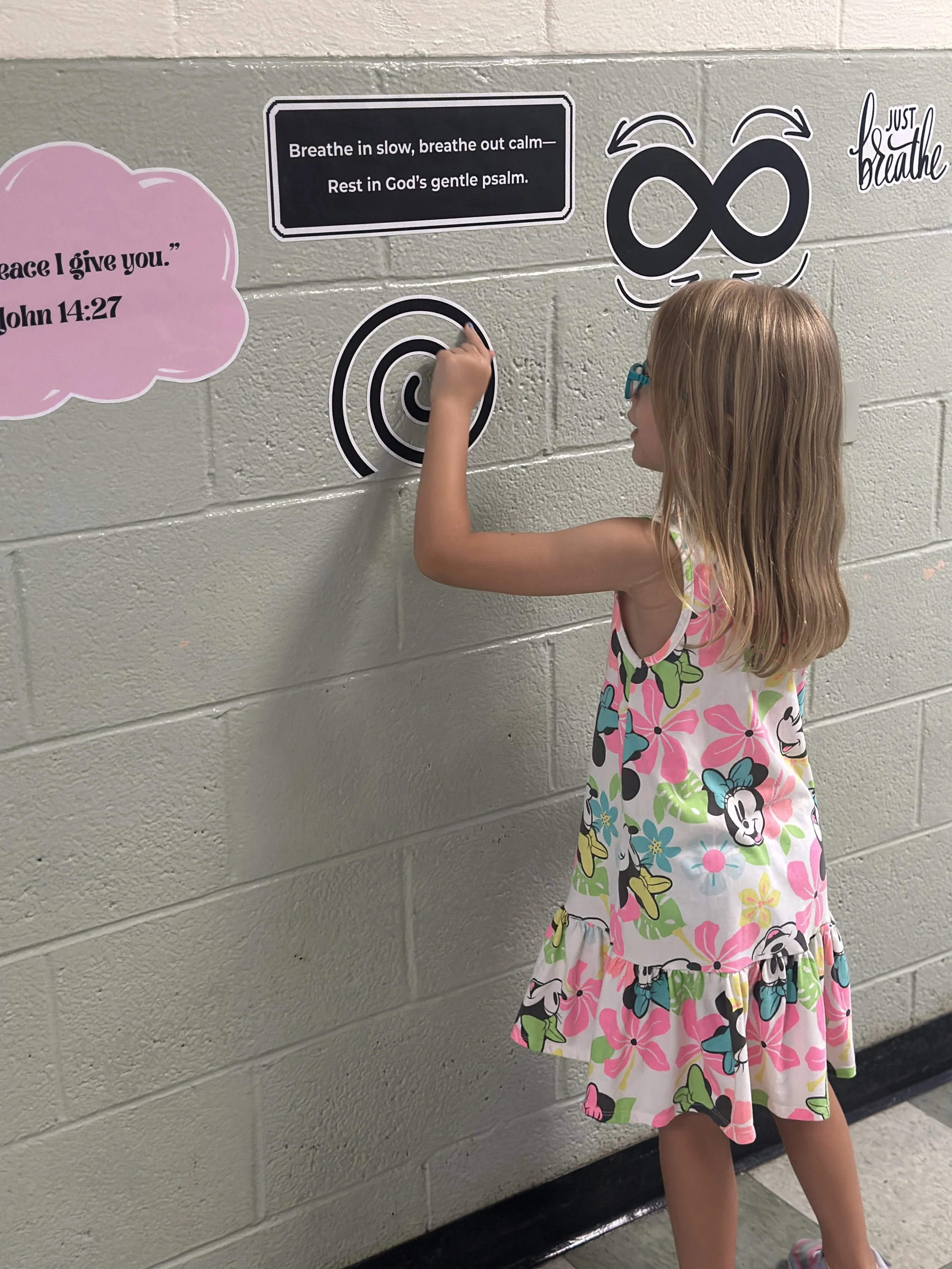
Benefits of Sensory Pathways
Schools often notice improvements in:
Better transitions
Instead of chaotic hallway movement, students have a structured activity to complete while moving between classrooms.
Improved focus
Movement increases alertness and prepares the brain for learning.
Self-regulation
Students begin recognizing when they need movement before becoming overwhelmed.
Executive functioning
Many pathways challenge planning, sequencing, working memory, and attention.
Positive school culture
Hallways become engaging spaces that reinforce kindness, perseverance, responsibility, faith, or other school values.
Choosing the Right Sensory Pathway
Not every pathway is the same.
When comparing options, ask yourself:
What skills are we trying to support?
Examples include:
Self-regulation
Executive functioning
School readiness
Faith formation
Character education
Motor coordination
Emotional regulation
Who will use it?
Consider:
Preschool
Elementary
Middle school
Therapy students
Entire school
Where will it be installed?
Popular locations include:
Main hallways
Classroom hallways
Counseling offices
Libraries
Waiting rooms
Church hallways
Religious education spaces
Is it durable?
School hallways receive heavy foot traffic.
Choose commercial-quality materials designed specifically for educational settings.
Faith-Based vs. Traditional Sensory Pathways
Many schools are looking for ways to reinforce learning beyond the classroom.
Faith-based sensory pathways combine movement with Scripture, prayer, virtues, sacraments, or Bible stories, creating opportunities for students to encounter their faith throughout the school day.
Instead of simply decorating hallways, schools can transform them into meaningful spaces that encourage movement while reinforcing Catholic identity.
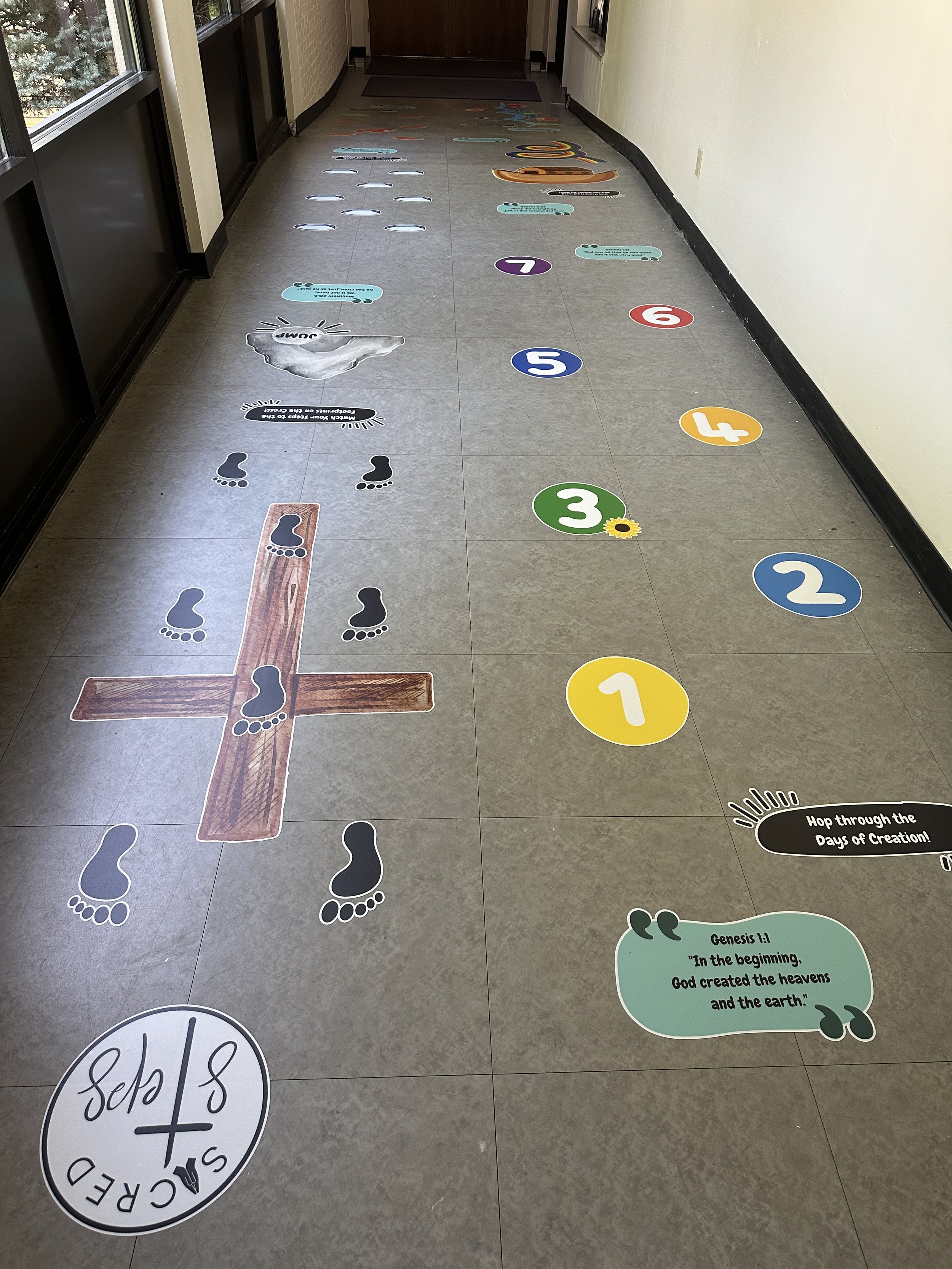
How Occupational Therapy Influences Great Design
As an occupational therapist, I approach every sensory pathway differently than a graphic designer.
Every movement should have a purpose.
Activities should intentionally support:
Bilateral coordination
Crossing midline
Motor planning
Vestibular input
Proprioceptive input
Executive functioning
Self-regulation
Beautiful design matters—but purposeful movement matters even more.
Frequently Asked Questions
How long does installation take?
Most floor decals can be installed in just a few hours depending on the size of the project.
Are sensory pathways only for elementary schools?
No.
Many middle schools, counseling departments, therapy clinics, churches, and early childhood programs successfully use movement pathways.
Do sensory pathways require a lot of space?
Not at all.
They can be customized for long hallways, short corridors, classrooms, counseling spaces, or even portable options.
Can they be cleaned?
Yes.
Commercial-quality decals are designed for regular school cleaning procedures when installed and maintained according to manufacturer recommendations.
Try This Tomorrow
Take a walk through your school and look at your hallways with fresh eyes.
Ask yourself:
Where do students tend to become restless during transitions?
Which hallway could become a purposeful movement opportunity?
Is there a space that could reinforce your school's mission, values, or faith while helping students regulate and refocus?
Sometimes the most powerful learning spaces aren't classrooms at all—they're the places students pass through every day.
Want to Learn More?
At Sacred Steps Sensory Paths, every product is designed by a practicing school-based occupational therapist to support movement, learning, regulation, and school culture.
Whether you're looking for faith-based sensory pathways, universal movement paths, calming spaces, or portable options, I'd love to help you find the right fit for your school.
I also offer complimentary hallway mock-ups so you can visualize how your space could be transformed before placing an order.
Explore the collection or contact me to start planning your hallway transformation today.
About the Author
Trisha Klausing, OTR/L is a practicing school-based occupational therapist and the founder of Sacred Steps Sensory Paths. She designs movement-rich environments that help schools support self-regulation, executive functioning, learning, and faith formation. Sacred Steps products are used in schools, churches, clinics, and educational settings across 25 states and Canada.