Floor, Wall, or Portable Sensory Path? How to Choose the Right Option for Your School
Floor, wall, or portable—which sensory path is right for your school? Compare the benefits of each format and learn what works best for your students, space, and daily routines.
When schools begin exploring sensory paths, one of the first questions they ask is:
Should we choose a floor path, a wall path, or a portable option?
It is a great question—and there is not one answer that works for every school. The best choice depends on your available space, the ages of your students, how you want the path to be used, and whether you need a permanent or flexible resource.
As a pediatric and school-based occupational therapist, I created Sacred Steps Sensory Paths to give students proactive opportunities to move, regulate, refocus, and return to learning. Each format supports those goals a little differently.
Here is an easy way to determine which sensory path may be the best fit for your school, church, preschool, or therapy space.
Choose a Floor Sensory Path When You Want Movement Built Into the Hallway
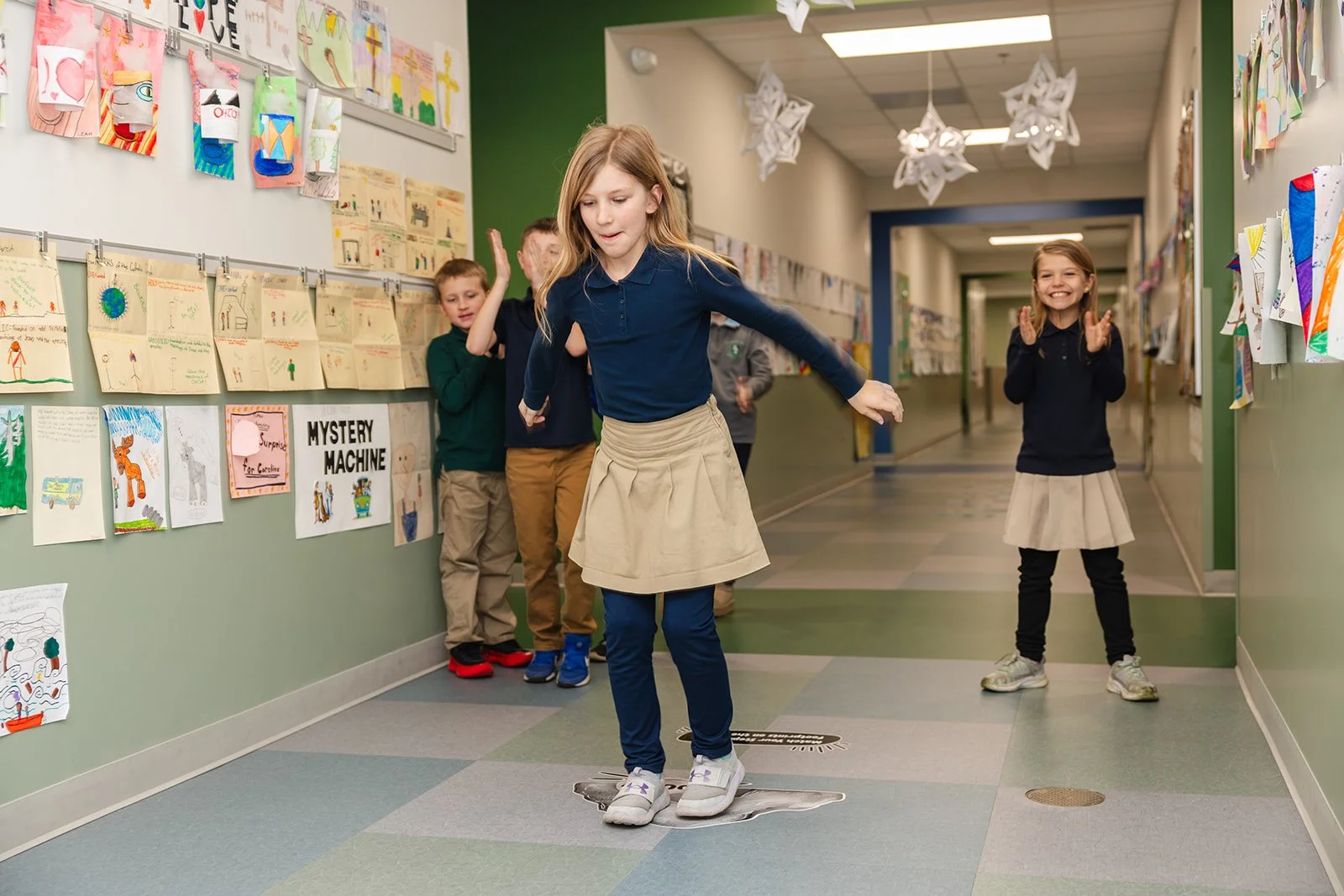
A floor sensory path is a wonderful choice when you want movement to become a natural part of the school day. Students can hop, jump, balance, squat, follow footprints, and complete other purposeful movements as they travel through the hallway.
Floor paths work especially well when:
You have a dedicated hallway or open floor area.
You want a permanent, highly visible movement resource.
Multiple classrooms will use the path throughout the day.
Your students benefit from whole-body movement and heavy-work activities.
You want movement breaks to be easily available without gathering extra equipment.
Sacred Steps floor decals are commercially printed for heavy daily traffic and can be waxed over as part of your school’s normal floor-care routine. Once installed, the path is ready whenever students need it—during transitions, scheduled sensory breaks, indoor recess, therapy sessions, or those moments when a child simply needs to move before returning to class.
Before choosing a floor path, consider hallway width, doorways, traffic patterns, and custodial routines. A path does not always need to run in one perfectly straight line. Stations can be spaced out, turned, or arranged to work around the features of your building.
Choose a Wall Sensory Path When Floor Space Is Limited
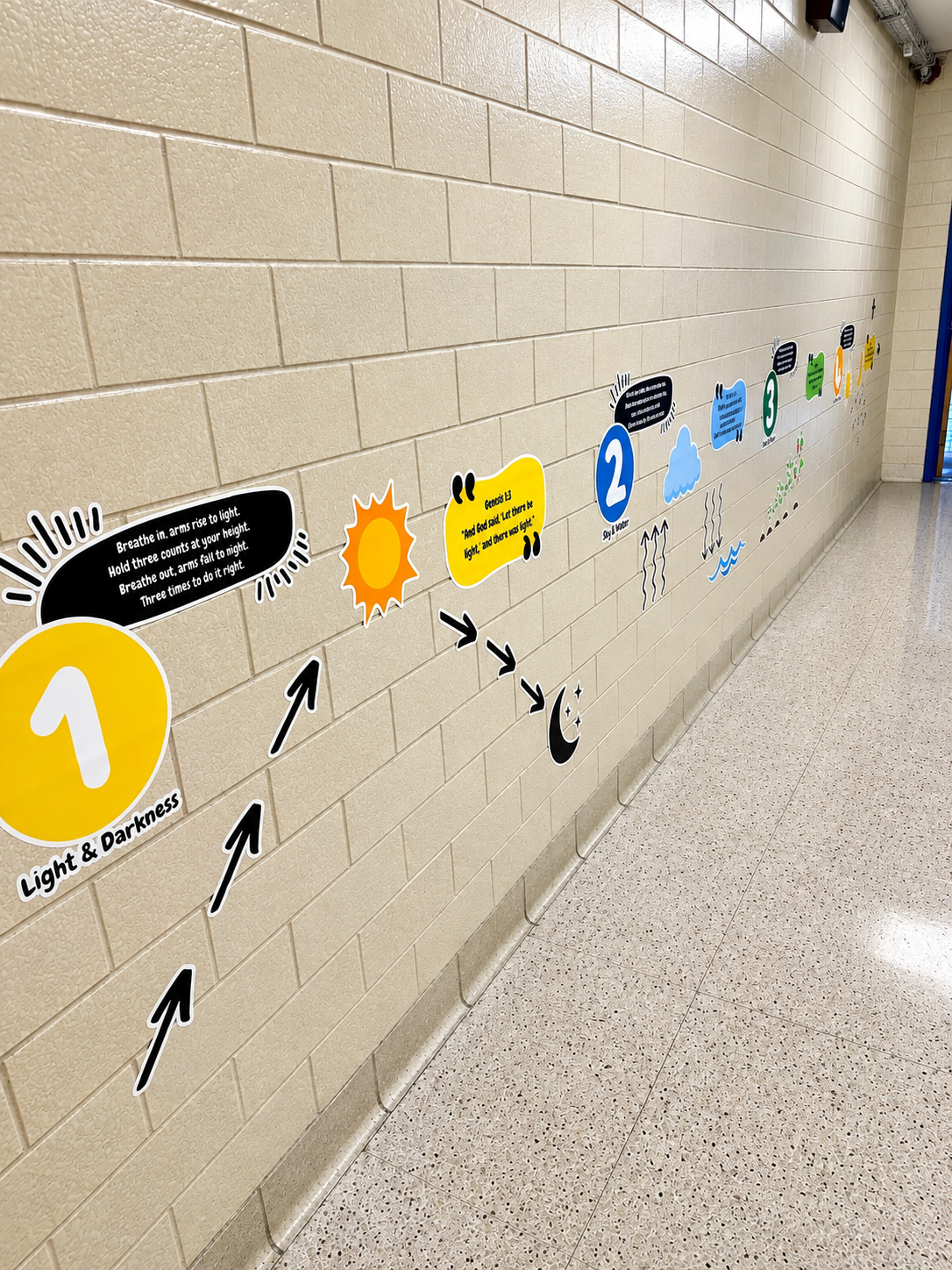
Do you have a narrow hallway, a busy traffic pattern, or floors that are not suitable for decals? A wall path may be the perfect solution.
Wall activities can encourage students to reach, stretch, push, breathe, trace, pray, cross midline, and complete calming or strengthening movements—all without taking up valuable floor space.
Wall paths are a strong choice when:
Hallways are narrow or need to remain clear.
You want activities near a classroom, counseling office, prayer space, or sensory area.
You would like to add regulation supports at different heights.
You want a quieter movement experience with less jumping or traveling.
You have a beautiful blank wall just waiting to do something useful!
Wall-based options can also be especially helpful for older students who may prefer activities that feel a little more discreet. Designs such as Who God Says I Am, Days of Creation, and Beatitudes Blessings combine movement and regulation with meaningful faith-based messages.
Sacred Steps wall decals are removable, making them a practical option for many school and church environments.
Choose a Portable Sensory Path When Flexibility Matters Most
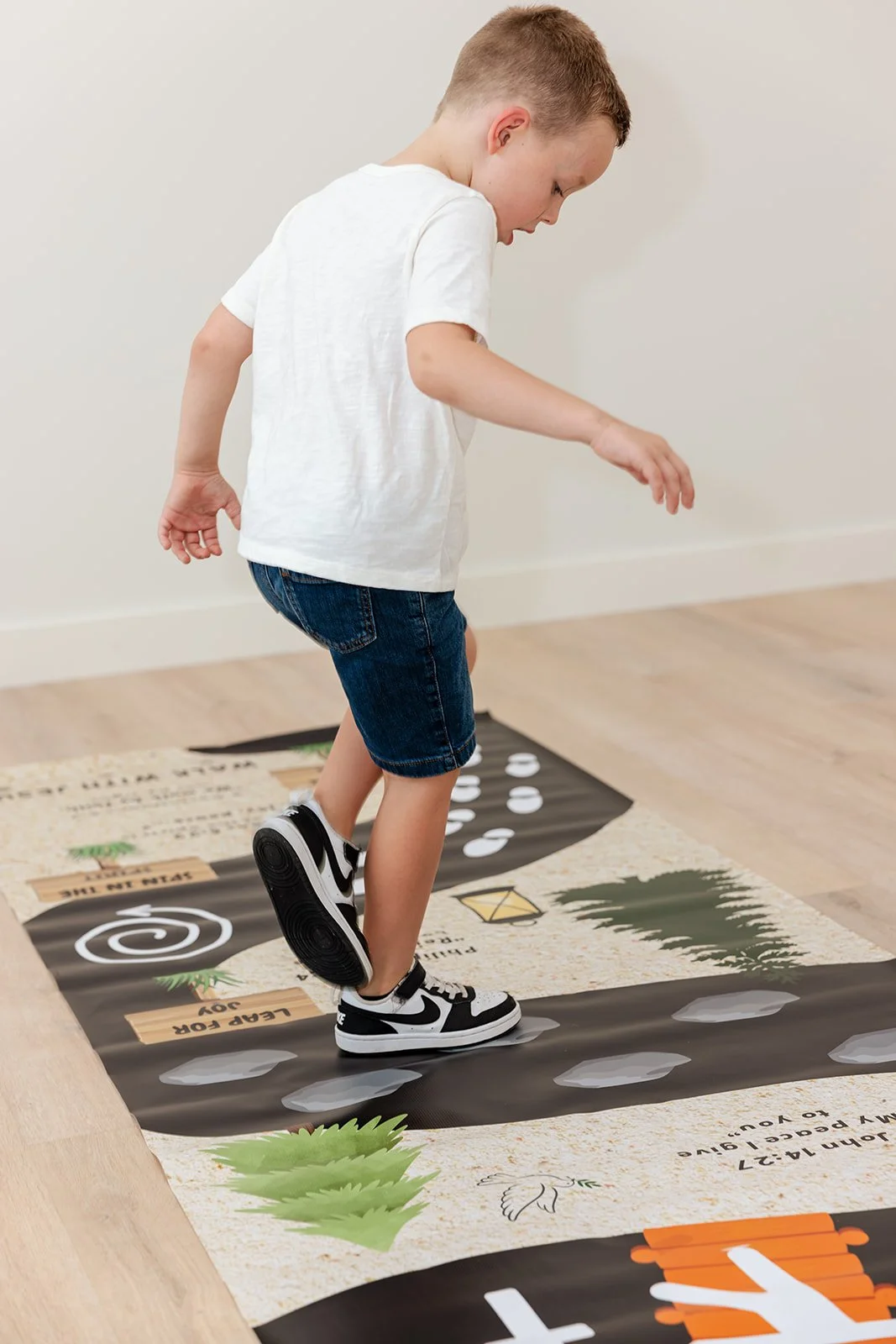
Sometimes the best sensory space is wherever your students happen to be that day.
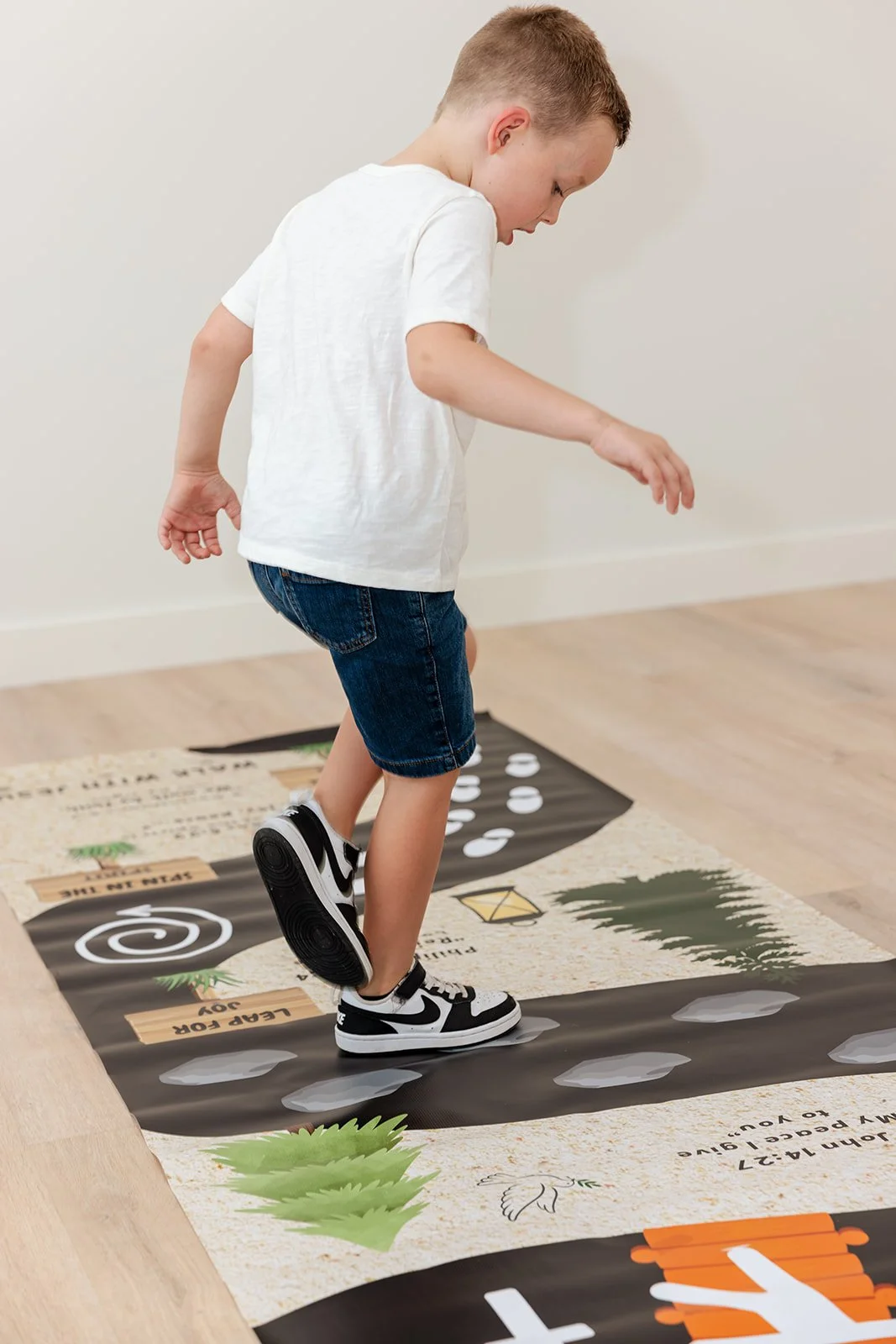
Portable sensory paths are printed on durable 3' x 10' canvas mats. They can be rolled out in a classroom, preschool room, parish center, therapy space, hallway, or counseling area—and then rolled up and stored when the activity is finished.
A portable path may be the best fit when:
You need to move the resource between classrooms or buildings.
You rent your space or cannot install permanent decals.
You want an easy option for special events, faith formation, indoor recess, or sensory-friendly Mass.
You have limited space and need to store the path between uses.
You want to begin with a smaller investment before selecting a full permanent path.
Portable paths are also an easy way for teachers to add purposeful movement to the day without rearranging an entire classroom. Roll it out, let students move, and roll it back up—no construction project required!
For smaller preschool and early-childhood spaces, the Little Steps portable paths offer the same grab-and-go flexibility in a compact 24" x 72" size.
Could Your School Use More Than One Format?
Absolutely! Many schools find that a combination works best.
For example, a school might place a full floor path in a main hallway, add calming wall activities near the counselor’s office, and keep a portable path available for classrooms or special events. A Starter Set can also introduce several permanent activities in a smaller area before the school expands to a full path.
Think less about choosing the single “perfect” format and more about where students need support during their day:
Where do transitions become difficult?
Where do students wait?
Where could a child safely take a short movement break?
Which areas are accessible to the greatest number of students?
Would a permanent resource be used more consistently, or does your team need flexibility?
Those answers will usually point you toward the best choice.
Are Sensory Paths Difficult to Install?
Most schools install their Sacred Steps Sensory Paths themselves. I provide installation instructions and am available to help with placement and layout before installation begins. Having two or three people makes the process much easier, especially for larger floor pieces.
If your school would prefer installation assistance, travel installation may also be available for an additional fee based on location and travel expenses.
Still Not Sure? Send Me Your Space!
You do not need to have everything figured out before reaching out. In fact, some of my favorite projects have started with a photo of an empty hallway and the question, “What could work here?”
Send me a few pictures, approximate dimensions, the ages of the students you serve, and anything you hope the space will accomplish. I will give you my honest recommendation about whether a floor, wall, portable, or combination option would work best.
Narrow hallway? Awkward corner? Small preschool room? Send it anyway. You may have more possibilities than you think!
Explore Sacred Steps Sensory Paths or contact me to begin planning a path for your space!