What to Look for in a Sensory Path for Your Catholic School
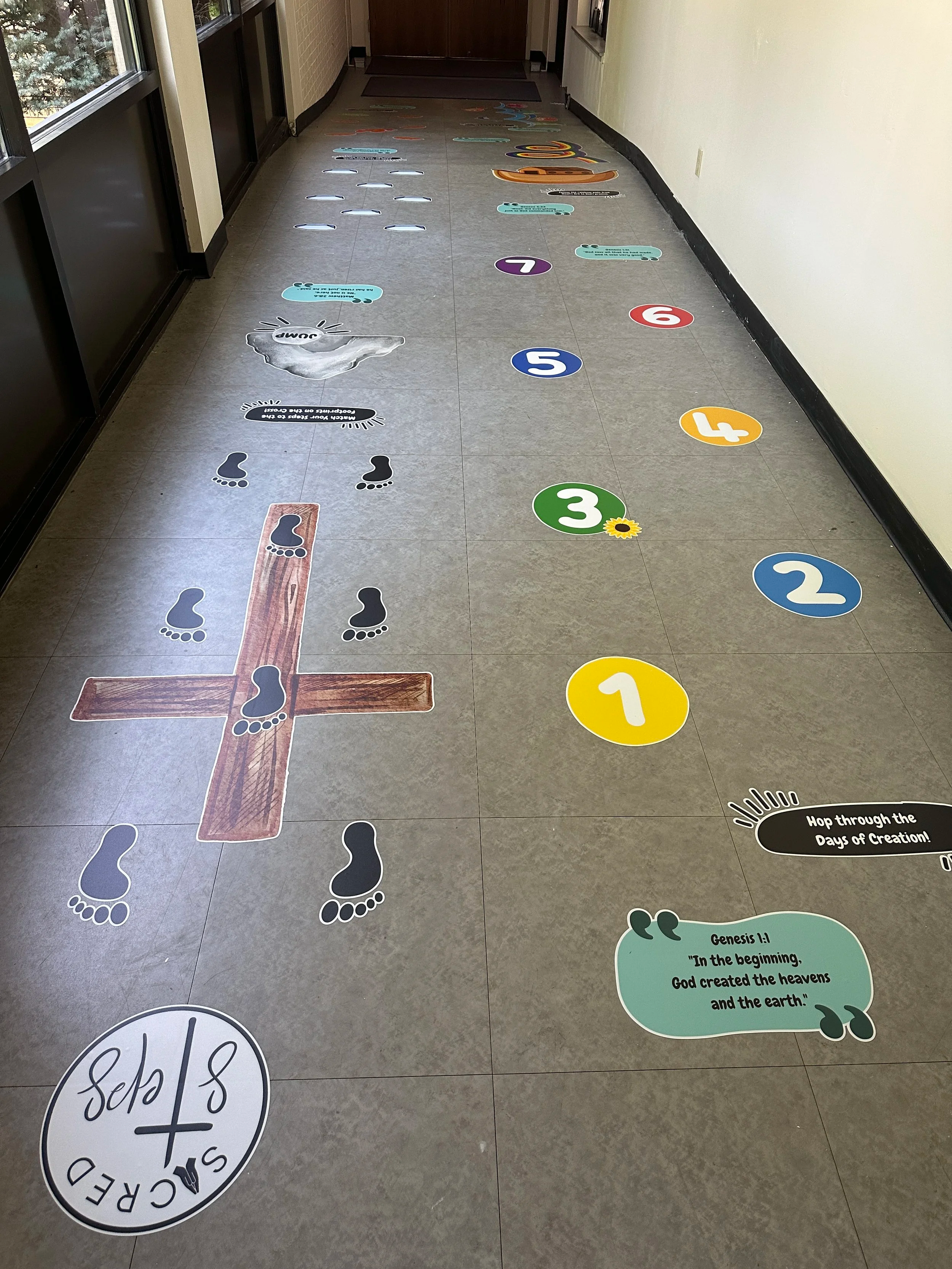
The Bible Stories Sacred Steps Sensory Path installed on a school floor featuring faith-based movement activities for Catholic school hallways.
If you've been searching for a sensory path for your Catholic school, you've probably noticed there aren't many options designed with faith in mind — and that matters more than you might think.
Movement and faith belong together.
Sensory paths help children regulate their bodies, improve focus, and transition more smoothly between activities. But in a Catholic school, why settle for generic shapes and animals when every wall can reinforce what you're already teaching?
Here's what to look for:
1. OT-Informed Design A sensory path should be created with occupational therapy principles in mind — not just fun graphics. Each activity should target specific motor and sensory skills like bilateral coordination, balance, and body awareness.
2. Faith-Based Content Look for paths that incorporate Scripture, crosses, prayer, or saints — elements that reinforce your school's mission while children move.
3. Flexibility Does it work in hallways? Classrooms? Can it be moved if needed? Portable options give you maximum flexibility without a permanent commitment.
4. Proven Results Look for a product used in real Catholic schools, with testimonials from principals, teachers, and OTs.
Sacred Steps Sensory Paths were designed by an occupational therapy professional specifically for Catholic schools — and are now serving students in 24 states. Browse our paths here.