
The first day of school is exciting.
New backpacks. Freshly sharpened pencils. New teachers. Seeing friends again.
But for many students, the first days of school can also feel like a lot.
New classrooms. Different routines. Unfamiliar expectations. Crowded hallways. Bells ringing. Chairs scraping. More sitting. More listening. More transitions. And after a summer with a very different schedule, suddenly being expected to regulate through an entire school day again.
We often call it "first-day jitters."
But sometimes what looks like nervousness, excessive energy, silliness, avoidance, tears, difficulty listening, or even challenging behavior is also a child trying to manage all of the sensory and emotional demands that come with returning to school.
As a school-based occupational therapist, that's why I believe one of the best things we can do at the beginning of the year is simple:
Don't wait for students to struggle before giving them tools to regulate.
The First Day Is a Sensory Experience
Think about walking into school from a child's perspective.
The hallway may be louder than they've experienced all summer.
There are people everywhere.
They're trying to remember where to put their backpack, where to sit, when they're allowed to talk, where they're supposed to walk, what happens next — and perhaps even how to open that brand-new lunch container someone bought them.
For younger students, it may be their first time spending an entire day away from home.
For older students, there may be new classrooms, changing classes, increased academic expectations, new social situations, and less downtime.
And underneath all of that, their bodies are processing an enormous amount of sensory information.
That's a lot of work before the academics even begin.
First-Day Jitters Don't Look the Same in Every Child
The student who is overwhelmed isn't always the child crying at the classroom door.
It might be the child who:
Can't stop moving in his chair.
Suddenly needs to sharpen his pencil for the fourth time.
Becomes extra silly during transitions.
Covers her ears in a noisy hallway.
Has difficulty getting started on an assignment.
Melts down over something seemingly small.
Asks to go to the bathroom repeatedly.
Withdraws and becomes unusually quiet.
Has difficulty keeping hands to himself in line.
Seems completely fine at school — and falls apart the moment he gets home.
These behaviors don't automatically mean a child has a sensory processing difficulty.
Sometimes they simply mean:
This is a lot for my body right now.
And that's where proactive supports can make such a difference.
What If We Supported Regulation Before the Struggle?
We tend to think about sensory strategies reactively.
A student becomes overwhelmed, so we give them a break.
A child can't sit still, so we send them to move.
A student is upset, so we suggest taking deep breaths.
Those strategies can certainly be helpful.
But what if we shifted the timing?
What if the movement came before the long period of sitting?
What if the calming activity happened before the difficult transition?
What if students learned where and how to reset before they were already dysregulated?
That's the power of being proactive.
Instead of asking only:
"What should we do when this child is struggling?"
We can also ask:
"What can we put in place so this child is less likely to get there?"
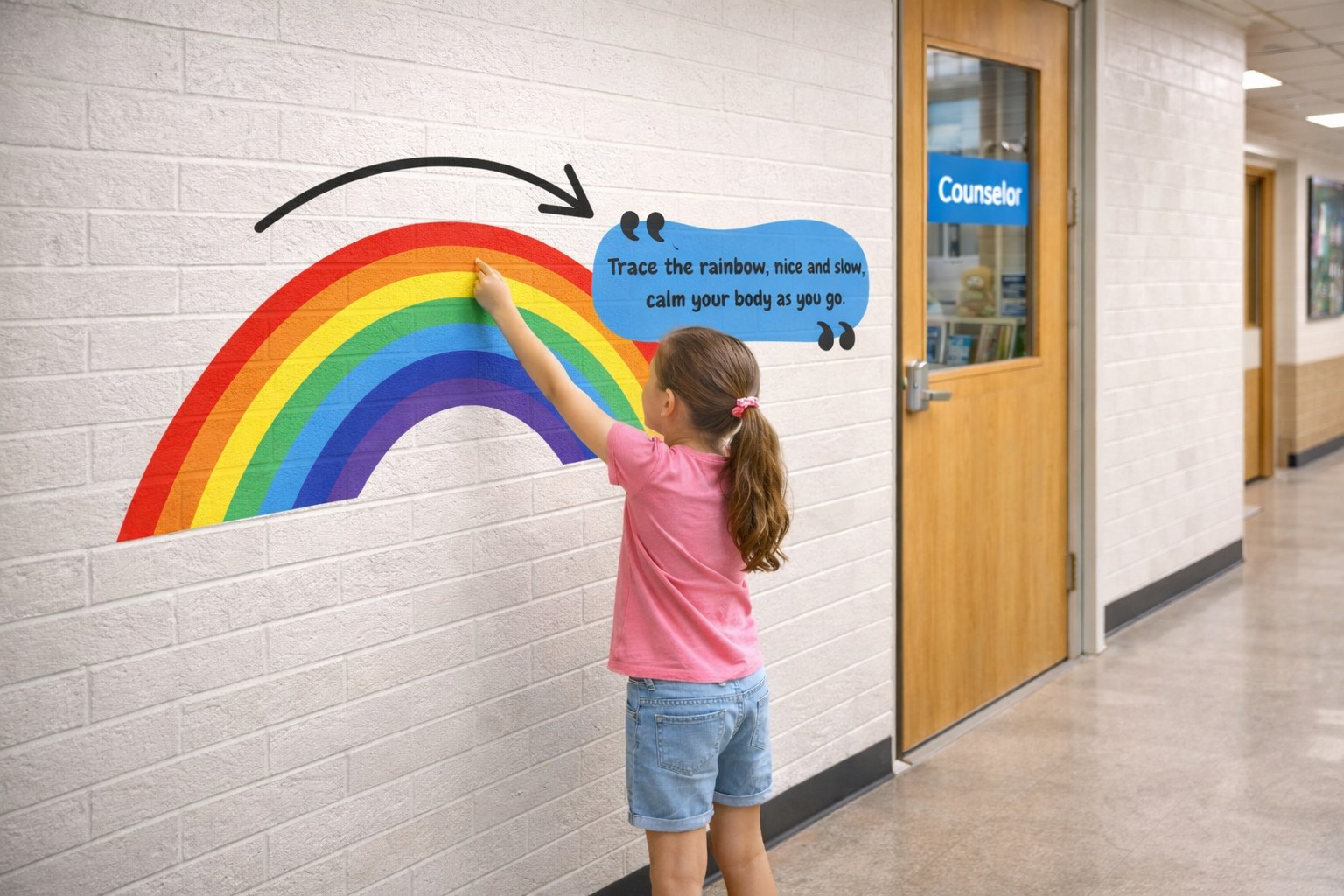
Proactive Doesn't Have to Mean Complicated
Supporting sensory and regulation needs doesn't require every school to build a sensory room.
It doesn't have to mean creating an elaborate schedule of sensory breaks.
And it certainly doesn't have to add another complicated program to a teacher's already-full plate.
Sometimes small changes are enough.
A few minutes of movement before morning work.
A calming activity outside the classroom.
A movement station students can use during a hallway transition.
A quiet reset space in the corner of a classroom.
A portable sensory path that can be rolled out when needed and shared between spaces.
A breathing activity before a test.
A whole-class movement break after prolonged sitting.
Start small.
The goal isn't to create more for teachers to manage.
It's to build regulation opportunities into things students are already doing.
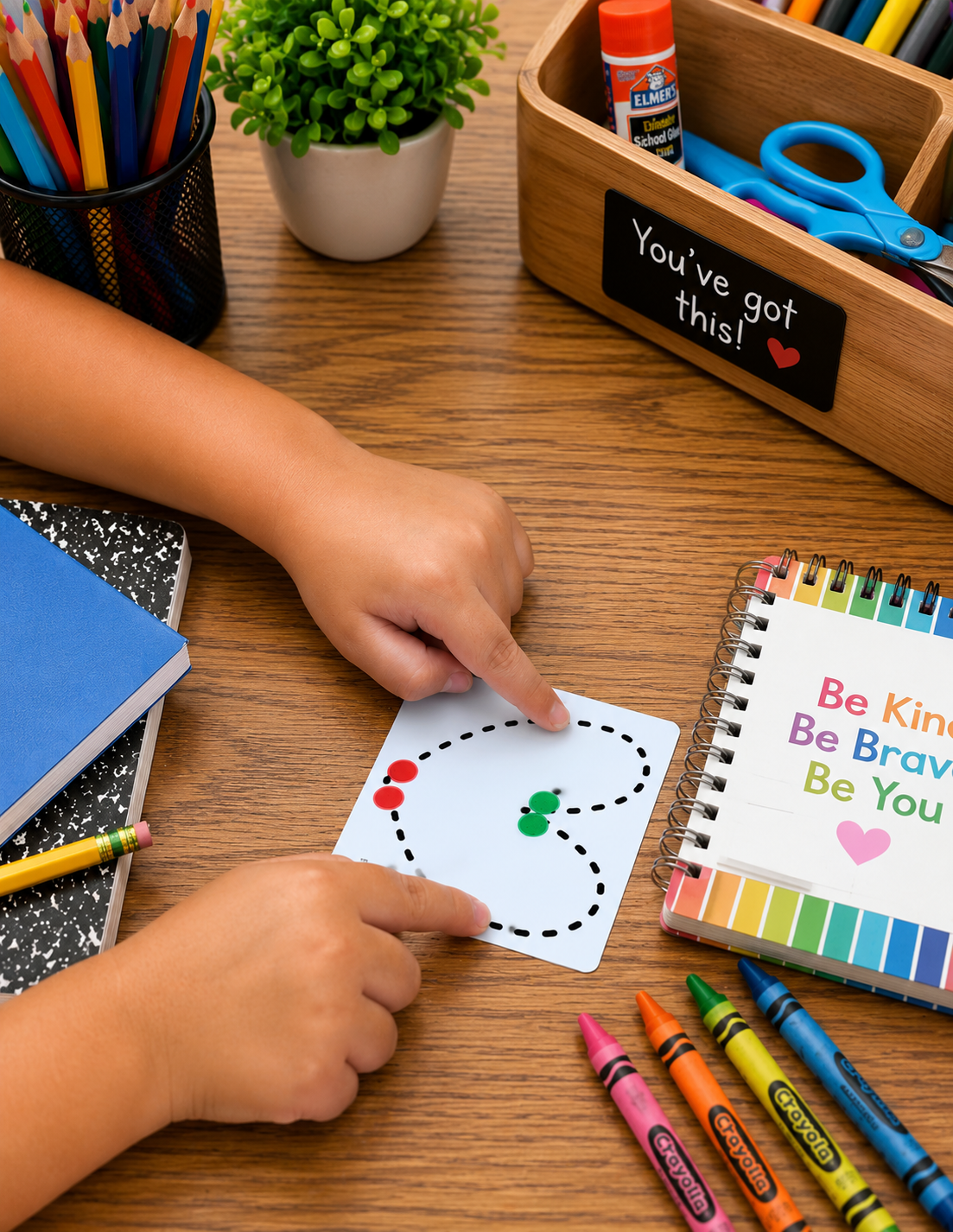
Movement Isn't Taking Away From Learning
Especially during the first weeks of school, there can be pressure to establish routines and get students academically engaged as quickly as possible.
But movement doesn't have to compete with learning.
For many students, purposeful movement can help them become more ready for what comes next.
When a child has an appropriate opportunity to move, reset, breathe, push, stretch, march, balance, or simply step away for a moment, we're giving their body another tool for regulation.
And when the body is more regulated, participating in classroom expectations may become easier.
That's why I don't view movement and sensory supports as something separate from the school day.
They're one way we help prepare students for the school day.
Teach the Tools Before They're Needed
The beginning of the year is also the perfect time to introduce sensory and regulation resources.
Don't wait until a student is upset to show them a calming space for the first time.
Don't introduce a sensory path only after someone is having difficulty.
Teach students what the resources are, how to use them, and when they might help.
Let the whole class practice.
Normalize taking a breath.
Normalize movement.
Normalize recognizing when your body needs something.
When these supports are simply part of the school environment, using them doesn't have to feel like a punishment or something reserved for "the kid who is struggling."
It becomes another tool available to students.
A Different Way to Prepare for Day One
We spend so much time preparing our schools for the first day.
Bulletin boards are ready.
Name tags are on desks.
Lesson plans are written.
Supplies are organized.
Hallways look beautiful.
But as you're walking through your school before those doors open, consider adding one more question to your checklist:
Where can our students go — or what can they do — when their bodies need to move, calm, or reset?
You may already have the perfect space.
And it might only take one small addition to make it useful.
Try This Tomorrow
Walk through your students' first day from their perspective.
Where will they wait?
Where will it be loud?
When will they be expected to sit for a longer period?
Which transitions might feel overwhelming?
When will there be lots of directions, people, noise, or stimulation happening at once?
Now choose one of those moments.
Ask yourself:
"What could we put in place five minutes earlier?"
Maybe it's two minutes of movement.
Maybe it's a breathing exercise.
Maybe it's a visual reminder.
Maybe it's a sensory activity students pass on their way back to class.
Start with one proactive support and see what happens.
Because sometimes the best time to help a student regulate is before they need help regulating.
Want to Learn More?
Sacred Steps Sensory Paths were created by a school-based occupational therapist to help schools incorporate purposeful movement and regulation into the spaces and routines they already have.
Schools don't need a sensory room — or even a large hallway — to get started.
You can begin with one individual activity, a calming space, a Starter Set, a portable sensory path, or a full hallway path.
Sacred Steps offers both universal school resources and OT-designed faith-based sensory paths, allowing Catholic and Christian schools to combine purposeful movement and regulation with messages that reinforce their faith throughout the school day.
Products are commercially printed using durable, professional-grade materials designed for school environments, with floor, wall, and portable options available.
Whether you're preparing for the very first day or realizing a few weeks into the year that your students need additional support, you don't have to change everything at once.
Start with one need.
Start with one space.
Start with one purposeful step.
About the Author
Trisha Klausing is a school-based occupational therapist with more than 10 years of experience and the creator of Sacred Steps Sensory Paths. After seeing firsthand how movement and regulation impact students' ability to participate successfully in the school day, she created Sacred Steps to provide schools with purposeful, professionally designed sensory resources — including faith-based options that allow Christian and Catholic schools to support the whole child while reinforcing their faith.