Is Your School Hallway Working Hard Enough?
A 5-Minute Hallway Check From a School-Based Occupational Therapist
When we think about preparing a school environment for students, we tend to focus on classrooms.
We arrange desks. We organize materials. We create calm-down spaces. We think about lighting, seating, visual supports, and classroom routines.
But there's another space students use every single day that we don't always think about in the same way:
The hallway.
As a school-based occupational therapist, I spend a lot of time thinking about how the environment affects a student's ability to regulate, transition, participate, and learn.
And hallways are part of that environment.
Students may walk through them dozens of times each day. They transition from preferred activities to non-preferred activities there. They navigate noise, other students, visual stimulation, schedule changes, and expectations—all while being asked to keep their bodies regulated.
So here's a question worth asking:
Is your hallway simply getting students from Point A to Point B—or could it be doing more?
Take a 5-Minute Walk Through Your School
I created a simple Principal's Hallway Checklist to help school leaders look at their hallways through a slightly different lens.
You don't need a formal assessment.
You don't need an OT walking beside you.
Just take five minutes and walk through your building while thinking about a few key areas.
1. Look at the visual environment.
Stand at one end of your hallway and simply look.
Does the space feel organized—or overwhelming?
Can students easily identify important signs and visual cues?
Are bulletin boards and displays intentional, or is every available inch competing for their attention?
For many students, especially those who are easily distracted or overwhelmed by visual input, more isn't always better.
Sometimes creating a more supportive environment starts with deciding what doesn't need to be there.
2. Look for opportunities to move.
We often treat movement as something that happens at recess, in physical education, or during a designated classroom movement break.
But movement doesn't have to be separate from the school day.
It can be built into it.
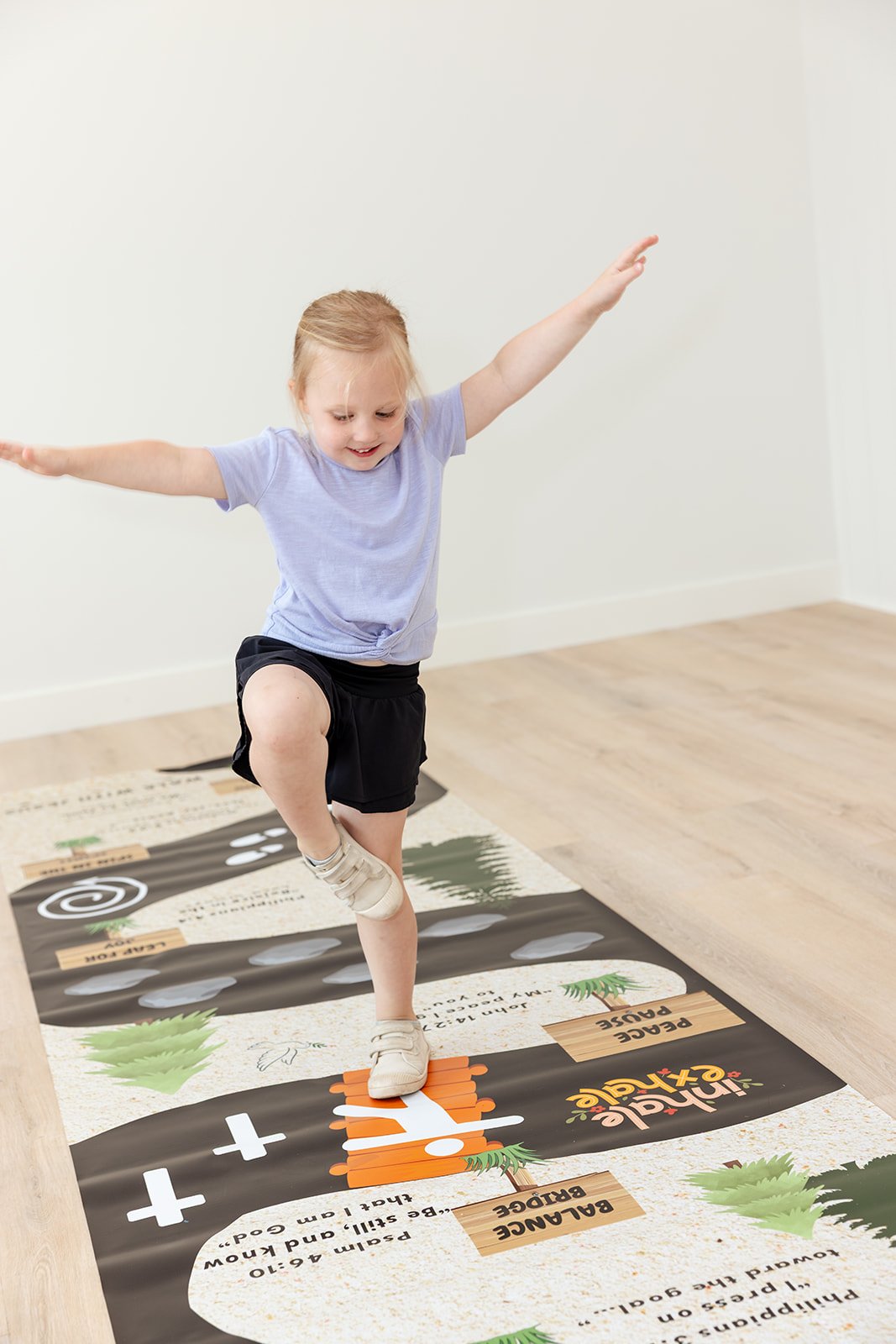
Could an unused stretch of hallway give students an opportunity to jump, balance, reach, breathe, cross midline, or complete a quick sequence of purposeful movements?
Could a student use that space for a two-minute regulation break and then return to class?
Could movement be used proactively, rather than waiting until a child is already dysregulated?
That's one of the biggest shifts I encourage schools to consider.
3. Pay attention to transitions.
For some students, transitions are easy.
For others, they're one of the hardest parts of the school day.
Leaving a preferred classroom, navigating a busy hallway, remembering where to go next, managing peers and noise, and preparing for an entirely different set of expectations requires a surprising amount of regulation and executive functioning.
As you walk your hallways, ask:
What support is available for the child who struggles here?
It might be a visual cue.
It might be a predictable movement opportunity.
It might be a calming strategy.
Sometimes a relatively small environmental support can make a difficult transition more manageable.
4. Ask whether your hallway helps students return ready to learn.
This is one of my favorite questions.
Instead of thinking only about hallway behavior—Are students quiet? Are they walking? Are they following expectations?—consider what happens after the hallway.
Does the environment help students arrive at their next destination ready to participate?
Purposeful movement can provide opportunities to work on body awareness, coordination, balance, motor planning, regulation, and attention.
A hallway can also reinforce skills we want students to carry back into the classroom:
Confidence.
Patience.
Perseverance.
Kindness.
Leadership.
A hallway doesn't have to be wasted space.
5. Look at the space you already have.
This may be the most practical part of the entire exercise.
Look for:
An empty wall.
An unused corner.
A long stretch of hallway.
A small space outside a counseling office.
An area near the intervention room.
A spot where a portable activity could be rolled out when needed.
You don't necessarily need a dedicated sensory room—or a large budget—to create another opportunity for regulation in your school.
Start with the space you already have.
For Catholic Schools: Look Through One More Lens
In a Catholic school, I would add another question to the hallway walk:
Does our Catholic identity extend beyond our classrooms?
Catholic education has a unique opportunity to surround students with reminders of who they are and Whose they are throughout the entire school day.
Faith formation doesn't have to stop when students leave religion class.
Our hallways and shared spaces can reinforce Scripture, prayer, virtues, Sacraments, and reminders of God's presence.
And our sensory and regulation supports don't have to be separate from that mission either.
We can support the body, mind, AND spirit.
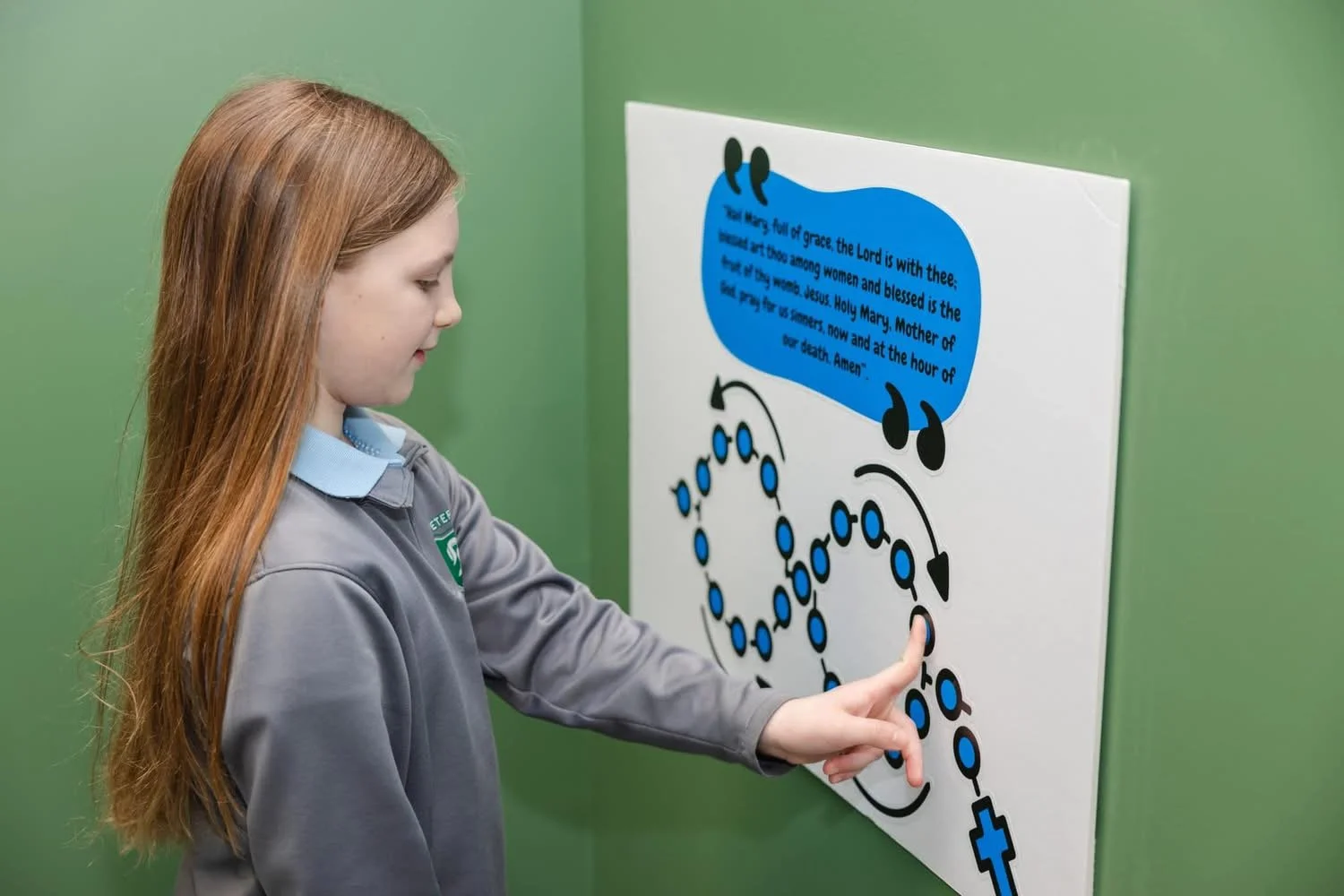
That's one of the reasons I created Sacred Steps in the first place. I wanted Catholic schools to have access to purposeful movement and regulation supports without having to separate those supports from their Catholic identity.
Try This Tomorrow
Take five minutes and walk one hallway in your school.
Don't walk it as an administrator thinking about schedules, supervision, or maintenance.
For five minutes, try to walk it from the perspective of a student.
Ask yourself:
What does this space ask of our students—and what does it give back to them?
Then identify one space that could work a little harder.
That's it.
You don't need to redesign your school.
Start with one hallway. One wall. One corner. One opportunity.
Download the Free Principal's Hallway Checklist
I've turned these questions into a simple printable checklist you can take with you as you walk through your building.
Use it yourself, share it with your leadership team, or walk through the building with your OT, counselor, intervention specialist, or facilities staff.
Catholic school? I've created a Catholic version, too, with an additional section on Faith Throughout the Building.
Want to Learn More?
If your hallway walk leaves you looking at an empty wall or unused stretch of floor and thinking, We could do something with that, I'd be happy to help.
Sacred Steps Sensory Paths offers floor-based, wall-based, and portable movement and regulation supports designed specifically for real school environments.
And you don't need to begin with a full sensory path.
Whether you have $300 or $3,000, we can start with the space and budget you have and determine what could make the greatest impact for your students.
Sometimes transforming a school environment doesn't start with a huge project.
It starts by looking at an ordinary space differently.
About the Author
Trisha Klausing, MOT, OTR/L, is a practicing school-based occupational therapist and founder of Sacred Steps Sensory Paths. Drawing on more than a decade of experience working with students and educators, she creates movement and regulation supports designed for the realities of school environments. Sacred Steps offers both faith-based and universal options to help schools create purposeful opportunities for movement, regulation, confidence, executive functioning, and student success.