More Than the ABCs: 20+ Ways to Use an Alphabet Sensory Path at School
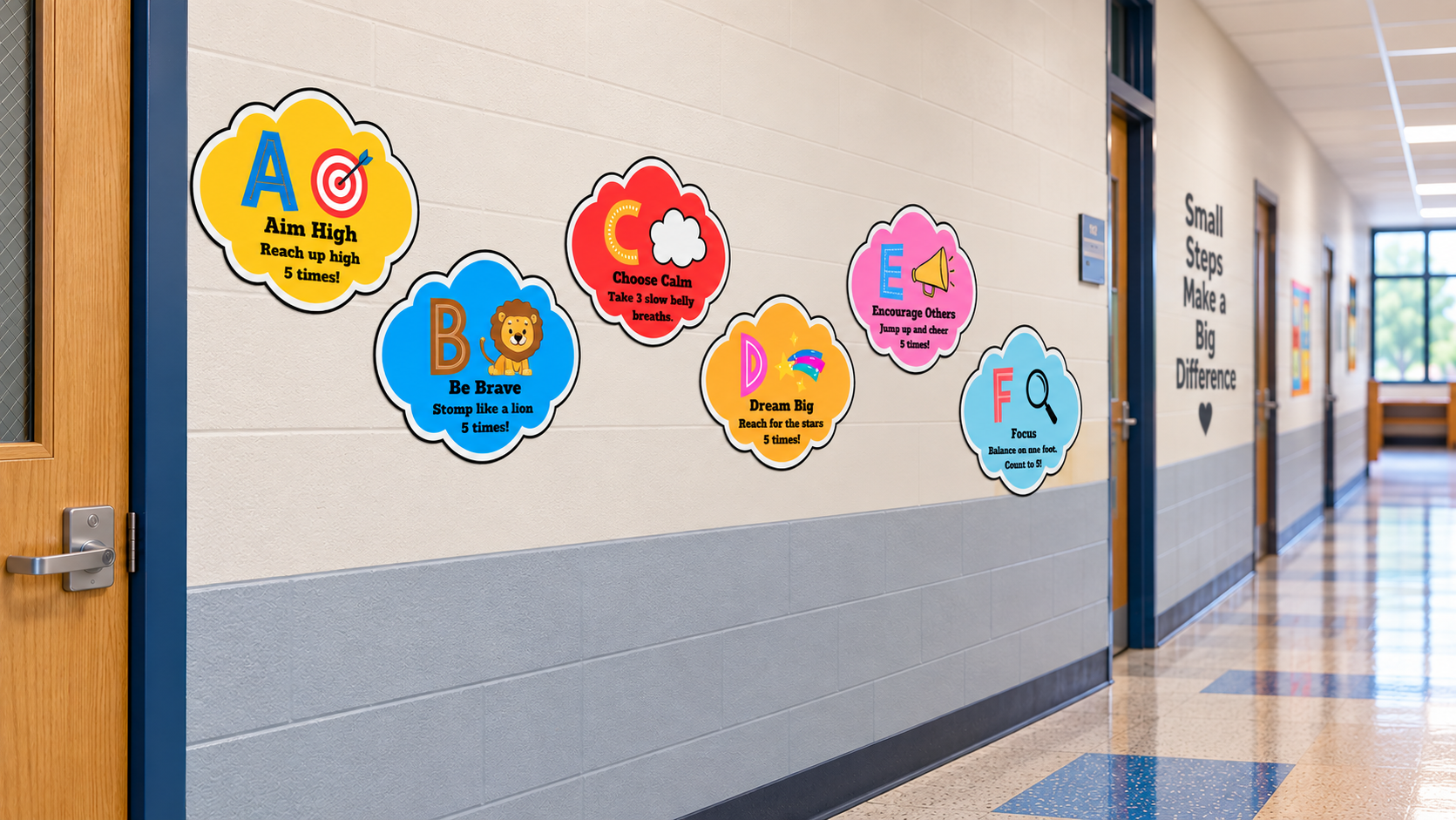
When you look at an alphabet sensory path, your first thought might be:
“Cute! Kids can practice their ABCs.”
Absolutely.
But as a school-based occupational therapist, I look at it and see so much more.
I see spelling practice. Movement breaks. Following directions. Motor planning. Classroom transitions. Sensory regulation. Vocabulary practice. And, with a faith-based alphabet like the Holy Alphabet, opportunities to reinforce faith throughout the school day.
One resource. A LOT of possibilities.
And perhaps best of all?
Teachers don't have to prep a thing.
Here are some of my favorite ways schools can put an alphabet sensory path to work.
🔤 Turn Spelling Practice Into Movement
Instead of sitting at a desk and writing a word one more time, send students to the alphabet!
Students can move from letter to letter to:
Spell their first or last name
Practice weekly spelling words
Spell sight words
Practice vocabulary words
Spell a friend's or teacher's name
Identify beginning or ending sounds
Practice letter recognition
Match uppercase and lowercase letters
Spell words related to the current classroom lesson
You can even challenge older students with longer vocabulary words from science or social studies.
Now you've combined academics + movement without creating another activity for the teacher to prepare.
👣 Make Movement Breaks Purposeful
Sometimes a student doesn't need another worksheet.
They need to MOVE.
A teacher might notice a student becoming restless, losing focus, or having difficulty sitting through a lesson.
Instead of simply saying, “Go take a walk,” they can give the student a quick mission:
“Go spell your name and come back.”
“Spell three words from your spelling list.”
“Find the letters in SCHOOL.”
“Go spell BRAVE and then come back to class.”
The student gets a brief change of environment and an opportunity to move—but the break still has structure and purpose.
And the teacher didn't have to stop and create a sensory activity.
It's already there.
🧠 Use It Proactively for Sensory Regulation
One thing I emphasize frequently as an OT is that sensory supports don't have to be reserved for the moment a child is already struggling.
They can be proactive.
An alphabet sensory path can become a quick movement option:
Before a challenging academic task
After a long period of sitting
During transitions
Before returning from lunch or recess
Before a student needs sustained attention
When a student begins showing signs that they need movement
As part of an established sensory or regulation routine
Not every child needs the same kind or amount of sensory input, of course. But having simple movement opportunities available throughout the school environment gives teachers another tool they can use intentionally.
🏃 Work on More Than Regulation
As an occupational therapist, I also love all of the other skills we can sneak into an activity like this.
An alphabet path can incorporate:
Motor planning: Where do I need to move next?
Visual scanning: Can I locate the letter I'm looking for?
Sequencing: Which letter comes next?
Following directions: Can I remember and complete a two- or three-step direction?
Attention: Can I stay with the activity until I've completed the word?
Gross motor skills: Add jumping, hopping, squatting, tiptoeing or other movements as students travel between letters.
Suddenly, “Spell your name” can become a much richer activity.
🎯 Let Teachers Get Creative
Once an alphabet path is in a school, teachers can adapt it to whatever they're teaching.
Try:
“Find a letter that makes the /m/ sound.”
“Spell an animal that lives in the ocean.”
“Spell one of this week's vocabulary words.”
“Find the first letter of our state capital.”
Or make it a challenge:
“Can you spell your teacher's last name without making a mistake?” 😄
There are countless ways to combine classroom content with movement.
🙏 And With the Holy Alphabet…Add Faith Formation
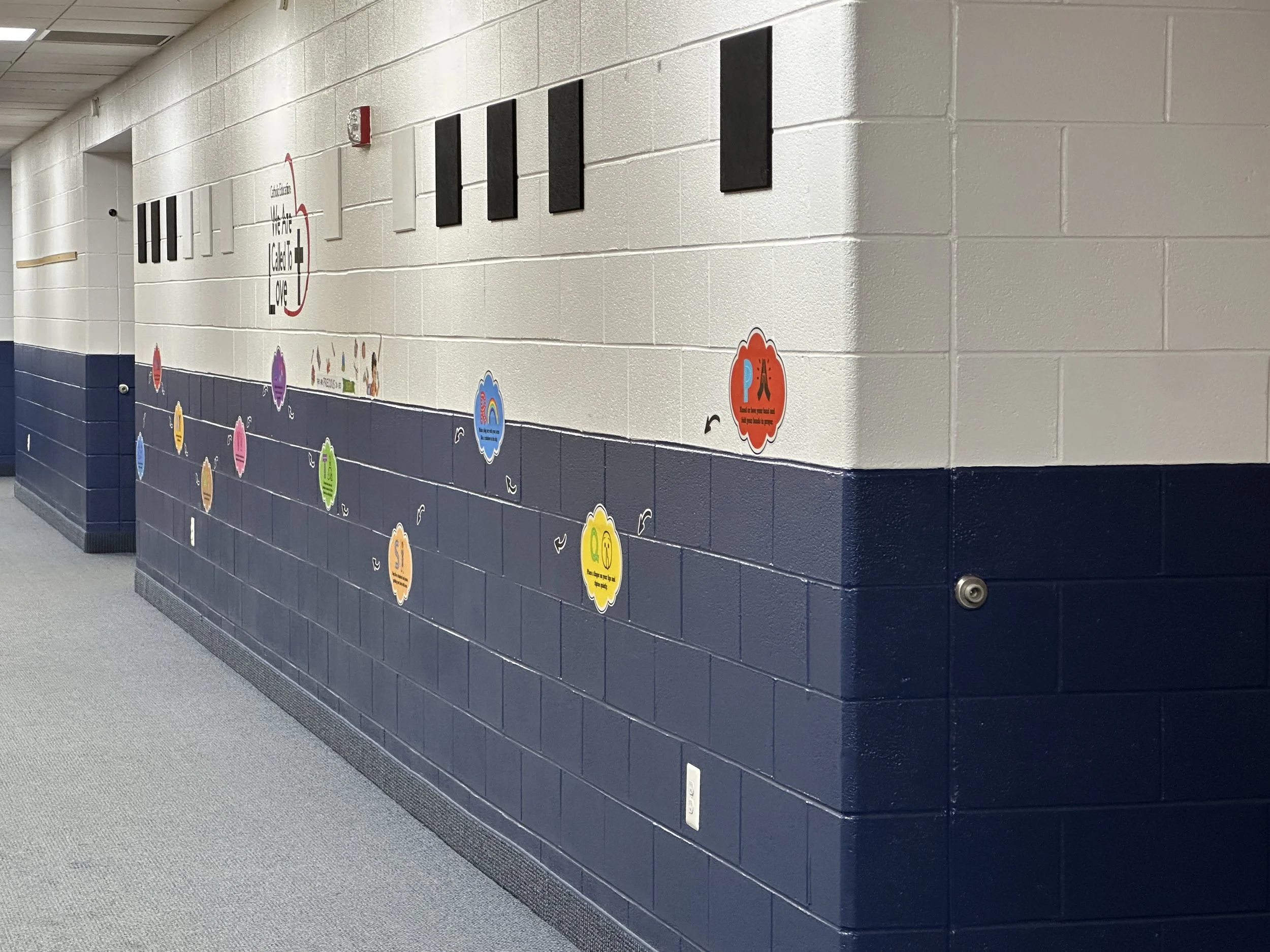
This is one of my favorite parts of the Holy Alphabet Sensory Path.
In a Catholic school, the same resource can support academics, movement and faith formation.
Students can:
Spell the names of saints
Spell Bible characters
Find the first letter of their patron saint's name
Spell words from a Scripture passage
Practice vocabulary from religion class
Spell virtues such as KIND, HONEST or FAITHFUL
Spell words such as FAITH, HOPE, LOVE, PRAY and JESUS
Practice a weekly virtue or faith word
Use the path before or after Mass or religion class
Imagine choosing a faith word of the week and having classes visit the Holy Alphabet to spell it.
It's another small way to make faith visible—and interactive—outside of religion class.
💛 One Resource. So Many Uses.
One of my goals when I design resources for Sacred Steps Sensory Paths is to make them practical.
Teachers already have enough to do.
A sensory resource shouldn't require an elaborate setup, another lesson plan, or a pile of materials before anyone can use it.
An alphabet sensory path simply becomes part of the school environment.
Some days it might be used for spelling.
Another day it might be a movement break.
Another student might use it as part of a sensory routine.
A class might use it for a scavenger hunt.
And in a Catholic school, it might become part of a religion lesson.
That's when I think a school resource becomes especially valuable—not when it has one purpose, but when teachers keep finding new ways to use it.
And I have a feeling once teachers and students start using an alphabet path, they'll come up with ideas I haven't even thought of yet. 😊
Already have an alphabet sensory path? Share these ideas with your teachers and challenge them to come up with a few of their own!
And if you're considering adding one to your school but aren't sure where it would fit, send me a picture of your space. I love helping schools figure out creative ways to use their hallways and walls!