Because every little saint deserves to feel comfortable, included, and ready to celebrate!
There's something pretty special about walking through a Catholic school on All Saints Day.
Little St. Francises, St. Joans, St. Thérèses, and St. Patricks fill the hallways. There are halos, robes, crowns, and plenty of adorable costumes. It's a wonderful opportunity for children to learn about the saints and celebrate their faith!
But as a pediatric occupational therapist who has spent more than a decade working in schools, I also see All Saints Day through a slightly different lens.
For some children, a day filled with excitement, costumes, parades, and changes in routine can also be a day filled with sensory challenges.
And sometimes, the children who appear to be handling everything just fine are working the hardest to hold it all together.
The good news? A few small adjustments can help make All Saints Day a more comfortable, meaningful, and inclusive experience for everyone.
1. Comfort Comes First (Even for Little Saints!)
Let's talk costumes!
Scratchy fabric, tight collars, itchy tags, heavy robes, and crowns that won't stay put can be uncomfortable for any child. For children with sensory sensitivities, those sensations can become overwhelming.
Try these simple adjustments:
Encourage soft, familiar clothing underneath costumes.
Allow children to wear just one costume accessory, such as a sash, halo, or cape.
Avoid requiring hats, veils, or headpieces that feel uncomfortable.
Have an alternative available if a child needs to change out of a costume.
Remember, a child doesn't need an elaborate costume to celebrate the saints!
Sometimes, a simple brown shirt and a rope belt are all it takes to make a wonderful St. Francis. 😉
2. Preview the Day Before the Excitement Begins
Children thrive on predictability, and All Saints Day celebrations often bring a completely different school routine.
Instead of regular classroom activities, there might be a special Mass, a parade, classroom visits, presentations, or celebrations with older students.
For some children, those unexpected changes can create anxiety, even when the activities themselves are fun.
A little preparation goes a long way!
Create a simple visual schedule showing the day's special activities.
Talk through what the parade or celebration will look and sound like.
Explain where children will go and who will be with them.
Give reminders before transitions, especially when moving into crowded or noisy spaces.
One of my favorite OT strategies is to help children know what's happening now, what's coming next, and when they'll return to something familiar.
A little predictability can make a big difference!
3. Give Children Choices About How They Participate
Not every child loves being the center of attention.
While some children can't wait to march through the hallways dressed as their favorite saint, others may feel overwhelmed by crowds, noise, unfamiliar faces, or the expectation to perform.
And that's okay!
Participation doesn't have to look the same for every child.
Consider offering choices such as:
Walking beside a familiar teacher or classmate.
Carrying a small sign or helping with a classroom task.
Participating in just part of the parade.
Watching from a quieter location.
Sharing information about their saint in a smaller group instead of in front of a large audience.
The goal isn't to make every child participate in exactly the same way.
The goal is to help every child feel included in a way that works for them.
After all, the saints weren't all the same. Our children don't have to be, either. 💛
4. Build in Movement and Quiet Moments BEFORE They're Needed
Here's something I've learned after years of working with children in schools:
Just because a child looks regulated doesn't necessarily mean they feel regulated.
I hear from parents ALL the time who tell me their child comes home from school and completely falls apart.
Tears. Meltdowns. Big emotions.
Yet when they talk to the teacher, they're told their child had a wonderful day with no concerns!
Sound familiar?
Some children spend an incredible amount of energy managing expectations, processing sensory information, and navigating social situations throughout the school day.
When they finally get home, all that built-up stress and exhaustion can come spilling out.
Now imagine adding costumes, crowded hallways, a special Mass, and a completely different routine!
That's why I encourage schools to think about regulation proactively, not reactively.
Instead of waiting until a child becomes overwhelmed, consider building opportunities for movement and quiet moments into the celebration itself.
A few ideas:
Take a short movement break before or after the parade.
Offer a familiar quiet space where children can regroup.
Include gentle stretches, wall pushes, or other familiar movement activities between events.
Allow children to step away from the excitement when needed.
Make these opportunities available to ALL students, not just those with identified sensory needs.
Movement breaks aren't a magic solution for every child, but they can be one helpful tool for supporting regulation throughout a busy day.
And sometimes, a few minutes of purposeful movement can help a child feel more prepared for whatever comes next.
A Little More Movement, A Lot More Meaning
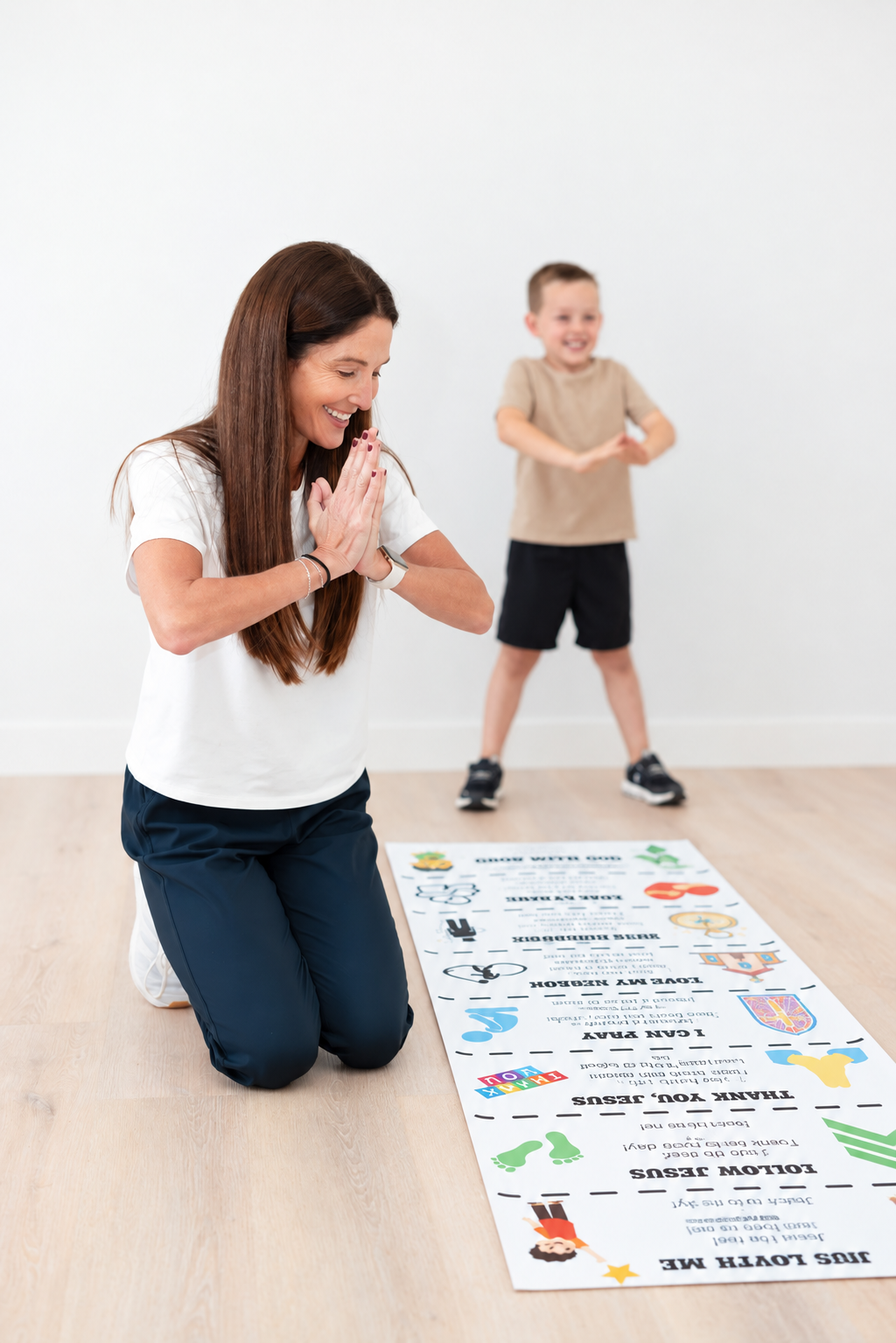
As both a school-based occupational therapist and the founder of Sacred Steps Sensory Paths, I'm passionate about helping schools incorporate purposeful movement into everyday routines.
That's why I created faith-based sensory paths that combine movement, developmental skills, and opportunities to grow in faith.
Whether children are hopping, balancing, stretching, or practicing calming strategies, sensory paths offer a familiar way to incorporate movement throughout the school day.
And on special days like All Saints Day, when routines are anything but ordinary, having familiar movement opportunities available can be especially valuable.
But here's what I hope you'll remember most:
We don't have to eliminate the excitement of special school celebrations. We simply need to make room for the children who experience that excitement differently.
Because every little saint deserves to feel welcomed, supported, and included.
Happy All Saints Day! 😇
Looking for More Ways to Support Your Students?
At Sacred Steps Sensory Paths, I create occupational therapist-designed, faith-based sensory paths and calming activities for Catholic schools, churches, and religious education programs.
From full-size hallway paths to portable movement activities and calming corners, there are options for different ages, spaces, and budgets.
I'd love to help you find the right fit for your school!
Explore the Sacred Steps collection or reach out to me directly. I'm always happy to share ideas!
About the Author
Trisha Klausing is a school-based occupational therapist with more than 10 years of experience and the creator of Sacred Steps Sensory Paths. After seeing firsthand how movement and regulation impact students' ability to participate successfully in the school day, she created Sacred Steps to provide schools with purposeful, professionally designed sensory resources — including faith-based options that allow Christian and Catholic schools to support the whole child while reinforcing their faith.