Floor, Wall, or Portable Sensory Path? How to Choose the Right Option for Your School
Floor, wall, or portable—which sensory path is right for your school? Compare the benefits of each format and learn what works best for your students, space, and daily routines.
When schools begin exploring sensory paths, one of the first questions they ask is:
Should we choose a floor path, a wall path, or a portable option?
It is a great question—and there is not one answer that works for every school. The best choice depends on your available space, the ages of your students, how you want the path to be used, and whether you need a permanent or flexible resource.
As a pediatric and school-based occupational therapist, I created Sacred Steps Sensory Paths to give students proactive opportunities to move, regulate, refocus, and return to learning. Each format supports those goals a little differently.
Here is an easy way to determine which sensory path may be the best fit for your school, church, preschool, or therapy space.
Choose a Floor Sensory Path When You Want Movement Built Into the Hallway
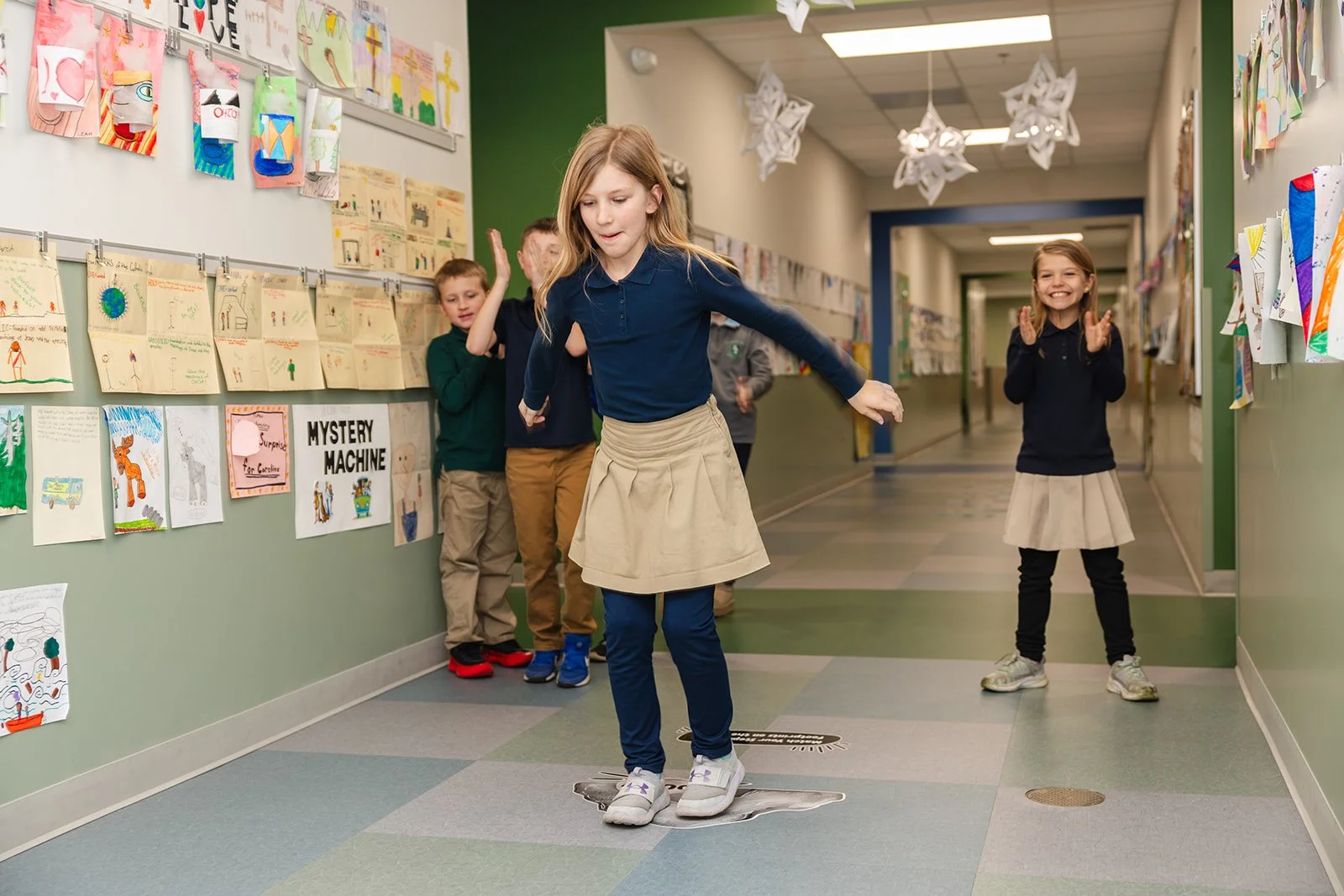
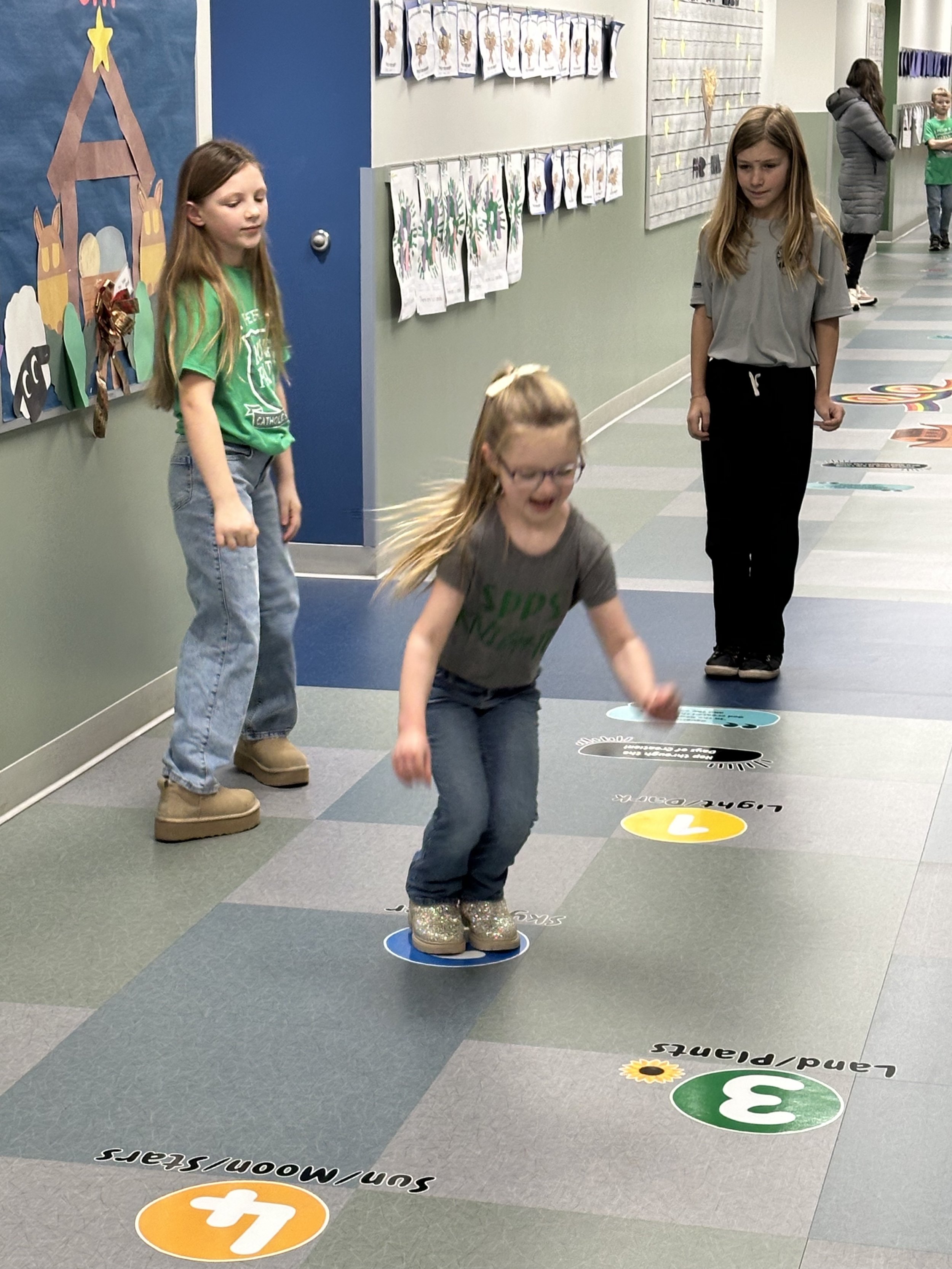
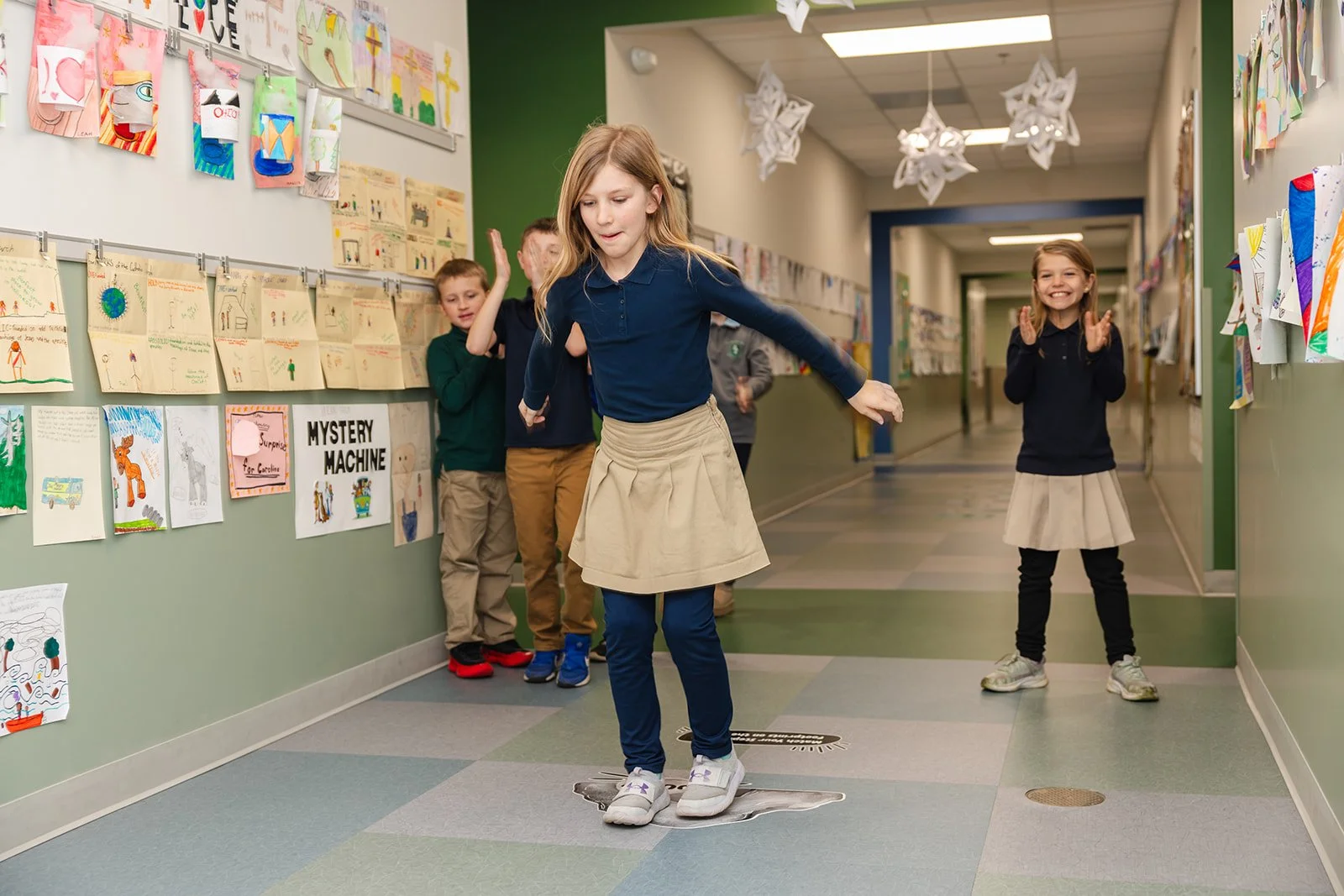
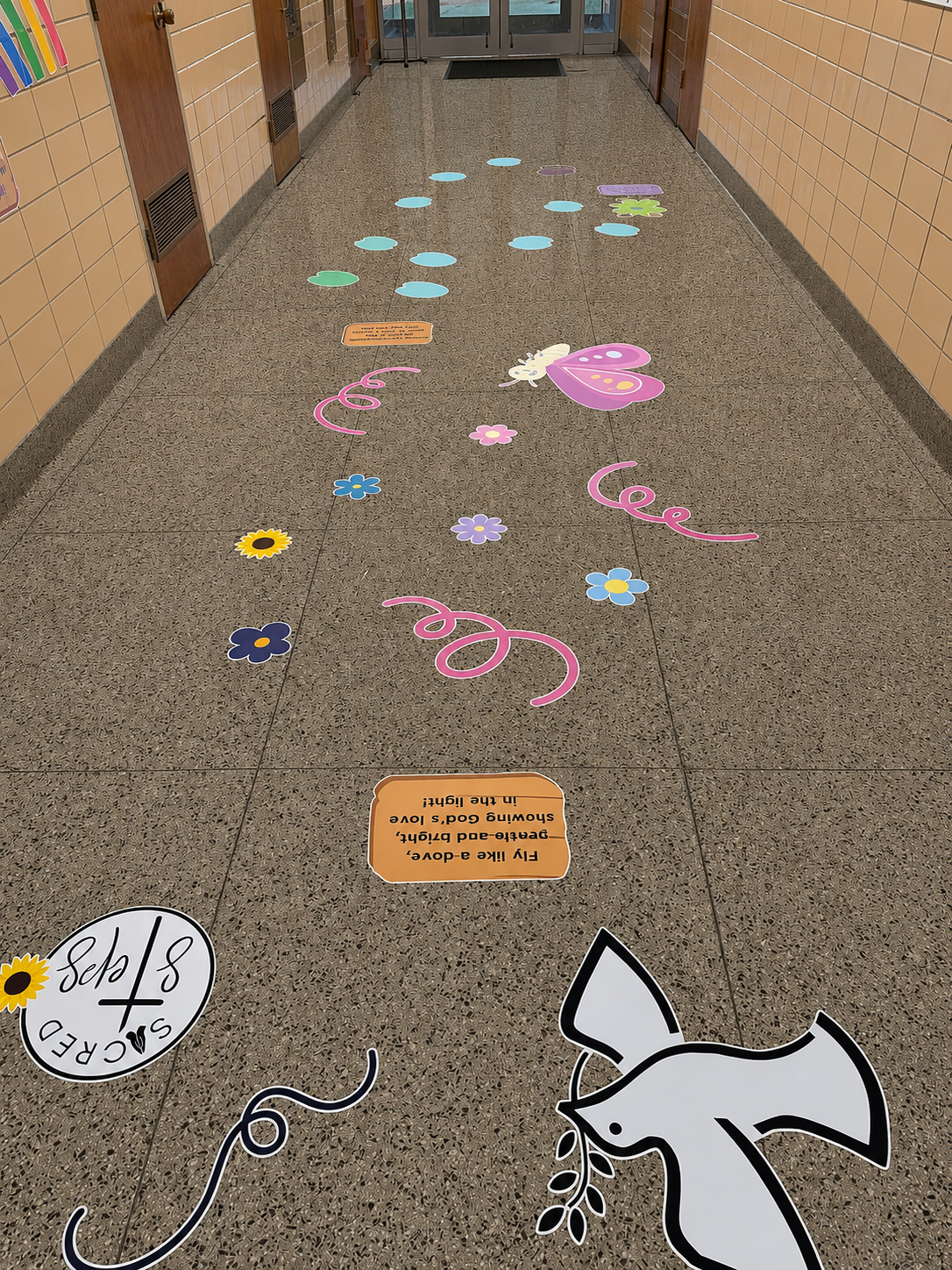
A floor sensory path is a wonderful choice when you want movement to become a natural part of the school day. Students can hop, jump, balance, squat, follow footprints, and complete other purposeful movements as they travel through the hallway.
Floor paths work especially well when:
You have a dedicated hallway or open floor area.
You want a permanent, highly visible movement resource.
Multiple classrooms will use the path throughout the day.
Your students benefit from whole-body movement and heavy-work activities.
You want movement breaks to be easily available without gathering extra equipment.
Sacred Steps floor decals are commercially printed for heavy daily traffic and can be waxed over as part of your school’s normal floor-care routine. Once installed, the path is ready whenever students need it—during transitions, scheduled sensory breaks, indoor recess, therapy sessions, or those moments when a child simply needs to move before returning to class.
Before choosing a floor path, consider hallway width, doorways, traffic patterns, and custodial routines. A path does not always need to run in one perfectly straight line. Stations can be spaced out, turned, or arranged to work around the features of your building.
Choose a Wall Sensory Path When Floor Space Is Limited
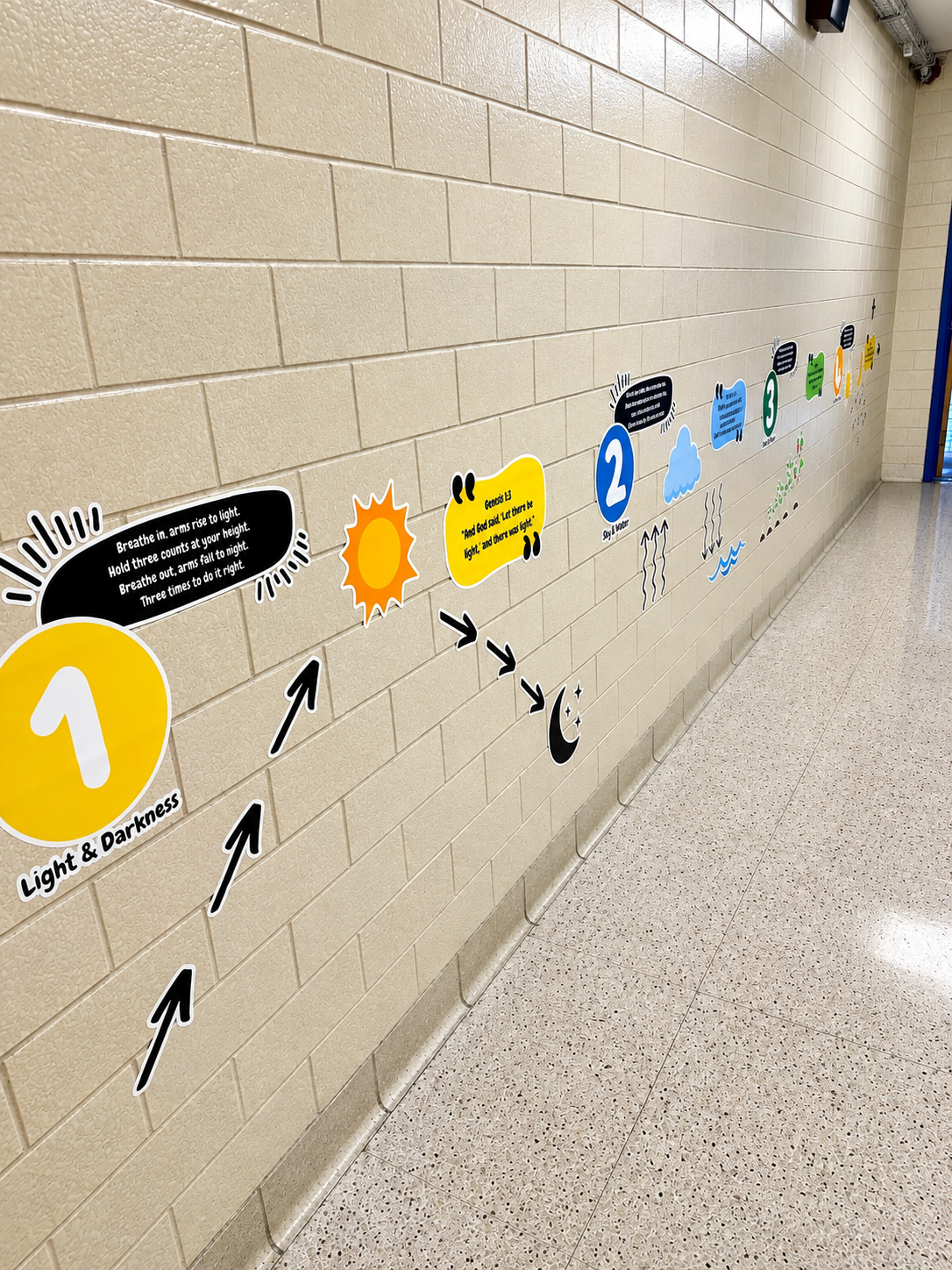
Do you have a narrow hallway, a busy traffic pattern, or floors that are not suitable for decals? A wall path may be the perfect solution.
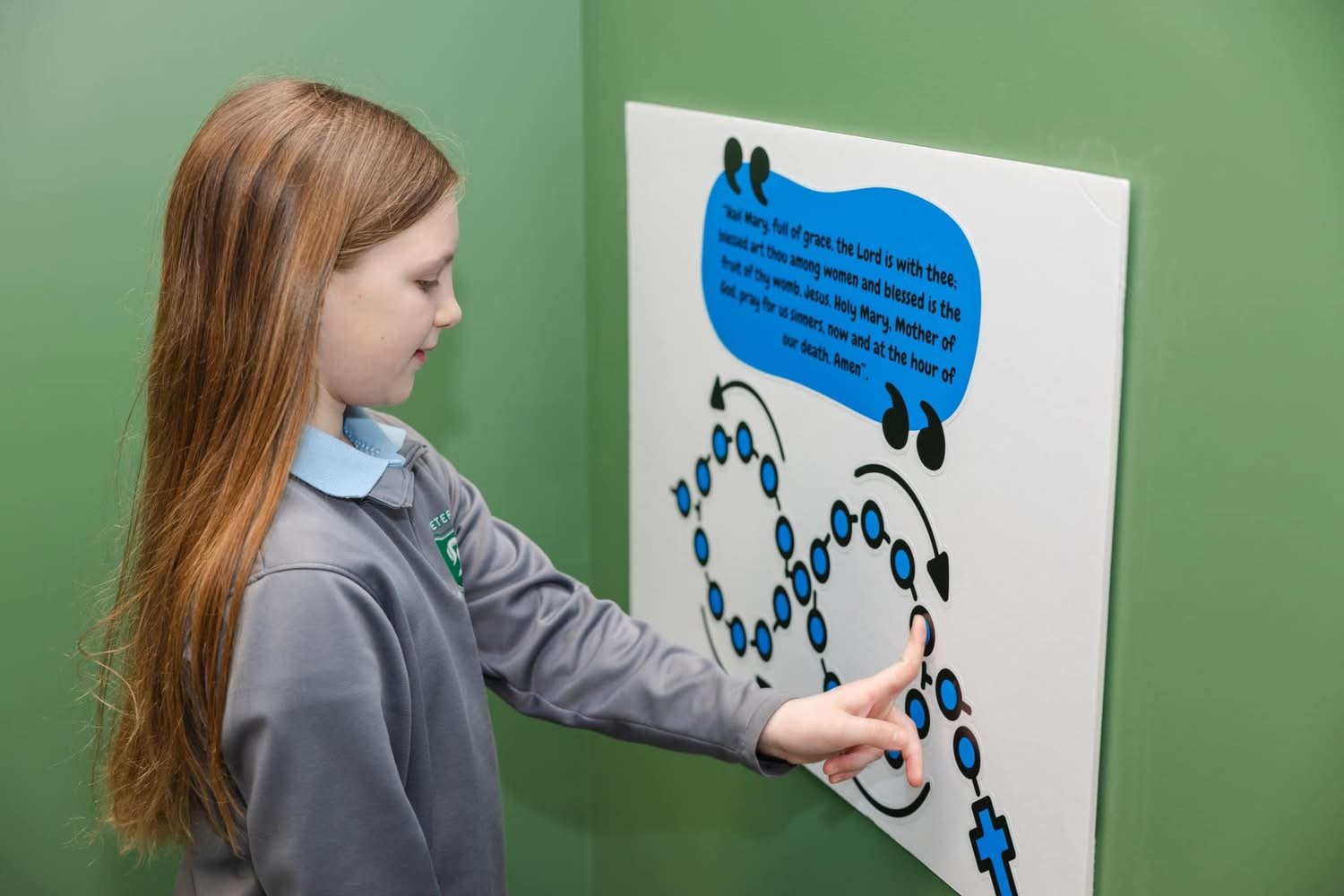
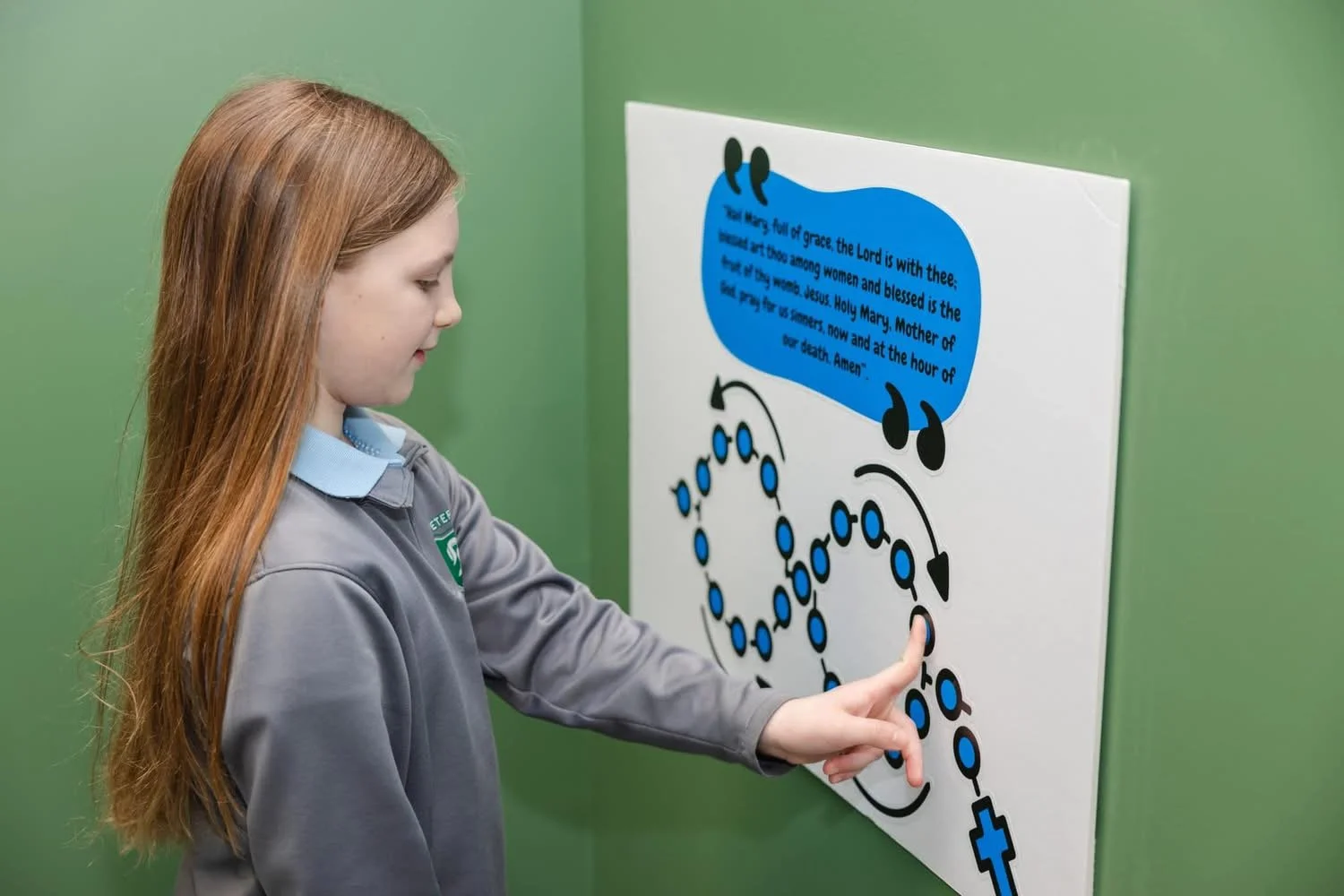
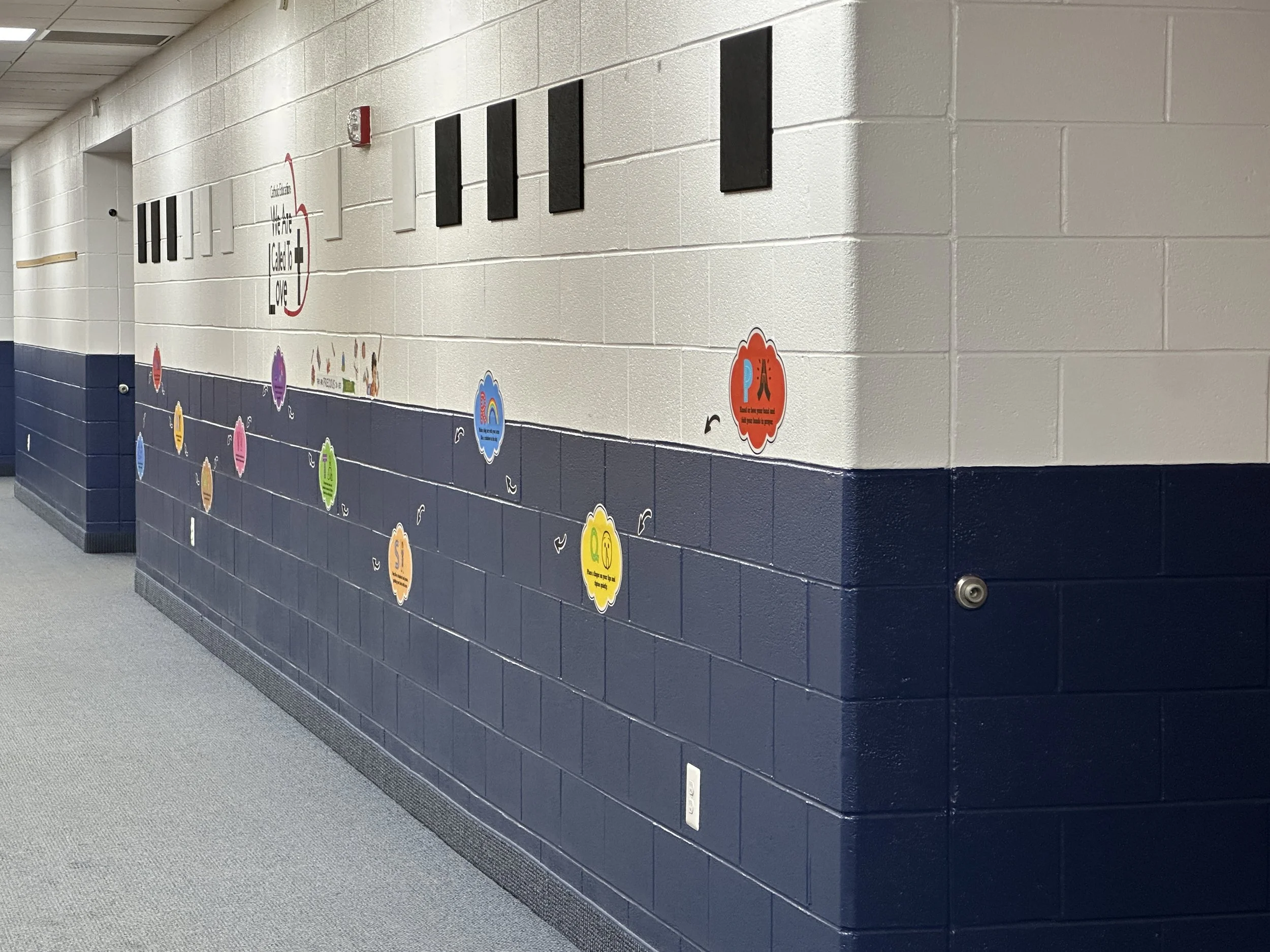
Wall activities can encourage students to reach, stretch, push, breathe, trace, pray, cross midline, and complete calming or strengthening movements—all without taking up valuable floor space.
Wall paths are a strong choice when:
Hallways are narrow or need to remain clear.
You want activities near a classroom, counseling office, prayer space, or sensory area.
You would like to add regulation supports at different heights.
You want a quieter movement experience with less jumping or traveling.
You have a beautiful blank wall just waiting to do something useful!
Wall-based options can also be especially helpful for older students who may prefer activities that feel a little more discreet. Designs such as Who God Says I Am, Days of Creation, and Beatitudes Blessings combine movement and regulation with meaningful faith-based messages.
Sacred Steps wall decals are removable, making them a practical option for many school and church environments.
Choose a Portable Sensory Path When Flexibility Matters Most
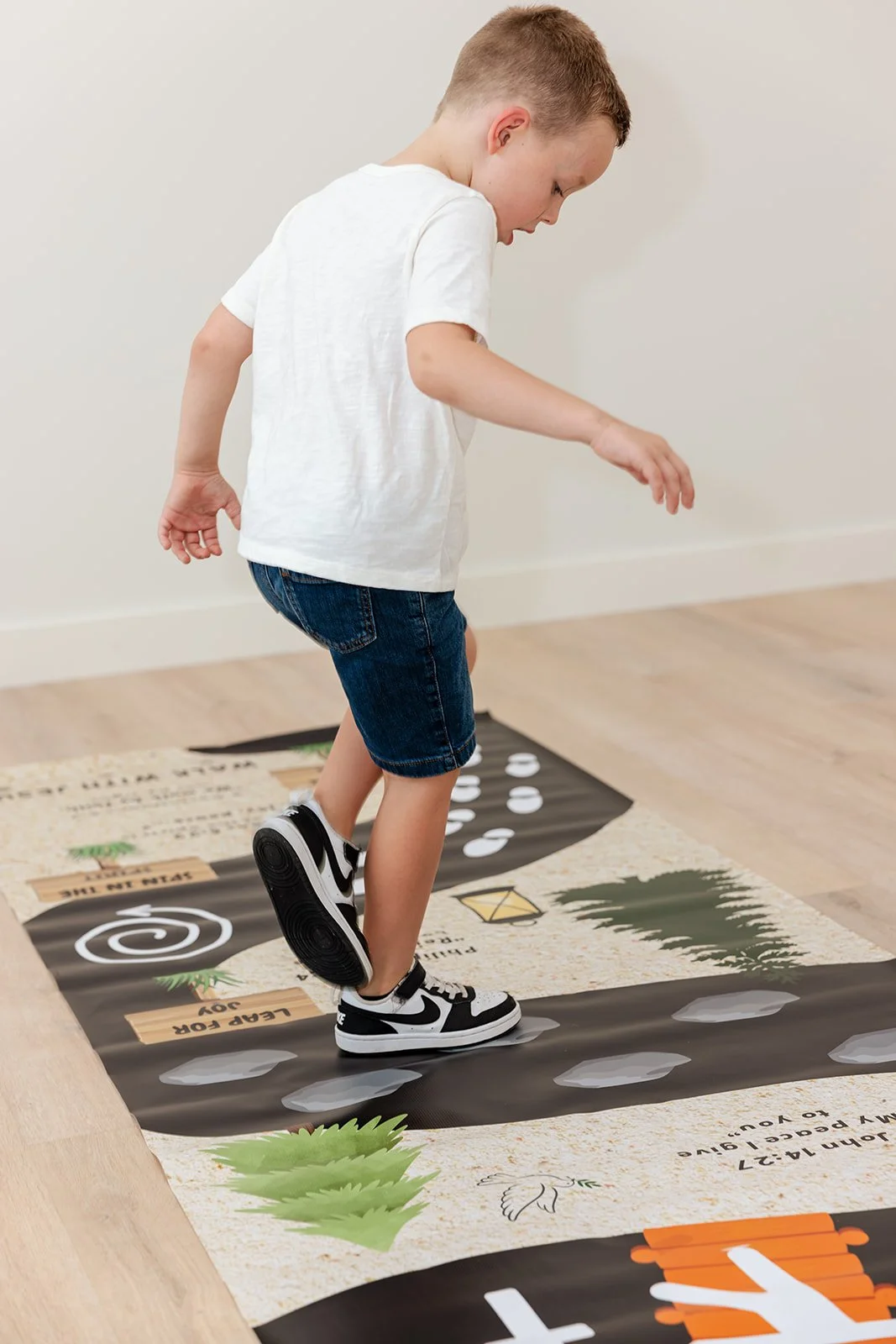
Sometimes the best sensory space is wherever your students happen to be that day.
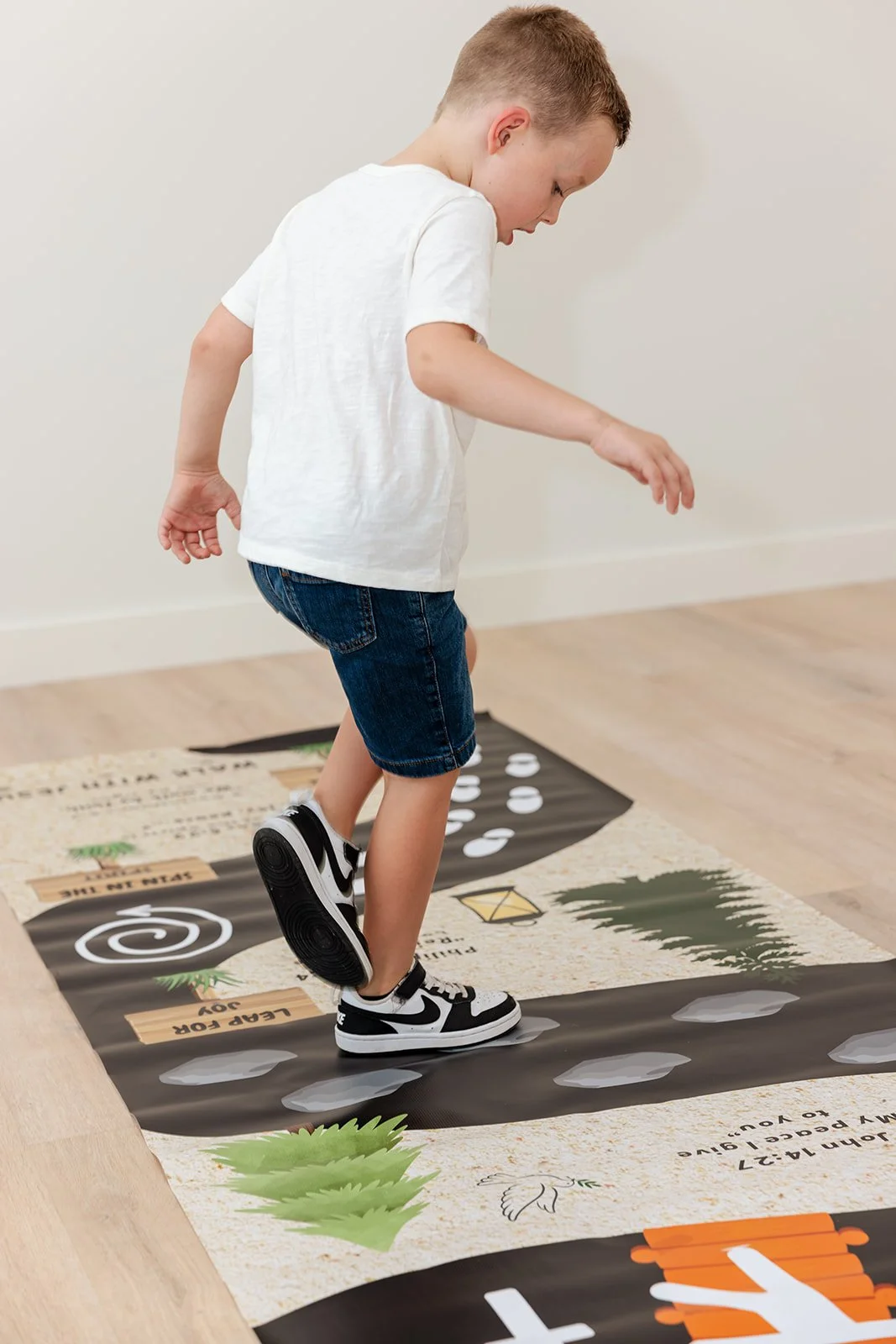
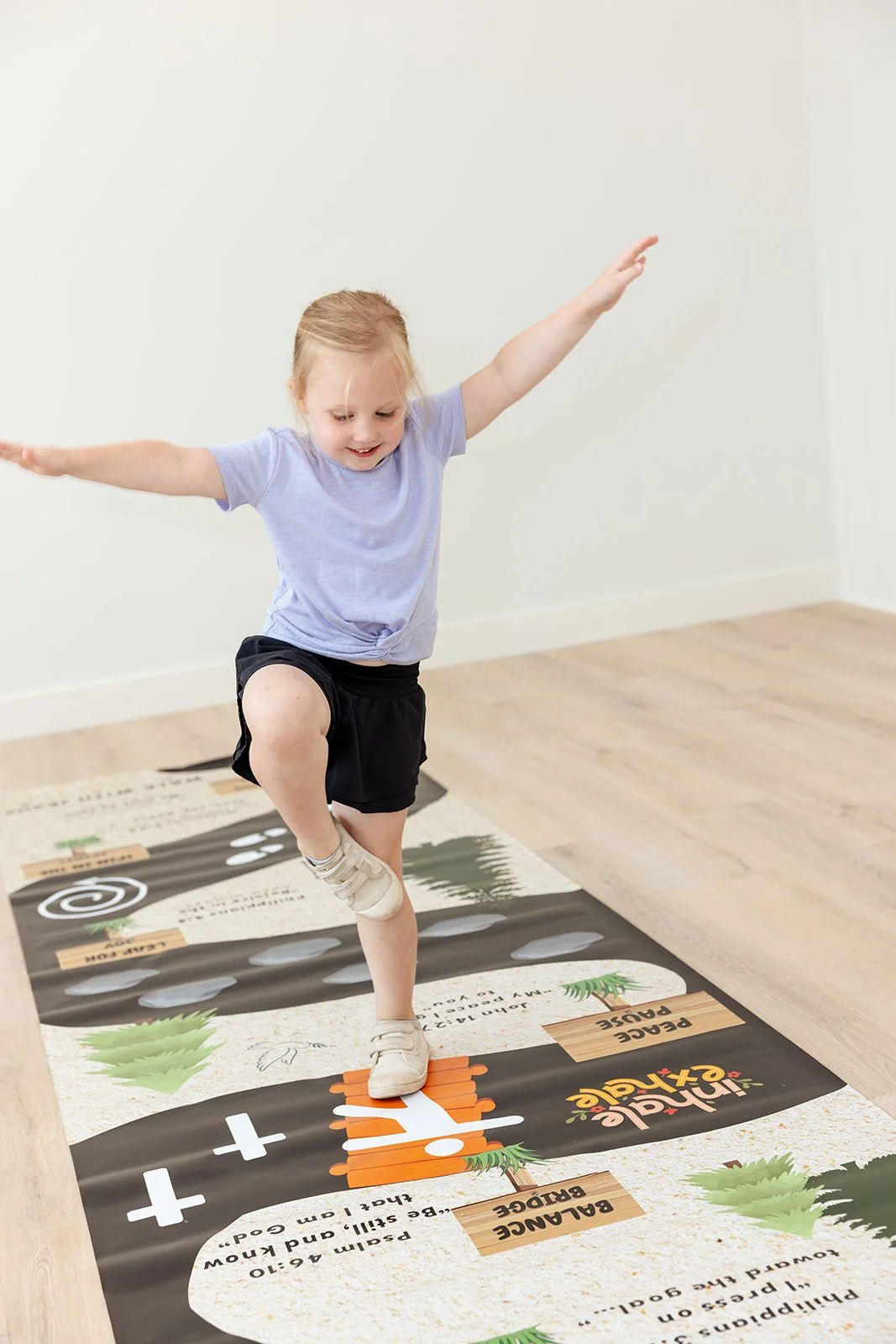
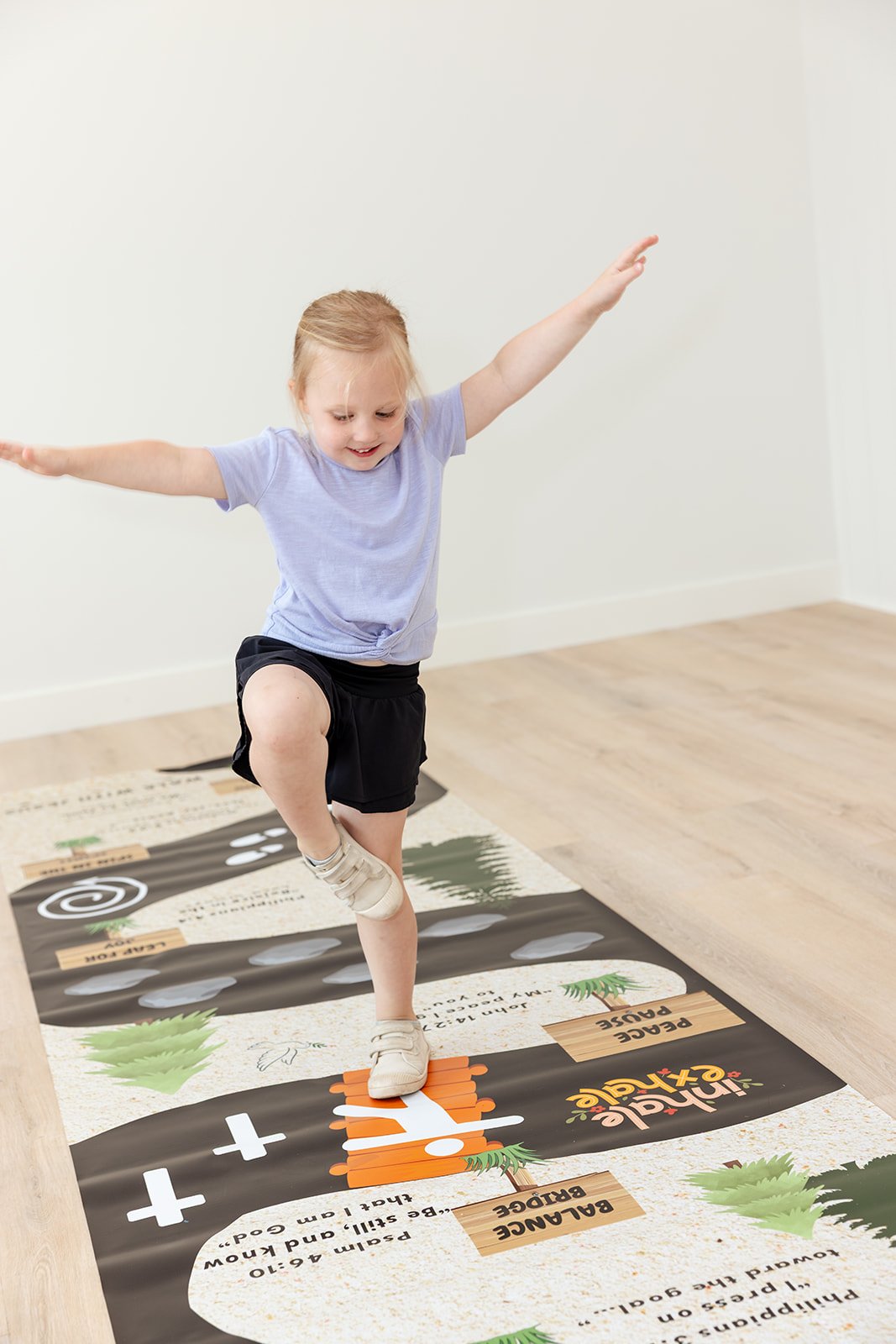
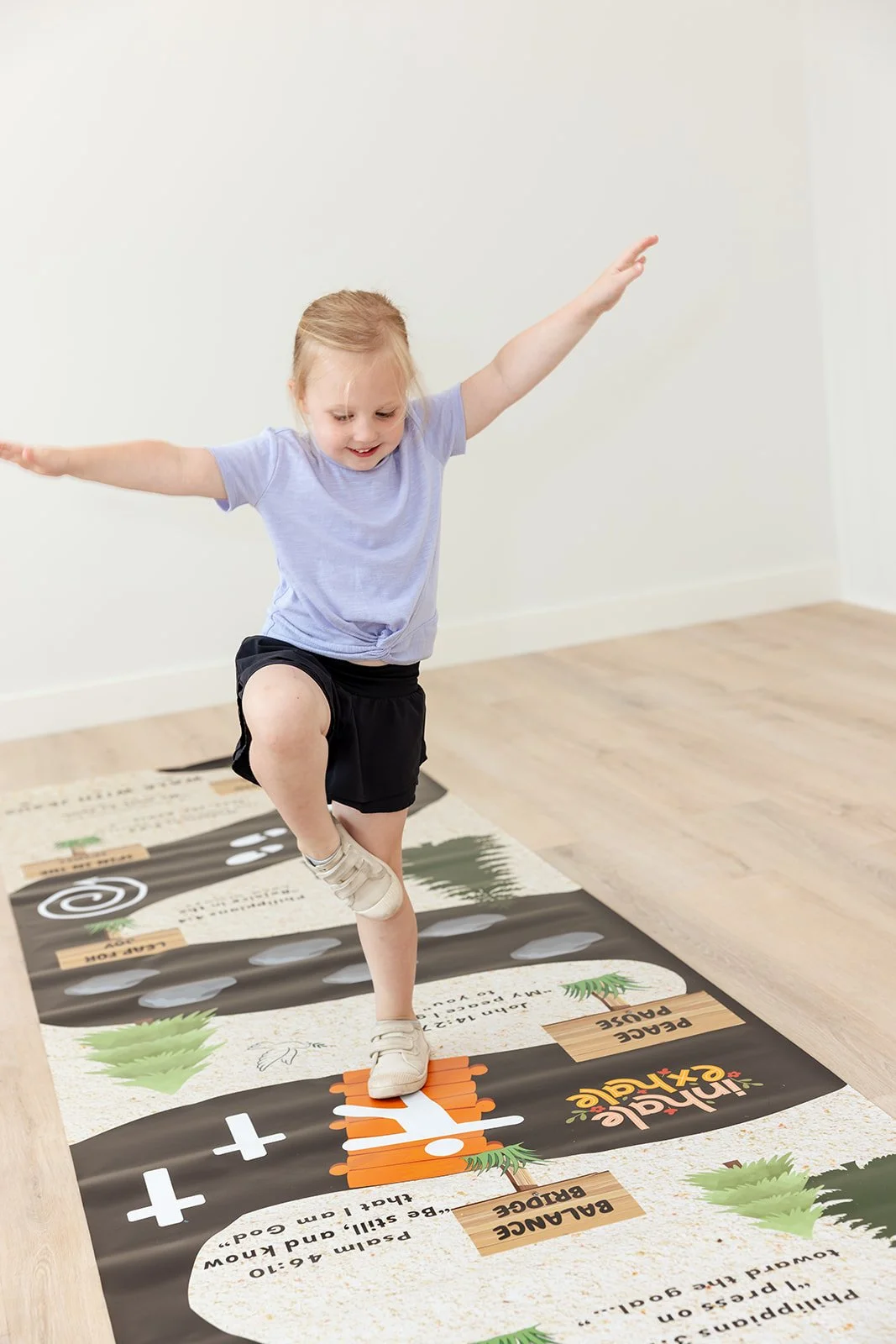
Portable sensory paths are printed on durable 3' x 10' canvas mats. They can be rolled out in a classroom, preschool room, parish center, therapy space, hallway, or counseling area—and then rolled up and stored when the activity is finished.
A portable path may be the best fit when:
You need to move the resource between classrooms or buildings.
You rent your space or cannot install permanent decals.
You want an easy option for special events, faith formation, indoor recess, or sensory-friendly Mass.
You have limited space and need to store the path between uses.
You want to begin with a smaller investment before selecting a full permanent path.
Portable paths are also an easy way for teachers to add purposeful movement to the day without rearranging an entire classroom. Roll it out, let students move, and roll it back up—no construction project required!
For smaller preschool and early-childhood spaces, the Little Steps portable paths offer the same grab-and-go flexibility in a compact 24" x 72" size.
Could Your School Use More Than One Format?
Absolutely! Many schools find that a combination works best.
For example, a school might place a full floor path in a main hallway, add calming wall activities near the counselor’s office, and keep a portable path available for classrooms or special events. A Starter Set can also introduce several permanent activities in a smaller area before the school expands to a full path.
Think less about choosing the single “perfect” format and more about where students need support during their day:
Where do transitions become difficult?
Where do students wait?
Where could a child safely take a short movement break?
Which areas are accessible to the greatest number of students?
Would a permanent resource be used more consistently, or does your team need flexibility?
Those answers will usually point you toward the best choice.
Are Sensory Paths Difficult to Install?
Most schools install their Sacred Steps Sensory Paths themselves. I provide installation instructions and am available to help with placement and layout before installation begins. Having two or three people makes the process much easier, especially for larger floor pieces.
If your school would prefer installation assistance, travel installation may also be available for an additional fee based on location and travel expenses.
Still Not Sure? Send Me Your Space!
You do not need to have everything figured out before reaching out. In fact, some of my favorite projects have started with a photo of an empty hallway and the question, “What could work here?”
Send me a few pictures, approximate dimensions, the ages of the students you serve, and anything you hope the space will accomplish. I will give you my honest recommendation about whether a floor, wall, portable, or combination option would work best.
Narrow hallway? Awkward corner? Small preschool room? Send it anyway. You may have more possibilities than you think!
Explore Sacred Steps Sensory Paths or contact me to begin planning a path for your space!
Can 4 Minutes of Movement Improve Classroom Focus? What the Research Says
Could just a few minutes of movement help students return to learning more focused and ready to participate? A school-based pediatric occupational therapist looks at the research behind classroom movement breaks, on-task behavior, regulation, and why purposeful movement can be an important part of the school day.
Teachers are asked to fit an incredible amount into the school day.
Reading. Math. Writing. Intervention. Specials. Social-emotional learning. Transitions. Assessments.
So when someone suggests adding movement breaks to the day, it's understandable for educators to wonder:
Where are we supposed to find the time?
As a pediatric, school-based occupational therapist, I hear versions of this question often. And it's one reason I find the research surrounding movement and classroom behavior so interesting. Classroom movement breaks don't have to take large amounts of time away from instruction. Research suggests that even brief opportunities for physical activity may support on-task behavior, student regulation, and classroom focus.
Because what if movement isn't taking valuable time away from learning?
What if a few purposeful minutes of movement actually help students make better use of the learning time that follows?
Research suggests that may be exactly what happens.
What Can Just 4 Minutes of Movement Do?
One study examined the effect of short classroom activity breaks in children in grades 1–3.
The movement break lasted just four minutes.
Compared with a control condition without an activity break, researchers found increases in on-task behavior of:
10.4% following a morning activity break
10.5% following an afternoon activity break
14% when students participated in both morning and afternoon activity breaks
The researchers found that activity breaks improved on-task behavior regardless of whether they occurred in the morning or afternoon. The effects were particularly strong among children who demonstrated more off-task behavior without the movement break.
Four minutes.
That's less time than many classroom transitions take.
And while one small study certainly doesn't mean every child will become 10–14% more attentive after four minutes of movement, it gives us something important to think about:
Sometimes a small investment in movement may pay us back in attention.
This Isn't Just One Study
A systematic review published in 2018 looked at research involving classroom movement breaks and physically active learning.
When researchers examined classroom behavior, 9 out of 11 interventions showed improvement following particular types of movement breaks or physically active learning.
The review also concluded that classroom movement breaks and physically active learning increased physical activity and enhanced time on task.
It's important to put those findings in context: the researchers described much of the underlying evidence as low-to-medium quality and noted substantial differences among the studies. So we shouldn't interpret the research as proof that any movement break will automatically improve learning.
But the overall findings provide good reason for schools to take purposeful movement seriously.
And other research points in a similar direction.
A study involving fourth- and fifth-grade students found that 10-minute classroom exercise breaks resulted in significantly higher time-on-task than a sedentary classroom activity—87.6% compared with 77.1%.
A separate study involving 87 primary-school students found that brief physical activity breaks—with or without academic content incorporated—were effective in improving on-task behavior.
Why Might Movement Help?
From an occupational therapy perspective, this makes a lot of sense.
We sometimes expect children to move seamlessly from one demand to another:
Recess → math.
Lunch → reading.
Twenty minutes sitting at a desk → another twenty minutes sitting at a desk.
But children don't leave their bodies at the classroom door.
Their ability to attend and participate is influenced by their level of alertness, sensory needs, regulation, environment, and the demands being placed upon them.
Movement provides sensory input and changes the demands being placed on the body.
For some students, that movement may help them become more alert and ready to engage. For others, it may provide an appropriate outlet for their need to move before they're asked to sustain attention again.
That's why I prefer to think about movement as more than simply:
“Getting the wiggles out.”
We're trying to give the body purposeful input that helps prepare it for what we're asking it to do next.
Don't Wait Until a Student Is Already Struggling
This is one of the biggest shifts I encourage schools to make.
Movement doesn't have to be something we offer only after a child is already:
out of their seat,
unable to attend,
frustrated,
restless,
overwhelmed, or
struggling to participate.
We can use movement proactively.
A movement opportunity might make sense:
Before a longer period of seated work.
After lunch.
Between subjects.
During a transition.
Following an extended period of sitting.
Or simply at predictable points in the day when we know attention tends to decrease.
Rather than asking:
“What do we do when this student can't sit anymore?”
we can begin asking:
“What can we do before we get to that point?”
That's a very different approach.
But Please Don't Send Them Back Bouncing Off the Walls! 😊
There's another important piece of the puzzle.
A movement break shouldn't necessarily end with the most exciting, activating activity and then:
“Okay! Back to class!”
Every teacher reading this knows exactly how well that can go. 😂
Our goal isn't simply to get children moving.
We also want to help them transition back to a state that's appropriate for learning.
That's why I like pairing purposeful movement with a calming or organizing activity at the end.
That might include slower movements, controlled breathing, pushing or other resistive activities, or another strategy appropriate for the student and environment.
Think of it as:
👣 MOVE → ❤️ RESET → 📚 LEARN
We're giving the body an opportunity to move—and then helping it prepare for what comes next.
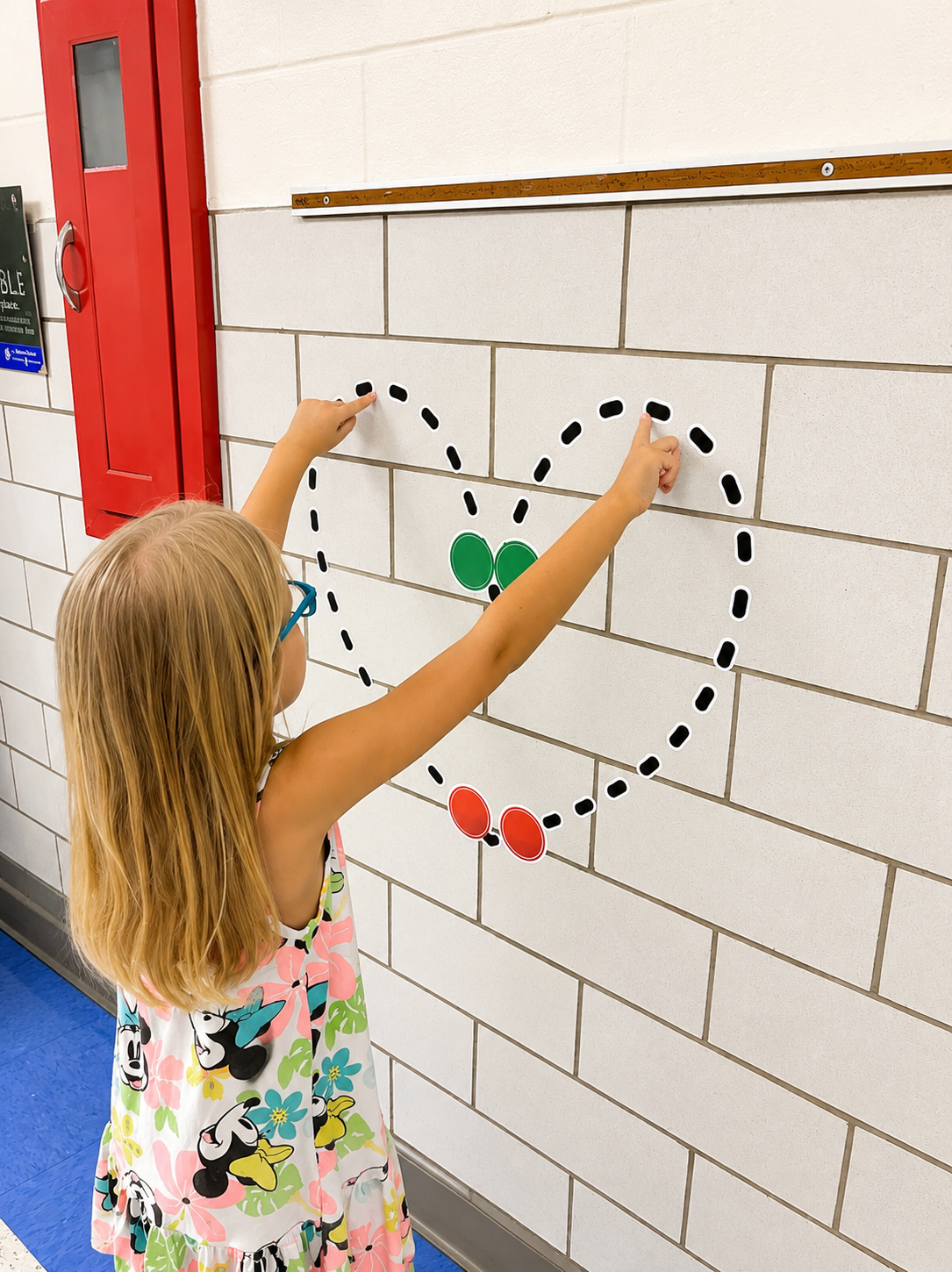
Movement Doesn't Have to Mean a Sensory Room
This is another misconception I encounter.
Schools sometimes assume that supporting sensory regulation requires a beautiful dedicated sensory room filled with specialized equipment.
Those spaces can certainly be valuable.
But they're not the only option.
Purposeful movement can happen in the spaces students already use:
Hallways. Classrooms. Counseling areas. Resource rooms. Early childhood wings. Transition spaces.
And it doesn't always require 20 or 30 minutes.
The research on short classroom activity breaks is particularly encouraging because it suggests that even brief opportunities for movement may be meaningful.
That's the Thinking Behind Sensory Paths
As a practicing pediatric and school-based occupational therapist, this philosophy is a big part of why I created Sacred Steps Sensory Paths.
I wanted movement and regulation strategies to be available where children already are, rather than requiring teachers to find another program, another room, or another large block of time.
Sensory paths provide students with a structured sequence of purposeful movement activities that can be incorporated naturally into the school day.
And importantly, my paths also incorporate a calming component to help students slow their bodies and reset before returning to the classroom.
For public schools, Steps to Success combines purposeful movement with positive character traits such as:
Kind. Brave. Respectful. Patient. Persevering. Responsible. Honest. Helpful.
For Catholic and Christian schools, Sacred Steps' faith-based paths can combine movement and regulation with Scripture, prayer, Bible stories, the Sacraments, and reminders of who God created children to be.
Different messages.
Same underlying OT philosophy:
Give children an opportunity to move, help their bodies reset, and then ask them to return to learning.
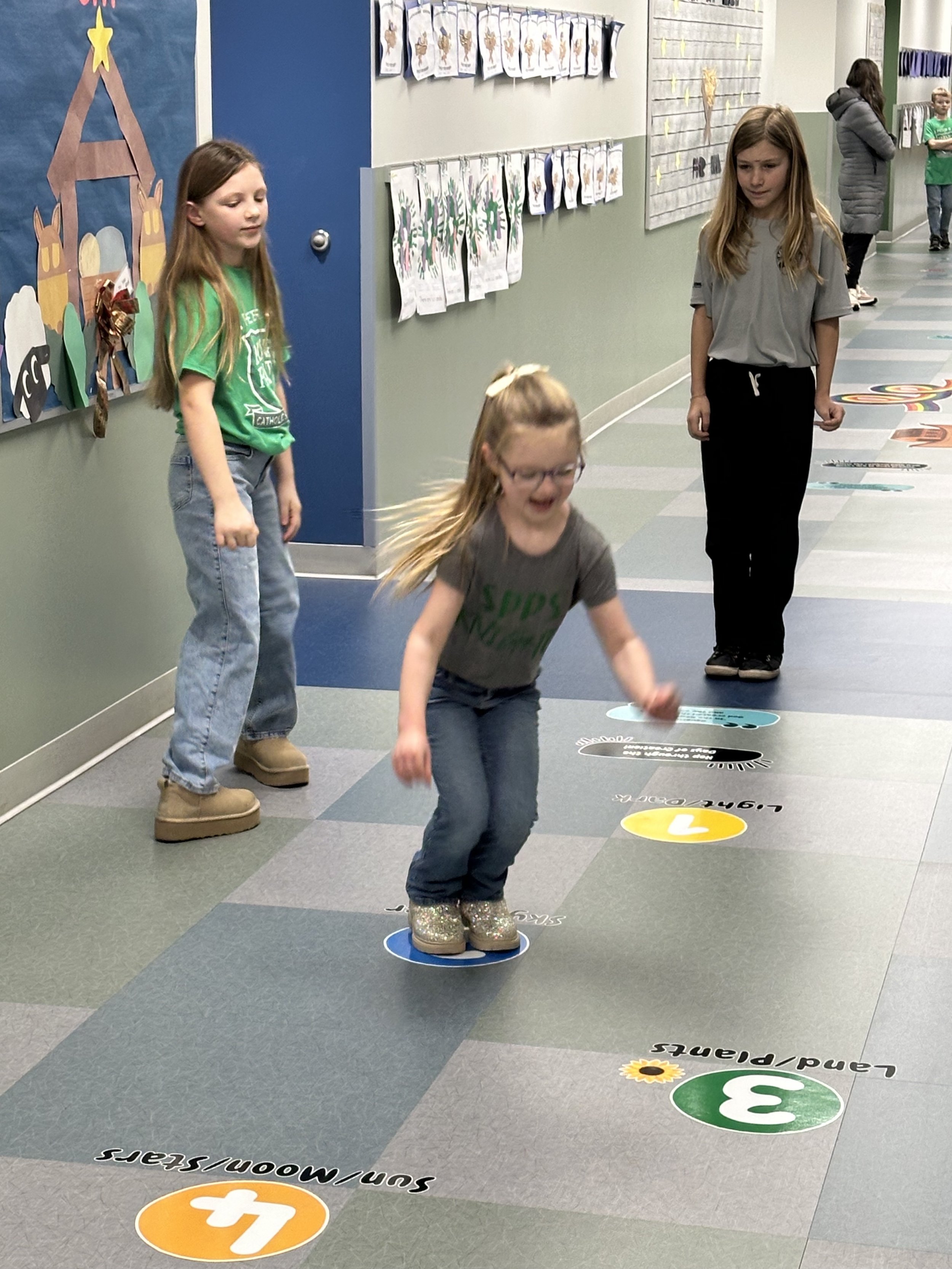
A Few Minutes Can Matter
Schools don't need another complicated initiative.
Teachers certainly don't need one more thing added to an already overflowing plate.
But perhaps that's exactly why this research matters.
We're not necessarily talking about adding another 30-minute block to the schedule.
One study found meaningful differences in on-task behavior after four minutes of classroom activity. Another found higher time-on-task following a 10-minute exercise break. And a systematic review found generally favorable results for classroom behavior across a range of movement interventions.
That doesn't mean four minutes is a magic number.
It does mean we may want to reconsider the assumption that every minute spent moving is a minute taken away from learning.
Sometimes those few minutes may help prepare a child's brain and body for the learning we're asking them to do next.
And that makes movement worth making time for.
Try It Now! 👣
Want to put the research into practice today? Try this quick movement-and-reset break with your students:
10 Wall Pushes
Place both hands on the wall and push hard, then relax.
10 Cross-Body Taps
Touch right hand to left knee, then left hand to right knee.
5 Slow Squats
Move down and back up slowly and with control.
5 Big Reaches
Reach high overhead, then down toward your toes.
Finish with 3 Slow Breaths
Breathe in through your nose...and slowly out through your mouth.
Then head back to learning!
The whole thing takes just a few minutes and follows the same philosophy I use when designing Sacred Steps:
👣 MOVE → ❤️ RESET → 📚 LEARN
Try it before a longer lesson, after lunch, between subjects, or anytime you notice your students could use a quick reset.
About the Author
Trisha Klausing, OTR/L is a practicing pediatric, school-based occupational therapist with more than 10 years of experience supporting children in educational settings.
She is also the creator of Sacred Steps Sensory Paths, OT-designed movement and regulation resources created to help schools incorporate purposeful movement into the spaces students already use every day.
Sacred Steps offers both faith-based sensory paths for Catholic and Christian schools and universal options for public schools, including permanent floor and wall paths, portable sensory paths, calming resources, and movement activities.
Trisha's work combines her experience as an occupational therapist with a practical understanding of what actually works in busy schools—because supporting regulation shouldn't require another complicated program for teachers to manage.
Her goal is simple:
Help children move, regulate, and return ready for what's next. ❤️

First-Day Jitters Are More Than Nerves: Why Sensory Supports Matter From Day One
Discover how proactive sensory supports, movement breaks, and sensory paths can help students manage first-day jitters, regulate, and get ready to learn.
The first day of school is exciting.
New backpacks. Freshly sharpened pencils. New teachers. Seeing friends again.
But for many students, the first days of school can also feel like a lot.
New classrooms. Different routines. Unfamiliar expectations. Crowded hallways. Bells ringing. Chairs scraping. More sitting. More listening. More transitions. And after a summer with a very different schedule, suddenly being expected to regulate through an entire school day again.
We often call it "first-day jitters."
But sometimes what looks like nervousness, excessive energy, silliness, avoidance, tears, difficulty listening, or even challenging behavior is also a child trying to manage all of the sensory and emotional demands that come with returning to school.
As a school-based occupational therapist, that's why I believe one of the best things we can do at the beginning of the year is simple:
Don't wait for students to struggle before giving them tools to regulate.
The First Day Is a Sensory Experience
Think about walking into school from a child's perspective.
The hallway may be louder than they've experienced all summer.
There are people everywhere.
They're trying to remember where to put their backpack, where to sit, when they're allowed to talk, where they're supposed to walk, what happens next — and perhaps even how to open that brand-new lunch container someone bought them.
For younger students, it may be their first time spending an entire day away from home.
For older students, there may be new classrooms, changing classes, increased academic expectations, new social situations, and less downtime.
And underneath all of that, their bodies are processing an enormous amount of sensory information.
That's a lot of work before the academics even begin.
First-Day Jitters Don't Look the Same in Every Child
The student who is overwhelmed isn't always the child crying at the classroom door.
It might be the child who:
Can't stop moving in his chair.
Suddenly needs to sharpen his pencil for the fourth time.
Becomes extra silly during transitions.
Covers her ears in a noisy hallway.
Has difficulty getting started on an assignment.
Melts down over something seemingly small.
Asks to go to the bathroom repeatedly.
Withdraws and becomes unusually quiet.
Has difficulty keeping hands to himself in line.
Seems completely fine at school — and falls apart the moment he gets home.
These behaviors don't automatically mean a child has a sensory processing difficulty.
Sometimes they simply mean:
This is a lot for my body right now.
And that's where proactive supports can make such a difference.
What If We Supported Regulation Before the Struggle?
We tend to think about sensory strategies reactively.
A student becomes overwhelmed, so we give them a break.
A child can't sit still, so we send them to move.
A student is upset, so we suggest taking deep breaths.
Those strategies can certainly be helpful.
But what if we shifted the timing?
What if the movement came before the long period of sitting?
What if the calming activity happened before the difficult transition?
What if students learned where and how to reset before they were already dysregulated?
That's the power of being proactive.
Instead of asking only:
"What should we do when this child is struggling?"
We can also ask:
"What can we put in place so this child is less likely to get there?"
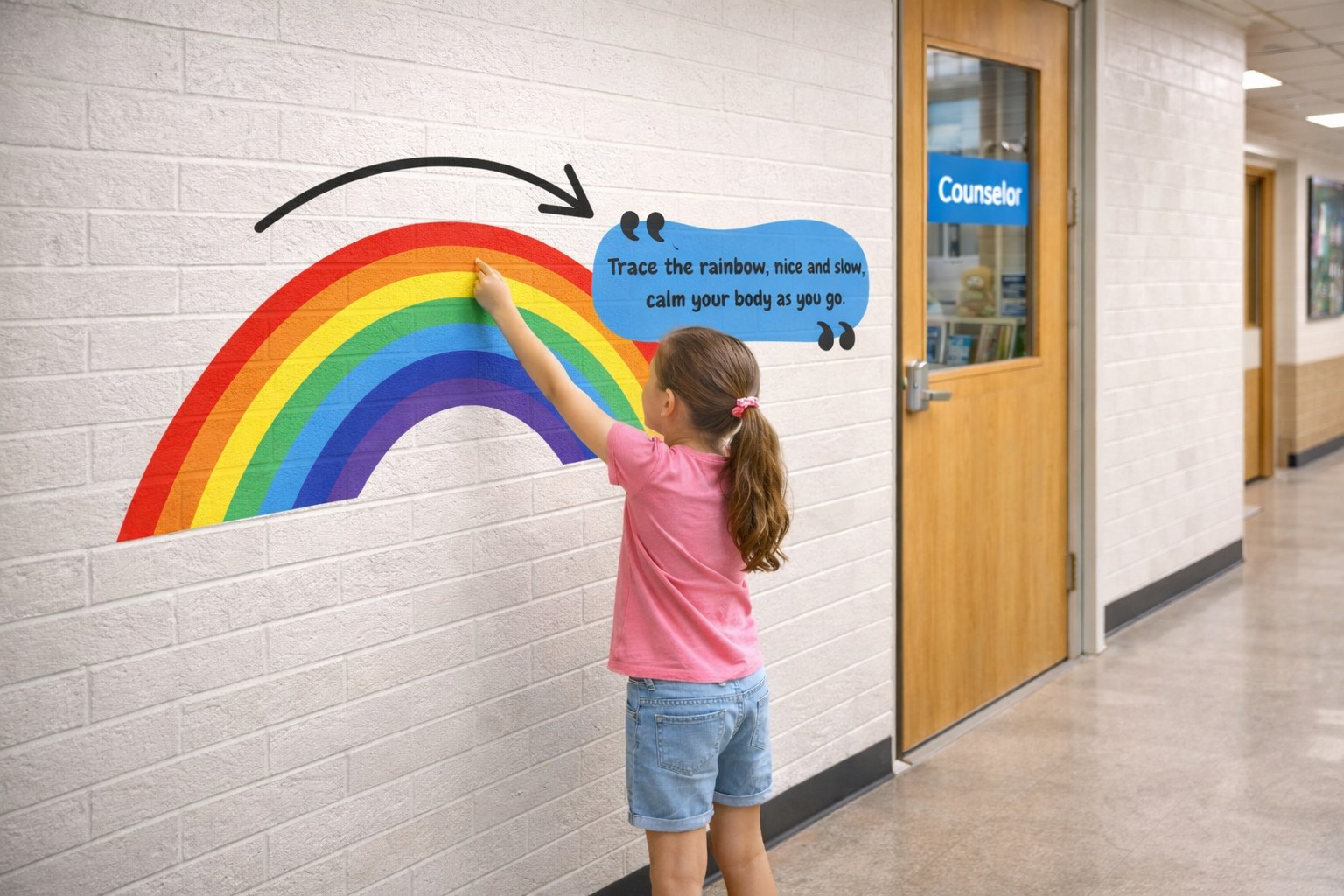
Proactive Doesn't Have to Mean Complicated
Supporting sensory and regulation needs doesn't require every school to build a sensory room.
It doesn't have to mean creating an elaborate schedule of sensory breaks.
And it certainly doesn't have to add another complicated program to a teacher's already-full plate.
Sometimes small changes are enough.
A few minutes of movement before morning work.
A calming activity outside the classroom.
A movement station students can use during a hallway transition.
A quiet reset space in the corner of a classroom.
A portable sensory path that can be rolled out when needed and shared between spaces.
A breathing activity before a test.
A whole-class movement break after prolonged sitting.
Start small.
The goal isn't to create more for teachers to manage.
It's to build regulation opportunities into things students are already doing.
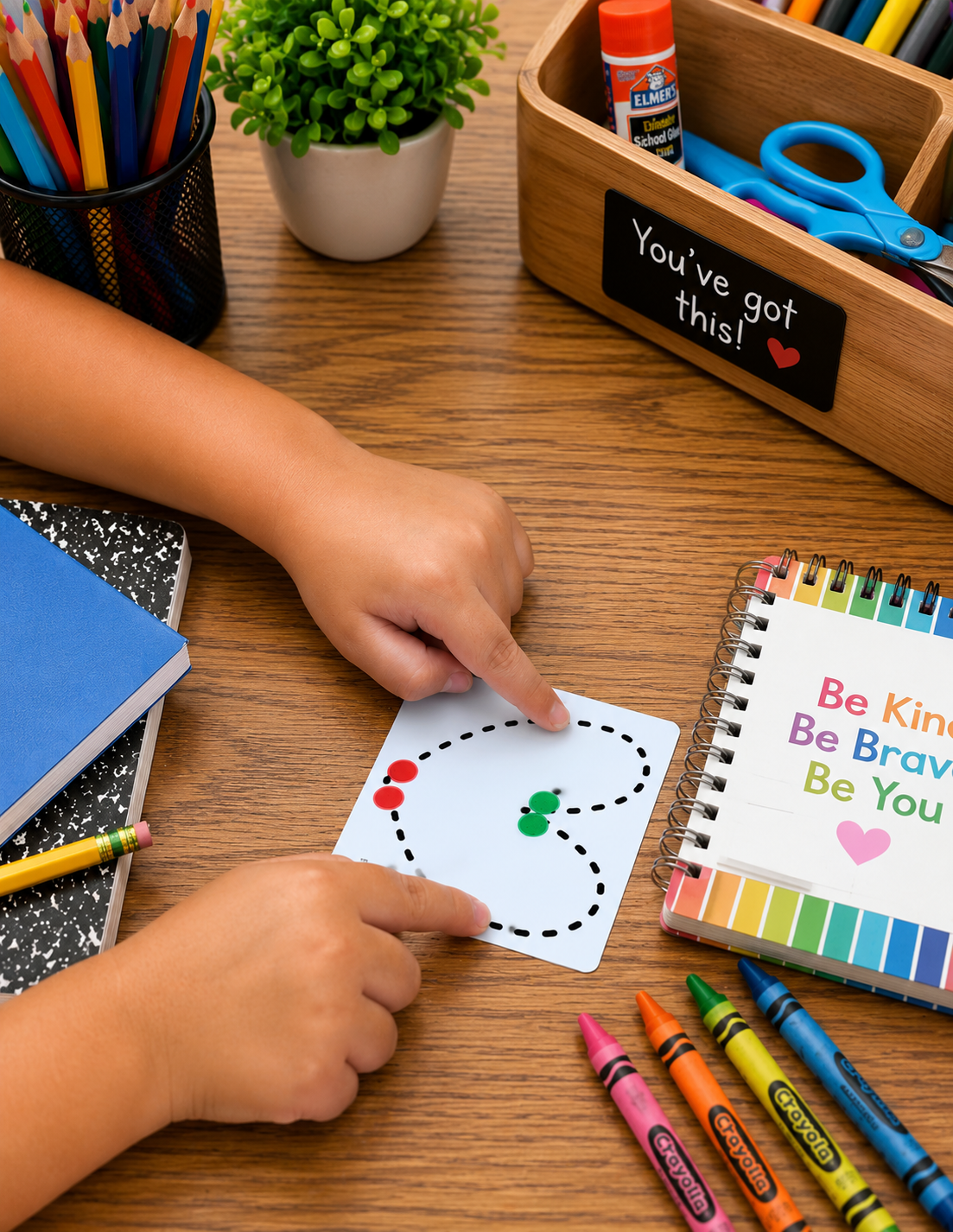
Movement Isn't Taking Away From Learning
Especially during the first weeks of school, there can be pressure to establish routines and get students academically engaged as quickly as possible.
But movement doesn't have to compete with learning.
For many students, purposeful movement can help them become more ready for what comes next.
When a child has an appropriate opportunity to move, reset, breathe, push, stretch, march, balance, or simply step away for a moment, we're giving their body another tool for regulation.
And when the body is more regulated, participating in classroom expectations may become easier.
That's why I don't view movement and sensory supports as something separate from the school day.
They're one way we help prepare students for the school day.
Teach the Tools Before They're Needed
The beginning of the year is also the perfect time to introduce sensory and regulation resources.
Don't wait until a student is upset to show them a calming space for the first time.
Don't introduce a sensory path only after someone is having difficulty.
Teach students what the resources are, how to use them, and when they might help.
Let the whole class practice.
Normalize taking a breath.
Normalize movement.
Normalize recognizing when your body needs something.
When these supports are simply part of the school environment, using them doesn't have to feel like a punishment or something reserved for "the kid who is struggling."
It becomes another tool available to students.
A Different Way to Prepare for Day One
We spend so much time preparing our schools for the first day.
Bulletin boards are ready.
Name tags are on desks.
Lesson plans are written.
Supplies are organized.
Hallways look beautiful.
But as you're walking through your school before those doors open, consider adding one more question to your checklist:
Where can our students go — or what can they do — when their bodies need to move, calm, or reset?
You may already have the perfect space.
And it might only take one small addition to make it useful.
Try This Tomorrow
Walk through your students' first day from their perspective.
Where will they wait?
Where will it be loud?
When will they be expected to sit for a longer period?
Which transitions might feel overwhelming?
When will there be lots of directions, people, noise, or stimulation happening at once?
Now choose one of those moments.
Ask yourself:
"What could we put in place five minutes earlier?"
Maybe it's two minutes of movement.
Maybe it's a breathing exercise.
Maybe it's a visual reminder.
Maybe it's a sensory activity students pass on their way back to class.
Start with one proactive support and see what happens.
Because sometimes the best time to help a student regulate is before they need help regulating.
Want to Learn More?
Sacred Steps Sensory Paths were created by a school-based occupational therapist to help schools incorporate purposeful movement and regulation into the spaces and routines they already have.
Schools don't need a sensory room — or even a large hallway — to get started.
You can begin with one individual activity, a calming space, a Starter Set, a portable sensory path, or a full hallway path.
Sacred Steps offers both universal school resources and OT-designed faith-based sensory paths, allowing Catholic and Christian schools to combine purposeful movement and regulation with messages that reinforce their faith throughout the school day.
Products are commercially printed using durable, professional-grade materials designed for school environments, with floor, wall, and portable options available.
Whether you're preparing for the very first day or realizing a few weeks into the year that your students need additional support, you don't have to change everything at once.
Start with one need.
Start with one space.
Start with one purposeful step.
About the Author
Trisha Klausing is a school-based occupational therapist with more than 10 years of experience and the creator of Sacred Steps Sensory Paths. After seeing firsthand how movement and regulation impact students' ability to participate successfully in the school day, she created Sacred Steps to provide schools with purposeful, professionally designed sensory resources — including faith-based options that allow Christian and Catholic schools to support the whole child while reinforcing their faith.
Is Your School Hallway Working Hard Enough?
Learn how school hallways can support student regulation, movement, transitions, and readiness to learn. Plus, download a free Principal’s Hallway Checklist.
A 5-Minute Hallway Check From a School-Based Occupational Therapist
When we think about preparing a school environment for students, we tend to focus on classrooms.
We arrange desks. We organize materials. We create calm-down spaces. We think about lighting, seating, visual supports, and classroom routines.
But there's another space students use every single day that we don't always think about in the same way:
The hallway.
As a school-based occupational therapist, I spend a lot of time thinking about how the environment affects a student's ability to regulate, transition, participate, and learn.
And hallways are part of that environment.
Students may walk through them dozens of times each day. They transition from preferred activities to non-preferred activities there. They navigate noise, other students, visual stimulation, schedule changes, and expectations—all while being asked to keep their bodies regulated.
So here's a question worth asking:
Is your hallway simply getting students from Point A to Point B—or could it be doing more?
Take a 5-Minute Walk Through Your School
I created a simple Principal's Hallway Checklist to help school leaders look at their hallways through a slightly different lens.
You don't need a formal assessment.
You don't need an OT walking beside you.
Just take five minutes and walk through your building while thinking about a few key areas.
1. Look at the visual environment.
Stand at one end of your hallway and simply look.
Does the space feel organized—or overwhelming?
Can students easily identify important signs and visual cues?
Are bulletin boards and displays intentional, or is every available inch competing for their attention?
For many students, especially those who are easily distracted or overwhelmed by visual input, more isn't always better.
Sometimes creating a more supportive environment starts with deciding what doesn't need to be there.
2. Look for opportunities to move.
We often treat movement as something that happens at recess, in physical education, or during a designated classroom movement break.
But movement doesn't have to be separate from the school day.
It can be built into it.
Could an unused stretch of hallway give students an opportunity to jump, balance, reach, breathe, cross midline, or complete a quick sequence of purposeful movements?
Could a student use that space for a two-minute regulation break and then return to class?
Could movement be used proactively, rather than waiting until a child is already dysregulated?
That's one of the biggest shifts I encourage schools to consider.
3. Pay attention to transitions.
For some students, transitions are easy.
For others, they're one of the hardest parts of the school day.
Leaving a preferred classroom, navigating a busy hallway, remembering where to go next, managing peers and noise, and preparing for an entirely different set of expectations requires a surprising amount of regulation and executive functioning.
As you walk your hallways, ask:
What support is available for the child who struggles here?
It might be a visual cue.
It might be a predictable movement opportunity.
It might be a calming strategy.
Sometimes a relatively small environmental support can make a difficult transition more manageable.
4. Ask whether your hallway helps students return ready to learn.
This is one of my favorite questions.
Instead of thinking only about hallway behavior—Are students quiet? Are they walking? Are they following expectations?—consider what happens after the hallway.
Does the environment help students arrive at their next destination ready to participate?
Purposeful movement can provide opportunities to work on body awareness, coordination, balance, motor planning, regulation, and attention.
A hallway can also reinforce skills we want students to carry back into the classroom:
Confidence.
Patience.
Perseverance.
Kindness.
Leadership.
A hallway doesn't have to be wasted space.
5. Look at the space you already have.
This may be the most practical part of the entire exercise.
Look for:
An empty wall.
An unused corner.
A long stretch of hallway.
A small space outside a counseling office.
An area near the intervention room.
A spot where a portable activity could be rolled out when needed.
You don't necessarily need a dedicated sensory room—or a large budget—to create another opportunity for regulation in your school.
Start with the space you already have.
For Catholic Schools: Look Through One More Lens
In a Catholic school, I would add another question to the hallway walk:
Does our Catholic identity extend beyond our classrooms?
Catholic education has a unique opportunity to surround students with reminders of who they are and Whose they are throughout the entire school day.
Faith formation doesn't have to stop when students leave religion class.
Our hallways and shared spaces can reinforce Scripture, prayer, virtues, Sacraments, and reminders of God's presence.
And our sensory and regulation supports don't have to be separate from that mission either.
We can support the body, mind, AND spirit.
That's one of the reasons I created Sacred Steps in the first place. I wanted Catholic schools to have access to purposeful movement and regulation supports without having to separate those supports from their Catholic identity.
Try This Tomorrow
Take five minutes and walk one hallway in your school.
Don't walk it as an administrator thinking about schedules, supervision, or maintenance.
For five minutes, try to walk it from the perspective of a student.
Ask yourself:
What does this space ask of our students—and what does it give back to them?
Then identify one space that could work a little harder.
That's it.
You don't need to redesign your school.
Start with one hallway. One wall. One corner. One opportunity.
Download the Free Principal's Hallway Checklist
I've turned these questions into a simple printable checklist you can take with you as you walk through your building.
Use it yourself, share it with your leadership team, or walk through the building with your OT, counselor, intervention specialist, or facilities staff.
Catholic school? I've created a Catholic version, too, with an additional section on Faith Throughout the Building.
Want to Learn More?
If your hallway walk leaves you looking at an empty wall or unused stretch of floor and thinking, We could do something with that, I'd be happy to help.
Sacred Steps Sensory Paths offers floor-based, wall-based, and portable movement and regulation supports designed specifically for real school environments.
And you don't need to begin with a full sensory path.
Whether you have $300 or $3,000, we can start with the space and budget you have and determine what could make the greatest impact for your students.
Sometimes transforming a school environment doesn't start with a huge project.
It starts by looking at an ordinary space differently.
About the Author
Trisha Klausing, MOT, OTR/L, is a practicing school-based occupational therapist and founder of Sacred Steps Sensory Paths. Drawing on more than a decade of experience working with students and educators, she creates movement and regulation supports designed for the realities of school environments. Sacred Steps offers both faith-based and universal options to help schools create purposeful opportunities for movement, regulation, confidence, executive functioning, and student success.
No Hallway? No Problem. How Portable Sensory Paths Bring Movement Anywhere
Learn how portable sensory paths help schools bring movement, self-regulation, and executive functioning support to any space—without permanent installation.
As schools prepare for a new year, many educators are looking for simple, effective ways to help students feel calm, focused, and ready to learn.
Sensory paths have become an increasingly popular way to provide purposeful movement throughout the school day. Traditionally, these paths are installed in hallways where students can hop, stretch, balance, and regulate their bodies before entering the classroom.
But what if your school doesn't have a long hallway?
What if you're looking for something that can move from classroom to classroom?
Or perhaps you'd like to introduce movement supports before committing to a permanent installation.
That's exactly why I created portable sensory paths.
Not Every School Has the Perfect Hallway
Permanent hallway sensory paths are wonderful—but they aren't the right fit for every school.
Some schools have narrow hallways.
Some have carpet instead of tile.
Some share facilities with other organizations.
Others simply want the flexibility to move resources throughout the building.
Portable sensory paths make it possible to bring meaningful movement anywhere students need it.
Simply roll them out when needed, then roll them back up for easy storage.
Why Purposeful Movement Matters
As a practicing school-based occupational therapist, I've seen firsthand how movement can change the course of a student's day.
Purposeful movement helps students:
Improve attention and focus
Develop self-regulation skills
Strengthen executive functioning
Prepare their brains for learning
Reduce stress and anxiety
Improve body awareness
Transition more successfully between activities
Build confidence and independence
The beauty of portable paths is that these benefits aren't limited to hallways—they can happen anywhere.
Where Portable Sensory Paths Work
Schools are using portable sensory paths in:
Classrooms
Occupational therapy rooms
Physical therapy spaces
Speech therapy rooms
Counseling offices
Libraries
Resource rooms
Preschool classrooms
Religious education classrooms
Parish centers
Before and after-school programs
Small-group intervention spaces
Because they're portable, one path can support multiple classrooms throughout the day.
Perfect for Schools That Aren't Ready for Permanent Installation
Portable sensory paths are also a wonderful option for schools that:
Want to try a sensory path before investing in hallway decals
Need movement supports in multiple locations
Have limited wall or floor space
Want movement available during indoor recess
Need flexible intervention tools
Prefer resources that can easily be stored when not in use
Many schools begin with a portable path and later expand into permanent hallway installations as they see the positive impact on students.
Which Portable Path Is Right for Your School?
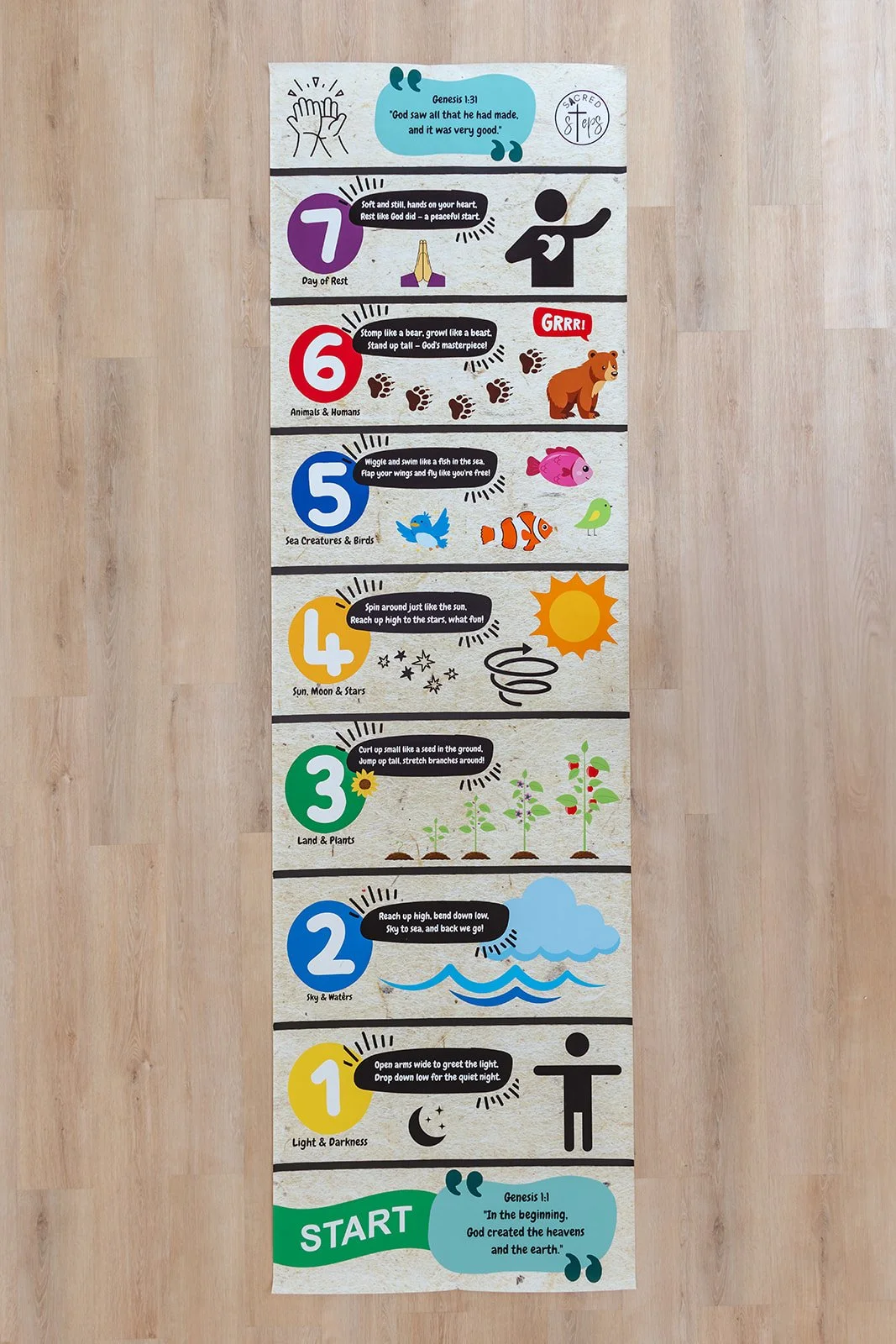
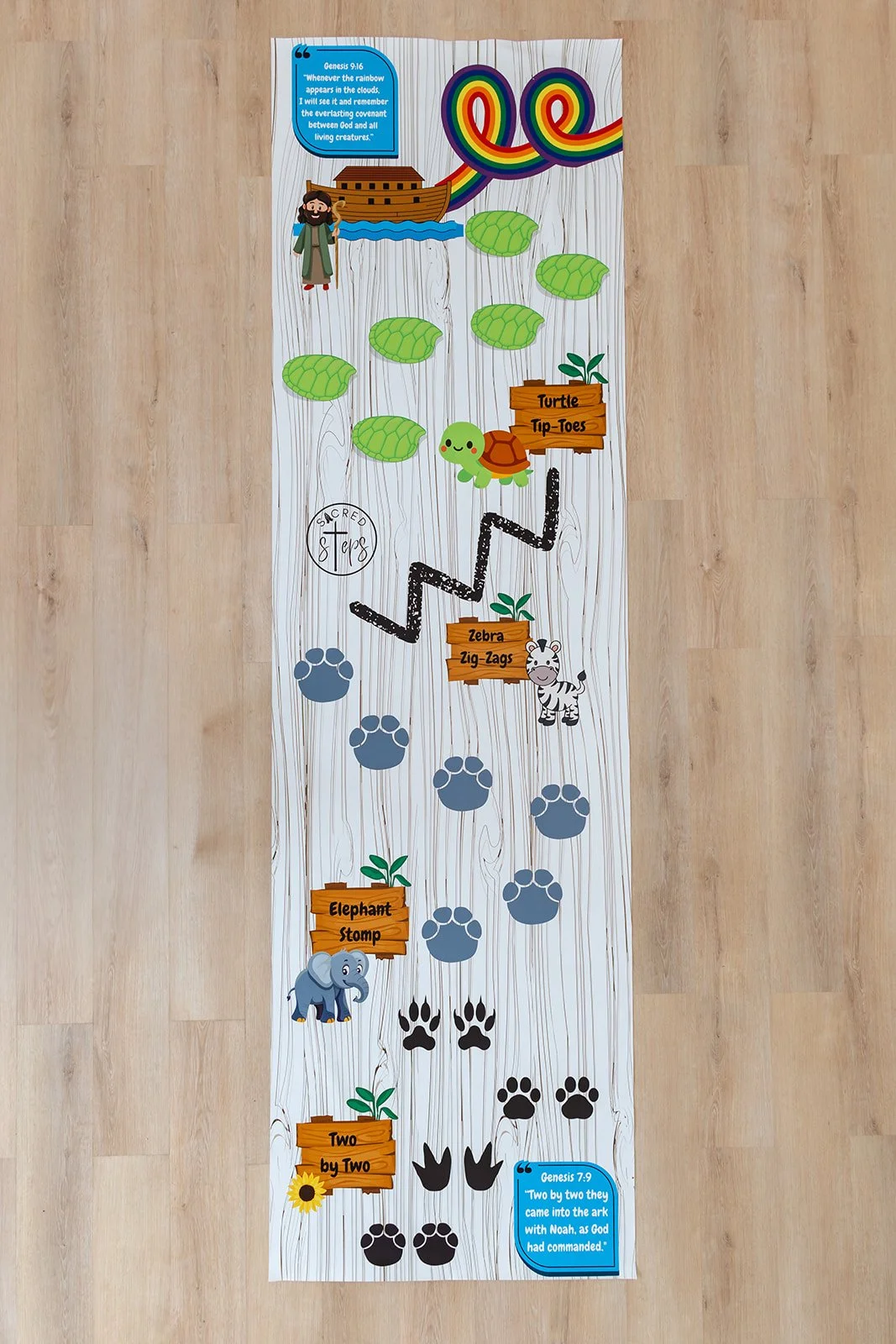
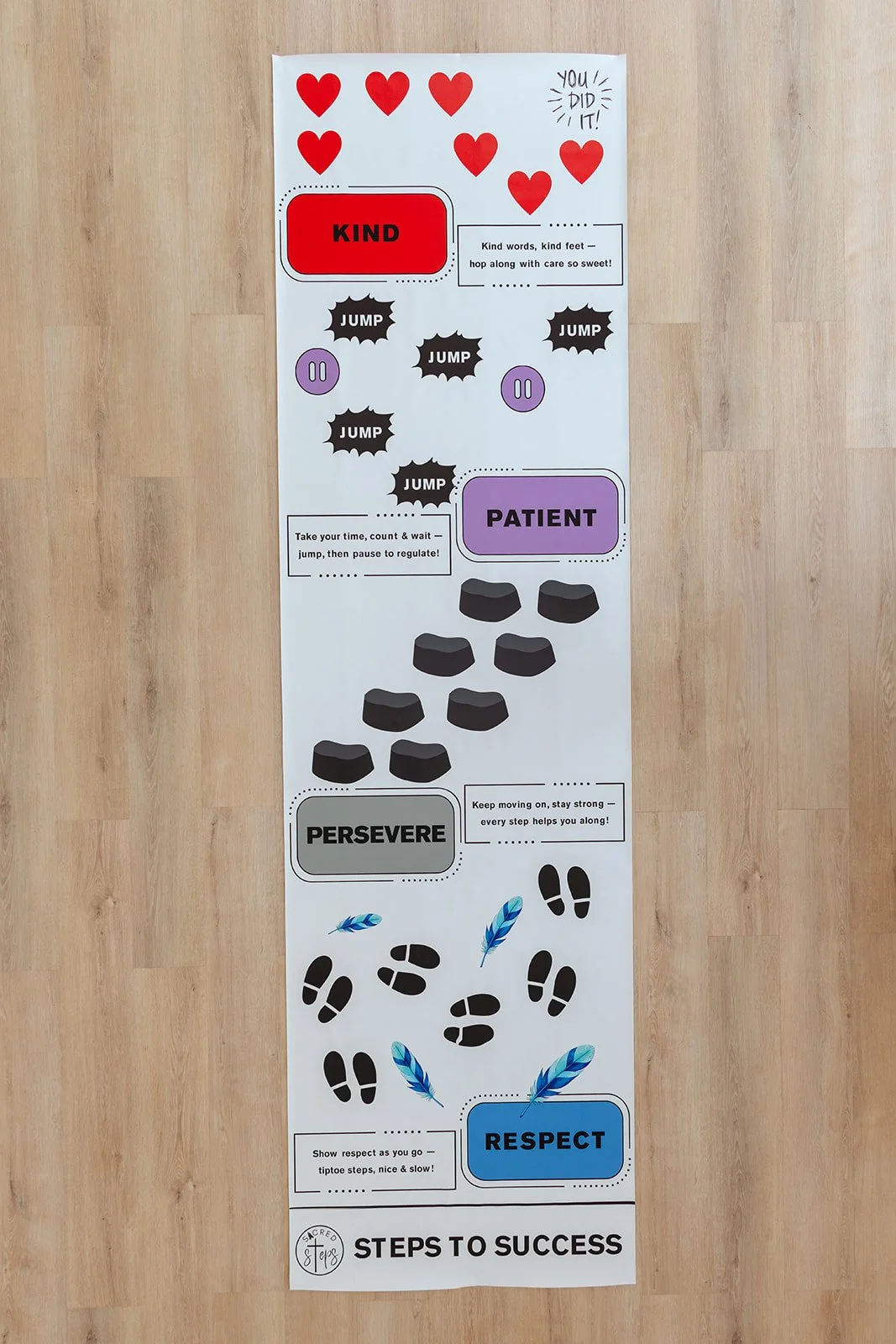
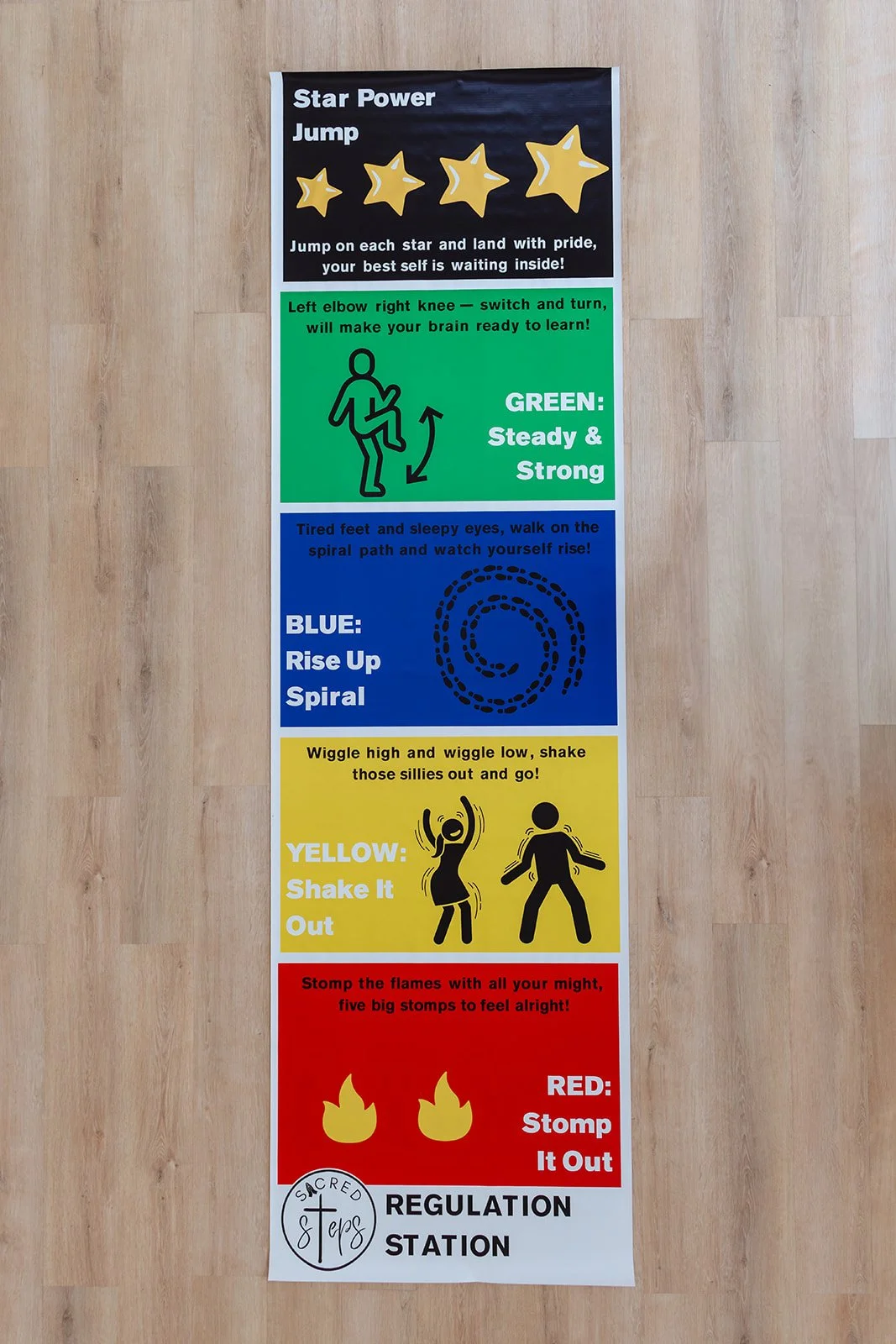
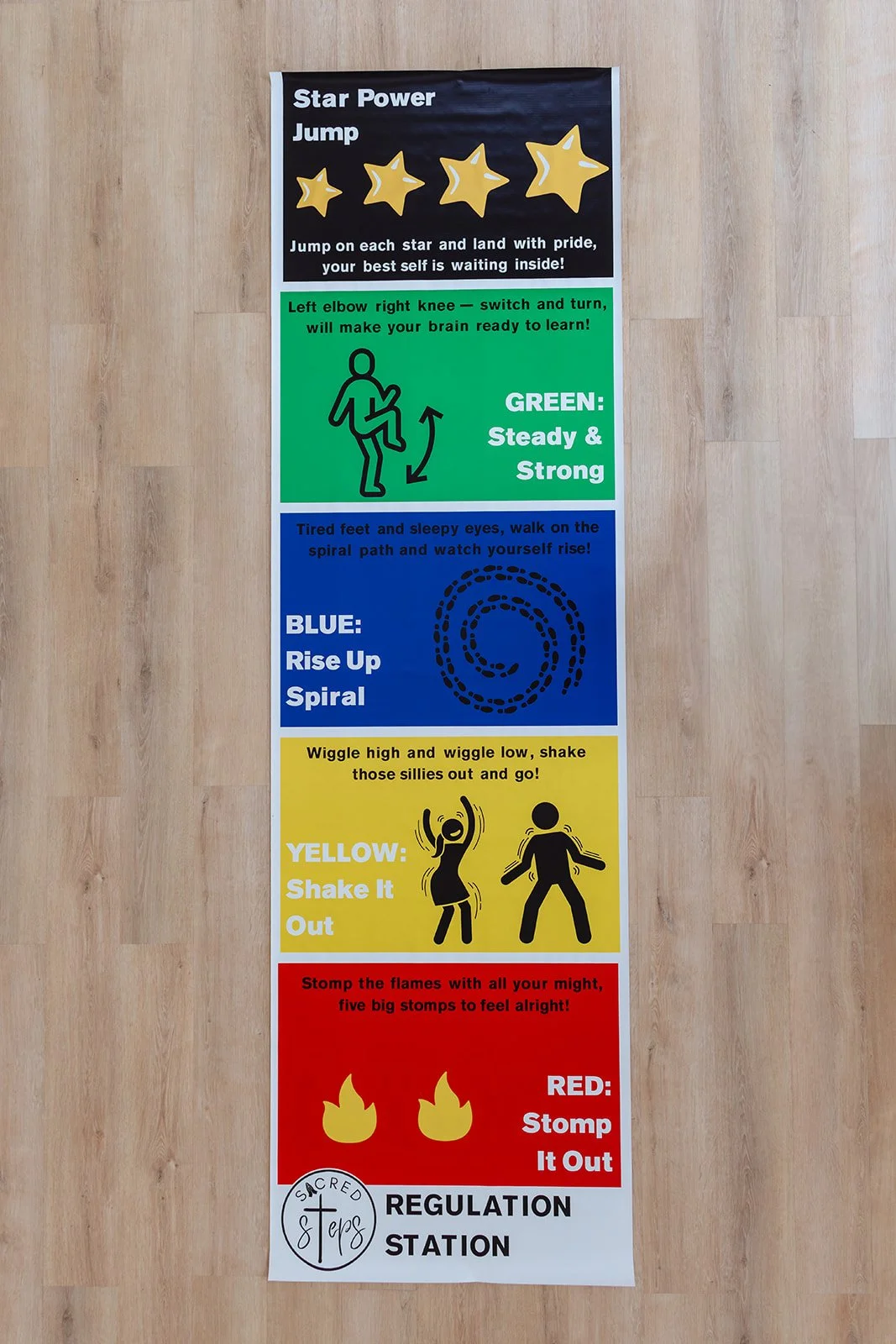
Sacred Steps currently offers six portable sensory paths, each designed to meet different needs while encouraging purposeful movement.
⭐ Steps to Success
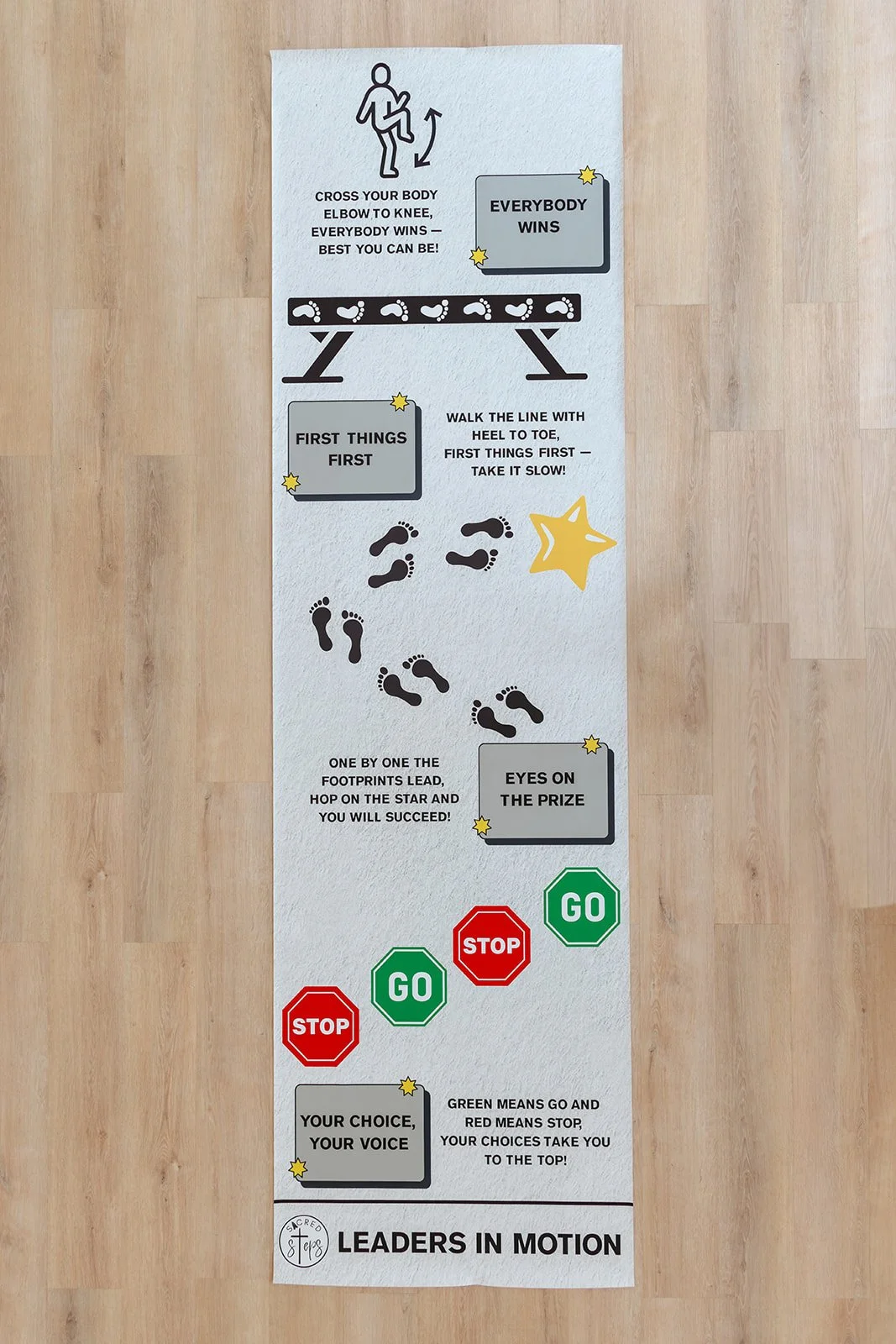
A universal social-emotional learning path that reinforces kindness, perseverance, responsibility, honesty, bravery, patience, and other important life skills.
Perfect for:
Public schools
Private schools
Counseling spaces
Intervention programs
Leadership initiatives
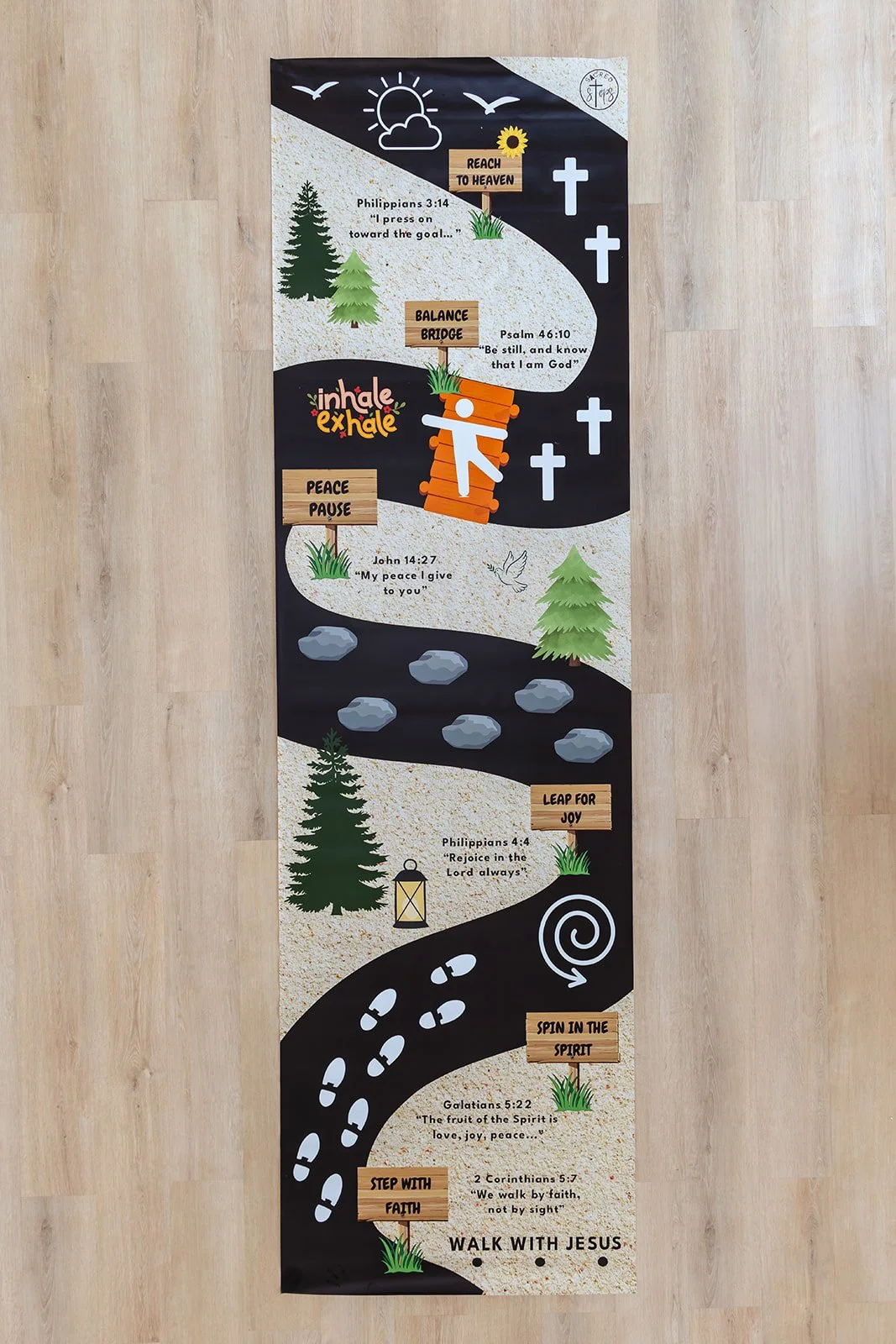
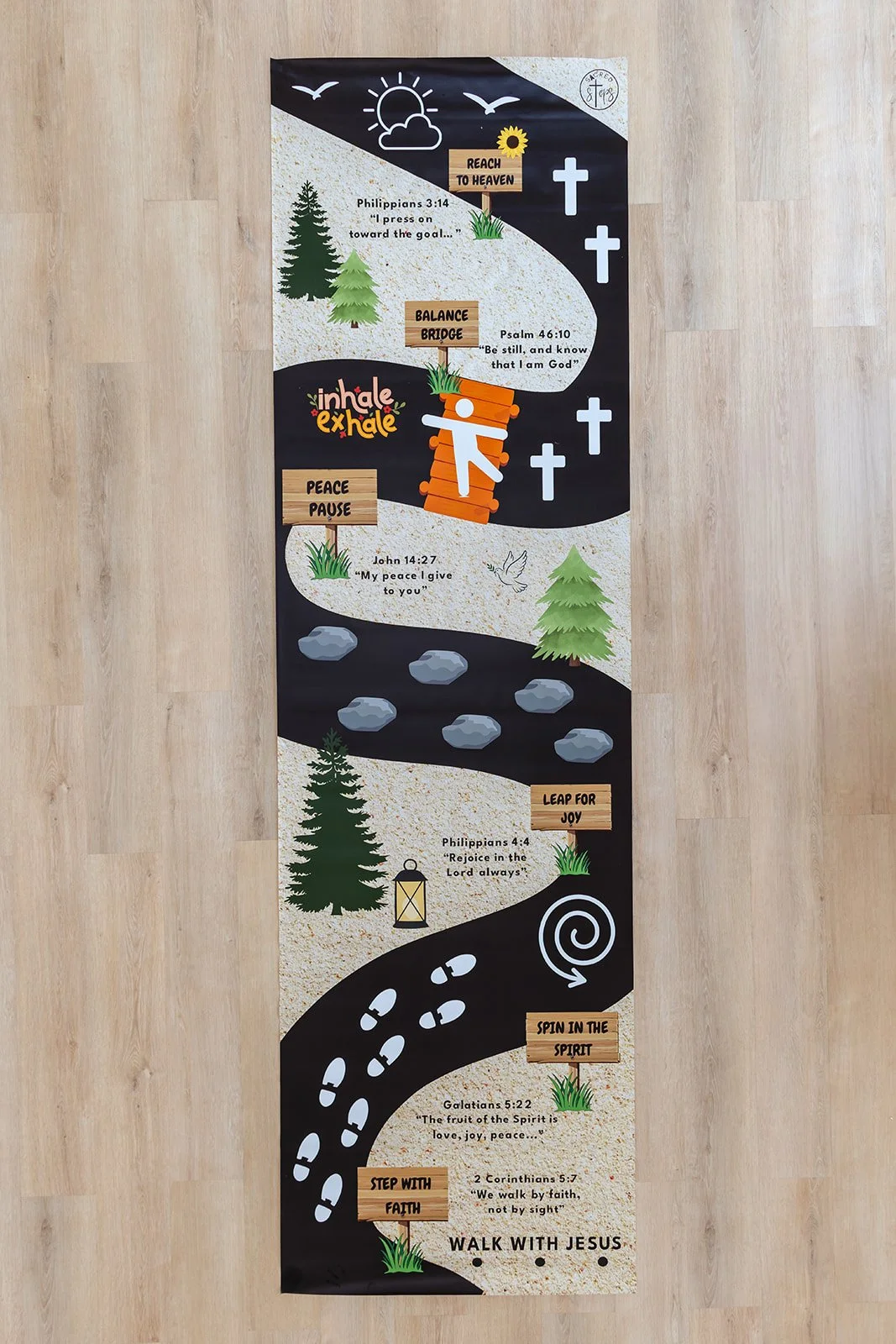
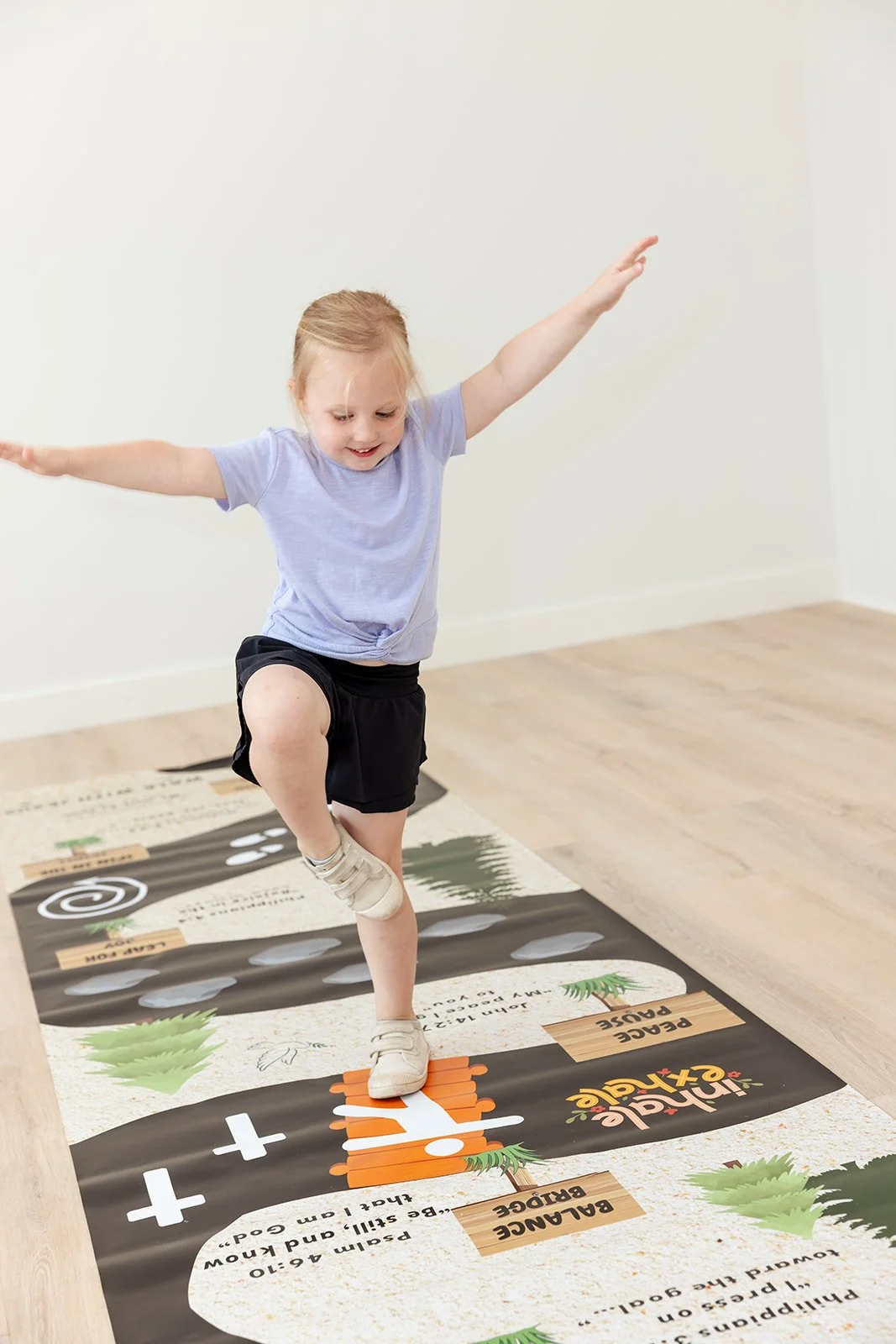
⭐ Walk With Jesus
Students move while reflecting on the life and teachings of Jesus, reinforcing faith formation through purposeful movement.
Perfect for:
Catholic schools
Religious education
Parish programs
Faith formation classrooms
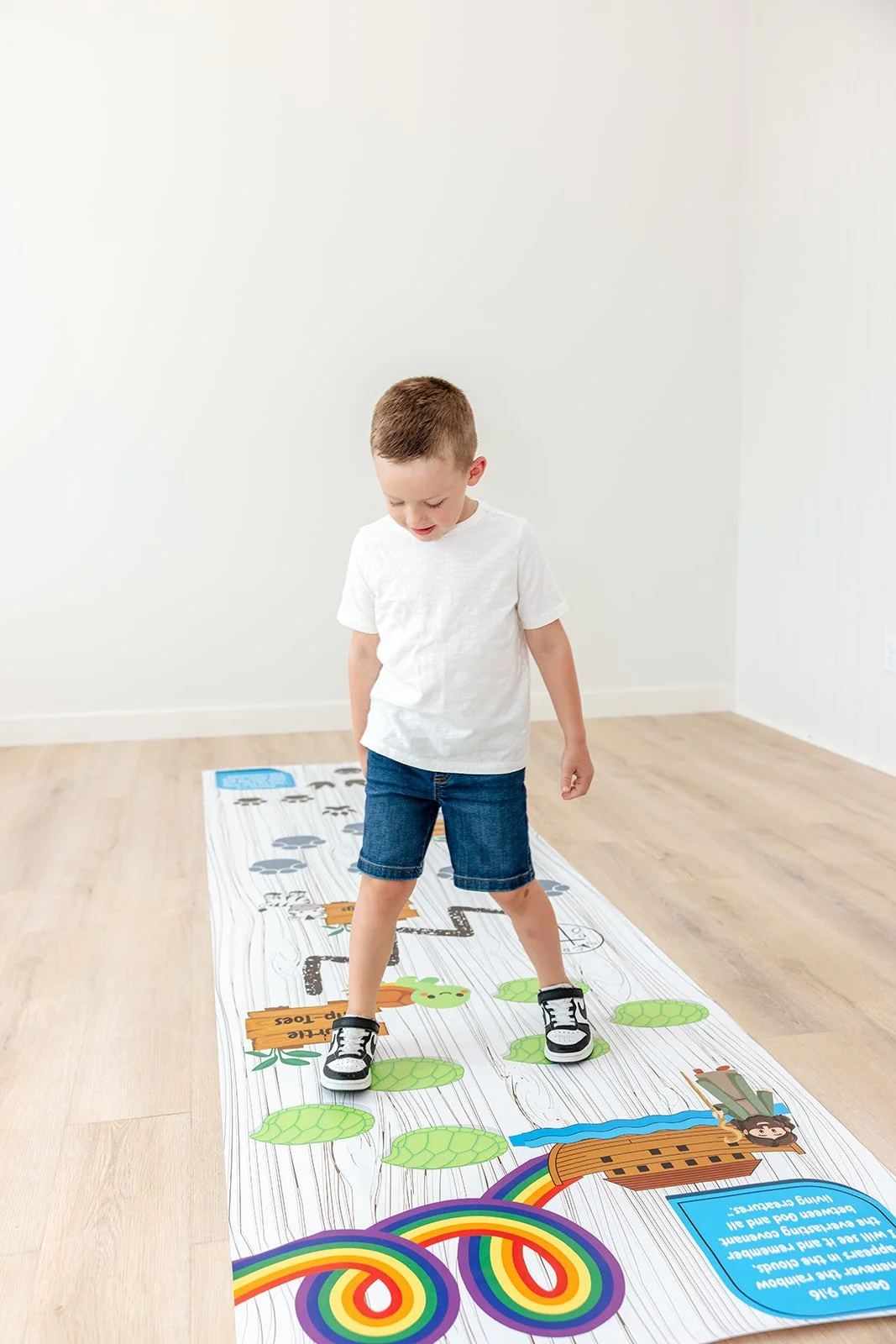
⭐ Noah's Ark
A favorite for younger learners, this engaging path combines movement with one of the Bible's most beloved stories.
Perfect for:
Preschool
Kindergarten
Early elementary
Church nurseries
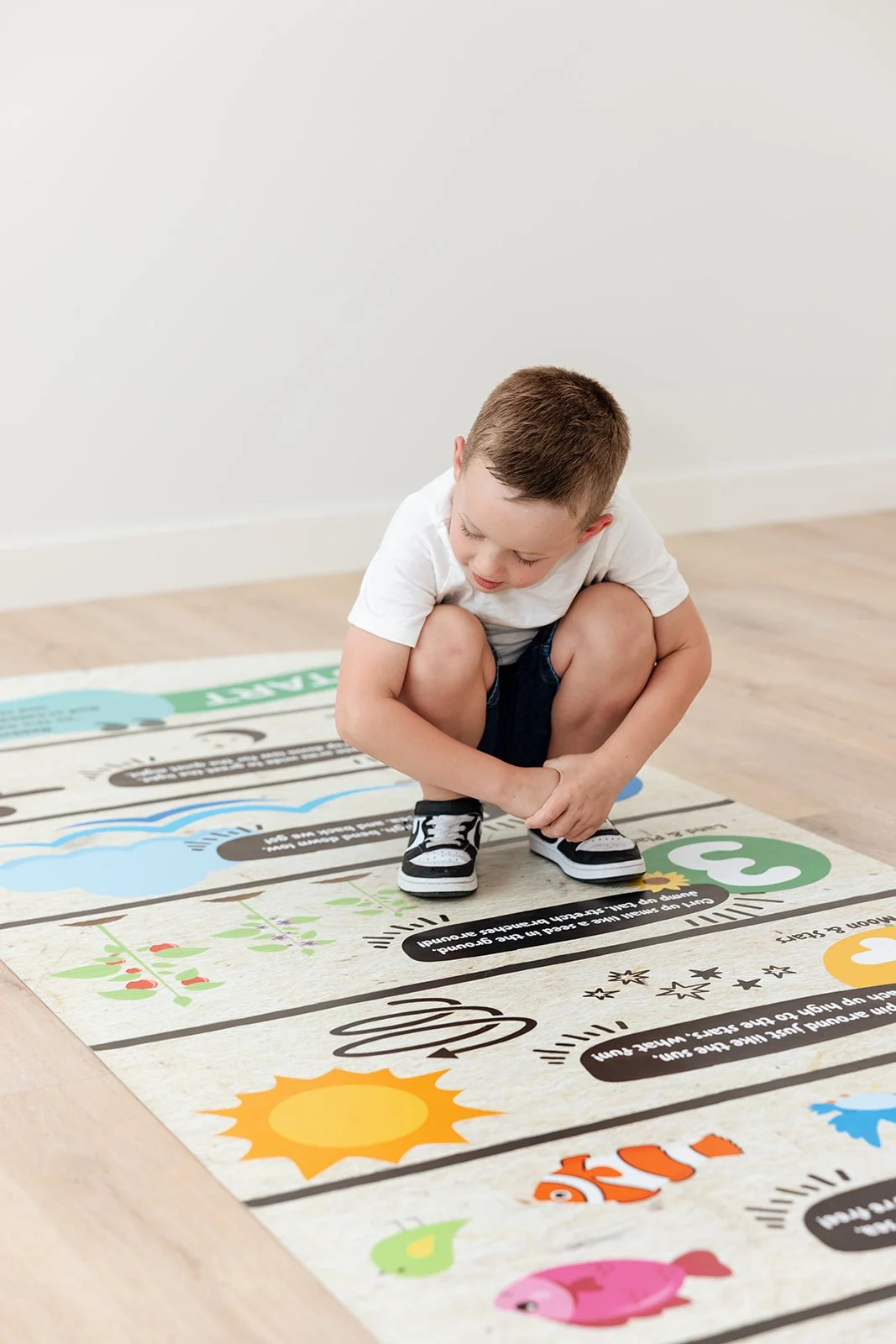
⭐ Days of Creation
Students journey through the seven days of creation while moving, balancing, hopping, and learning Scripture.
Perfect for:
Elementary religion classes
Catholic schools
Faith formation
Vacation Bible School
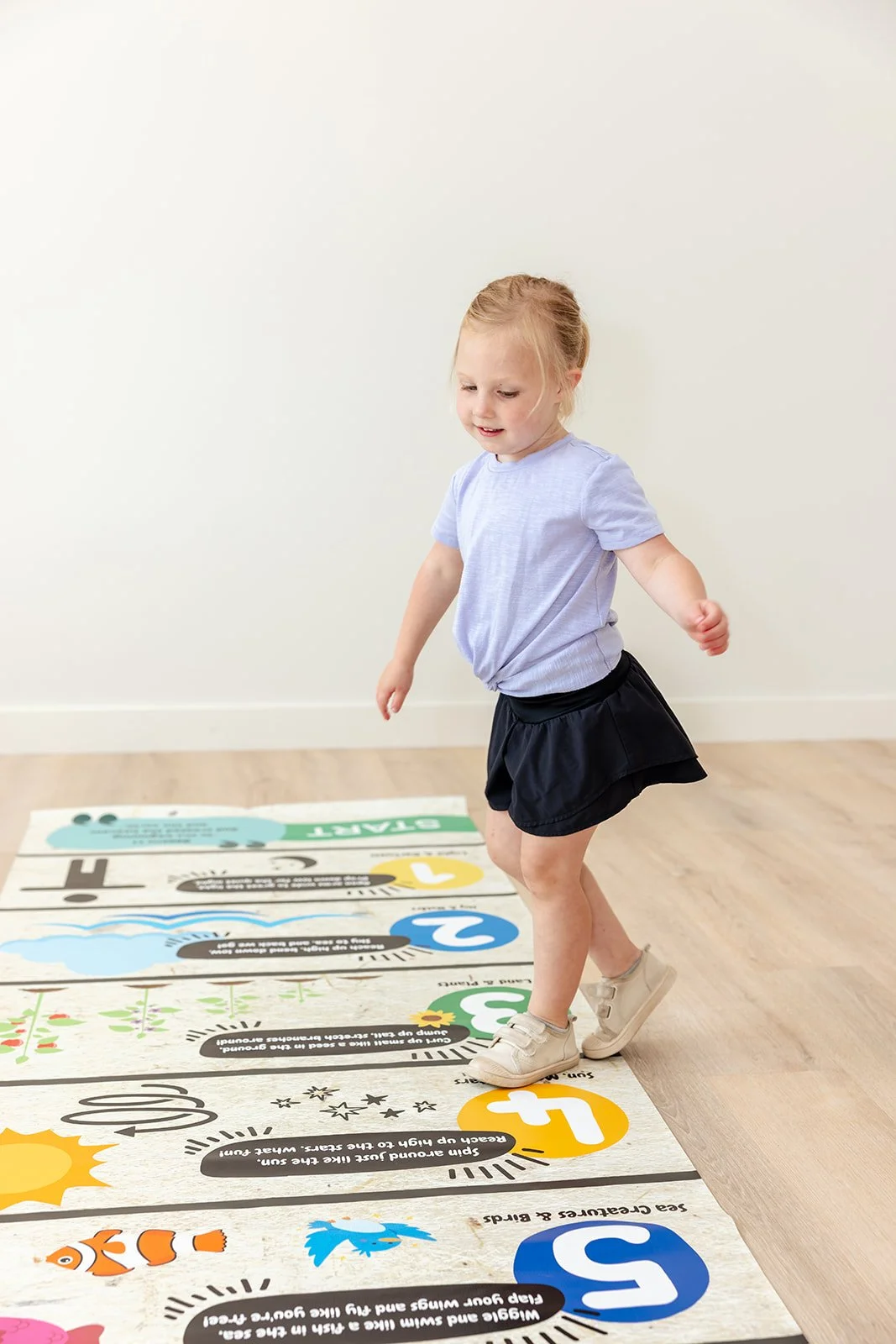
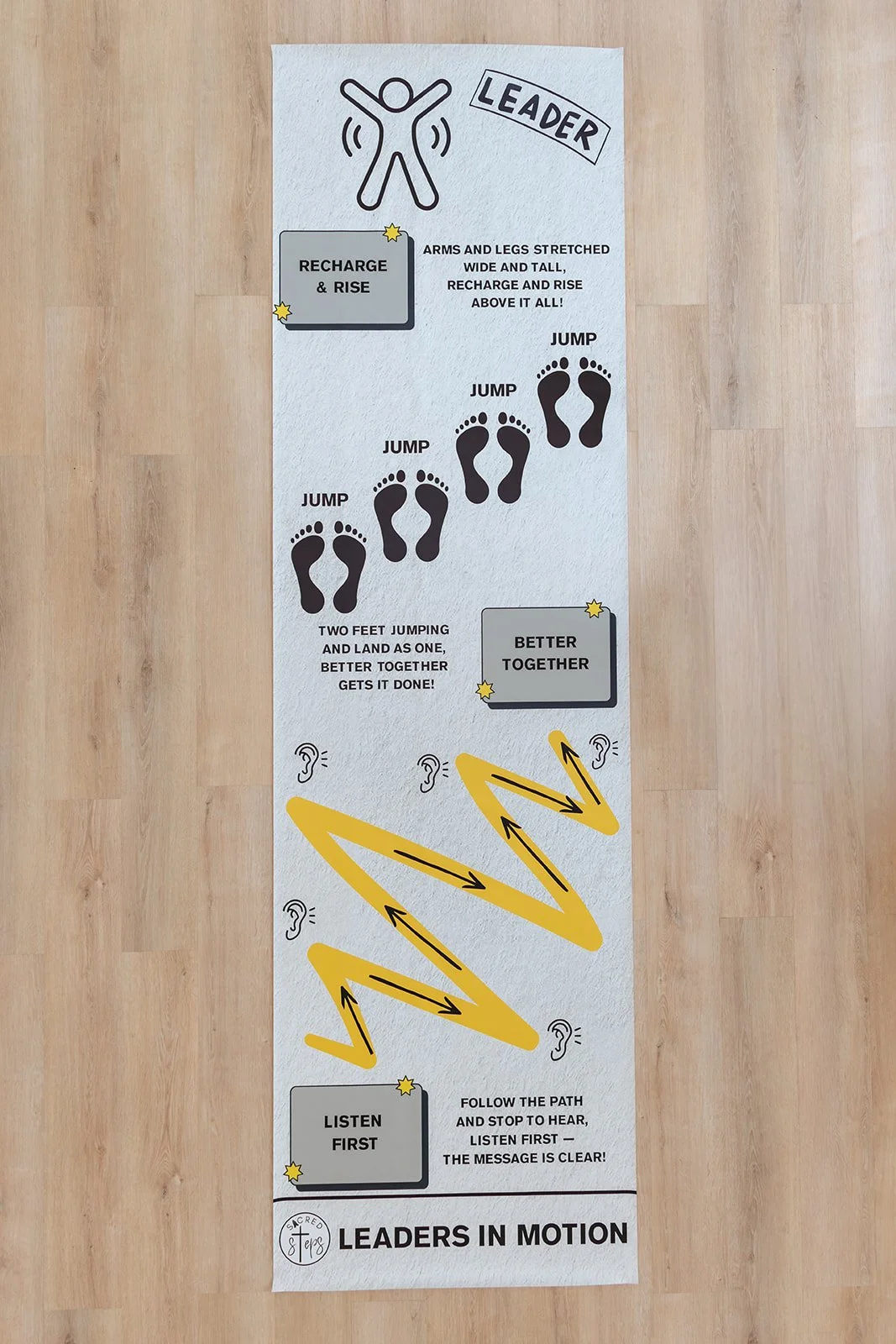
⭐ Leaders in Motion
Created to help students develop leadership skills through purposeful movement, Leaders in Motion encourages confidence, responsibility, perseverance, teamwork, self-regulation, executive functioning, and positive decision-making.
Available in two unique versions, schools can choose the path that best fits their students and school culture.
Perfect for:
Leadership initiatives
Character education
Social-emotional learning (SEL)
Executive functioning support
Student leadership programs
Elementary and middle school students
Why Schools Love Portable Paths
Portable sensory paths give schools incredible flexibility.
One resource can support:
Morning arrival
Indoor recess
Small-group instruction
Therapy sessions
Classroom brain breaks
Counseling visits
Transition times
After-school programs
Instead of students traveling to the sensory path, the sensory path comes to them.
Every portable path is professionally printed on durable 3ft x 10ft canvas, rolls up for easy storage, and can be moved from room to room in seconds.
No installation.
No commitment to one location.
Just purposeful movement wherever students need it.
Try This Tomorrow
Choose one classroom that struggles with transitions.
Before independent work, after recess, or before dismissal, spend just five minutes allowing students to complete a movement activity together.
Observe what changes.
Many teachers notice students returning to learning calmer, more organized, and better prepared to focus.
Sometimes just a few minutes of purposeful movement can completely change the tone of the classroom.
Want to Learn More?
Whether you're looking for faith-based resources like Walk With Jesus, Noah's Ark, and Days of Creation, or universal options like Steps to Success and our Leaders in Motion portable paths, Sacred Steps makes it easy to bring purposeful movement into any learning environment.
No hallway?
No problem.
Movement can happen anywhere students learn, grow, regulate, and thrive.
Browse the complete collection of portable sensory paths and discover how simple it can be to create meaningful movement opportunities throughout your school.
About the Author
Trisha Klausing, OTR/L is a practicing school-based occupational therapist with more than a decade of experience helping children succeed through purposeful movement, sensory regulation, and executive functioning supports. She is the founder of Sacred Steps Sensory Paths, creating OT-designed movement resources that are now helping students in schools across 27 states and Canada. Whether through permanent hallway installations or portable sensory paths, her mission is to help every child feel welcomed, regulated, confident, and ready to learn.
How Catholic Schools Can Reinforce Faith Outside the Classroom
Discover simple ways Catholic schools can reinforce faith beyond religion class by transforming hallways and shared spaces into meaningful learning environments.
When we think about faith formation in Catholic schools, our minds often go to religion class, Mass, prayer services, and sacramental preparation. Those are, of course, essential parts of Catholic education.
But what about the other 90% of a student's day?
The walk to lunch.
The trip to the library.
Transitions between classrooms.
Waiting in the hallway.
Walking to the office.
A moment spent calming down after a difficult interaction.
These everyday moments offer incredible opportunities to reinforce faith—not through another lesson, but through the environment itself.
Every Hallway Is a Teaching Opportunity
Children spend a surprising amount of time moving throughout their school. Rather than viewing hallways simply as spaces that connect classrooms, Catholic schools can intentionally design them to become extensions of faith formation.
Imagine a student walking to music class while stopping to:
Recall the seven days of Creation.
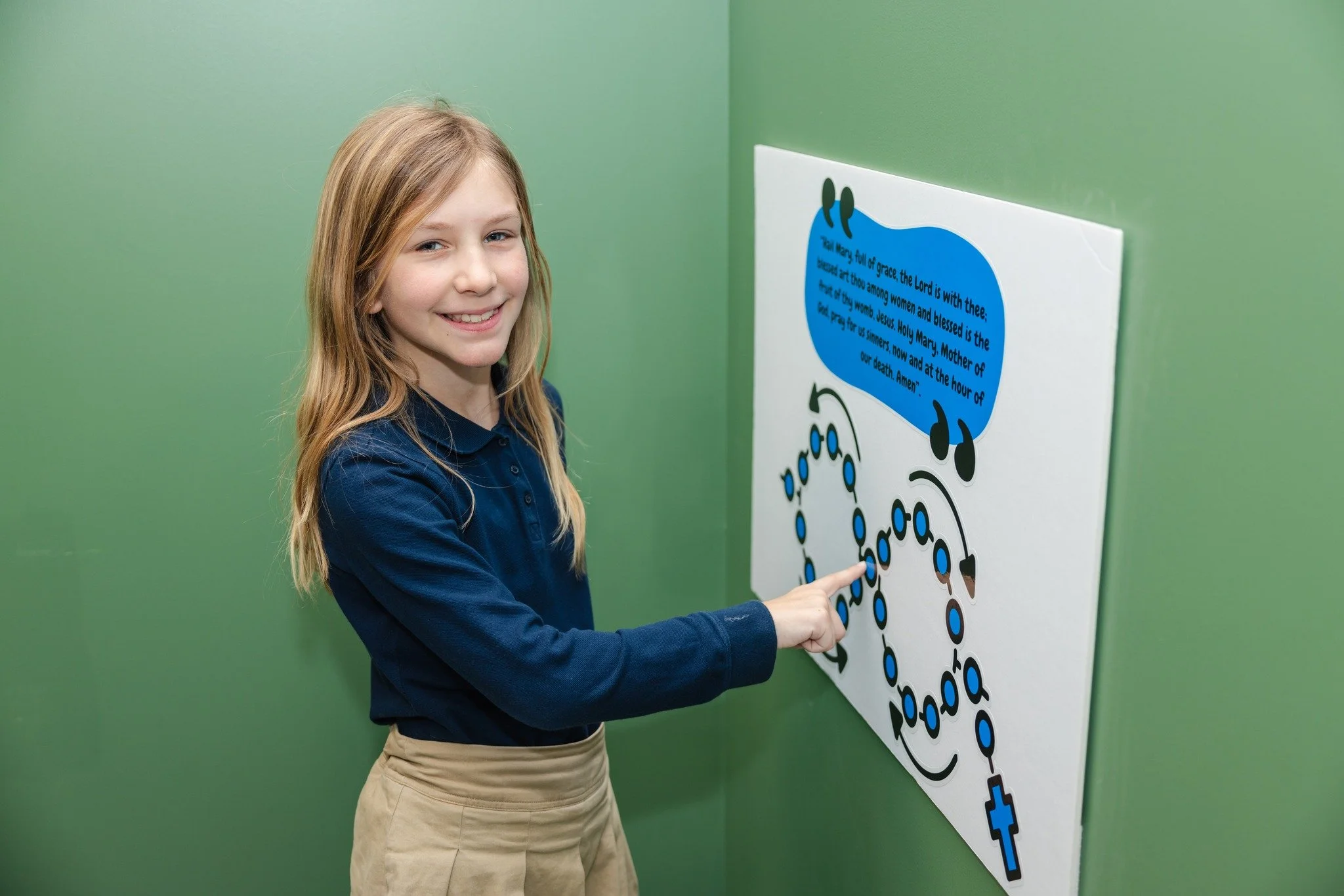
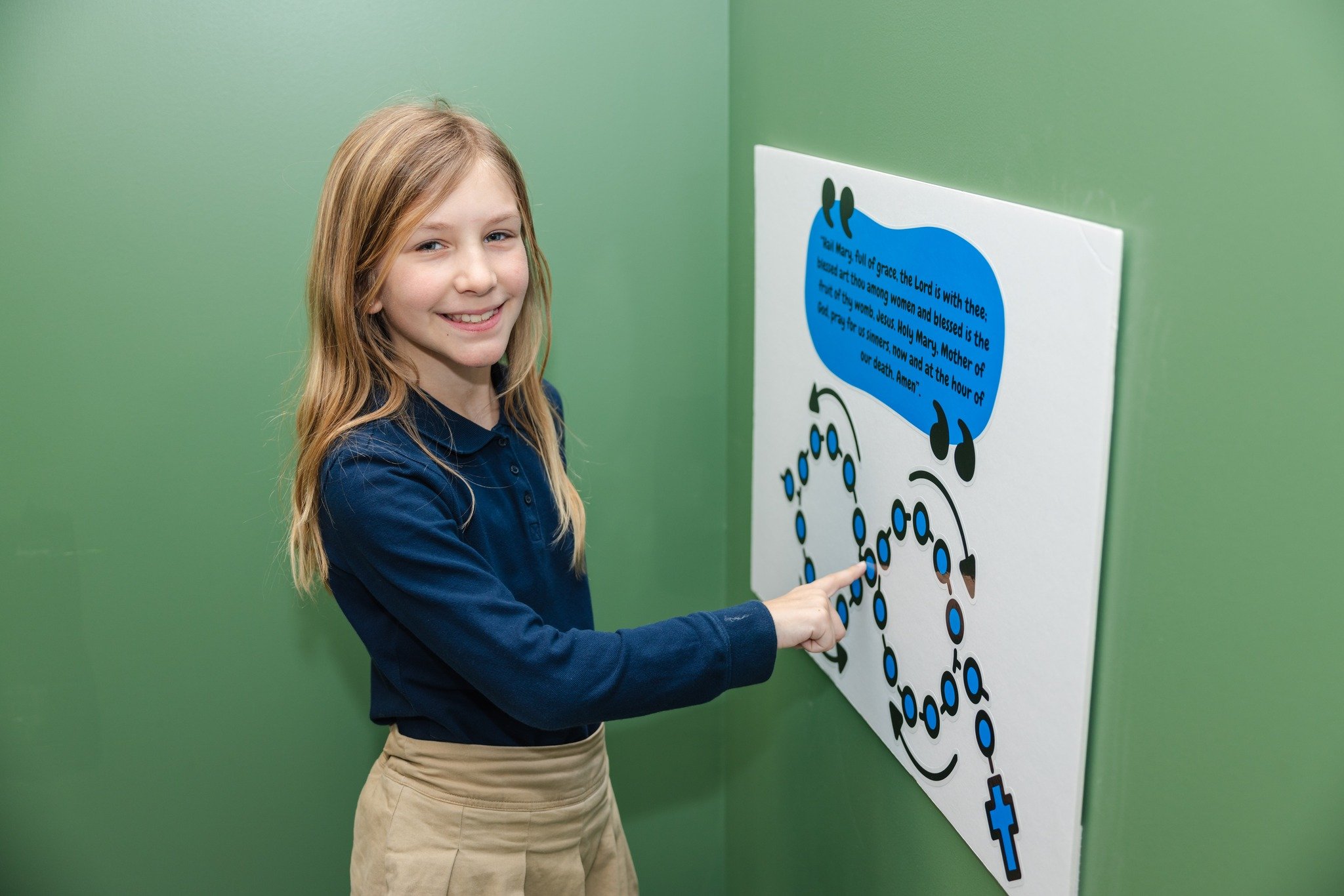
Pray a Hail Mary while following a Rosary Infinity Loop.
Remember one of the Beatitudes.
Reflect on who God says they are.
Practice calming strategies while being reminded they are loved by God.
These small interactions don't replace religion class—they reinforce it.
Over time, repeated exposure helps children internalize both faith and movement in meaningful ways.
Faith Is Built Through Repetition
Anyone who has worked with children knows that repetition matters.
Students learn multiplication facts by practicing them repeatedly.
They learn handwriting through daily use.
The same is true for faith.
Seeing Scripture, virtues, prayers, and reminders of God's love throughout the school day helps make these truths familiar and accessible.
Instead of faith existing only during one class period, it becomes woven into everyday school life.
Movement Helps Learning
As an occupational therapist, I also see another important benefit.
Children are designed to move.
Movement helps many students:
regulate their bodies,
improve attention,
organize their thoughts,
prepare for learning,
and transition more successfully between activities.
When movement is paired with faith-based messages, students are engaging both their minds and their bodies.
A hallway becomes more than a place to walk—it becomes a place to learn, reflect, and reset.
Every Student Benefits
Faith-filled movement opportunities can support students of all ages and abilities.
Some students may pause to pray.
Others may benefit from the calming movement.
Some simply enjoy the interactive experience.
The beauty is that each child engages at their own level while receiving consistent reminders of God's presence throughout the day.
Building a Culture of Faith
Catholic school culture isn't created only through curriculum.
It's created through daily experiences.
The words students see.
The messages they hear.
The routines they practice.
The environments they move through.
When hallways, counseling spaces, libraries, early childhood wings, and parish centers intentionally reflect the school's mission, faith becomes something students experience—not just something they study.
Over time, these seemingly small moments contribute to a school culture where children are continually reminded that they are known, loved, forgiven, and called by God.
Try This Tomorrow
Take one walk through your school's hallways.
Ask yourself:
"If a visitor walked through our building, would they immediately recognize that this is a Catholic school?"
Beyond crucifixes and classroom doors, consider where students could encounter reminders of Scripture, prayer, virtue, or God's love during the ordinary transitions of their day.
Sometimes the most meaningful opportunities for faith formation happen outside the classroom.
Want to Learn More?
Sacred Steps Sensory Paths was created by a practicing school-based occupational therapist to help schools intentionally combine movement, learning, and faith.
From Bible Stories and the Days of Creation to the Beatitudes, Rosary Infinity Loop, Holy Alphabet, Sacred Sacraments, and Who God Says I Am, each pathway is designed to reinforce Catholic teaching while supporting movement, self-regulation, and student engagement.
Whether you're looking to transform an entire hallway or add a simple faith-filled movement station, I'd be happy to help you find the best fit for your school, parish, or ministry.
Explore the full collection or contact me for personalized recommendations and complimentary hallway mock-ups.
About the Author
Trisha Klausing, OTR/L is a pediatric, school-based occupational therapist and the founder of Sacred Steps Sensory Paths. With more than a decade of experience helping children succeed in school, she designs movement experiences that strengthen regulation, learning, and faith. Sacred Steps products are used in Catholic schools, churches, therapy clinics, and early childhood programs across 25 states and Canada.
Why Movement Belongs in Children's Ministry
Discover how purposeful movement helps children engage in worship, Sunday School, VBS, and sensory-friendly ministry through OT-designed faith-based pathways.
The Sacred Steps Difference: An OT Perspective
When we think about helping children grow in their faith, we often think about Bible stories, worship songs, crafts, and prayer.
Those are all wonderful ways to teach children about God's love.
But what if one of the most effective teaching tools has been with us all along?
Movement.
As a pediatric occupational therapist, I've spent my career helping children learn through movement. And over the years, I've come to realize something important:
Children don't stop needing movement when they walk through the doors of a church.
In fact, many children are better able to listen, participate, and remember when movement is intentionally included in the experience.
God Designed Children to Move
Children learn differently than adults.
They wiggle.
They jump.
They explore.
They touch.
They experience the world through their bodies.
That's not something to eliminate.
It's something we can embrace.
Movement isn't a distraction from learning.
For many children, movement is how learning happens.
The same is true when they're learning about God.
Every Transition Is a Teaching Opportunity
Think about the journey a child takes on a typical Sunday morning.
Walking from the parking lot.
Heading to the children's ministry room.
Moving between activities.
Waiting for parents after class.
Most of those moments are simply transitions.
But what if they became part of the lesson?
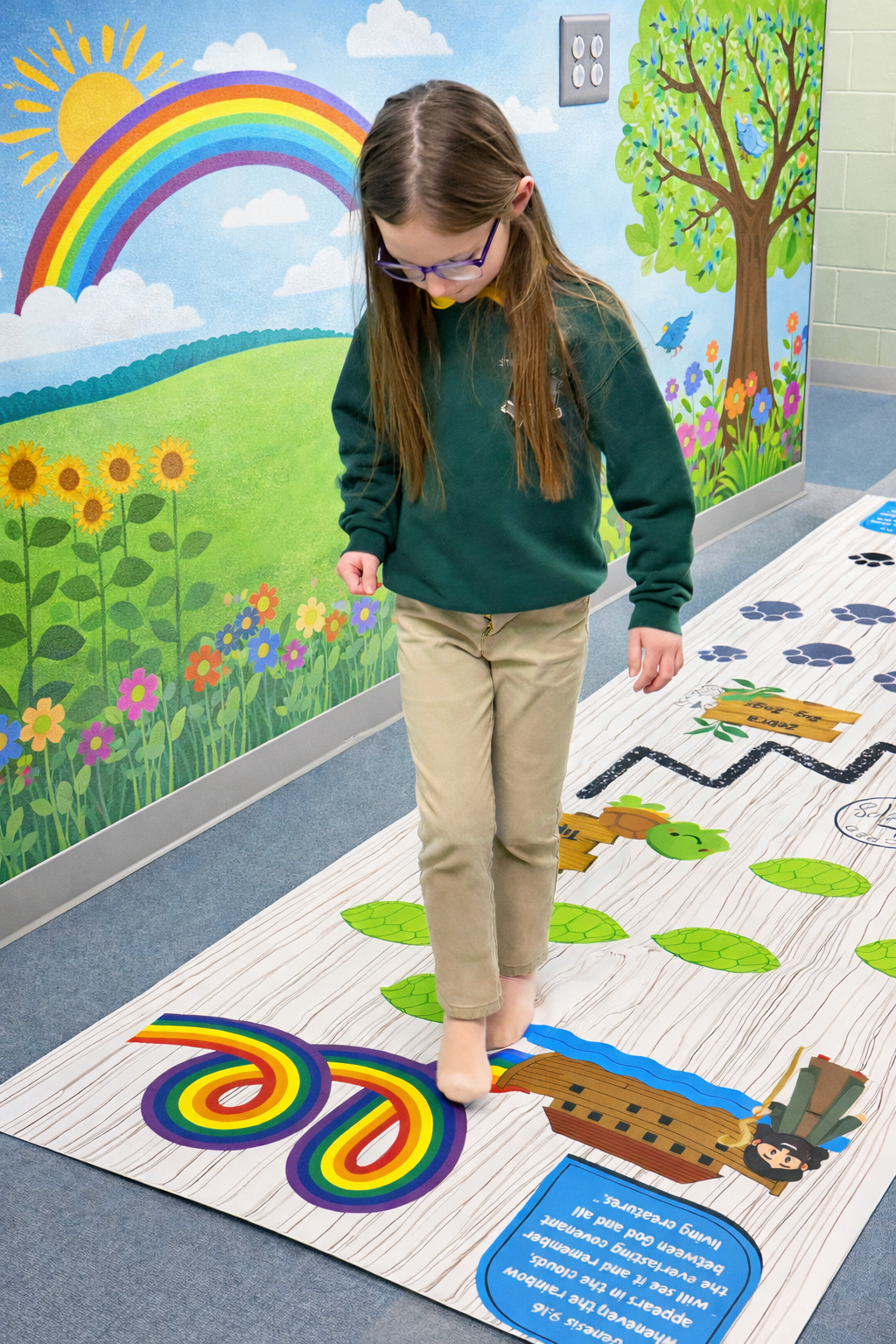
Imagine children hopping through the Days of Creation.
Following Noah's Ark.
Practicing calming breaths before prayer.
Reciting Scripture while moving from station to station.
The transition itself becomes meaningful.
Movement Creates Welcome
Every church wants families to feel welcomed.
For some children, especially those with sensory processing differences, autism, ADHD, or anxiety, sitting still for long periods can be difficult.
Purposeful movement offers another way to participate.
It says:
"You belong here, too."
Movement pathways can become valuable resources for:
Sensory-friendly Masses or worship services
Children's Church
Sunday School
Religious Education
Vacation Bible School
Family ministry events
Special needs ministries
Rather than asking children to suppress their need to move, we can give them a purposeful way to move while remaining engaged.
Why Portable Pathways Work So Well
Churches are wonderfully flexible spaces.
One classroom may host Sunday School in the morning, Vacation Bible School during the summer, and a parish meeting that evening.
That's why I created portable pathways.
Unlike permanent installations, portable pathways can be:
Rolled out wherever they're needed
Shared between classrooms
Used in fellowship halls
Brought to parish events
Stored away in minutes
One pathway can serve an entire ministry.
The Sacred Steps Difference
When I searched for commercially produced movement pathways rooted in the Christian and Catholic faith, I couldn't find any.
So I created them.
Every Sacred Steps pathway combines purposeful movement with Scripture, Bible stories, virtues, and faith-filled messages.
They're designed not simply to keep children busy.
They're designed to help children:
Move with purpose.
Regulate their bodies.
Engage more fully.
Experience God's love in another meaningful way.
Because movement and faith belong together.
Imagine This...
Imagine a child arriving at church excited to follow Noah's Ark.
Imagine another quietly taking deep breaths before entering Mass.
Imagine siblings practicing Bible stories while they wait for class to begin.
Imagine a family saying,
"My child can't wait to come to church."
Sometimes, the smallest changes create the biggest moments.
A Final Thought
As ministry leaders, teachers, catechists, and volunteers, we work hard to help children know and love Jesus.
Movement isn't separate from that mission.
It can become another way children encounter Him.
Because every hallway teaches something.
Why not let it teach faith?
Call to Action
If you're looking for a new way to engage children this fall, explore our collection of OT-designed portable movement pathways rooted in the Christian and Catholic faith.
Whether you're serving a parish, church, children's ministry, or sensory-friendly worship program, we'd love to help you create a space where every step points children toward Christ.
Trisha Klausing, MOT, OTR/L is a practicing pediatric occupational therapist and the founder of Sacred Steps Sensory Paths. She designs OT-informed movement experiences that help children regulate, learn, and thrive in schools, therapy clinics, churches, childcare centers, and community spaces.
What Are Your Hallways Teaching?
Discover how schools can transform hallways into spaces that support self-regulation, executive functioning, character development, faith formation, and student success.
When we think about teaching, we naturally think about classrooms.
We think about lesson plans, curriculum, small groups, and instructional strategies.
But lately I've been asking a different question:
What are our hallways teaching?
Students spend hundreds of hours each year moving through hallways.
They walk to lunch.
They transition between classes.
They head to specials.
They travel to the library, gym, and office.
Those moments may seem small, but they add up.
And every space in a school sends a message.
The Hidden Curriculum of School Spaces
Whether we realize it or not, our physical environments are constantly teaching.
Classrooms teach academic content.
Libraries teach a love of reading.
Playgrounds teach cooperation and social skills.
But what about hallways?
For many schools, hallways are simply spaces students move through as quickly as possible.
But what if they could do more?
What if hallways became opportunities to reinforce the very lessons we want students to carry with them every day?
Hallways That Teach Character
Imagine students encountering messages about:
• Kindness
• Respect
• Perseverance
• Gratitude
• Responsibility
• Courage
Not once during a special assembly.
Not once during a character education lesson.
Every single day.
The power of repetition matters.
The messages students see repeatedly often become the messages they remember.
Hallways That Teach Self-Regulation
As a school-based occupational therapist, I know that many students need movement in order to learn.
Students are being asked to sit longer, focus longer, and manage increasingly complex expectations.
Purposeful movement can help students:
• Refocus attention
• Improve body awareness
• Reduce stress
• Increase readiness for learning
• Transition more successfully between activities
A hallway can become a place where students practice regulation skills instead of simply passing through.
Hallways That Teach Executive Functioning
Executive functioning skills are some of the most important skills students develop.
These include:
• Following directions
• Planning
• Organization
• Flexible thinking
• Self-monitoring
• Task initiation
Movement-based activities can provide opportunities for students to practice these skills in engaging and meaningful ways.
Hallways That Teach Faith
For Catholic and Christian schools, hallways offer another unique opportunity.
Faith formation doesn't only happen during religion class.
Students can be reminded throughout the day that they are:
✝️ Loved by God
✝️ Created with purpose
✝️ Called to serve others
✝️ Never alone
Bible stories, virtues, prayers, and faith-based movement activities can transform hallways into spaces that support both spiritual and physical development.
Making Every Square Foot Count
One of my favorite things about working with schools is helping them see possibilities they hadn't considered before.
An empty hallway becomes a sensory path.
A blank wall becomes a calming station.
A transition area becomes a space for movement, reflection, and growth.
The best part?
Most schools already have the space they need.
They simply need to look at it differently.
A Simple Question
As you prepare for the upcoming school year, I encourage you to take a walk through your building and ask yourself:
What are our hallways teaching?
Are they simply moving students from one place to another?
Or are they reinforcing the values, skills, and lessons that matter most?
Because every space in a school teaches something.
The question is whether it teaches intentionally.
Would you like help envisioning what a "Hallway That Teaches" could look like in your school?
I'd be happy to create a complimentary mockup using a photo of your hallway, wall, library, counseling office, or common area.
Sometimes the most impactful student support starts with a space you're already walking past every day.
What Is a Holy Path for Kids — and Why Catholic Schools Are Adding Them to Their Hallways
A holy path for kids combines movement, sensory engagement, and faith formation in one. Discover how Catholic and Christian schools are using sacred sensory paths to help students regulate, focus, and grow in faith.
If you've been searching for a "holy path for kids," you're not alone — and you've landed in exactly the right place.
Catholic and Christian schools across the country are discovering a powerful tool that combines two things educators care deeply about: helping kids regulate their bodies and minds, AND growing in their faith. It's called a holy path — and it's transforming school hallways in the most beautiful way.
What Is a Holy Path for Kids?
A holy path for kids is a faith-based sensory path installed in a school hallway or common area. Rather than standard shapes or colors, each movement station is tied to a faith-based concept — Bible stories, Catholic virtues, the Sacraments, the fruits of the Holy Spirit, or scripture verses.
As children walk, hop, balance, and move through the path, they aren't just regulating their nervous systems — they're engaging with the foundations of their faith, one step at a time.
Think of it as a living catechism in your hallway. 🙏
Why Movement Matters for Kids
As an occupational therapist with over 10 years of school-based experience, I've seen firsthand what happens when kids don't get enough movement during the school day. They fidget. They struggle to focus. They act out — not because they're choosing to misbehave, but because their sensory systems are crying out for input.
Research consistently shows that movement:
Improves focus and attention in the classroom
Supports emotional regulation
Reduces anxiety
Improves readiness to learn
A holy path gives kids a purposeful, structured way to get that movement — without taking a single minute away from academics or faith formation.
What Makes a Holy Path Different from a Regular Sensory Path?
Standard sensory paths are wonderful tools. But for Catholic and Christian schools, a generic sensory path can feel like a missed opportunity.
A holy path is intentionally designed to weave faith into every movement. At Sacred Steps Sensory Paths, our paths are created by a licensed occupational therapist AND grounded in Catholic and Christian tradition, so every hop, balance, and stretch is connected to something meaningful.
Some of our most popular holy path themes include:
Bible Stories Sensory Path — walking through beloved scripture stories with every step
Fruit of the Holy Spirit Path — reinforcing love, joy, peace, patience, and more
Walk With Jesus Path — 3 ft x 10 ft rollable path features six Scripture-inspired movement activities that support regulation, focus, motor planning, and body awareness
Holy Alphabet Path — faith-based letters from A to Z for younger learners
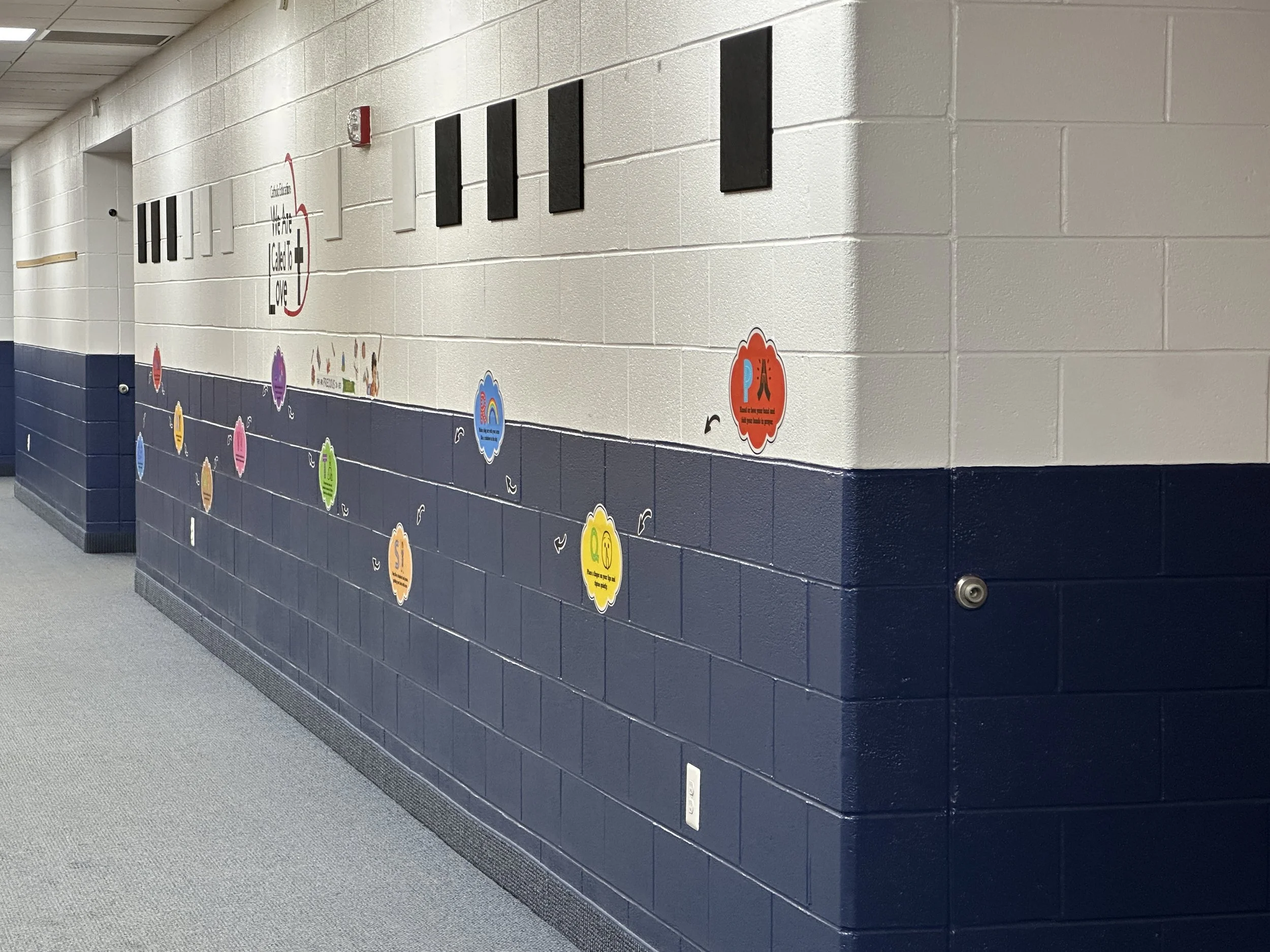
Faith-based Holy Alphabet sensory path installed in a school hallway, featuring letter-themed movement stations designed by a pediatric occupational therapist to support student regulation and faith formation in Catholic and Christian schools.
Who Is a Holy Path For?
Holy paths work beautifully for:
Catholic and Christian elementary schools
Parish preschools and faith-based early childhood programs
Religious education hallways and common areas
Therapy clinics serving faith-based communities
Churches, YMCAs, and community spaces
And the best part? They work for ALL students — not just those with sensory needs. Every child benefits from movement and faith formation woven together throughout the school day.
What Schools Are Saying
Here's a recent review from Delphos St. John's Preschool that sums it up perfectly:
"WOW! We had Sacred Steps Sensory Paths installed last summer and our students loved it during the school year! Families and siblings love it when visiting too. Quick and easy install, and they're still in great shape!"
A full school year of daily use — and still going strong. That's the kind of investment that pays for itself over and over again.
When Is the Best Time to Install a Holy Path?
Summer! Most schools choose to have their holy path installed during the summer months when hallways are clear and there's no disruption to the school day. Sacred Steps installation is quick — typically just a few hours one morning — and your path will be ready and waiting when students return in the fall.
If you're planning for next school year, now is the perfect time to start the conversation.
Ready to Bring a Holy Path to Your School?
Sacred Steps Sensory Paths is the only OT-designed faith-based sensory path company in the country, now serving Catholic and Christian schools in 25 states and Canada.
We'd love to help you create something beautiful — and meaningful — for your students.
👉 Request your FREE custom hallway mockup here and see exactly what a holy path could look like in your space before you commit to anything.
Trisha Nusbaum, OTR/L, MOT is a pediatric occupational therapist with over 10 years of school-based experience and the founder of Sacred Steps Sensory Paths LLC.